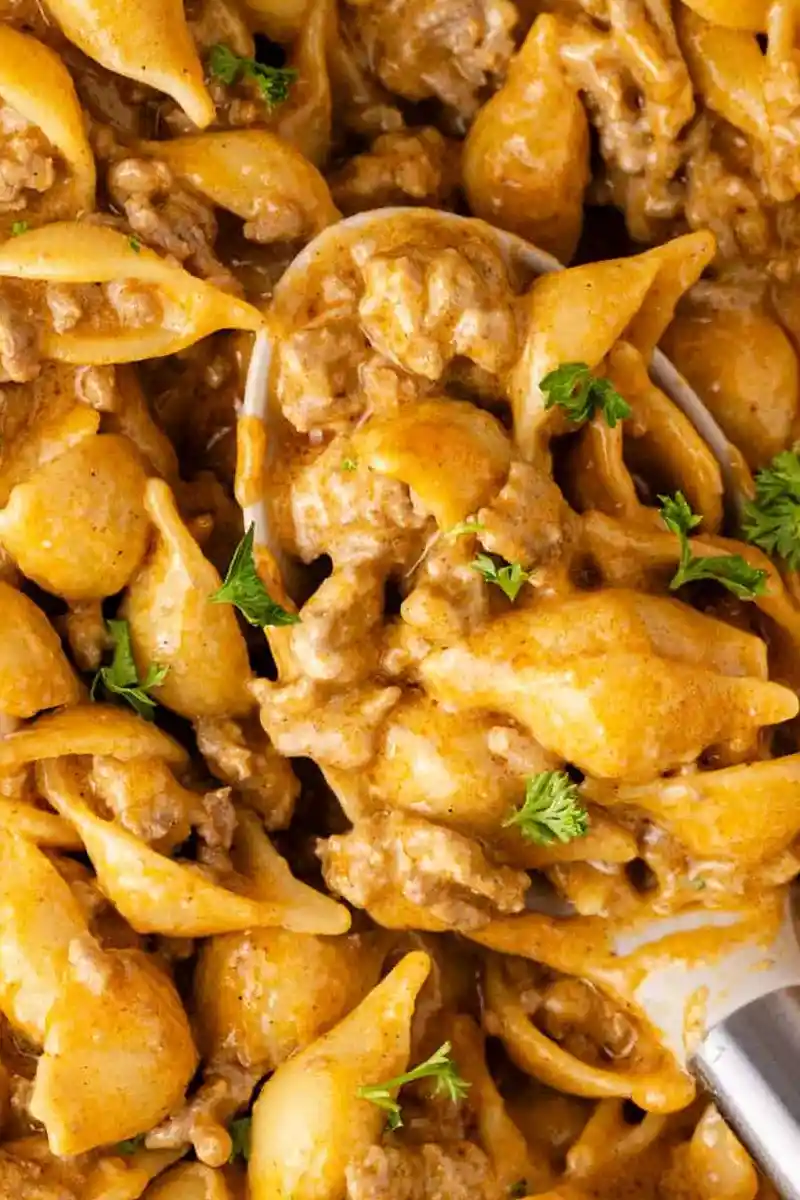
This one-pot beef pasta combines bold taco flavors with a creamy cheese sauce for a quick weeknight meal. It uses simple pantry staples to create a hearty dinner in just 30 minutes.
List of ingredients
- 1.5 pounds lean ground beef – any fat content or meat mixture works well.
- 1 package (85 grams) taco seasoning – provides the primary flavor profile.
- 4 cups low sodium beef broth – used to simmer the pasta and create the sauce.
- 3 cups (7.5 ounces) dry pasta shells – chosen for their ability to hold sauce.
- 2 cups shredded cheddar cheese – adds saltiness and thickness.
- 4 ounces cream cheese – creates a smooth and velvety texture.
step-by-step instructions
- Brown the beef: Heat a large skillet over medium high and cook ground beef until no longer pink. Drain excess fat if desired, then stir in the taco seasoning.
- Combine liquids and pasta: Pour the beef broth and the uncooked pasta shells into the skillet and bring the mixture to a boil.
- Initial simmer: Cover the skillet with a lid and lower the heat. Cook for 10 minutes while covered to ensure even steaming.
- Final pasta cook: Uncover the skillet and raise the heat to maintain a rolling boil. Continue cooking for 8-10 minutes or until the pasta reaches your desired tenderness.
- Melt the cheese: Bring the heat back to low. Stir in the shredded cheddar and cream cheese and cook until completely melted.
Protein Alternatives and Swaps
Using Ground Turkey for a Leaner Meal
Ground turkey is an excellent substitute for beef if you prefer a lighter protein. Since turkey is leaner, you may need to add a tablespoon of oil to the skillet to prevent sticking. The taco seasoning blends well with turkey for a similar flavor profile.
Substituting with Ground Chicken
Ground chicken is another versatile option that keeps the dish satisfying. Like turkey, chicken has a milder taste and lower fat content than beef. Ensure the meat is browned thoroughly before adding the broth to maintain a rich color.
Plant-Based Meat Crumbles
For a vegetarian version, use plant-based meat crumbles. Brown the crumbles in the skillet first to develop a meaty texture. Follow the rest of the instructions exactly as written for a consistent result.
Adding Vegetables for Nutrition
Incorporating Corn and Black Beans
Stirring in canned corn and rinsed black beans adds color and texture. These ingredients can be added during the last 5 minutes of the pasta cooking time. They increase the fiber content and make the meal more filling.
Adding Sautéed Bell Peppers and Onions
Dice one bell pepper and a small onion to sauté with the beef. This adds a layer of aromatic sweetness and essential vitamins. Cook the vegetables until softened before stirring in the taco seasoning.
Stirring in Fresh Spinach or Kale
Add a handful of fresh baby spinach or chopped kale just before adding the cheese. The residual heat will wilt the greens without overcooking them. This is an easy way to add iron and nutrients to the dish.
Including Diced Zucchini
Small cubes of zucchini can be browned with the meat for added bulk. Ensure the pieces are small enough to cook through during the simmering process. Zucchini absorbs the taco flavors and blends seamlessly into the sauce.
Sauce Customization and Flavor Tweaks
Adjusting the Heat Level
Use a mild taco seasoning for children or those sensitive to spice. For a bolder kick, add a pinch of crushed red pepper flakes or a diced jalapeño during the meat-browning stage. This allows you to control the intensity of the heat.
Increasing Sauce Creaminess
For an even richer sauce, stir in a dollop of sour cream at the very end. Alternatively, you can substitute a half cup of beef broth with heavy cream. This creates a more luxurious, velvet-like consistency.
Reducing Sodium Content
Use a homemade taco seasoning blend to avoid the excess salt found in store-bought packets. Pair this with a zero-sodium beef broth to keep the meal heart-healthy. You can add a pinch of salt at the end to taste.
Adding a Tangy Brightness
Squeeze half a fresh lime over the pasta once it is removed from the heat. The acidity of the lime cuts through the richness of the cheese. This adds a fresh, zesty note common in authentic taco dishes.
Pasta Shape Substitutions
Using Elbow Macaroni
Elbow macaroni is a classic alternative that mimics the original boxed helper. These noodles cook at a similar rate to shells. They provide a consistent texture and hold the cheese sauce well.
Opting for Rotini or Fusilli
Spiral-shaped pastas like rotini are excellent for trapping thick sauces in their grooves. You may need to adjust the cooking time by a minute or two depending on the thickness of the noodle. They offer a more substantial bite than shells.
Using Penne Pasta
Penne is a great choice for those who prefer a firmer pasta texture. Because penne is larger, ensure it is fully submerged in the broth during the simmering phase. This prevents the edges from remaining hard.
Trying Whole Wheat Pasta
Whole wheat shells or macaroni add more fiber and a nuttier flavor. These noodles may require an extra minute or two of simmering to reach tenderness. Be careful not to overcook them, as they can become soft more quickly than white pasta.
Storage and Preservation
Refrigerator Storage Guidelines
Store leftovers in an airtight container in the refrigerator for 3-4 days. The pasta will continue to absorb liquid as it sits, making the sauce thicker. This is normal and can be corrected during reheating.
Freezing Instructions
Place the pasta in a freezer-safe container and freeze for up to 2 months. For best results, cool the dish completely before sealing the lid. Thaw the container in the refrigerator overnight before warming.
Selecting the Right Containers
Use glass containers for reheating to avoid plastic leaching. Ensure there is a small amount of headspace in the container to allow for expansion during freezing. This prevents the lid from popping off.
Reheating Methods
Stovetop Reheating Process
Warm the pasta in a skillet over medium heat. Add a splash of beef broth or milk to loosen the thickened sauce. Stir frequently to ensure the cheese melts evenly without burning.
Microwave Reheating Tips
Heat the pasta in short intervals of 60 seconds. Stir the mixture between each interval to distribute the heat. Add a tablespoon of water or milk to prevent the noodles from drying out.
Oven Reheating Technique
Place the pasta in an oven-safe dish and cover it with foil to trap moisture. Heat at 350 degrees Fahrenheit until warmed through. This method is best for larger quantities of leftovers.
Make-Ahead Strategies
Undercooking the Pasta
If you plan to eat the meal later, cook the pasta until it is slightly under al dente. This prevents the noodles from becoming mushy when reheated. The pasta will finish cooking during the reheating process.
Preparing the Meat Base in Advance
Brown the beef and mix in the taco seasoning a day before. Store the cooked meat in the fridge in a sealed container. When ready to cook, simply start the recipe from the broth addition step.
Pre-mixing the Seasoning
If you make your own seasoning, blend all the dry spices in a small jar. This saves time during the cooking process. You can store these premixed portions for future meals.
Troubleshooting Common Issues
Fixing a Sauce That Is Too Thick
If the sauce becomes too heavy, stir in a small amount of beef broth or water. Add the liquid one tablespoon at a time until the desired consistency is reached. Do this over low heat to avoid breaking the sauce.
Correcting a Sauce That Is Too Thin
Simmer the pasta uncovered for an additional 2-5 minutes before adding the cheese. This allows the excess liquid to evaporate. The cheese will further thicken the sauce once stirred in.
Preventing Grainy Cheese Sauce
Add the cream cheese first and stir until it is fully incorporated. Turn the heat off completely before stirring in the shredded cheddar. This prevents the cheese from overheating and separating.
Managing Overcooked Pasta
If the pasta becomes too soft, avoid stirring it too vigorously. Gently fold in the cheese to maintain the integrity of the noodles. In the future, check the pasta tenderness more frequently during the final boil.
Serving and Presentation
Adding Fresh Toppings
Garnish the dish with diced avocado or fresh cilantro. These toppings add a creamy and herbal contrast to the savory beef. They make the one-pot meal feel more like a complete taco experience.
Pairing with Side Salads
Serve the pasta with a crisp green salad topped with a lime vinaigrette. The acidity of the salad balances the richness of the cheese sauce. This adds a fresh element to the hearty dinner.
Using Dipping Sauces
Place a small bowl of sour cream or salsa on the table for dipping. This allows guests to customize the flavor and spice level of their portion. It adds an interactive element to the meal.
Adding Final Garnishes
Sprinkle a bit of extra shredded cheese or chopped green onions on top. The green onions provide a mild bite and a pop of color. This simple step improves the visual appeal of the dish.
Frequently Asked Questions
Can I use a different broth?
Yes, chicken broth or vegetable broth can be used as substitutes. Ensure they are low sodium to control the total salt content of the dish.
Is this recipe spicy?
The spice level depends entirely on the taco seasoning you choose. Opt for a mild blend for children or a hot blend for more heat.
Do I have to drain the beef?
Draining the beef is optional and depends on your preference. Keeping the fat adds more flavor to the sauce, while draining it makes the meal leaner.
Can I use a different pasta shape?
Absolutely, elbows, rotini, or penne all work well. Just ensure the pasta is fully submerged in the liquid while simmering.
Can I make this in a slow cooker?
This recipe is designed for a skillet to ensure the pasta cooks correctly. Using a slow cooker may result in overcooked, mushy noodles.
Print
Creamy One-Pot Taco Beef Pasta
- Total Time: 30 minutes
- Yield: 8 servings 1x
- Diet: General
Description
My Homemade Hamburger Helper is creamy, cheesy and loaded with bold taco seasoning, and tender pasta shells make it a cozy, satisfying dinner.
Ingredients
- 1.5 pounds lean ground beef
- 1 package taco seasoning (85 grams)
- 4 cups beef broth (low sodium)
- 3 cups pasta shells (7.5 ounces, dry measurement)
- 2 cups cheddar cheese (shredded)
- 4 ounces cream cheese
Instructions
- Step: Heat a large skillet over medium high and cook beef until no longer pink. Drain if desired then mix in the taco seasoning (I personally do not strain it for additional flavor).
- Step: Pour in the broth, the uncooked noodles and bring to a boil. Cover the skillet and lower the heat. Cook for 10 minutes covered, then uncover, raise the heat to keep a rolling boil and cook until the pasta is your desired tenderness (about 8-10 minutes).
- Step: Bring the heat back to low, add cheeses and cook until melted.
Notes
Cover for the first 10 minutes to ensure even cooking with steam. If cream cheese is cold, add it first, then shut off the heat before adding shredded cheese for a smoother sauce. Add a splash of broth at the end if the sauce thickens too much.
- Prep Time: 0 minutes
- Cook Time: 30 minutes
- Category: Mains
- Method: One Pot
- Cuisine: American
Nutrition
- Serving Size: 1 serving
- Calories: 437 kcal
- Sugar: 2 g
- Sodium: 1087 mg
- Fat: 20 g
- Saturated Fat: 10 g
- Unsaturated Fat: 6 g
- Trans Fat: 0.3 g
- Carbohydrates: 32 g
- Fiber: 2 g
- Protein: 32 g
- Cholesterol: 95 mg