This refreshing side dish combines the heartiness of a classic pasta salad with the crunch of a traditional coleslaw. It features a variety of colorful vegetables bound together by a tangy, creamy dressing.
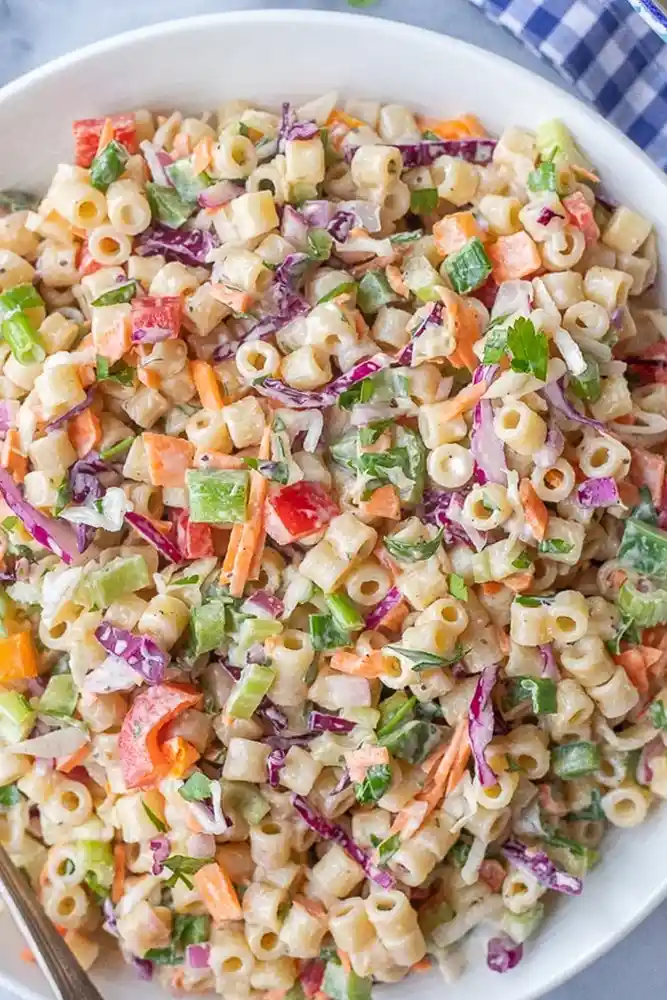
List of ingredients
- 300 g (about 3/4 box) small pasta, such as ditalini or macaroni – provides the base structure.
- 1 cup shredded purple cabbage – adds color and crunch.
- 1 cup shredded green cabbage – provides traditional coleslaw texture.
- 1 cup shredded and chopped carrot – adds sweetness and brightness.
- 1 cup diced bell peppers – use any preferred colors for variety.
- 1 cup diced celery – contributes a fresh, salty snap.
- 1/2 cup diced red onion – provides a sharp, savory contrast.
- 1/2 cup chopped scallions – adds a mild onion flavor.
- 1/2 cup chopped parsley, or fresh herbs of choice – enhances the fresh aroma.
- 1 cup mayonnaise (vegan mayo recommended) – creates the creamy emulsion.
- 1/4 cup apple cider vinegar – adds essential acidity.
- 2 teaspoons dijon mustard, or more if desired – provides depth and stability.
- 2 teaspoons pure maple syrup – balances the acidity with sweetness.
- 1/2 teaspoon granulated garlic – adds a concentrated savory note.
- 1/4 teaspoon celery seed – gives a classic coleslaw flavor profile.
- 1 1/2 teaspoons salt – enhances all other flavors.
- 1/2 teaspoon black pepper – adds a subtle spicy warmth.
step-by-step instructions
- Prepare the pasta: Heat a large pot of water over high heat until it reaches a rolling boil. Add the pasta and cook according to the package directions. Drain the pasta and rinse it with cold water for about a minute to stop the cooking process. Set the pasta aside to cool completely.
- Mix the dressing: In a small bowl, combine the mayonnaise, apple cider vinegar, dijon mustard, maple syrup, granulated garlic, and celery seed. Stir until the mixture is smooth and combined. If the dressing is too thick, stir in one or two tablespoons of water to reach the desired consistency. Season with salt and black pepper to taste.
- Assemble the salad: Place all the shredded and diced vegetables into a large mixing bowl. Add the cooled pasta to the vegetables. Pour the prepared sauce over the ingredients and mix until everything is evenly coated. Depending on your preference for creaminess, you may choose not to use all of the sauce. Serve immediately or refrigerate for 3-4 days.
Pasta Selection and Preparation
Choosing Small Pasta Shapes
Small pasta shapes like ditalini or elbow macaroni are ideal for this recipe. These shapes have a high surface-area-to-volume ratio, which allows the creamy dressing to cling to the noodles effectively. This ensures every bite is evenly seasoned.
Preventing Pasta Overcooking
Cook the pasta until it is al dente, meaning it still has a slight firmness to the bite. Overcooked pasta can become mushy, especially after absorbing the vinegar-based dressing during refrigeration. Firm pasta maintains the structural integrity of the salad.
Stopping the Cooking Process with Cold Water
Rinsing pasta with cold water immediately after draining is crucial for cold salads. This step removes excess surface starch, which prevents the noodles from sticking together in a clump. It also lowers the temperature quickly, ensuring the mayonnaise does not melt when mixed.
Vegetable Preparation and Texture
Achieving Consistent Cabbage Shreds
For the best texture, shred the purple and green cabbage into thin, uniform strips. Using a mandoline slicer or a sharp chef’s knife ensures that the cabbage integrates well with the pasta. Consistent sizing allows the dressing to coat the vegetables evenly.
Uniform Dicing for Bell Peppers and Celery
Dice the bell peppers and celery into small, uniform cubes. This prevents any single vegetable from dominating the texture of the salad. Small pieces ensure that you get a bit of every ingredient in each spoonful.
Reducing Red Onion Sharpness
If you find raw red onion too pungent, you can soak the diced pieces in cold water for ten minutes before adding them to the bowl. Drain them thoroughly before mixing. This process removes some of the harsh sulfur compounds while keeping the crunch.
Dressing Flavor and Consistency
Balancing Acidity with Maple Syrup
The apple cider vinegar provides a sharp tang that is characteristic of coleslaw. The pure maple syrup acts as a counterbalance, smoothing out the acidity without making the salad overly sweet. This creates a professional, balanced flavor profile.
Stabilizing the Dressing with Mustard
Dijon mustard serves as more than just a flavor agent; it acts as an emulsifier. It helps bind the oil in the mayonnaise with the vinegar, preventing the dressing from separating over time. This keeps the salad looking creamy even after several hours.
Controlling Sauce Viscosity
The thickness of the dressing can vary based on the brand of mayonnaise used. If the sauce feels too heavy or gloppy, whisk in a small amount of water. This thins the dressing just enough to coat the pasta without pooling at the bottom of the bowl.
Storage and Food Safety
Maintaining Freshness in the Refrigerator
Store the completed salad in an airtight container to prevent it from absorbing other smells from the fridge. Keep it at a constant temperature of 40°F (4°C) or below. This is critical for mayo-based salads to ensure food safety.
Managing Moisture in Airtight Containers
Vegetables like cabbage and celery release water over time due to the salt in the dressing. Using a container with a tight seal prevents this moisture from evaporating, but you may notice some liquid at the bottom after a day. Simply stir the salad before serving to redistribute the dressing.
Maximum Shelf Life
This salad is best consumed within three to four days. After this period, the pasta may begin to soften too much, and the vegetables will lose their characteristic snap. Always check for freshness before serving leftovers.
Serving and Presentation
Enhancing Visual Appeal with Herbs
Adding fresh parsley or dill at the very end provides a bright green contrast to the purple cabbage and orange carrots. Fresh herbs add a layer of aromatic freshness that cuts through the richness of the mayonnaise.
Ideal Serving Temperatures
Serve this salad chilled. The cold temperature enhances the crispness of the raw vegetables and makes the creamy dressing more refreshing. For the best results, let the salad sit in the fridge for at least one hour before serving.
Scaling for Large Events
When doubling or tripling the recipe for a potluck, mix the dressing in a separate pitcher first. Add the dressing to the pasta and vegetables in batches to ensure every part of the large volume is thoroughly coated without overworking the pasta.
Common Substitutions
Using Corn or Rice-Based Pasta
For a gluten-free version, substitute the wheat pasta with corn or brown rice pasta. Ensure you cook gluten-free pasta slightly under the package directions, as these varieties tend to break down faster when exposed to acidic dressings.
Replacing Maple Syrup with Agave
If maple syrup is unavailable, agave nectar or a small amount of honey can be used. Agave is a neutral sweetener that maintains the vegan status of the recipe. Honey provides a similar viscosity but adds a distinct floral note.
Substituting Apple Cider Vinegar
White distilled vinegar or rice vinegar can be used if apple cider vinegar is not on hand. White vinegar is sharper and more neutral, while rice vinegar is milder and slightly sweeter. Adjust the amount of sweetener based on the vinegar choice.
Troubleshooting Common Issues
Correcting a Thin Dressing
If the dressing feels too watery, whisk in an extra tablespoon of mayonnaise or a pinch of xanthan gum. This will increase the viscosity and help the sauce adhere better to the smooth surface of the pasta.
Managing Excessive Liquid
If the salad becomes too watery after refrigeration, it is usually due to the salt drawing moisture from the cabbage. You can fix this by stirring in a small amount of additional mayonnaise or draining a bit of the excess liquid before serving.
Preventing Starchy Pasta Clumps
If the pasta clumps together despite rinsing, try tossing it with a teaspoon of oil while it is still slightly warm. This creates a barrier that prevents the starches from bonding before the dressing is added.
Frequently Asked Questions
Can I use store-bought coleslaw dressing?
Yes, you can replace the homemade dressing with a bottled coleslaw dressing. However, store-bought versions often contain more sugar, so you may want to taste the salad before adding any additional sweeteners.
How do I keep the vegetables crunchy?
Keep the vegetables raw and do not over-mix the salad. Stir gently with a large spoon or spatula to avoid bruising the cabbage and carrots, which helps maintain their structural snap.
Can I add protein to this salad?
You can add grilled chicken breast, chickpeas, or diced tofu to make the salad more filling. Fold the protein in at the very end to ensure it is coated in dressing without breaking apart.
Does this salad freeze well?
No, this salad should not be frozen. The mayonnaise will separate upon thawing, and the raw vegetables will lose their texture and become translucent and mushy.
Print
Creamy Macaroni Coleslaw Salad
- Total Time: 27 minutes
- Yield: 6–8 servings 1x
- Diet: Vegan
Description
This Macaroni Coleslaw Salad is the perfect mix between macaroni salad and coleslaw! It’s a great side dish for parties, potlucks and BBQs. This macaroni coleslaw salad is easy to make, packed with tons of vegetables and dressed with a creamy mayo based dressing.
Ingredients
- 300 g small pasta, such as ditalini or macaroni
- 1 cup shredded purple cabbage
- 1 cup shredded green cabbage
- 1 cup shredded and chopped carrot
- 1 cup diced bell peppers
- 1 cup diced celery
- 1/2 cup diced red onion
- 1/2 cup chopped scallions
- 1/2 cup chopped parsley
- 1 cup vegan mayonnaise
- 1/4 cup apple cider vinegar
- 2 teaspoons dijon mustard
- 2 teaspoons pure maple syrup
- 1/2 teaspoon granulated garlic
- 1/4 teaspoon celery seed
- 1 1/2 teaspoons salt
- 1/2 teaspoon black pepper
Instructions
- Step: Heat a large pot of water over high heat until boiling, cook pasta according to package directions, drain, rinse with cold water, and set aside to cool.
- Step: Mix mayonnaise, apple cider vinegar, dijon mustard, maple syrup, granulated garlic, celery seed, salt, and pepper in a small bowl until combined.
- Step: Combine all vegetables and cooled pasta in a large bowl, pour the sauce over, and mix until combined.
Notes
You can substitute gluten-free noodles. Store leftovers in an airtight container in the refrigerator for 3-4 days.
- Prep Time: 15 minutes
- Cook Time: 12 minutes
- Category: Side
- Method: Stovetop
- Cuisine: American
Nutrition
- Serving Size: 1 serving
- Calories: 380 kcal
- Sugar: 6 g
- Sodium: 620 mg
- Fat: 18 g
- Saturated Fat: 2 g
- Unsaturated Fat: 16 g
- Trans Fat: 0 g
- Carbohydrates: 38 g
- Fiber: 5 g
- Protein: 8 g
- Cholesterol: 0 mg