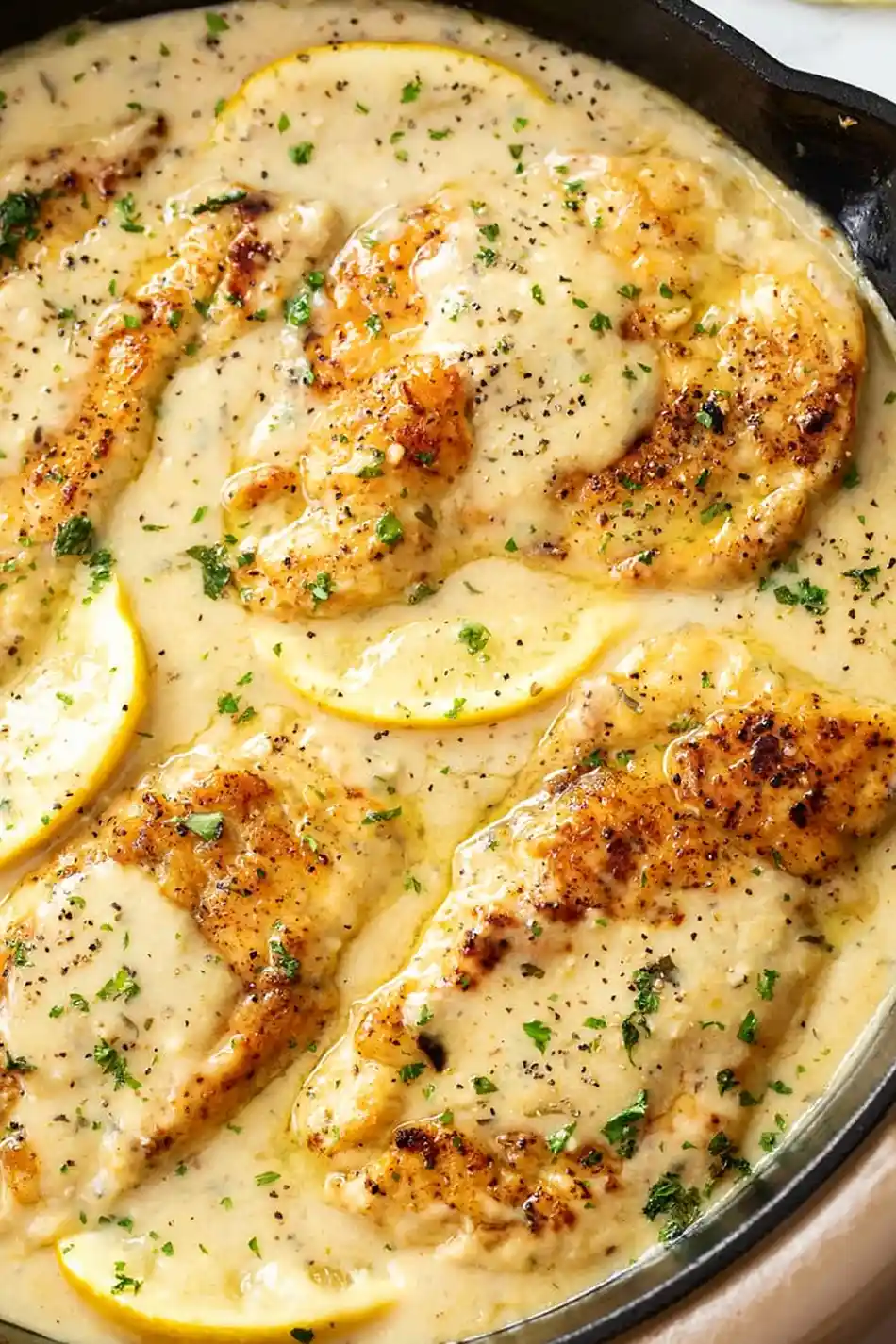
This creamy lemon pepper chicken is a quick stove-top meal perfect for busy weeknights. Its tangy and savory sauce pairs wonderfully with a variety of side dishes for a complete dinner.
List of ingredients
- 2 cups chicken broth – used for both the base and the sauce.
- 1 chicken bouillon cube – enhances the savory depth of the liquid.
- 3 tablespoons heavy cream – creates a rich, velvety texture.
- 1 tablespoon honey – balances the acidity of the lemon.
- ½ teaspoon brown sugar – adds a subtle sweetness.
- 1 teaspoon mustard powder – provides a sharp, tangy undertone.
- 1 teaspoon parsley – adds a fresh, herbal note.
- 1 teaspoon oregano – contributes an earthy aroma.
- 1/8 teaspoon coarse black pepper – adds a mild spice.
- 2 large boneless skinless chicken breasts – the main protein source.
- 2 teaspoons Lemon Pepper Seasoning – for a concentrated citrus flavor.
- ¼ cup flour – used for dredging the chicken.
- 1-2 tablespoons olive oil – for searing the meat.
- ½ cup chicken broth – used for deglazing the pan (replacement for wine).
- 3 tablespoons butter – adds richness to the roux.
- 3 cloves garlic, minced – provides a pungent, savory base.
- 3 tablespoons flour – used to thicken the sauce.
- 1/3 cup Parmesan cheese, grated – adds salty, nutty flavor.
- 2 tablespoons lemon juice – brightens the overall taste.
- 1 lemon, cut into wedges – for simmering and garnishing.
- Freshly cracked pepper – for a final seasoning touch.
step-by-step instructions
- Prepare the sauce mixture: Combine the 2 cups of chicken broth, bouillon cube, heavy cream, honey, brown sugar, mustard powder, parsley, oregano, and coarse black pepper in a large measuring cup with a spout. Set this aside for later use.
- Prep the chicken breasts: Slice the chicken breasts in half lengthwise to create 2-3 thinner slices. Cover them with plastic wrap and use the textured side of a meat mallet to pound them to a uniform ½ inch thickness.
- Season and dredge: Season each side of the chicken with lemon pepper seasoning. Sprinkle the ¼ cup of flour over the surface of each side and rub it in to ensure a light, even coating.
- Sear the meat: Heat olive oil in a large skillet over medium-high heat. Sear the chicken in batches for 4-5 minutes per side until a golden-brown crust develops, then remove them from the pan and set aside.
- Deglaze the skillet: Turn the heat off and pour in ½ cup of chicken broth. Set the heat back to medium and use a silicone spatula to scrape the browned bits, or fond, from the bottom of the pan.
- Reduce the liquid: Let the liquid bubble gently and reduce by half, which usually takes about 3 minutes.
- Sauté aromatics: Add the butter and minced garlic to the skillet. Cook for approximately 1 minute until the garlic is fragrant.
- Create the roux: Stir in 3 tablespoons of flour and cook for 2 minutes, stirring continuously until the raw flour smell is gone.
- Thicken the sauce: Pour the prepared sauce mixture from the measuring cup into the pan in small splashes, stirring constantly. Bring the mixture to a boil, then reduce to a gentle simmer.
- Concentrate flavors: Let the sauce simmer uncovered for 5 minutes to allow the flavors to meld and the liquid to thicken.
- Incorporate cheese and citrus: Reduce the heat to low. Gradually sprinkle in the Parmesan cheese while stirring continuously until melted, then stir in the lemon juice.
- Finish the dish: Return the seared chicken to the pan and spoon the sauce over the meat. Simmer for 4 minutes uncovered.
- Final touch: Add the fresh lemon wedges to the skillet and simmer for one last minute. Remove from heat and garnish with parsley and freshly cracked pepper.
Advanced Searing and Preparation Techniques
Pounding Chicken for Uniform Cooking
Using a meat mallet to pound chicken to a consistent ½ inch thickness is critical for even heat distribution. This ensures that the edges do not overcook while the center remains raw. It also shortens the cooking time, keeping the meat juicy.
The Role of Flour Dredging
Dredging the chicken in flour creates a thin barrier that protects the meat from direct high heat. This process facilitates a better Maillard reaction, resulting in a more golden crust. Additionally, the flour on the meat helps thicken the final sauce during the simmering phase.
Managing Pan Temperature for Searing
Ensure the olive oil is shimmering but not smoking before adding the chicken. Overcrowding the pan can drop the temperature, causing the chicken to steam in its own juices rather than sear. Cook in batches to maintain high heat for a proper crust.
Mastering the Creamy Sauce
Understanding the Deglazing Process
Deglazing involves adding liquid to a hot pan to loosen the caramelized proteins stuck to the bottom. These browned bits, known as fond, contain concentrated flavor that integrates into the sauce. Using a silicone spatula ensures every bit of flavor is captured.
Perfecting the Roux for Stability
A roux is formed by cooking flour in butter to remove the raw starch taste. Stirring for 2 minutes ensures the flour is properly toasted but not burnt. This stable base prevents the sauce from becoming lumpy or tasting like raw grain.
Emulsifying the Parmesan Cheese
Adding Parmesan slowly on low heat prevents the cheese from clumping or separating. Constant stirring allows the fats in the cheese to emulsify with the broth and cream. This results in a smooth, glossy finish rather than a grainy texture.
Controlling Sauce Thickness
Simmering the sauce uncovered allows water to evaporate, which concentrates the flavor and thickens the consistency. If the sauce becomes too thick, a small splash of chicken broth can be added to loosen it. Conversely, simmering longer will result in a heavier glaze.
Customizing and Substituting Ingredients
Alternative Liquid for Deglazing
While some recipes call for wine, using a high-quality chicken broth provides a clean, savory profile. To mimic the acidity of wine, you can add a teaspoon of apple cider vinegar or an extra squeeze of lemon. This keeps the flavor profile bright and balanced.
Selecting the Best Parmesan Cheese
Always grate Parmesan from a block rather than using pre-shredded options. Pre-shredded cheeses are coated in cellulose or potato starch to prevent clumping, which hinders smooth melting. Freshly grated cheese melts faster and tastes more authentic.
Adding Fresh Vegetables to the Pan
Fresh baby spinach or capers can be stirred into the sauce during the final simmering stage. Spinach adds a vibrant color and nutritional value, while capers provide a salty, briny pop. Add these just before the chicken returns to the pan to avoid overcooking.
Serving and Pairing Recommendations
Best Starchy Accompaniments
Mashed potatoes are the ideal pairing as they soak up the creamy lemon sauce. For a lighter option, buttered noodles or a bed of garlic Parmesan pasta work well. Orzo is another excellent choice due to its rice-like shape and ability to hold onto the sauce.
Pairing with Roasted Vegetables
Roasted broccoli, asparagus, or green beans provide a crisp contrast to the richness of the cream sauce. Roast them with olive oil, salt, and pepper at 400°F until tender-crisp. The charred edges of the vegetables complement the lemon tang.
Light Side Dish Options
A simple side salad with a light vinaigrette can cut through the richness of the butter and cream. Freshly steamed carrots or a side of sautéed kale also add a healthy balance to the meal. These options ensure the plate feels balanced and not too heavy.
Storage and Reheating Guidelines
Proper Refrigeration and Freezing
Store leftovers in an airtight glass container in the refrigerator for up to 3 days. This dish also freezes well for up to 3 months. Ensure the sauce is completely cooled before sealing to prevent ice crystals from forming.
Best Method for Reheating Frozen Chicken
Thaw the chicken in the refrigerator overnight or use a microwave defrost setting. Place the chicken and sauce in a small, lightly greased, covered casserole dish. Bake at 350°F for 20-25 minutes to heat through without drying out the meat.
Maintaining Sauce Texture During Reheating
When reheating on the stove, add a tablespoon of water or broth to the pan. Heat on low and stir gently to re-emulsify the fats in the sauce. Avoid high heat, as it can cause the cream and cheese to separate.
Troubleshooting Common Issues
Fixing a Broken or Separated Sauce
If the sauce separates into oil and solids, it is usually due to excessive heat. Lower the temperature and whisk in a small amount of cold chicken broth or a teaspoon of heavy cream. Constant whisking on low heat will help bring the emulsion back together.
Adjusting Too Much Acidity
If the lemon flavor is too overpowering, add a pinch more brown sugar or a small amount of additional heavy cream. The sweetness and fat will neutralize the sharp acid. Always taste the sauce before adding the final lemon wedges.
Preventing Chicken from Becoming Tough
Tough chicken usually results from overcooking the breasts during the searing or final simmering phase. Ensure the chicken is pounded to a uniform thickness. Use a meat thermometer to check that the internal temperature reaches 165°F without exceeding it.
Frequently Asked Questions
Can I use chicken thighs instead of breasts?
Yes, boneless skinless chicken thighs can be used. They are more forgiving and stay juicier, though they may require a slightly longer searing time. You do not need to pound thighs as much as breasts since they are naturally more uniform in thickness.
What is the best lemon pepper seasoning to use?
A seasoning that contains both sea salt and citric acid provides the best balance. If your brand is very potent or salty, reduce the amount used on the chicken to avoid over-seasoning the final dish. Always taste your seasoning blend first.
Can I make this recipe in a slow cooker?
This specific recipe is designed for the stove top to achieve a sear and a roux-based sauce. A slow cooker cannot sear the meat or thicken a flour-based sauce in the same way. For a slow cooker version, omit the flour and butter and thicken the sauce with a cornstarch slurry at the end.
Is it possible to make this dairy-free?
You can replace heavy cream with full-fat coconut milk and Parmesan with nutritional yeast or a dairy-free Parmesan alternative. Use a plant-based butter substitute for the roux. Be aware that the flavor profile will shift slightly toward a nuttier taste.
How do I keep the lemon wedges from becoming bitter?
Add the lemon wedges during the very last minute of cooking. Simmering them for too long can release bitter oils from the white pith of the lemon. Quick heating softens them and releases the juice without introducing bitterness.
Print
Creamy Lemon Pepper Chicken
- Total Time: 45 minutes
- Yield: 4 servings 1x
- Diet: General
Description
This Lemon Pepper Chicken is an easy stove top recipe with the most flavorful sauce that pairs well with potatoes, pasta, vegetables, garlic bread, or salad!
Ingredients
- 2 cups chicken broth
- 1 chicken bouillon cube
- 3 tablespoons heavy cream
- 1 tablespoon honey
- ½ teaspoon brown sugar
- 1 teaspoon mustard powder
- 1 teaspoon parsley
- 1 teaspoon oregano
- 1/8 teaspoon coarse black pepper
- 2 large boneless skinless chicken breasts
- 2 teaspoons Lemon Pepper Seasoning
- ¼ cup flour
- 1–2 tablespoons olive oil
- ½ cup chicken broth
- 3 tablespoons butter
- 3 cloves garlic, minced
- 3 tablespoons flour
- 1/3 cup Parmesan cheese, grated
- 2 tablespoons lemon juice
- 1 lemon, cut into wedges
- Freshly cracked pepper, for serving
Instructions
- Prep Work: Combine the sauce ingredients (broth, bouillon, cream, honey, brown sugar, mustard powder, parsley, oregano, and coarse black pepper) in a large measuring cup and set aside.
- Make the Chicken: Slice chicken breasts in half lengthwise and pound to ½ inch thick. Season with lemon pepper seasoning and dredge in flour.
- Sear: Heat olive oil in a large skillet over medium-high heat. Sear chicken for 4-5 minutes per side until golden, then set aside.
- Deglaze: Add chicken broth to the skillet over medium heat and reduce by half, scraping the bottom of the pan.
- Sauté: Stir in butter and garlic for 1 minute, then add 3 tablespoons of flour and cook for 2 minutes.
- Simmer: Gradually whisk in the prepared sauce mixture. Bring to a boil, then reduce heat and simmer for 5 minutes.
- Finish Sauce: Reduce heat to low and stir in Parmesan cheese and lemon juice.
- Combine: Return chicken to the pan, spoon sauce on top, and simmer for 4 minutes.
- Garnish: Add lemon wedges and simmer for 1 more minute. Sprinkle with parsley and freshly cracked pepper.
Notes
For the best results, shred Parmesan cheese from a block. Capers or spinach can be added to the sauce at the end of cooking for extra flavor.
- Prep Time: 15 minutes
- Cook Time: 30 minutes
- Category: Main Course
- Method: Stove top
- Cuisine: American
Nutrition
- Serving Size: 1 serving
- Calories: 345 kcal
- Sugar: 7 g
- Sodium: 961 mg
- Fat: 21 g
- Saturated Fat: 10 g
- Unsaturated Fat: 8 g
- Trans Fat: 0.4 g
- Carbohydrates: 21 g
- Fiber: 2 g
- Protein: 18 g
- Cholesterol: 81 mg