This creamy dill salmon provides a restaurant-quality meal that is quick to prepare and highly nutritious. The combination of fresh herbs and a rich cream sauce transforms simple fillets into an elegant dinner.
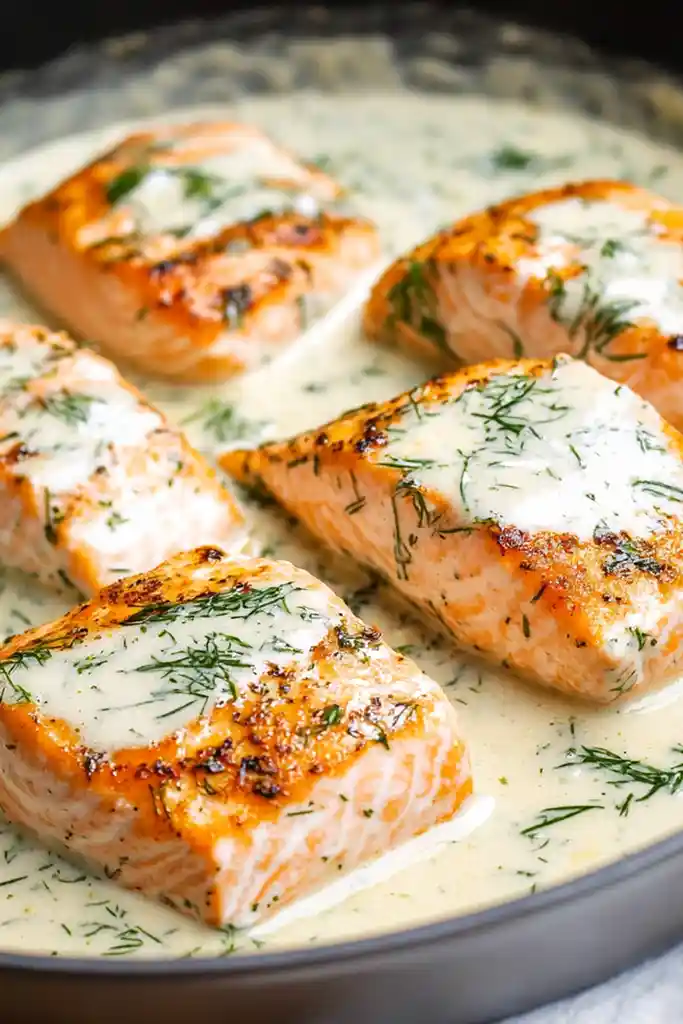
List of ingredients
- 1 pound fresh salmon, cut into 4 portions – use center-cut fillets for even cooking.
- 1/4 teaspoon garlic powder – provides a consistent savory base.
- Salt and pepper, to taste – adjust based on the saltiness of your broth.
- All-purpose flour, for dredging – creates a light crust and helps thicken the sauce.
- 1 tablespoon olive oil – prevents the butter from burning at high heat.
- 1 tablespoon butter – adds richness and helps with the browning process.
- 1/2 cup chicken broth – serves as the liquid base for the pan sauce.
- 1 teaspoon lemon juice – cuts through the richness of the cream.
- 1/2 teaspoon Dijon mustard – adds depth and a slight tang.
- 1 cup heavy/whipping cream – creates the thick, velvety texture of the sauce.
- 1 tablespoon fresh dill, finely chopped – essential for the signature herbal flavor.
step-by-step instructions
- Prepare the Salmon: Cut the salmon into 4 portions. Season each piece with garlic powder, salt, and pepper. Lightly dredge each piece in flour, ensuring all sides are evenly coated.
- Sear the Salmon: Heat olive oil and butter in a skillet over medium-high heat. Once the skillet is hot, add the salmon. Cook for 3–4 minutes per side until lightly browned. Do not fully cook the salmon at this stage. Remove the salmon from the pan and set it aside on a plate.
- Make the Sauce Base: Reduce the heat slightly and add the chicken broth, lemon juice, and Dijon mustard to the skillet. Stir well to incorporate the mustard, and let the mixture simmer for 1–2 minutes.
- Add Cream and Dill: Stir in the heavy cream and fresh dill, blending everything smoothly.
- Finish Cooking the Salmon: Return the salmon to the skillet. Let it simmer in the sauce for about 5 minutes, or until the sauce thickens slightly and the salmon is cooked through.
- Season and Serve: Taste the sauce and adjust seasoning with salt and pepper, if needed. Serve the salmon with freshly chopped parsley and a squeeze of lemon juice, if desired.
Expert Cooking Secrets for Perfect Salmon
Patting Salmon Dry Before Dredging
Use paper towels to firmly pat the salmon fillets dry on all sides before seasoning. Removing surface moisture prevents the fish from steaming in the pan, which allows the flour to adhere better and ensures a golden-brown sear. This step is critical for achieving a professional crust.
Controlling Pan Temperature
Maintain a medium-high heat when searing the fish to ensure the butter and oil are shimmering but not smoking. If the pan is too cool, the salmon will stick and fail to brown; if it is too hot, the butter will burn and taste bitter. Use a stainless steel or cast iron skillet for the best heat retention.
Determining Optimal Doneness
Salmon is perfectly cooked when it reaches an internal temperature of 145 degrees Fahrenheit or when it flakes easily with a fork. Avoid overcooking the fish, as it can become dry and lose its natural oils. The salmon should remain slightly translucent in the very center before the final simmering stage.
Preventing Fish from Sticking
Wait until the oil and butter have fully heated before placing the salmon in the pan. Do not attempt to flip the fish too early; once a proper crust has formed, the salmon will naturally release from the pan surface. Using a flexible fish spatula helps lift the fillets without breaking them.
Ingredient Alternatives and Substitutions
Using Half-and-Half for a Lighter Sauce
If you prefer a less rich consistency, substitute the heavy cream with half-and-half. Note that half-and-half has a lower fat content, so the sauce may take slightly longer to thicken. You may need to simmer the sauce for an extra minute before returning the salmon to the pan.
Substituting Dried Dill for Fresh
If fresh dill is unavailable, you can use dried dill, but the ratio is different. Use approximately one-third of the amount of dried dill compared to fresh, as dried herbs have a more concentrated flavor. Add the dried dill during the sauce base stage rather than at the end to allow the flavors to bloom.
Swapping Salmon for Other Fish
This cream sauce works well with other firm white fish like cod, halibut, or sea bass. These fish have a milder flavor and a different texture, so adjust the searing time accordingly. Ensure the fish is cut into similar portions to maintain the cooking timeline.
Using Vegetable Broth Instead of Chicken Broth
For a different flavor profile or dietary preference, replace chicken broth with vegetable broth. Vegetable broth often contains carrots and celery notes that complement the dill and lemon well. Ensure the broth is low-sodium to maintain control over the final seasoning.
Recommended Side Dish Pairings
Fluffy Rice and Quinoa Options
Serve the salmon over a bed of basmati or jasmine rice to soak up the excess cream sauce. Quinoa is another excellent choice for those seeking more protein and a nuttier flavor. These grains provide a neutral base that balances the richness of the dill cream.
Roasted and Steamed Vegetables
Roasted carrots or asparagus provide a sweet and earthy contrast to the savory sauce. Steamed broccoli or sautéed spinach are also nutritious options that add color to the plate. Toss the vegetables in a small amount of lemon butter to mirror the flavors in the salmon.
Fresh Green Salads
A crisp garden salad with a light lemon vinaigrette cleanses the palate between bites of the rich sauce. Use arugula or baby spinach as a base and add cucumber slices for extra crunch. Avoid heavy dressings that might compete with the cream sauce.
Garlic Mashed Potatoes
Creamy mashed potatoes are a classic pairing for salmon in a cream sauce. The buttery texture of the potatoes complements the garlic and dill notes perfectly. For added flavor, stir in a small amount of chives or parsley into the mash.
Storage and Reheating Guidelines
Refrigerating Leftovers
Store leftover salmon and sauce in an airtight glass container in the refrigerator for up to two days. Ensure the fish has cooled slightly before sealing to prevent excess condensation. Keep the salmon submerged in the sauce to prevent the fish from drying out.
Reheating Without Overcooking
Avoid using a microwave on high heat, as this often overcooks the salmon and causes the cream sauce to separate. Instead, gently reheat the salmon and sauce in a small skillet over low heat. Add a tablespoon of water or cream to loosen the sauce as it warms.
Freezing Considerations
It is not recommended to freeze the salmon once it has been cooked in a cream sauce. The texture of the fish can become mushy, and the cream sauce often breaks or separates upon thawing. For the best quality, consume the dish within 48 hours of preparation.
Preparation and Make-Ahead Advice
Preparing the Sauce Base in Advance
You can prepare the broth, lemon juice, and mustard mixture ahead of time and store it in the fridge. When ready to cook, simply heat the mixture in the skillet before adding the cream. This saves time during the actual cooking process on busy weeknights.
Pre-cutting and Seasoning
Cut the salmon into portions and store them in a sealed container with the garlic powder and salt. This allows the seasonings to penetrate the fish slightly, enhancing the flavor. Dredge the fish in flour immediately before searing to prevent the coating from becoming soggy.
Organizing the Mise en Place
Have all ingredients chopped and measured before turning on the stove. Since the searing and sauce-making happen quickly, having the dill chopped and the cream measured prevents the garlic and butter from burning while you search for ingredients.
Troubleshooting Common Issues
Fixing a Curdled Cream Sauce
If the sauce begins to separate or curdle, it is usually due to excessive heat. Reduce the flame immediately and whisk in a small amount of cold heavy cream or a teaspoon of cornstarch dissolved in water. Stir gently over low heat until the emulsion stabilizes.
Adjusting a Sauce That is Too Thick
If the cream sauce becomes too thick during the final simmering stage, add a splash of chicken broth or water. Stir slowly and let it simmer for one minute to reach your desired consistency. The sauce should be thick enough to coat the back of a spoon but still pourable.
Managing Flour Clumps
If you notice clumps of flour in the sauce, use a whisk instead of a spoon to incorporate the liquids. Sifting the flour before dredging the salmon can also help ensure a smoother coating. If clumps persist, you can strain the sauce through a fine-mesh sieve before returning the fish to the pan.
Correcting Over-Salted Sauce
If the sauce tastes too salty, add an extra squeeze of lemon juice or a small dollop of unsalted butter. The acidity of the lemon and the fat of the butter help neutralize the saltiness. You can also add a pinch of sugar to balance the flavors.
Frequently Asked Questions
Can I use frozen salmon?
Yes, frozen salmon can be used as long as it is completely thawed. Thaw the fillets in the refrigerator overnight or use a cold-water bath for faster results. It is essential to pat the thawed salmon very dry before dredging to ensure a proper sear.
Is it possible to make this recipe dairy-free?
You can make a dairy-free version by swapping the butter for a plant-based butter alternative. Replace the heavy cream with full-fat coconut cream or a cashew-based cream. Note that coconut cream may add a slight coconut flavor to the dish.
How do I know when the salmon is cooked through?
The salmon is done when the flesh changes from a translucent pink to an opaque light pink. It should flake easily when pressed with a fork. For precision, use a meat thermometer to check that the internal temperature has reached 145 degrees Fahrenheit.
What if I don’t have Dijon mustard?
You can substitute Dijon with a standard yellow mustard or a whole-grain mustard. Whole-grain mustard adds a nice texture and a slightly different flavor profile. If you have no mustard at all, increase the amount of lemon juice and add a pinch of paprika.
} Print
Creamy Dill Salmon with Garlic Cream Sauce
- Total Time: 30 minutes
- Yield: 4 servings 1x
- Diet: General
Description
A quick and nutritious dinner featuring fresh dill, garlic, and a luscious cream sauce, turning simple salmon into a gourmet experience perfect for weeknights or entertaining.
Ingredients
- 1 pound fresh salmon, cut into 4 portions
- 1/4 teaspoon garlic powder
- Salt and pepper, to taste
- All-purpose flour, for dredging
- 1 tablespoon olive oil
- 1 tablespoon butter
- 1/2 cup chicken broth
- 1 teaspoon lemon juice
- 1/2 teaspoon Dijon mustard
- 1 cup heavy/whipping cream
- 1 tablespoon fresh dill, finely chopped
Instructions
- Prepare the Salmon: Cut the salmon into 4 portions. Season each piece with garlic powder, salt, and pepper. Lightly dredge each piece in flour, ensuring all sides are evenly coated.
- Sear the Salmon: Heat olive oil and butter in a skillet over medium-high heat. Once the skillet is hot, add the salmon. Cook for 3–4 minutes per side until lightly browned. Do not fully cook the salmon at this stage. Remove the salmon from the pan and set it aside on a plate.
- Make the Sauce Base: Reduce the heat slightly and add the chicken broth, lemon juice, and Dijon mustard to the skillet. Stir well to incorporate the mustard, and let the mixture simmer for 1–2 minutes.
- Add Cream and Dill: Stir in the heavy cream and fresh dill, blending everything smoothly.
- Finish Cooking the Salmon: Return the salmon to the skillet. Let it simmer in the sauce for about 5 minutes, or until the sauce thickens slightly and the salmon is cooked through.
- Season and Serve: Taste the sauce and adjust seasoning with salt and pepper, if needed. Serve the salmon with freshly chopped parsley and a squeeze of lemon juice, if desired.
Notes
Pat the salmon dry with paper towels before dredging in flour to ensure a nice sear. Use fresh dill for the best flavor. Do not overcook the salmon; it is done when it flakes easily with a fork.
- Prep Time: 10 minutes
- Cook Time: 20 minutes
- Category: Main Course
- Method: Pan-searing
- Cuisine: American
Nutrition
- Serving Size: 1 portion
- Calories: 510 kcal
- Sugar: 4 g
- Sodium: 480 mg
- Fat: 38 g
- Saturated Fat: 22 g
- Unsaturated Fat: 16 g
- Trans Fat: 0 g
- Carbohydrates: 9 g
- Fiber: 1 g
- Protein: 32 g
- Cholesterol: 125 mg