This rich pasta bake combines tender chicken and succulent shrimp in a velvety carbonara sauce. It is a hearty, family-style meal that delivers restaurant-quality Italian flavors right in your own kitchen.
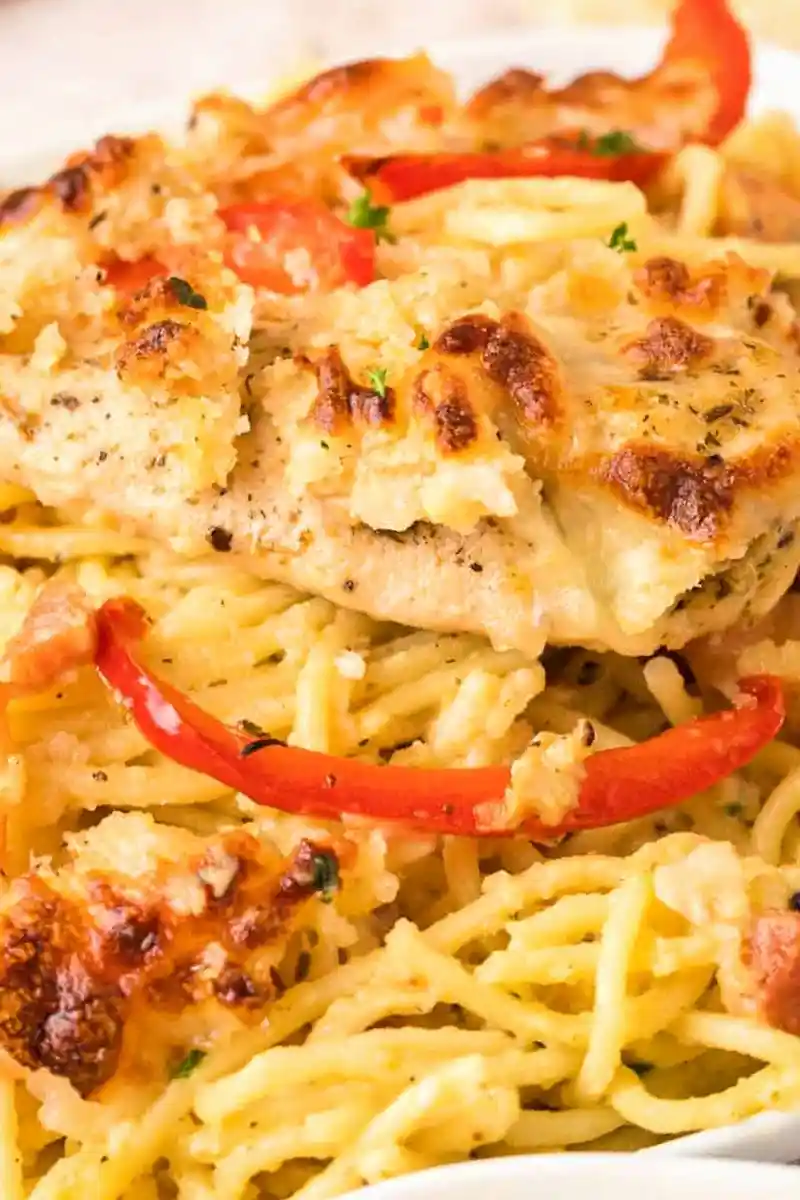
List of ingredients
- 1 pound chicken tenders – sliced into bite-sized strips.
- 1 pound medium-size shrimp – peeled and deveined.
- 1 cup extra virgin olive oil – used for the protein marinade.
- 1 tablespoon Italian seasoning – provides a classic herb blend.
- 5 cloves garlic, minced – for fresh, aromatic flavor.
- 1 teaspoon pepper – freshly ground for best taste.
- 1/2 teaspoon salt – to enhance all flavors.
- 16 ounces spaghetti – cooked until al dente.
- 1 red bell pepper – thinly sliced for color and sweetness.
- 4 ounces smoked turkey cubes, diced – a savory alternative to pancetta.
- 1/2 cup salted butter – used for the sauce base.
- 3 egg yolks – creates the signature carbonara richness.
- 2 tablespoons all-purpose flour – used as a thickening agent.
- 1 tablespoon crushed garlic – added to the creamy sauce.
- 1/2 cup parmesan cheese, grated – for a sharp, salty taste.
- 2 cups heavy cream – the base for the smooth sauce.
- 1/4 cup parmesan romano cheese, shredded – for the topping.
- 1 cup mozzarella cheese, shredded – for a gooey, melted finish.
- 1 cup Italian seasoned panko bread crumbs – for a crispy crust.
- 1/2 cup salted butter, melted – binds the topping ingredients.
- 1 tablespoon garlic powder – adds depth to the breadcrumb crust.
- Fresh parsley, finely chopped – used for the final garnish.
step-by-step instructions
- Prepare the Marinade: In a medium mixing bowl, whisk together the olive oil, Italian seasoning, minced garlic, pepper, and salt. Place the chicken tenders and shrimp into a gallon-size food storage bag, pour the marinade over them, seal tightly, and refrigerate for at least 4 hours.
- Cook the Pasta: Bring a large pot of salted water to a boil and cook the spaghetti according to package directions until al dente. Drain the noodles thoroughly and set them aside for later use.
- Sear the Proteins: Pour the marinated chicken, shrimp, and the remaining marinade into a large skillet over medium-high heat. Cook for 7 minutes, then remove the shrimp from the pan to prevent overcooking. Add the sliced red bell peppers to the skillet with the chicken and cook for an additional 5 minutes.
- Build the Sauce Base: Heat 1 tablespoon of olive oil in a large pot over medium-high heat. Add the diced smoked turkey and cook for 5 minutes until crispy, stirring frequently. Add the butter and let it melt completely, then lower the heat to medium-low and whisk in the flour.
- Create the Creamy Carbonara: Stir in the crushed garlic, grated parmesan cheese, heavy cream, and egg yolks. Whisk the mixture constantly for 5 minutes to ensure the sauce is smooth and the eggs do not scramble.
- Combine Pasta and Sauce: Add the cooked spaghetti to the pot and toss until the noodles are evenly coated in the creamy sauce.
- Assemble the Casserole: Transfer the coated pasta into a 9×13 inch oven-safe baking dish, spreading it into an even layer. Arrange the cooked chicken, shrimp, and bell peppers on top of the pasta.
- Prepare and Add Topping: In a small bowl, stir together the parmesan romano, mozzarella, seasoned panko, melted butter, and garlic powder. Spread this mixture evenly over the top of the casserole.
- Bake and Finish: Set your oven broiler to low. Place the dish under the broiler for 5-7 minutes until the topping is golden brown and crispy. Garnish with fresh parsley before serving.
Cooking Tips for the Perfect Carbonara
Maintain Constant Whisking for the Sauce
When adding the egg yolks and heavy cream to the pan, you must whisk continuously. This prevents the eggs from curdling or scrambling due to the direct heat. A steady motion ensures a perfectly emulsified and silky texture.
Avoid Overcooking the Spaghetti
Cook the pasta strictly until it is al dente, meaning it still has a slight firmness. Because the pasta continues to cook while under the broiler, overboiling it initially will result in a mushy consistency. Draining it well also prevents the sauce from becoming watery.
Control the Broiler Temperature
Using the low setting on your broiler allows for better control over the browning process. High heat can burn the panko crumbs and cheese before the interior of the casserole is heated through. Keep a close eye on the dish during the final minutes.
Prevent Rubberized Shrimp
Shrimp cook very quickly and can become tough if left in the pan too long. Removing them after the initial 7 minutes of searing ensures they remain tender. They will be reheated during the broiling process, so this step is crucial.
Use a Large Skillet for Searing
Crowding the pan can cause the chicken and shrimp to steam rather than sear. Use a wide skillet to allow the protein to make direct contact with the heat. This develops a golden-brown crust and deeper flavor.
Ingredient Substitutions and Modifications
Alternative Protein Choices
If you prefer not to use shrimp, you can substitute them with scallops or additional chicken. For a different flavor profile, chunks of firm salmon work well. Ensure all proteins are cut into uniform, bite-sized pieces for even cooking.
Switching the Pasta Shape
While spaghetti is traditional, fettuccine or linguine are excellent alternatives. These wider noodles hold onto the heavy carbonara sauce more effectively. Avoid using very small pasta shapes, as they may get lost in the creamy sauce.
Dairy-Free Adjustments
For those avoiding heavy cream, a mixture of cashew cream and a touch of lemon juice can mimic the richness. Replace the butter with a high-quality plant-based butter alternative. Use a nutritional yeast blend or vegan parmesan for the cheesy elements.
Adding More Vegetables
Beyond red bell peppers, you can add sautéed spinach or frozen peas to the mix. These vegetables add color and nutrition without overpowering the sauce. Stir them in during the final stage of sauce preparation.
Gluten-Free Flour Options
To make the sauce gluten-free, replace the all-purpose flour with a 1:1 gluten-free flour blend or cornstarch. Use a gluten-free pasta like brown rice or chickpea spaghetti. Ensure the panko breadcrumbs are also replaced with a gluten-free breadcrumb alternative.
Serving Suggestions and Pairings
Fresh Garden Side Salads
Since this dish is very rich, a bright, acidic salad balances the meal. A simple mix of arugula, cherry tomatoes, and a lemon vinaigrette works best. The acidity cuts through the heaviness of the cream and cheese.
Garlic Bread Accompaniments
Warm garlic bread or toasted ciabatta is a classic pairing for carbonara. Use the bread to scoop up any remaining sauce from the plate. Topping the bread with a sprinkle of parsley and sea salt adds a professional touch.
Non-Alcoholic Beverage Pairings
A sparkling water with a slice of lemon or lime refreshes the palate between bites. Unsweetened iced tea with a hint of mint also complements the savory herbs in the chicken marinade. These options keep the meal light and balanced.
Plating for Presentation
Serve the casserole directly from the baking dish to maintain the melted cheese texture. Use a wide spatula to lift generous portions, ensuring every serving gets a mix of chicken and shrimp. Garnish with an extra sprinkle of fresh parsley for a pop of color.
Storage and Reheating Guidelines
Refrigeration Methods
Store any leftover carbonara in an airtight container in the refrigerator. It will stay fresh and safe to eat for 3 to 4 days. Ensure the container is sealed tightly to prevent the pasta from drying out.
Optimal Oven Reheating
For the best results, reheat portions in the oven at 350 degrees F. Cover the dish with foil to trap moisture and heat for 10-15 minutes. This method preserves the texture of the topping better than other methods.
Microwave Reheating Tips
If you are short on time, the microwave is a convenient option. Cover the plate with a damp paper towel to keep the sauce from separating. Heat in 1-minute intervals, stirring gently in between to distribute the heat evenly.
Freezing Feasibility
This dish is not recommended for freezing because the cream and egg-based sauce may separate upon thawing. The pasta also tends to become mushy after being frozen and reheated. It is best enjoyed fresh or refrigerated.
Troubleshooting Common Issues
Fixing a Separated Sauce
If the sauce looks oily or separated, it is likely due to excessive heat. Whisk in a tablespoon of warm water or milk over low heat to bring the emulsion back together. Be gentle to avoid overcooking the egg yolks.
Managing a Sauce That Is Too Thick
Heavy cream and flour can sometimes make the sauce too dense. Stir in a small amount of the reserved pasta water or additional heavy cream. This will loosen the consistency while maintaining the creamy flavor.
Handling Burnt Toppings
If the panko topping browns too quickly, cover the dish loosely with aluminum foil. This protects the surface while allowing the center to heat through. Always use a low broiler setting to prevent this issue.
Reducing Excess Oil
If the protein marinade releases too much oil in the skillet, carefully spoon it out before adding the pasta. Too much oil can make the final casserole feel greasy. Keeping only a small amount of the marinade helps build flavor without the grease.
Frequently Asked Questions
Can I marinate the protein overnight?
Yes, marinating the chicken and shrimp overnight can deepen the flavor. However, be cautious with the shrimp, as prolonged exposure to salt and acid can change their texture. Four to eight hours is generally the sweet spot.
Do I have to use egg yolks?
Egg yolks are essential for the authentic, rich texture of carbonara. If you omit them, the sauce will be more like a standard Alfredo. For a similar richness without yolks, you can increase the amount of parmesan cheese.
Which parmesan is best for this recipe?
Using a high-quality Parmigiano-Reggiano provides the best salty and nutty flavor. For the topping, a blend of shredded parmesan and romano adds a more complex, sharp taste. Avoid using the canned powdered variety for best results.
Can I use frozen shrimp?
Frozen shrimp work perfectly as long as they are fully thawed and patted dry. Excess water on the shrimp will prevent them from searing and may dilute the marinade. Thaw them in the refrigerator overnight for the best quality.
How do I prevent the cheese from burning?
Ensure the broiler is set to low and stay by the oven. The panko and cheese can go from golden to burnt in a matter of seconds. Remove the dish immediately once the topping reaches a light golden brown color.
Print
Creamy Chicken and Shrimp Carbonara Casserole
- Total Time: 4 hours 55 minutes
- Yield: 6 servings 1x
- Diet: General
Description
You’ll be glad you stayed home with this Copycat Olive Garden Chicken and Shrimp Carbonara which is definitely better than the real deal!
Ingredients
- 1 pound chicken tenders
- 1 pound medium-size shrimp (peeled and deveined)
- 1 cup extra virgin olive oil
- 1 tablespoon Italian seasoning
- 5 cloves garlic (minced)
- 1 teaspoon pepper (freshly ground preferred)
- 1/2 teaspoon salt
- 16 ounces spaghetti
- 1 red bell pepper (thinly sliced)
- 4 ounces smoked turkey pancetta (diced)
- 1/2 cup salted butter
- 3 egg yolks
- 2 tablespoons all-purpose flour
- 1 tablespoon crushed garlic
- 1/2 cup parmesan cheese (grated)
- 2 cups heavy cream
- 1/4 cup parmesan romano cheese (shredded)
- 1 cup mozzarella cheese (shredded)
- 1 cup Italian seasoned panko bread crumbs
- 1/2 cup salted butter (melted)
- 1 tablespoon garlic powder
- Fresh parsley (finely chopped, for garnish)
Instructions
- Marinade: Add the chicken tenders and shrimp to a gallon-sized food storage bag. In a small mixing bowl, whisk together the olive oil, Italian seasoning, minced garlic, pepper, and salt. Pour the marinade over the chicken and shrimp. Seal the bag and marinate in the fridge for at least 4 hours.
- Pasta and Protein: Bring a large pot of salted water to a boil and cook the spaghetti according to the package directions until al dente. Drain the noodles and set them aside. Pour the chicken, shrimp, and marinade into a large skillet. Cook over medium-high heat for 7 minutes. Add the bell peppers to the skillet, and cook for another 5 minutes. Remove from the heat and set aside.
- Sauce Base: Add 1 tablespoon of olive oil to a large pot over medium-high heat. Add the smoked turkey pancetta and cook for 5 minutes until crispy, stirring often. Add the butter to the pot and lower the heat to medium-low. Once the butter is melted, whisk in the flour.
- Creamy Sauce: Add the crushed garlic, parmesan cheese, heavy cream, and egg yolks. Whisk constantly for 5 minutes to prevent the eggs from scrambling. Add the cooked spaghetti and stir to coat in the sauce.
- Assembly: Transfer the pasta to a 9-inch x 13-inch baking sheet and spread it into an even layer. Top the pasta with the cooked chicken tenders, shrimp, and bell peppers. Preheat your oven’s broiler to low.
- Topping and Broiling: In a small mixing bowl, stir together the parmesan romano cheese, mozzarella, seasoned bread crumbs, melted butter, and garlic powder until well combined. Sprinkle the topping evenly over the casserole. Broil for 5-7 minutes, until the top is golden brown and slightly crispy. Garnish with chopped parsley and serve.
Notes
When adding the heavy cream and eggs to the sauce, whisk constantly to avoid scrambled eggs. Be careful not to overcook the spaghetti or the noodles may become mushy in the casserole dish.
- Prep Time: 20 minutes
- Cook Time: 35 minutes
- Category: Main Dish
- Method: Baking
- Cuisine: Italian
Nutrition
- Serving Size: 1 serving
- Calories: 1317 kcal
- Sugar: 6 g
- Sodium: 1597 mg
- Fat: 90 g
- Saturated Fat: 48 g
- Unsaturated Fat: 41 g
- Trans Fat: 1 g
- Carbohydrates: 74 g
- Fiber: 4 g
- Protein: 53 g
- Cholesterol: 449 mg