This nutrient-dense chicken and kale soup is a practical one-pot meal designed for efficiency and flavor. It utilizes pre-cooked poultry and a dairy-free creamy base to create a satisfying dinner in under an hour.
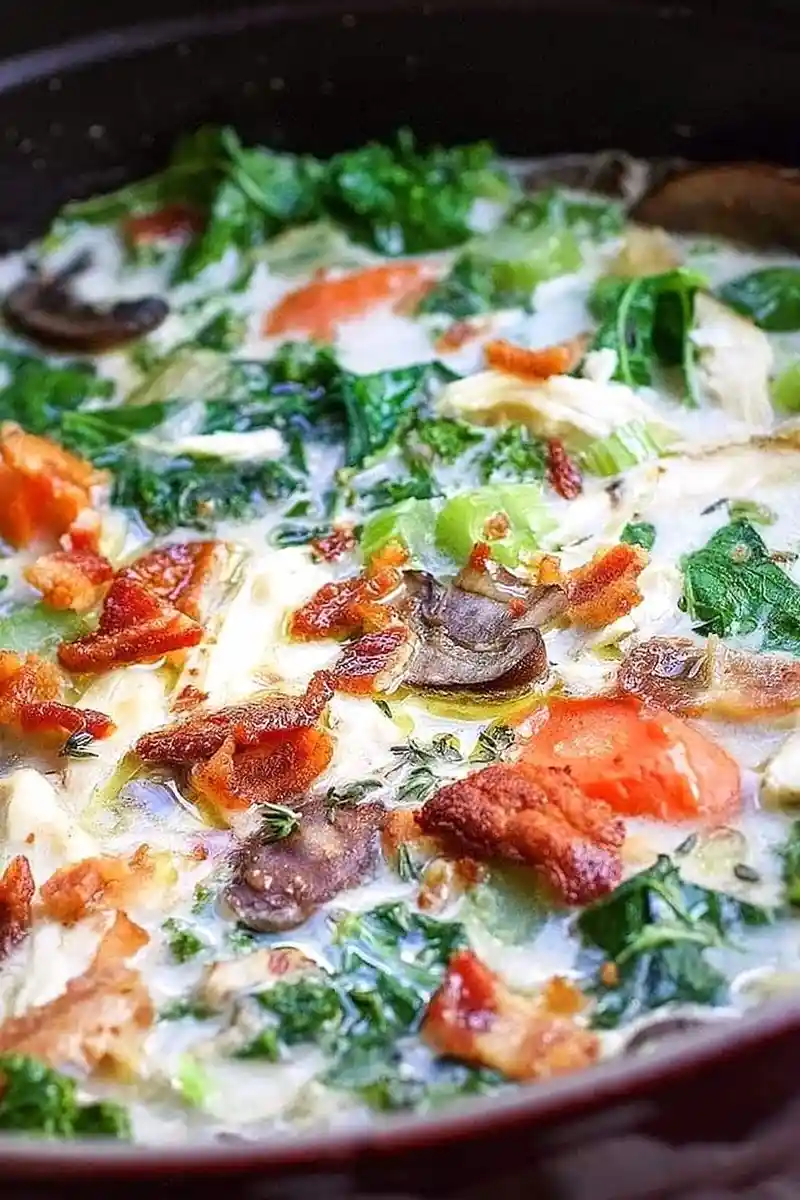
List of ingredients
- 2-3 cups shredded cooked chicken or turkey – use leftovers for maximum efficiency.
- 2 cups diced carrots (approximately 2 medium) – provide sweetness and color.
- 2 cups diced celery (1 small bundle) – adds a classic aromatic base.
- 1.25 cups diced yellow onion (half of one medium) – essential for savory depth.
- 6 medium garlic cloves, sliced – adds pungent flavor.
- 8 oz cremini or baby bella mushrooms, sliced – provides an earthy, umami quality.
- 5 slices turkey bacon, sliced – adds smoky fragrance without pork.
- 1 tbsp fresh thyme, finely chopped – brings a herbal aromatic note.
- A large handful curly kale, green chard, or lacinato kale – roughly chopped and rinsed.
- 1 tbsp olive oil – used for the initial sauté.
- 3 cups chicken stock (24 oz) – the primary liquid base.
- 1 tsp coarse salt – plus additional amounts to taste.
- Ground black pepper – a few rounds for spice.
- A small handful chopped parsley – used specifically for garnish.
- 3-4 tbsp gluten-free all-purpose or cassava flour – use 4 tbsp for a thicker consistency.
- 1.5 cups canned full-fat coconut milk – shaken well to combine the cream and liquid.
step-by-step instructions
- Prepare ingredients: Shred the pre-cooked chicken or turkey and set aside. Dice the carrots, celery, and onion into uniform pieces. Slice the garlic, mushrooms, and turkey bacon. Chop the fresh thyme and remove kale leaves from stems, chopping them roughly before rinsing and draining well.
- Brown the turkey bacon: Heat a 4-5 qt Dutch oven or heavy soup pot over medium-high heat. Add the olive oil and turkey bacon slices. Cook until the bacon is crispy, then remove the pieces from the pot, leaving the rendered fat behind for flavoring.
- Sauté the aromatics: Set the pot to medium heat. Add the sliced garlic and diced onion with a pinch of salt, sautéing until the onion begins to sweat. Stir in the carrots and celery with another pinch of salt and cook for 2 minutes. Finally, add the sliced mushrooms and chopped thyme, sautéing for about 1 minute until fragrant.
- Simmer the base: Pour in the chicken stock until the vegetables are just covered. Bring the mixture to a simmer, then cover the pot and reduce the heat to low. Cook for 8-10 minutes or until the carrots and celery are tender but still hold their shape.
- Create the thickening mixture: In a separate mixing bowl, whisk together the gluten-free or cassava flour and the full-fat coconut milk. Stir until the mixture is completely smooth and no flour clumps remain.
- Incorporate greens and cream: Stir the chopped kale into the pot. Increase the heat to medium and simmer for 2 minutes until the kale softens but remains bright green. Pour in the coconut milk mixture, stirring constantly for 1-2 minutes until the soup thickens.
- Final assembly: Stir in the shredded cooked chicken or turkey. Give the soup a final stir and turn off the heat. Season with salt and pepper to taste, then garnish with chopped parsley and the reserved crispy turkey bacon.
Optimizing Your Ingredients
Using Pre-Cooked Poultry for Efficiency
Utilizing pre-cooked chicken or turkey is an efficient way to prepare this meal. Whether you have leftovers from a roast or use a store-bought rotisserie chicken, the pre-cooked meat integrates quickly into the broth. Ensure the meat is shredded into bite-sized pieces to ensure every spoonful contains protein.
Selecting the Best Coconut Milk
For the best texture, use canned, full-fat, unsweetened coconut milk rather than the coconut milk beverage found in cartons. The higher fat content provides the necessary body and richness that mimics heavy cream. Always shake the can vigorously before opening to ensure the solid cream and liquid are fully emulsified.
Choosing the Right Flour Thickener
Cassava flour is an excellent choice for this recipe because it has a neutral flavor and provides a smooth consistency. Gluten-free all-purpose flour also works well, though the texture may vary slightly depending on the brand. Avoid using cornstarch or arrowroot, as these can create a translucent, gloopy texture rather than a creamy one.
Picking Fresh Kale Varieties
Curly kale is the traditional choice and holds its structure well during the simmering process. Lacinato kale, also known as dinosaur kale, offers a softer texture and a slightly sweeter taste. Green chard can be used as a substitute, though it may wilt faster than curly kale.
Enhancing the Broth Quality
The quality of your chicken stock directly impacts the final flavor of the soup. Using a homemade bone broth adds more collagen and depth, resulting in a more velvety mouthfeel. If using store-bought stock, select a low-sodium version so you can control the salt levels manually throughout the cooking process.
Professional Cooking Techniques
Mastering the Sauté Process
Sautéing the vegetables in stages ensures that each ingredient is cooked to its optimal texture. Begin with the onions and garlic to build the flavor foundation before adding the hard root vegetables like carrots and celery. This prevents the garlic from burning, which would otherwise introduce a bitter taste to the broth.
Maintaining Vibrant Kale Color
Adding the kale at the very end of the cooking process is critical for preserving its nutritional value and bright green color. Simmering for only 2-3 minutes ensures the leaves are tender but not overcooked. Overcooking kale can lead to a dull, olive-drab appearance and a slightly bitter flavor profile.
Creating a Lump-Free Creamy Base
Mixing the flour into the coconut milk before adding it to the pot creates a slurry that integrates seamlessly. Adding flour directly to the hot broth often results in clumps that are difficult to whisk out. Ensure the slurry is completely smooth before pouring it into the simmering soup.
Managing Temperature to Prevent Curdling
Keep the soup at a gentle simmer rather than a rolling boil once the coconut milk is added. High temperatures can cause the fats in the coconut milk or cream to separate, leading to a curdled appearance. Stirring constantly on medium-low heat ensures the emulsion remains stable.
Ingredient Substitutions and Variations
Dairy-Free Alternatives to Coconut Milk
If you prefer a different flavor profile than coconut, cashew cream is a neutral and rich alternative. Simply blend soaked raw cashews with water until smooth. For those who consume dairy, heavy cream or half-and-half can be used, though you may need to add an extra tablespoon of flour to achieve the same thickness.
Swapping Kale for Other Leafy Greens
Baby spinach is a convenient alternative that requires even less cooking time than kale. Stir in fresh spinach at the very last second, as the residual heat of the soup will wilt it instantly. Swiss chard or collard greens also work, though collards may require a longer simmering time to soften.
Replacing Mushrooms for Different Flavors
Cremini mushrooms provide a balanced earthiness, but shiitake mushrooms can be used for a more intense, savory flavor. If you prefer a meatier texture, sliced portobello mushrooms are an ideal choice. For those who do not enjoy mushrooms, they can be omitted entirely without affecting the soup’s structure.
Adapting the Recipe for Vegetarians
To make this a vegetarian dish, replace the chicken stock with a high-quality vegetable broth and omit the turkey bacon. For protein, add a combination of blended white beans and firm tofu cubes. The blended beans will add extra creaminess and body to the broth, replacing the richness of the meat.
Serving and Pairing Recommendations
Pairing with Hearty Breads
A slice of toasted sourdough or a crusty baguette is ideal for soaking up the creamy broth. For a gluten-free option, a toasted cassava bread or a seed-based cracker provides a satisfying crunch. Garlic bread is another excellent pairing that complements the garlic and thyme in the soup.
Complementary Side Salads
Because the soup is rich and creamy, it pairs well with a bright, acidic side salad. A simple arugula salad with a lemon-olive oil vinaigrette helps cut through the richness of the coconut milk. A chopped cucumber and tomato salad also provides a refreshing contrast in temperature and texture.
Roasted Root Vegetable Sides
Round out the meal with a side of roasted root vegetables, such as carrots, parsnips, or beets. Roasted cauliflower florets seasoned with paprika and salt add another layer of savory flavor. For a more filling meal, a side of miso-mashed sweet potatoes provides a complementary sweetness.
Storage and Preservation
Proper Refrigeration Methods
Store any remaining soup in an airtight glass container in the refrigerator for up to three days. Allow the soup to cool slightly before sealing the lid to prevent excess condensation from forming. Because of the coconut milk content, the soup is best enjoyed within this timeframe for optimal flavor.
Freezing Guidelines for Creamy Soups
This soup can be frozen for up to one month, though the texture of the coconut milk may change slightly. For the best results, freeze the soup base and chicken, but omit the kale and parsley. Add fresh greens when reheating the soup to maintain their color and texture.
Reheating Without Curdling
Reheat the soup slowly on the stovetop over low to medium heat. Stir frequently to ensure the heat is distributed evenly and the coconut milk reintegrates with the broth. Avoid using the high heat setting or boiling the soup, as this can cause the creamy base to separate.
Adjusting Consistency After Chilling
It is common for creamy soups to thicken significantly while sitting in the refrigerator. To bring back the original consistency, stir in a tablespoon of water or chicken stock during the reheating process. Add the liquid gradually until the soup reaches your desired thickness.
Troubleshooting Common Issues
Fixing a Thin Broth
If the soup feels too thin, you can simmer it uncovered for an additional 5-10 minutes to reduce the liquid. Alternatively, mix a small amount of cassava flour with water to create a concentrated slurry and stir it into the boiling soup. Continue stirring until the broth reaches the preferred thickness.
Correcting Bland Flavors
If the soup tastes flat, it usually lacks either salt or acidity. Begin by adding a pinch more coarse salt and tasting again. If it still lacks depth, stir in a teaspoon of lemon juice or apple cider vinegar to brighten the flavors and balance the richness of the coconut milk.
Preventing Coconut Milk Separation
Separation occurs when the soup is overheated or not stirred sufficiently. If you notice small oil droplets on the surface, whisk the soup vigorously over low heat to re-emulsify the fats. Ensuring the flour slurry is smooth before adding it also helps prevent separation.
Frequently Asked Questions
Can I use frozen kale instead of fresh?
Yes, frozen kale can be used. Thaw the kale completely and squeeze out any excess moisture before adding it to the soup to avoid diluting the broth. Add it during the same step as the fresh kale, but simmer it for a slightly shorter time as it is already partially broken down.
Is this soup suitable for meal prep?
This soup is excellent for meal prep as it maintains its flavor well over several days. Portions can be stored individually in containers and reheated in the microwave or on a stove. It is a nutrient-dense option for healthy weekday lunches.
How do I make this recipe lower in carbohydrates?
To reduce the carb count, omit the flour thickener entirely. The soup will be more of a broth-based consistency but will still be flavorful. You can also reduce the amount of coconut milk or replace it with a small amount of heavy cream.
Can I add noodles to this chicken kale soup?
Yes, you can add noodles for extra heartiness. For a low-carb option, stir in cooked shirataki or kelp noodles just before serving. For a traditional version, use cooked rice noodles or gluten-free pasta, adding them at the end so they do not absorb too much of the broth.
Print
Creamy Chicken and Kale Soup Recipe
- Total Time: 35 minutes
- Yield: 8 servings 1x
- Diet: Paleo
Description
This Chicken Kale Soup uses cooked and shredded chicken or turkey, turkey bacon crumbles, and fresh kale greens. It’s a healthy and delicious soup, plus easy to make!
Ingredients
- 2–3 cups shredded cooked chicken (or turkey)
- 2 cup diced carrots
- 2 cup diced celery
- 1.25 cups diced yellow onion
- 6 medium garlic cloves, sliced
- 8 oz. cremini mushrooms, sliced
- 5 slices turkey bacon, sliced
- 1 tbsp fresh thyme, finely chopped
- A large handful curly kale
- 1 tbsp olive oil
- 3 cups chicken stock
- 1 tsp coarse salt
- Ground black pepper
- A small handful chopped parsley
- 3–4 tbsp gluten-free all-purpose flour
- 1½ cups canned full-fat coconut milk
Instructions
- Prep: Shred the cooked chicken or turkey and set aside. Dice carrots, celery, and onion. Slice garlic, mushrooms, and bacon. Chop thyme. Remove kale leaves from stems and roughly chop. Rinse and drain well.
- Cook bacon: Heat a 4–5 qt. Dutch oven or heavy soup pot over medium-high heat. When hot, add oil and bacon. Cook until crispy. Remove the bacon and leave the rendered fat in the pot.
- Sauté aromatics: Reheat the pot over medium heat. Add garlic and onion with a pinch of salt; sauté until the onion starts to sweat. Add carrots and celery plus another pinch of salt; cook for 2 minutes. Add mushrooms and thyme, and sauté until fragrant, about 1 minute.
- Simmer soup: Pour in chicken stock to just cover the vegetables (about 3 cups). Bring to a simmer, cover, and reduce to low. Cook until the carrots and celery are tender but not mushy, 8–10 minutes.
- Prepare milk mixture: In a bowl, whisk together the gluten-free or cassava flour and coconut milk until smooth.
- Finish: Add the kale. Raise heat to medium and stir to combine. Simmer for a few minutes until kale softens but remains bright, 2 minutes. Stir in the coconut milk mixture and keep stirring until the soup thickens, 1–2 minutes.
- Serve: Finally, stir-in the cooked chicken or turkey. Give everything a stir then turn off the heat. Season with salt and pepper to taste. Garnish with chopped parsley and crispy bacon.
Notes
Add kale near the end so it stays vibrant and slightly crisp. Once adding the coconut milk, do not over boil the broth or the milk will curdle. Store refrigerated for 3 days or freeze for up to 1 month.
- Prep Time: 15 minutes
- Cook Time: 20 minutes
- Category: Soup
- Method: Stovetop
- Cuisine: American
Nutrition
- Serving Size: 1 serving
- Calories: 280 kcal
- Sugar: 6 g
- Sodium: 698 mg
- Fat: 19 g
- Saturated Fat: 11 g
- Unsaturated Fat: 8 g
- Trans Fat: 0 g
- Carbohydrates: 14 g
- Fiber: 3 g
- Protein: 16 g
- Cholesterol: 38 mg