This creamy salmon macaroni salad is a fast way to turn common pantry items into a filling meal. It requires minimal preparation and is ideal for quick lunches or outdoor gatherings.
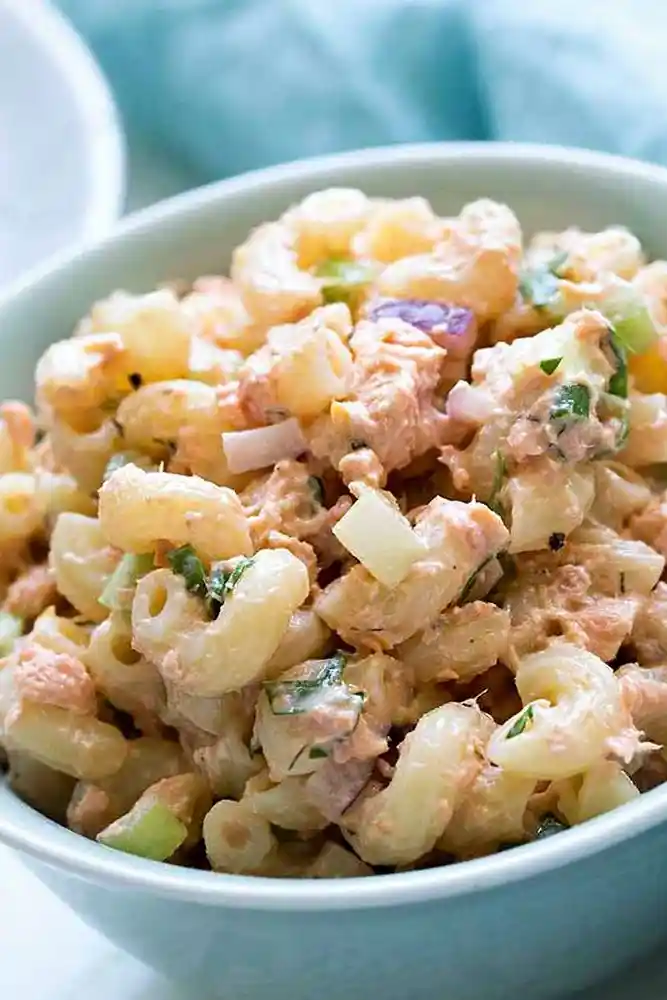
List of ingredients
- Salt – used for seasoning the pasta water.
- 1/2 pound (about 2 cups) dry macaroni pasta – provides the base structure.
- 2 (7-ounce) cans salmon – the primary protein source.
- 1/2 cup mayonnaise (plus more to taste or for added smoothness) – creates the creamy dressing.
- 1 teaspoon mustard – adds a tangy depth of flavor.
- 1 teaspoon lemon zest – provides bright, citrusy notes.
- 1 Tbsp lemon juice – cuts through the richness of the mayonnaise.
- 1/3 cup chopped shallots, red onions, or green onions (with onion greens) – adds a sharp, aromatic contrast.
- 2 Tbsp chopped fresh parsley – adds a fresh, herbal finish.
- 1 Tbsp chopped fresh dill (or 1/2 teaspoon dried dill) – complements the flavor of the salmon.
- 2 stalks celery, chopped – introduces a necessary crunch to the texture.
- Tabasco to taste (about 10 drops) – adds a subtle heat.
- Freshly ground black pepper – used for basic seasoning.
step-by-step instructions
- Boil the macaroni: Bring a pot of 2 quarts of water to a boil and stir in 1 tablespoon of salt. Add the dry macaroni pasta and cook uncovered in a rolling boil for approximately 10 minutes or until the pasta is al dente. Remove from heat, drain, rinse briefly in cold water while the macaroni is still warm, and drain again.
- Prepare the dressing: In a large mixing bowl, combine the canned salmon, mayonnaise, mustard, lemon zest, and lemon juice. Stir in the chopped shallots, parsley, dill, and celery until well blended.
- Combine and finish: Fold the cooked macaroni into the salmon mixture while the pasta is still warm to ensure better flavor absorption. Add Tabasco and freshly ground black pepper to taste. If the salad seems too dry as the pasta absorbs the dressing, stir in small amounts of water to maintain smoothness. Adjust seasonings as needed and chill in the refrigerator before serving.
Pasta Preparation Techniques
Achieving the Al Dente Texture
Cooking pasta to an al dente state ensures that the macaroni maintains its shape and does not become mushy when mixed with the heavy dressing. Set a timer for the recommended 10 minutes and test a piece of pasta to ensure it has a slight firm bite in the center. Overcooking the pasta at this stage will lead to a grainy texture in the final salad.
Using Salt in the Boiling Water
Adding a full tablespoon of salt to the boiling water is essential for seasoning the pasta from the inside out. Since macaroni is bland on its own, this step ensures the base of the salad is flavorful. The salt also slightly raises the boiling point of the water, which can contribute to a more consistent cook.
The Purpose of the Warm Rinse
Rinsing the pasta briefly in cold water removes excess surface starch, which prevents the macaroni from sticking together in clumps. It is important to keep the pasta warm during this process so that the pores remain open. Warm pasta absorbs the mayonnaise and lemon juice more effectively than completely chilled pasta.
Salmon Selection and Preparation
Choosing the Right Canned Salmon
Opt for high-quality canned salmon packed in water or its own juices to maintain a clean flavor profile. Check the label for pink salmon or sockeye for different intensity levels of flavor. Ensure the cans are not dented or swollen to guarantee the safety and quality of the fish.
Handling Bones and Skin
Most canned salmon contains soft, edible bones and skin that are rich in calcium and omega-3 fatty acids. If you prefer a smoother texture, use a fork to remove the larger bones and skin before adding the fish to the bowl. Otherwise, you can flake them into smaller pieces to blend in with the macaroni.
Draining the Salmon Properly
Drain the liquid from the cans thoroughly using a colander or the lid to avoid making the salad watery. Excess liquid can dilute the mayonnaise dressing and cause the flavors to taste muted. Gently press the salmon with a spoon to remove remaining moisture before flaking it into the mixing bowl.
Dressing and Flavor Enhancements
The Role of Lemon Zest and Juice
Combining both the zest and the juice of a lemon provides two different types of acidity. The zest contains essential oils that offer a fragrant aroma, while the juice provides the sharp acid needed to balance the fat in the mayonnaise. This combination prevents the salad from tasting too heavy.
Selecting the Best Onion Variety
Shallots offer a sophisticated, mild sweetness that is less overpowering than standard onions. Red onions provide a pungent bite and a bright color that makes the salad visually appealing. Green onions are the best choice for those who prefer a grassy, fresh flavor and a milder aromatic profile.
Balancing the Heat with Tabasco
Tabasco adds a vinegary heat that cuts through the richness of the salmon and mayonnaise. Start with 10 drops and taste frequently, as the heat can intensify as the salad chills. This small amount of spice enhances the other flavors without making the dish spicy.
Using Fresh Versus Dried Dill
Fresh dill provides a bright, lemony flavor that is highly characteristic of seafood salads. If using dried dill, reduce the quantity to 1/2 teaspoon because dried herbs are more concentrated than fresh ones. Fresh herbs should be chopped finely to ensure an even distribution of flavor throughout the salad.
Customization and Variations
Adding Extra Vegetable Crunch
For more texture, consider adding finely diced red bell peppers or grated carrots to the mixture. These additions provide a sweet contrast to the salty salmon and add nutritional value. Keep the dice small so the vegetables integrate well with the size of the macaroni.
Integrating Hard-Boiled Eggs
Chopped hard-boiled eggs can be stirred in to add more protein and a richer, creamier mouthfeel. Use only the whites for a leaner version or the whole egg for a more traditional deli-style salad. Ensure the eggs are completely cooled before adding them to the mixture.
Substituting Mayonnaise for Greek Yogurt
To reduce the calorie count or increase protein, you can replace half of the mayonnaise with plain Greek yogurt. This substitution adds a tangier flavor and a lighter consistency to the dressing. If the mixture becomes too thick, add a teaspoon of water or lemon juice to loosen it.
Storage and Food Safety
Selecting the Right Storage Container
Store the salad in an airtight glass or BPA-free plastic container to prevent it from absorbing odors from the refrigerator. Press a piece of plastic wrap directly onto the surface of the salad before closing the lid. This method minimizes air exposure and prevents the top layer of pasta from drying out.
Maximum Refrigeration Time
This salad is best consumed within three to four days of preparation. Over time, the pasta will continue to absorb moisture, and the vegetables may lose their crispness. Always keep the salad refrigerated at or below 40 degrees Fahrenheit to ensure food safety.
Refreshing the Salad Before Serving
Because macaroni is highly absorbent, the salad often looks dry after a night in the fridge. Stir in a tablespoon of mayonnaise or a splash of water just before serving to restore the creamy texture. This quick step revives the emulsion and improves the overall mouthfeel.
Serving Suggestions
Pairing with Fresh Greens
Serve a scoop of the salmon macaroni salad on a bed of crisp iceberg or romaine lettuce. The water content and crunch of the lettuce balance the density of the pasta. A wedge of tomato or a cucumber slice on the side adds additional freshness to the plate.
Using the Salad as a Sandwich Filler
This mixture works exceptionally well as a filling for toasted sourdough or whole-grain bread. Add a leaf of lettuce and a slice of tomato to create a hearty salmon sandwich. Toasting the bread provides a structural contrast to the soft texture of the salad.
Optimal Serving Temperature
While the salad is mixed while warm, it should be served chilled. Refrigerating the salad for at least two hours allows the flavors of the dill, lemon, and onions to meld together. Cold temperatures also enhance the refreshing quality of the mayonnaise-based dressing.
Troubleshooting Common Issues
Fixing a Grainy Texture
If the salad feels grainy, it is often due to the salmon not being flaked sufficiently or the mayonnaise breaking. Use a fork to mash any large chunks of fish into smaller pieces. Stirring in a small amount of extra mayonnaise can help smooth out the emulsion.
Reducing a Strong Fishy Taste
If the canned salmon flavor is too dominant, increase the amount of lemon juice or add a pinch more black pepper. The acidity of the lemon neutralizes the fishy odors and brightens the overall profile. Adding extra fresh parsley can also provide a clean, herbal mask.
Managing a Watery Consistency
Wateriness usually occurs if the salmon wasn’t drained well or if the vegetables released too much moisture. To thicken the salad, stir in an additional tablespoon of mayonnaise or a teaspoon of mustard. Avoid adding more salt, as salt can draw more water out of the celery and onions.
Frequently Asked Questions
Can I use a different pasta shape?
Yes, you can use shells, rotini, or ditalini instead of macaroni. These shapes are excellent for trapping the dressing and bits of salmon in their grooves. Ensure the pasta size is small enough to be eaten easily with a fork or spoon.
Is this salad suitable for freezing?
No, this salad should not be frozen because the mayonnaise will separate and the pasta will become mushy upon thawing. The fresh vegetables like celery and onions also lose their texture and release excess water. Store leftovers in the refrigerator instead.
Can I use wild-caught or farmed canned salmon?
Both options work well for this recipe. Wild-caught salmon typically has a more intense flavor and a darker color, while farmed salmon is often milder. Choose the one that fits your taste preference and budget.
How do I prevent the onions from being too strong?
If you find raw onions too pungent, soak the chopped shallots or red onions in cold water for ten minutes before adding them. Drain them thoroughly and pat them dry with a paper towel. This process removes the harsh sulfur compounds while keeping the crunch.
Print
Creamy Canned Salmon Macaroni Salad
- Total Time: 30 minutes
- Yield: 4 servings 1x
- Diet: General
Description
Made with canned salmon, this quick and easy lunch or dinner is ready in just about 30 minutes.
Ingredients
- 1 tablespoon salt
- 1/2 pound dry macaroni pasta
- 2 (7-ounce) cans salmon
- 1/2 cup mayonnaise
- 1 teaspoon mustard
- 1 teaspoon lemon zest
- 1 tablespoon lemon juice
- 1/3 cup chopped shallots, red onions, or green onions
- 2 tablespoons chopped fresh parsley
- 1 tablespoon chopped fresh dill (or 1/2 teaspoon dried dill)
- 2 stalks celery, chopped
- Tabasco to taste
- Freshly ground black pepper
Instructions
- Boil the macaroni: Bring a pot of water (2 quarts) to a boil. Add 1 tablespoon salt. Add the dry macaroni pasta and cook, uncovered, in a rolling boil for about 10 minutes, or until the macaroni is al dente (slightly firm). Remove from heat, drain, rinse briefly in cold water (macaroni should be still warm after rinsing) and drain again.
- Mix salmon and ingredients: In a large bowl, mix the salmon, mayonnaise, mustard, lemon zest, and lemon juice. Mix in the shallots, parsley, dill, and celery.
- Combine and chill: Mix in the cooked macaroni while it is still warm. Add Tabasco and freshly ground black pepper to taste. As the macaroni absorbs the mayonnaise, you may need to add some water to the salad to keep it from being dry. Adjust seasonings. Chill before serving.
Notes
Tip: add the macaroni to the salmon mayo mixture when it is still warm. That way it will absorb the flavors better.
- Prep Time: 10 minutes
- Cook Time: 20 minutes
- Category: Salad
- Method: Boiling and Mixing
- Cuisine: American
Nutrition
- Serving Size: 1 serving
- Calories: 552 kcal
- Sugar: 3 g
- Sodium: 744 mg
- Fat: 27 g
- Saturated Fat: 4 g
- Unsaturated Fat: 23 g
- Trans Fat: 0 g
- Carbohydrates: 47 g
- Fiber: 3 g
- Protein: 31 g
- Cholesterol: 94 mg