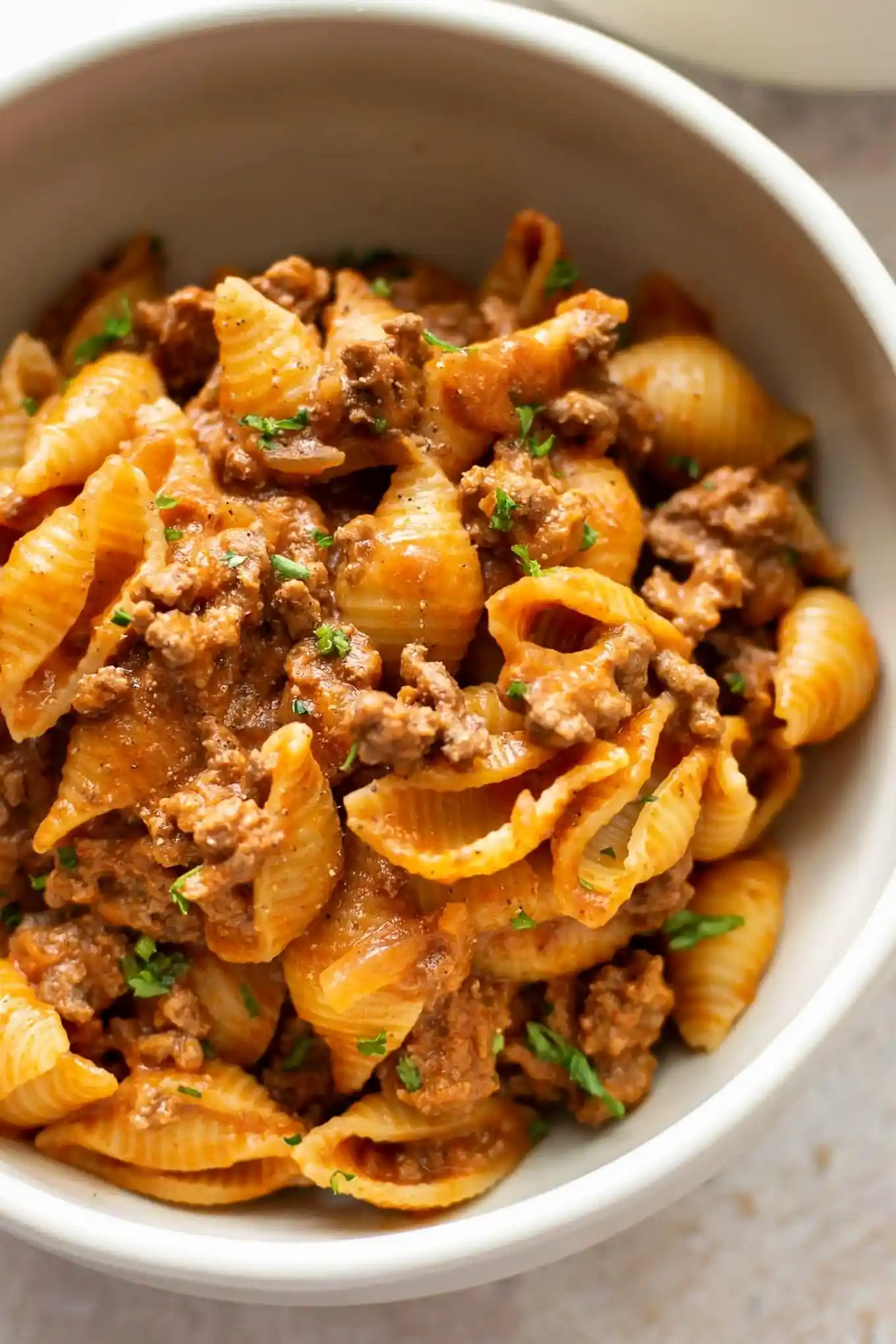
This creamy beef shell pasta is a quintessential comfort meal that combines tender ground beef with al dente pasta shells in a rich, savory tomato-based sauce. It is an ideal dinner for busy weeknights when you need something hearty, filling, and satisfying without spending hours in the kitchen. The dish relies on pantry staples, making it an accessible option for home cooks of all skill levels.
List of ingredients
- 1 lb ground beef
- 12 oz shell pasta
- 2 cups beef broth (alcohol-free)
- 1 cup heavy cream
- 1 cup shredded cheddar cheese
- 1 tablespoon olive oil
- 1 teaspoon onion powder
- 1 teaspoon garlic powder
- Salt and pepper to taste
step-by-step instructions
- Step: Bring a large pot of salted water to a boil and cook pasta shells according to package instructions until al dente; drain and set aside.
- Step: In a large skillet, heat olive oil over medium heat and brown the ground beef until fully cooked; drain excess fat.
- Step: Stir in onion powder, garlic powder, salt, and pepper.
- Step: Pour in the beef broth and bring to a simmer for 5 minutes.
- Step: Lower the heat and stir in the heavy cream and shredded cheddar cheese until the sauce is smooth and creamy.
- Step: Add the cooked pasta shells to the skillet and toss well to coat everything in the creamy sauce before serving.
Selecting the Ideal Beef Cut
Choosing the Right Fat Ratio
For this recipe, ground beef with a fat content of 15% to 20% is ideal. While very lean beef is healthier, it can sometimes become dry when simmered in a heavy sauce. Using a slightly higher fat content provides a richness that emulsifies with the cream, creating a deeper, more robust flavor profile that clings to the pasta shells better.
Importance of Proper Browning
When browning the beef, try not to overcrowd the skillet too quickly, as this can cause the meat to steam rather than brown. Aim for deep, dark golden-brown bits on the bottom of the pan, as these represent the Maillard reaction. These bits contain concentrated savory flavors that will be scraped up when you add the liquid ingredients, significantly boosting the intensity of the final dish.
Perfecting the Creamy Texture
Integrating Dairy Correctly
The heavy cream should be added only after the tomato-based sauce has been reduced and the heat has been turned down to low. If the sauce is boiling vigorously when you add the cream, there is a risk that the dairy might separate, leading to a grainy texture. Incorporating the cream gradually while stirring constantly ensures a smooth, silky emulsion that coats the shells perfectly.
Managing Cheese Meltdown
Avoid using pre-shredded cheese if possible, as it is often coated in cellulose to prevent clumping in the bag, which can prevent it from melting smoothly into the sauce. Freshly grating your own cheddar cheese ensures it melts evenly into the warm liquid without leaving a gritty or chalky mouthfeel. Add the cheese in handfuls, stirring constantly until each addition is fully integrated.
Substitution Strategies
Managing Dairy Sensitivities
If you prefer a dairy-free version, you can substitute the heavy cream with full-fat canned coconut milk or a high-quality cashew cream. While this will change the flavor profile slightly, it maintains the necessary fat content to keep the dish creamy. Similarly, use a dairy-free shredded cheddar substitute that is specifically designed to melt, ensuring it is stirred in slowly to avoid separation.
Adjusting Tomato Base Variations
For those who prefer a more acidic or bright flavor, replace half of the tomato sauce with crushed fire-roasted tomatoes. The fire-roasted variety adds a charred, smoky dimension that complements the smoked paprika already used in the recipe. If you need a thicker sauce, you can add one tablespoon of tomato paste during the garlic-sautéing phase to intensify the color and body.
Serving Ideas and Plating
Garnishing for Visual Appeal
To finish the dish, a light sprinkle of freshly chopped Italian parsley or chives adds a vibrant pop of color that contrasts beautifully with the creamy orange-tinted sauce. You can also offer a side of warm garlic bread or a crisp green salad tossed in a sharp vinaigrette. The acidity of a vinegar-based salad dressing is particularly helpful for cutting through the richness of the creamy beef shells.
Enhancing the Presentation
Serve the pasta in wide, shallow bowls to showcase the texture of the shells and the consistency of the sauce. Adding an extra dusting of aged Parmesan or a sprinkle of crushed red pepper flakes allows guests to adjust the seasoning and texture to their specific preference at the table. Ensuring the pasta is served immediately while still steaming hot guarantees the best mouthfeel.
Storing and Reheating Best Practices
Storing for Future Meals
If you have leftovers, place them in an airtight container once the dish has cooled to room temperature. This pasta can be stored in the refrigerator for up to three days. Note that the pasta will continue to absorb the sauce as it sits, so it may appear drier the next day; this is perfectly normal and simply requires a slight adjustment during the reheating phase.
Reheating Without Separation
To reheat, add a splash of beef broth or water to the container before heating it on the stovetop over low heat. Stirring frequently is the key to preventing the sauce from breaking or scorching on the bottom of the pan. Avoid using a high-power setting on the microwave, as this can cause the cheese and cream components to separate, leaving a greasy film on the surface of the sauce.
Frequently Asked Questions
Can I make this dish ahead of time?
You can prepare the meat and tomato sauce base up to 24 hours in advance and store it in the refrigerator. When ready to serve, bring the sauce to a gentle simmer, stir in the heavy cream and cheese, then fold in freshly boiled pasta. It is best to cook the pasta just before serving to ensure it retains an al dente texture rather than becoming mushy.
How do I fix a sauce that has become too thick?
If the sauce thickens too much while the pasta sits, stir in one or two tablespoons of warm beef broth at a time until you reach your desired consistency. Be sure to add the liquid slowly while the heat is on low, as you want to restore the creaminess without thinning out the flavor too much. Always taste and adjust seasoning if you have added extra broth.
Why does the sauce look grainy?
A grainy sauce is usually the result of adding cheese or cream to a sauce that is too hot or boiling, or using pre-shredded cheese with anti-caking agents. To prevent this, always lower the heat or remove the skillet from the burner completely before stirring in your dairy components. If the sauce is already grainy, whisking in a small amount of warm water or broth can sometimes help re-emulsify the sauce.
What if I do not have shell pasta?
Other medium-sized pasta shapes such as rigatoni, rotini, or penne are excellent alternatives. These shapes have ridges or hollow centers that excel at holding onto heavy, creamy sauces. Avoid thin, delicate pasta like angel hair, as it will likely get lost in the hearty beef sauce and break apart when stirred with the cheese and meat.
Print
Creamy Beef Shell Pasta
- Total Time: 60 minutes
- Yield: 4 servings 1x
- Diet: General
Description
This beef and shells recipe is incredibly simple to make. It’s a hearty and comforting family meal that you’ll enjoy again and again!
Ingredients
- 1 lb ground beef
- 12 oz shell pasta
- 2 cups beef broth (alcohol-free)
- 1 cup heavy cream
- 1 cup shredded cheddar cheese
- 1 tablespoon olive oil
- 1 teaspoon onion powder
- 1 teaspoon garlic powder
- Salt and pepper to taste
Instructions
- Step: Bring a large pot of salted water to a boil and cook pasta shells according to package instructions until al dente; drain and set aside.
- Step: In a large skillet, heat olive oil over medium heat and brown the ground beef until fully cooked; drain excess fat.
- Step: Stir in onion powder, garlic powder, salt, and pepper.
- Step: Pour in the beef broth and bring to a simmer for 5 minutes.
- Step: Lower the heat and stir in the heavy cream and shredded cheddar cheese until the sauce is smooth and creamy.
- Step: Add the cooked pasta shells to the skillet and toss well to coat everything in the creamy sauce before serving.
Notes
A simple and easy weeknight meal that’s perfect for a rainy night and curling up on the couch.
- Prep Time: 30 minutes
- Cook Time: 30 minutes
- Category: Main Course
- Method: Stovetop
- Cuisine: American
Nutrition
- Serving Size: 1 serving
- Calories: 520 kcal
- Sugar: 3 g
- Sodium: 650 mg
- Fat: 22 g
- Saturated Fat: 11 g
- Unsaturated Fat: 9 g
- Trans Fat: 0 g
- Carbohydrates: 48 g
- Fiber: 2 g
- Protein: 32 g
- Cholesterol: 95 mg