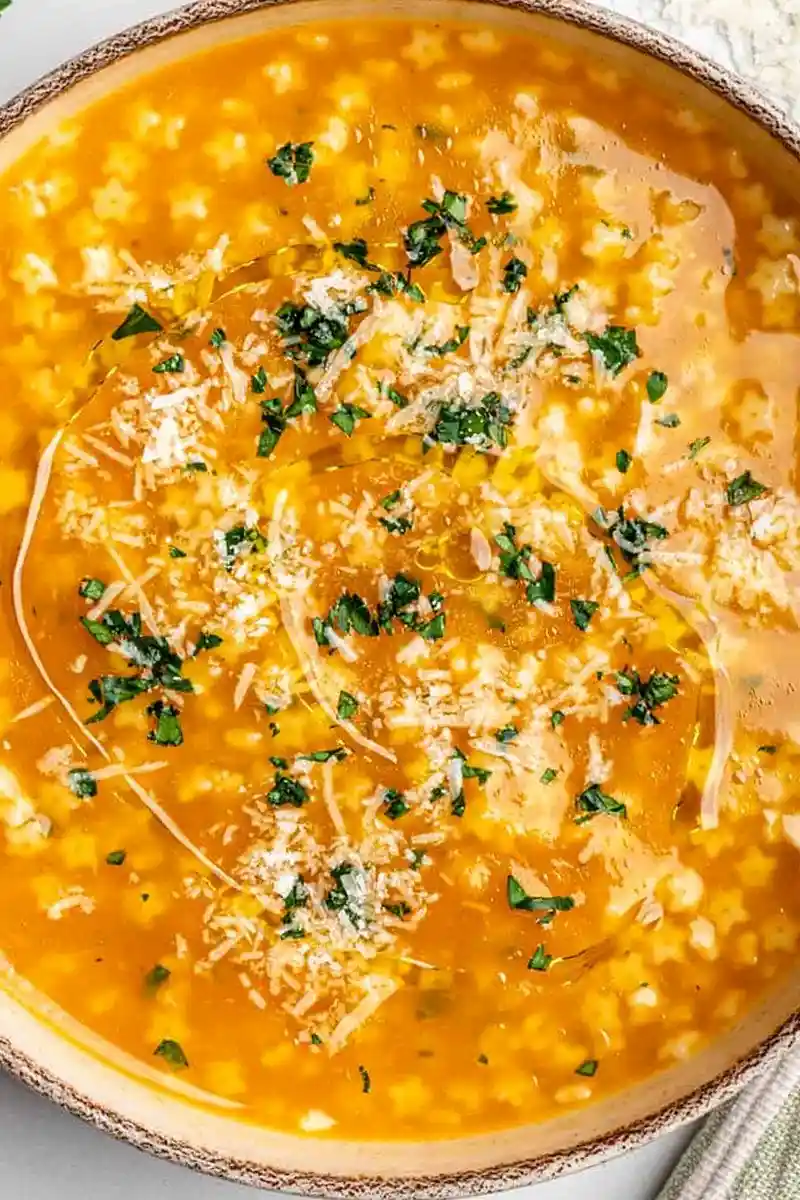
This quick Italian pastina soup is a nutrient-dense meal ready in under 30 minutes. It features a blended vegetable broth for a smooth texture and tiny pasta for maximum comfort.
List of ingredients
- 1 cup pastina pasta (stelline shape recommended) – tiny star-shaped pasta.
- 1 brown onion – provides a deep, savory base flavor.
- 2 carrots – adds natural sweetness and a golden color.
- 2 celery sticks – brings earthy freshness to the broth.
- 4 garlic cloves – adds aromatic depth and warmth.
- 6 cups low-sodium vegetable broth (or chicken broth) – the liquid base.
- Salt and black pepper – to taste for seasoning.
- 1 bay leaf (optional) – infuses the broth with a subtle herbal aroma.
- 1 parmesan rind (optional) – adds saltiness and rich umami flavor.
- Chopped parsley (optional garnish) – for a fresh finish.
- Grated parmesan cheese (optional garnish) – adds salty richness.
- Extra virgin olive oil (optional garnish) – for a silky mouthfeel.
step-by-step instructions
- Prepare vegetables: Roughly chop the onion, carrots, celery, and garlic cloves. Precise cuts are not required since these will be blended later.
- Simmer the base: Pour the vegetable broth into a large pot and add the chopped vegetables, bay leaf, and parmesan rind. Season with salt and black pepper, cover with a lid, and simmer over medium-high heat for approximately 20 minutes.
- Strain the solids: Use a fork to check that the vegetables are soft and tender. Remove the bay leaf and the parmesan rind, then strain the vegetables out of the broth using a slotted spoon or colander.
- Blend for smoothness: Transfer the cooked vegetables to a blender and add 1/2 cup of water. Blend the mixture until it is completely smooth.
- Recombine broth: Pour the blended vegetable puree back into the pot with the broth and stir well. Taste the soup and adjust the salt and pepper as needed.
- Cook the pasta: Bring the soup back to a boil, then add the pastina pasta. Stir the pasta every minute to ensure it does not stick to the bottom of the pot; cook for about 5-6 minutes.
- Finish and serve: Ladle the soup into bowls. Garnish with chopped parsley, grated parmesan cheese, and a drizzle of olive oil before serving.
Guide to Choosing the Right Pasta
Using Stelline Pasta
Stelline means ‘little stars’ in Italian. This shape is ideal for this soup because it is small enough to be eaten with a spoon and holds a small amount of broth in its center. It cooks quickly and provides a cute visual appeal.
Acini di Pepe Options
Acini di pepe are tiny round beads of pasta. They are often used in traditional Italian soups because they mimic the size of peppercorns. This shape provides a more uniform texture and is very easy for children to eat.
Substituting with Orzo or Risoni
Orzo is slightly larger and shaped like a grain of rice. While it works well, it may require an extra minute or two of cooking time compared to smaller pastina. It gives the soup a heartier, more substantial feel.
Alphabet Pasta for Kids
Alphabet pasta is a great way to make the meal more engaging for children. The cooking time is generally the same as stelline. It maintains its structure well during the short boiling process.
Gluten-Free Pasta Alternatives
If you need a gluten-free version, look for corn or rice-based pastina. Be aware that gluten-free pasta can release more starch, which may thicken the broth more than traditional wheat pasta. You may need a splash of extra broth to maintain the desired consistency.
Broth Enhancement Techniques
The Role of the Parmesan Rind
A parmesan rind is a powerhouse of flavor. As it simmers, it releases salty, nutty, and umami notes that deepen the vegetable broth. Always remove the rind before blending to avoid altering the color or texture of the puree.
Managing Sodium Levels
Using low-sodium broth allows you to control the salt content precisely. This is especially important since the parmesan rind and grated cheese garnish already add significant salt. Taste the soup only after the rind has simmered and before adding extra salt.
Creating a Homemade Vegetable Base
If you do not have store-bought broth, you can simmer the onions, carrots, and celery in water with a pinch of salt. While it lacks the intensity of concentrated stock, the blending process ensures the vegetable flavors are fully integrated.
Infusing with Fresh Herbs
While the bay leaf provides a base aroma, adding a sprig of fresh thyme or rosemary during the simmer can add complexity. Remove these woody herbs before blending to keep the broth smooth.
Blending and Texture Optimization
Achieving a Silky Puree
The addition of 1/2 cup of water in the blender is crucial for creating a vortex. This ensures that the carrots and celery are fully pulverized without leaving chunks. For an even smoother result, you can pass the puree through a fine-mesh sieve before returning it to the pot.
The Chunky Soup Variation
If you prefer a traditional vegetable soup texture, simply skip the blending step. Leave the vegetables diced small and simmer them until tender. This version is more rustic and provides more bite in every spoonful.
Adjusting Broth Viscosity
The blended vegetables act as a natural thickener. If the soup feels too thick after blending, stir in an additional cup of water or broth. This allows you to customize the soup from a light broth to a creamier consistency.
Using an Immersion Blender
For convenience, you can use an immersion blender directly in the pot. However, you must remove the bay leaf and parmesan rind first. This method saves the step of straining and transferring vegetables to a separate blender jar.
Ingredient Substitutions and Variations
Onion and Shallot Alternatives
Brown onions provide a classic depth, but shallots can be used for a milder, sweeter flavor. White onions are also a suitable substitute, though they provide a sharper taste. Always sauté them slightly if you want a caramelized flavor profile.
Adding Protein for a Heartier Meal
While this is a light soup, you can add shredded cooked chicken or chickpeas for more protein. Add these at the same time you add the pastina pasta so they heat through without overcooking.
Substituting Celery
If celery is unavailable, a small amount of bok choy stems or additional carrots can work. While the flavor profile will change slightly, the goal is to maintain a mix of aromatic vegetables for the broth base.
Vegan Garnish Options
To keep the soup completely plant-based, omit the parmesan rind and cheese. Use nutritional yeast for a similar cheesy flavor and a high-quality extra virgin olive oil for the richness.
Storage and Preservation Advice
Refrigerator Storage Guidelines
Store leftovers in an airtight container in the fridge for up to four days. Because the pasta continues to absorb liquid over time, the soup will likely become very thick or turn into a porridge-like consistency by the second day.
Freezing the Broth Base
The best way to freeze this soup is to freeze only the blended broth. Do not freeze the soup with the pasta already cooked in it, as the pasta will become mushy upon thawing. Freeze the broth in freezer-safe containers for up to three months.
Preventing Pasta Mushiness
If you are meal prepping for the week, cook the broth in a large batch and store it. Cook a small portion of pastina fresh each time you reheat the broth. This ensures the pasta maintains the perfect al dente texture.
Reheating Methods
Stovetop Reheating Process
Pour the stored soup into a saucepan over medium heat. Add a splash of water or vegetable broth to compensate for the liquid absorbed by the pasta. Stir gently until the soup reaches a simmer.
Microwave Instructions
Place the soup in a microwave-safe bowl and cover with a lid or paper towel. Heat in 1-minute intervals, stirring in between, to ensure the heat is distributed evenly and the pasta does not clump.
Restoring Consistency
If the soup has thickened too much in the fridge, do not be afraid to add more liquid. A tablespoon of water per bowl is usually enough to bring back the original soup-like consistency.
Troubleshooting Common Issues
Preventing Pasta from Sticking
Pastina is very small and high in starch, which makes it prone to sticking to the bottom of the pot. Constant stirring is the only way to prevent this. Use a whisk or a flat wooden spoon to keep the pasta moving.
Handling Overcooked Pasta
If the pasta becomes too soft, it is usually because it was simmered for too long or left in the hot broth. To prevent this, turn off the heat immediately once the pasta is tender. The residual heat will finish the cooking process.
Correcting Over-Salted Broth
If the broth tastes too salty after adding the parmesan rind, add a peeled, halved potato and simmer for 10 minutes. The potato absorbs excess salt. Remove the potato before adding the pasta.
Frequently Asked Questions
What is pastina pasta?
Pastina is a general term for very small pasta shapes used primarily in soups and broths. Common shapes include stars, grains of rice, and tiny letters, designed to be easy to eat and quick to cook.
Is this soup nutritious?
Yes, it is highly nutritious. It combines the vitamins from carrots, celery, and onion with the hydrating properties of broth, making it an excellent choice for recovery during illness or a light dinner.
Can I make this soup ahead of time?
You can prepare the blended vegetable broth in advance and store it in the refrigerator. However, it is highly recommended to add and cook the pastina only when you are ready to serve the dish.
Print
Comforting Italian Pastina Soup
- Total Time: 27 minutes
- Yield: 4 servings 1x
- Diet: Vegetarian
Description
This Italian Pastina Soup has the power to soothe your soul. Ready in 25 minutes, with a simple broth that feels like a warm hug in a bowl!
Ingredients
- 1 cup pastina pasta
- 1 brown onion
- 2 carrots
- 2 celery sticks
- 4 garlic cloves
- 6 cups vegetable broth
- Salt to taste
- Black pepper to taste
- 1 bay leaf (optional)
- 1 microbial-rennet parmesan rind (optional)
- Chopped parsley for garnish (optional)
- Grated microbial-rennet parmesan cheese for garnish (optional)
- Olive oil for garnish (optional)
Instructions
- Step 1: Roughly chop the onion, carrots, celery and garlic cloves.
- Step 2: Pour the vegetable broth in a large pot and add the chopped vegetables, bay leaf and parmesan rind. Season well with salt and black pepper, then place the lid on and simmer for approximately 20 minutes over medium-high heat.
- Step 3: Check that the vegetables are cooked. Remove the bay leaf and rind then strain out the vegetables through a slotted spoon or colander.
- Step 4: Add the cooked vegetables to a blender with ½ cup of water and blend until smooth.
- Step 5: Pour the blended vegetables back to the pot with the vegetable broth and stir through. Taste for seasoning.
- Step 6: Bring soup back to a boil, then add the pastina pasta. Stir the pastina every minute or so to ensure it doesn’t stick to the bottom (cook for 5-6 minutes).
- Step 7: Serve in bowls and garnish with chopped parsley, grated parmesan cheese and a drizzle of olive oil.
Notes
A low sodium vegetable broth has been used. For a fully vegan version, omit the parmesan rind and cheese garnish.
- Prep Time: 2 minutes
- Cook Time: 25 minutes
- Category: Mains
- Method: Simmering
- Cuisine: Italian
Nutrition
- Serving Size: 1 serving
- Calories: 201 kcal
- Sugar: 6 g
- Sodium: 34 mg
- Fat: 1 g
- Saturated Fat: 0.02 g
- Unsaturated Fat: 0.05 g
- Trans Fat: 0 g
- Carbohydrates: 43 g
- Fiber: 4 g
- Protein: 8 g
- Cholesterol: 0 mg