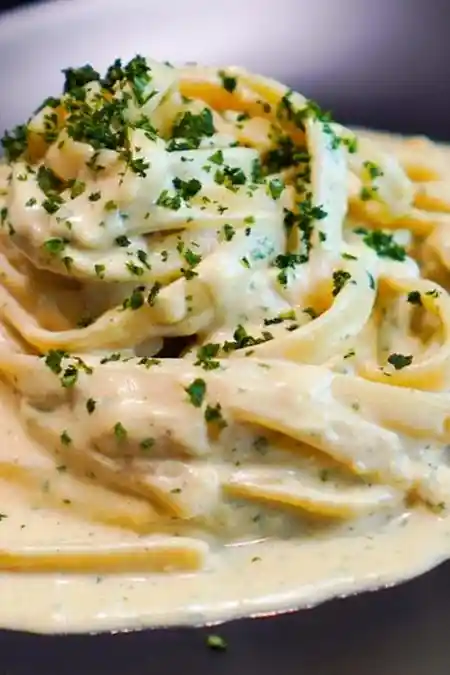
Experience the luxurious, velvet-smooth texture of restaurant-style pasta right in your own kitchen. This simple preparation relies on quality dairy and careful temperature control to create a coating that clings perfectly to every strand of fettuccine. It is the ideal solution for busy weeknights when you desire a sophisticated, comforting meal without the need for complex ingredients or lengthy cooking times.
List of ingredients
- 8 oz fettuccine
- ½ cup unsalted butter
- ½ cup heavy whipping cream
- ¾ cup Parmesan cheese, powdered or grated
- 1 tsp salt, divided
- ⅛ tsp freshly ground black pepper
- 1 tsp fresh parsley, chopped
- ⅛ cup vegetable stock
step-by-step instructions
- Step: Bring a large pot to a boil, add fettuccine pasta and cook by following package instructions. Add in 1/2 teaspoon of salt.
- Step: Drain using a strainer and set aside.
- Step: In a saucepan, melt butter and pour whipping cream. Mix well.
- Step: Add in Parmesan cheese, vegetable stock, pepper and the remaining salt. Mix together until cheese is melted.
- Step: Add the fettuccine pasta and mix until well coated.
- Step: Sprinkle chopped fresh parsley, stir to completely coat your pasta, and serve!
Mastering the Creamy Consistency
Managing Sauce Thickness With Starch
If you find that your sauce is slightly thicker than desired, simply add a small splash of the reserved pasta cooking water. The residual starch in this water acts as an emulsifier, which helps smooth out the sauce while maintaining its velvety mouthfeel without diluting the flavor. Always add this water one tablespoon at a time to keep full control over the final texture of your dish.
The Role of Freshly Grated Cheese
Pre-shredded cheese often contains anti-caking agents like cellulose that prevent it from melting properly into a smooth sauce. For the best results, purchase a block of high-quality Parmesan and grate it yourself using a fine microplane or box grater. This ensures the cheese integrates seamlessly into the cream, resulting in a sauce that is completely free of grainy or waxy textures.
Controlling Temperature During Reduction
The secret to a stable Alfredo sauce is maintaining a gentle heat throughout the cooking process. Using excessive heat can cause the heavy cream to break or the cheese to clump rather than melt. If the sauce begins to bubble too vigorously, lift the pan from the burner briefly to allow the temperature to stabilize before continuing your stir.
Refining Your Ingredient Selection
Selecting the Right Vegetable Stock
Since the sauce base is quite simple, the vegetable stock should be clear and high-quality to avoid darkening the final color of the cream. You may choose a light-colored stock or even a neutral mushroom-infused liquid to enhance the umami profile of the dish. Avoid overly salty bouillon cubes, as they can quickly overpower the delicate balance of the butter and cheese.
Choosing the Best Pasta Variety
While fettuccine is the traditional choice due to its wide, flat surface area, you can technically use other shapes that hold sauce well. Pasta varieties like tagliatelle or pappardelle are excellent alternatives that offer a similar experience. The most important factor is to ensure the pasta is cooked just to al dente, as it will continue to absorb some moisture once it hits the warm sauce.
Why Fresh Parsley Matters
Fresh parsley is not merely for decoration in this recipe; it provides a necessary herbal bite that cuts through the richness of the cream and butter. Flat-leaf Italian parsley is preferred over curly varieties for its superior flavor and easier preparation. Make sure to chop it finely so that small, pleasant bursts of brightness are distributed throughout each serving of pasta.
Serving Ideas and Pairings
Incorporating Roasted Seasonal Vegetables
To add texture and nutritional balance to your meal, consider folding in roasted vegetables such as broccoli florets or asparagus spears. Roasting these vegetables at high heat until tender-crisp allows them to hold their own against the heavy sauce. You can also mix in blanched spinach at the very end of the cooking process for a beautiful pop of color and earthy flavor contrast.
Serving With Crisp Accompaniments
A simple green salad tossed with a sharp vinaigrette serves as the perfect light companion to this indulgent pasta dish. The acidity of a lemon-based dressing acts as a palate cleanser against the richness of the Parmesan and heavy cream. Additionally, a crusty loaf of warm bread is ideal for soaking up any remaining sauce left on the plate.
Storage and Reheating Advice
Maintaining Texture During Storage
If you have leftovers, store them in an airtight container in the refrigerator for up to two days. Because dairy-based sauces can thicken significantly when cold, you may notice the pasta appears dry upon retrieval. This is normal and can be easily fixed during the warming phase, provided the pasta was not overcooked in the initial step.
Reheating Methods for Creamy Pasta
The safest way to reheat leftovers is on the stovetop over low heat, adding a tiny splash of milk or vegetable stock to re-emulsify the sauce. Avoid using the microwave if possible, as it tends to heat unevenly and can cause the butter in the sauce to separate. If you must use the microwave, heat in short 30-second bursts, stirring thoroughly between each interval to maintain consistency.
Planning Ahead for Efficient Cooking
While this dish is best served immediately, you can prepare components ahead of time to make dinner faster. Grate your Parmesan cheese and chop your parsley several hours before you begin cooking, storing them in separate containers in the fridge. Keeping your ingredients pre-measured allows you to focus entirely on the timing of the sauce reduction for a perfect finish.
Frequently Asked Questions
Can I use dried parsley instead of fresh?
Yes, you can substitute fresh parsley with dried, though you should use a smaller amount as dried herbs are more concentrated. Aim for approximately 1/4 teaspoon of dried parsley to avoid an overpowering flavor profile. Be sure to add it at the same time as the pepper to allow it to hydrate slightly in the sauce.
Is it possible to reduce the fat content?
While you can use half-and-half instead of heavy whipping cream, it will result in a noticeably thinner sauce that may not coat the pasta as effectively. To maintain the classic, luxurious mouthfeel of a traditional Alfredo, heavy cream is recommended. If you choose to modify the dairy, consider adding a pinch of cornstarch to the cold liquid before heating to help thicken the result.
Why did my sauce look grainy?
A grainy sauce is usually the result of using pre-grated cheese which contains starch additives that interfere with melting. It can also occur if the heat is too high when the cheese is added, causing the proteins to coagulate too quickly. Always keep the heat on the lower side and stir continuously with a whisk to achieve the smoothest possible finish.
Print
Classic Creamy Fettuccine Alfredo at Home
- Total Time: PT20M
- Yield: 4 1x
- Diet: Vegetarian
Description
A rich and creamy pasta that is so simple and easy to make. Make this classic staple pasta dish that is perfect for sharing at the comfort of your own home. It is even quicker than having take out!
Ingredients
- 8 oz fettuccine
- ½ cup unsalted butter
- ½ cup heavy whipping cream
- ¾ cup Parmesan cheese, powdered or grated
- 1 tsp salt, divided
- ⅛ tsp freshly ground black pepper
- 1 tsp fresh parsley, chopped
- ⅛ cup vegetable stock
Instructions
- Step: Bring a large pot to a boil, add fettuccine pasta and cook by following package instructions. Add in 1/2 teaspoon of salt.
- Step: Drain using a strainer and set aside.
- Step: In a saucepan, melt butter and pour whipping cream. Mix well.
- Step: Add in Parmesan cheese, vegetable stock, pepper and the remaining salt. Mix together until cheese is melted.
- Step: Add the fettuccine pasta and mix until well coated.
- Step: Sprinkle chopped fresh parsley, stir to completely coat your pasta, and serve!
Notes
Save a cup of pasta water when draining the noodles. If your sauce becomes too thick while tossing, add a tablespoon of the reserved pasta water at a time until you reach your desired consistency. For extra creaminess, feel free to add additional Parmesan cheese.
- Prep Time: PT0M
- Cook Time: PT20M
- Category: Pasta
- Method: Boil/Simmer
- Cuisine: European
Nutrition
- Serving Size: 1 serving
- Calories: 597 kcal
- Sugar: 1 g
- Sodium: 617 mg
- Fat: 41 g
- Saturated Fat: 25 g
- Unsaturated Fat: 14 g
- Trans Fat: 0 g
- Carbohydrates: 42 g
- Fiber: 2 g
- Protein: 16 g
- Cholesterol: 162 mg