This vibrant citrus and herb chicken breast dish offers a bright, aromatic profile perfect for a wholesome family dinner. By roasting the chicken atop a bed of sliced citrus and red onions, the meat remains tender while absorbing deep, savory-sweet flavors. It is an uncomplicated recipe that relies on fresh aromatics to create a restaurant-quality meal in under an hour.
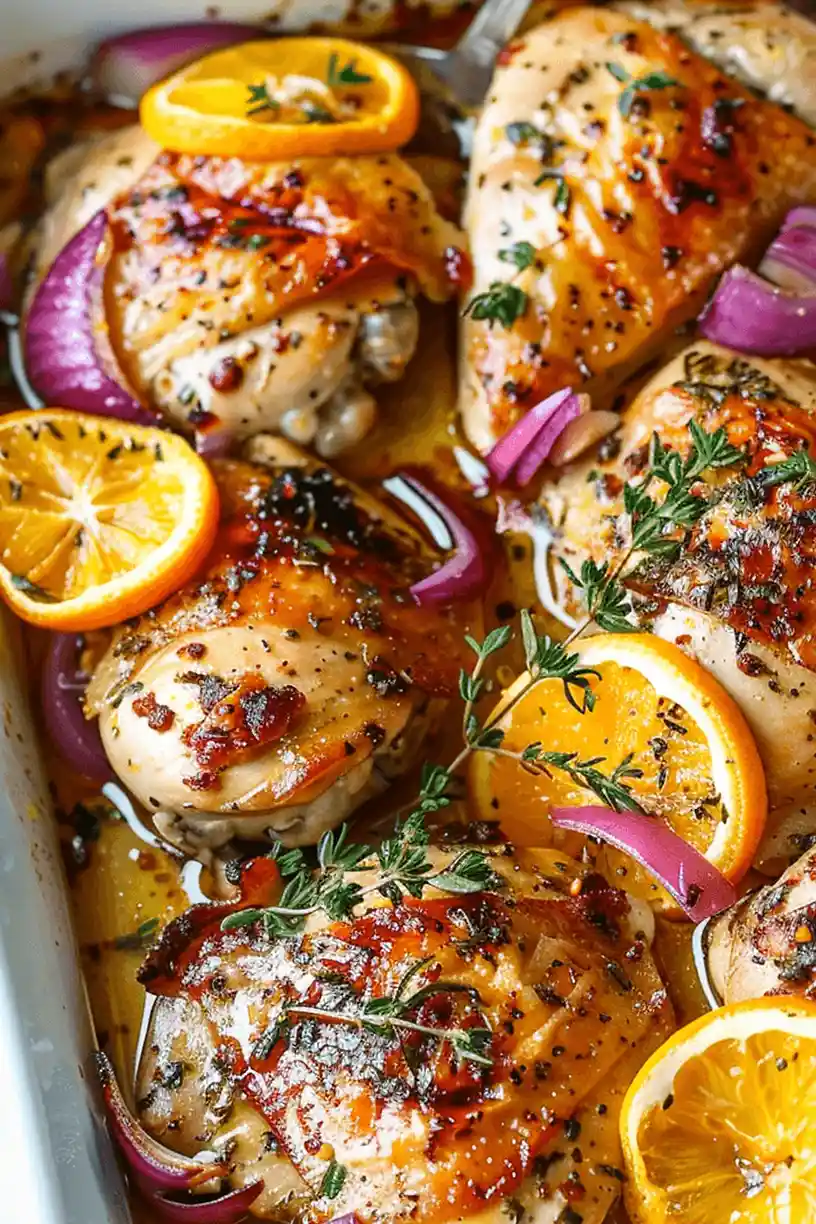
List of ingredients
- 4 chicken breasts
- 1/3 cup olive oil
- 2 tbsp orange juice
- 1 tbsp lemon juice
- 1 tsp local honey
- 1 shallot, finely diced
- 4 cloves minced garlic
- 1/2 tbsp dried oregano
- 1/2 tsp salt
- 1/2 tsp pepper
- 3/4 tsp paprika
- 2 oranges, thinly sliced
- 1 lemon, thinly sliced
- 3 sprigs fresh rosemary
- 4 sprigs fresh thyme
- 1 red onion, cut into wedges
step-by-step instructions
- Step: Preheat oven to 400° F.
- Step: In a bowl whisk together the olive oil, orange juice, lemon juice, honey, diced shallot, minced garlic, oregano, salt and pepper. Set aside.
- Step: Thinly slice the oranges and lemons, then cut the red onions into wedges. Arrange orange, lemon and red onion wedges on a 13x9in baking dish or sheet pan. Pour 1/3 of the sauce over the citrus and red onion and toss to ensure they are all well coated. Add in the thyme and rosemary sprigs.
- Step: Arrange the chicken breast over the citrus and pour the remaining sauce over the chicken. Rub the sauce all over each breast.
- Step: Place the dish in the oven and cook for 45 minutes. Half way through cooking, spoon some of the juices from the bottom of the pan over the chicken. The chicken will be done cooking when internal temperature of the thickest part of the chicken reads 165° F on a meat thermometer.
Essential Roasting Techniques
Why Resting the Meat Matters
After removing your chicken from the oven, allow it to rest on a warm plate for at least five to seven minutes before slicing. Resting allows the internal juices to redistribute throughout the meat fibers, ensuring each bite remains succulent rather than dry. Cutting into the chicken too early will cause the moisture to leak out onto the board, compromising the final texture.
Achieving Uniform Thickness
If your chicken breasts vary in thickness from the thick end to the thin tail, consider pounding the thicker portion with a meat mallet. Ensuring uniform thickness allows the entire breast to cook at the same rate, preventing the thinner parts from becoming overcooked while the thicker sections finish. Consistent sizing is the key to perfect results every time you roast poultry.
Selecting and Preparing Ingredients
Choosing the Best Citrus Fruits
Select oranges and lemons that feel heavy for their size, as these typically contain the most juice. Wash the skins thoroughly before slicing since the peels will be roasting alongside your chicken, releasing essential oils into the pan. If you find the lemon rind too bitter, remove the zest before slicing the fruit, though the pith usually mellows significantly during long roasting times.
Fresh Versus Dried Herbs
While the recipe specifies dried oregano for the sauce base, fresh rosemary and thyme sprigs are essential for the aromatic roasting bed. Dried herbs are concentrated and excellent for infusions, while fresh sprigs release a clean, volatile aroma that permeates the air inside your oven. Never substitute fresh woody herbs like rosemary with dried equivalents in this specific layering method, as the texture can become woody and unpleasant.
Optimizing Oven Performance
Managing Pan Juices
The liquid that collects at the bottom of the dish is a concentrated reduction of citrus juice, chicken drippings, and aromatics. Basting the chicken halfway through ensures that the top of the breasts remains glazed and flavorful. If the pan looks dry halfway through, you may add a splash of vegetable broth to prevent the aromatics from scorching.
Using the Right Dishware
A ceramic or glass 13×9 inch baking dish is ideal for this recipe because it retains heat well and prevents the citrus acids from reacting negatively with metal surfaces. If you must use a metal sheet pan, line it with parchment paper to protect the finish and make cleanup significantly easier. Avoid using thin aluminum pans, as they may cause the citrus sugars to burn too quickly.
Common Kitchen Inquiries
How do I know when the chicken is truly cooked through?
The only reliable way to check for doneness is using a calibrated digital meat thermometer inserted into the thickest part of the breast. Do not rely on visual cues alone, as the color of the meat can be deceptive depending on the lighting and seasoning. Once the thermometer registers 165° F, the chicken is safe to eat and at its peak level of juiciness.
What is the best way to handle leftovers?
Store any remaining chicken in an airtight container in the refrigerator for up to three days. Keep the chicken with a small amount of the pan juices to prevent it from drying out during storage. When you are ready to eat, store it separately from the roasted citrus slices to maintain the best quality of both components.
Can this recipe be prepared in advance?
You can whisk the marinade, slice the onions, and prep the citrus up to six hours before you intend to bake the dish. Keep the chicken refrigerated separately from the citrus and aromatics until you are ready to assemble the tray. Assembling too early can cause the citrus acids to begin “cooking” the surface of the raw chicken, which can alter the final texture of the proteins.
Why did the citrus slices turn brown in the oven?
Browning of the citrus slices is a natural result of the sugars caramelizing under the high heat of the oven. This charring is actually desirable, as it indicates that the natural juices have concentrated and deepened in flavor. As long as the slices are not blackened or emitting acrid smoke, this golden-brown appearance is a sign of a perfectly roasted dish.
Is it necessary to peel the shallots?
Yes, ensure you remove the papery skin from the shallots before finely dicing them for your marinade. The skin provides no flavor and will have an unpleasant, papery texture if left in the sauce. Focus on achieving a very fine mince so the shallot flavor integrates smoothly into the olive oil and citrus emulsion.
Expanding Flavor Profiles
Adding Depth with Fresh Garlic
The four cloves of garlic called for in this recipe provide a balanced aromatic backbone. If you are a fan of more intense garlic flavor, you can increase this to six cloves, but ensure you mince them very finely or use a garlic press. Larger chunks of garlic may char on the surface of the chicken before the interior is fully cooked, so consistency in the size of your aromatics is crucial for a balanced flavor.
Adjusting the Heat Level
While this recipe focuses on citrus and herbal brightness, you can introduce a subtle warmth by adding a pinch of red pepper flakes to the sauce. This addition is particularly effective if you prefer a slightly more complex flavor profile that isn’t purely sweet or tart. Start with just a quarter teaspoon to ensure the heat doesn’t overpower the delicate notes of the fresh thyme and rosemary.
The Role of Paprika
Paprika is included primarily for its ability to bridge the gap between the herbal notes and the savory meat juices. It adds a slight earthiness that prevents the dish from tasting overly acidic from the citrus components. Use a standard sweet paprika rather than smoked varieties to keep the profile light and fresh, which aligns better with the summer-inspired theme of this specific chicken dish.
Print
Citrus and Herb Chicken Breast
- Total Time: 55 minutes
- Yield: 4 1x
- Diet: Gluten-Free
Description
This is your new refreshing chicken recipe for the summer! Super easy and delicious!
Ingredients
- 4 chicken breasts
- 1/3 cup olive oil
- 2 tbsp orange juice
- 1 tbsp lemon juice
- 1 tsp local honey
- 1 shallot, finely diced
- 4 cloves minced garlic
- 1/2 tbsp dried oregano
- 1/2 tsp salt
- 1/2 tsp pepper
- 3/4 tsp paprika
- 2 oranges, thinly sliced
- 1 lemon, thinly sliced
- 3 sprigs fresh rosemary
- 4 sprigs fresh thyme
- 1 red onion, cut into wedges
Instructions
- Step: Preheat oven to 400° F.
- Step: In a bowl whisk together the olive oil, orange juice, lemon juice, honey, diced shallot, minced garlic, oregano, salt and pepper. Set aside.
- Step: Thinly slice the oranges and lemons, then cut the red onions into wedges. Arrange orange, lemon and red onion wedges on a 13x9in baking dish or sheet pan. Pour 1/3 of the sauce over the citrus and red onion and toss to ensure they are all well coated. Add in the thyme and rosemary sprigs.
- Step: Arrange the chicken breast over the citrus and pour the remaining sauce over the chicken. Rub the sauce all over each breast.
- Step: Place the dish in the oven and cook for 45 minutes. Half way through cooking, spoon some of the juices from the bottom of the pan over the chicken. The chicken will be done cooking when internal temperature of the thickest part of the chicken reads 165° F on a meat thermometer.
Notes
Ensure the chicken reaches an internal temperature of 165° F for food safety. Fresh herbs are recommended for the best aromatic results.
- Prep Time: 10 minutes
- Cook Time: 45 minutes
- Category: Chicken
- Method: Baking
- Cuisine: American
Nutrition
- Serving Size: 1 breast
- Calories: 320 kcal
- Sugar: 6 g
- Sodium: 380 mg
- Fat: 14 g
- Saturated Fat: 2 g
- Unsaturated Fat: 11 g
- Trans Fat: 0 g
- Carbohydrates: 12 g
- Fiber: 2 g
- Protein: 38 g
- Cholesterol: 110 mg