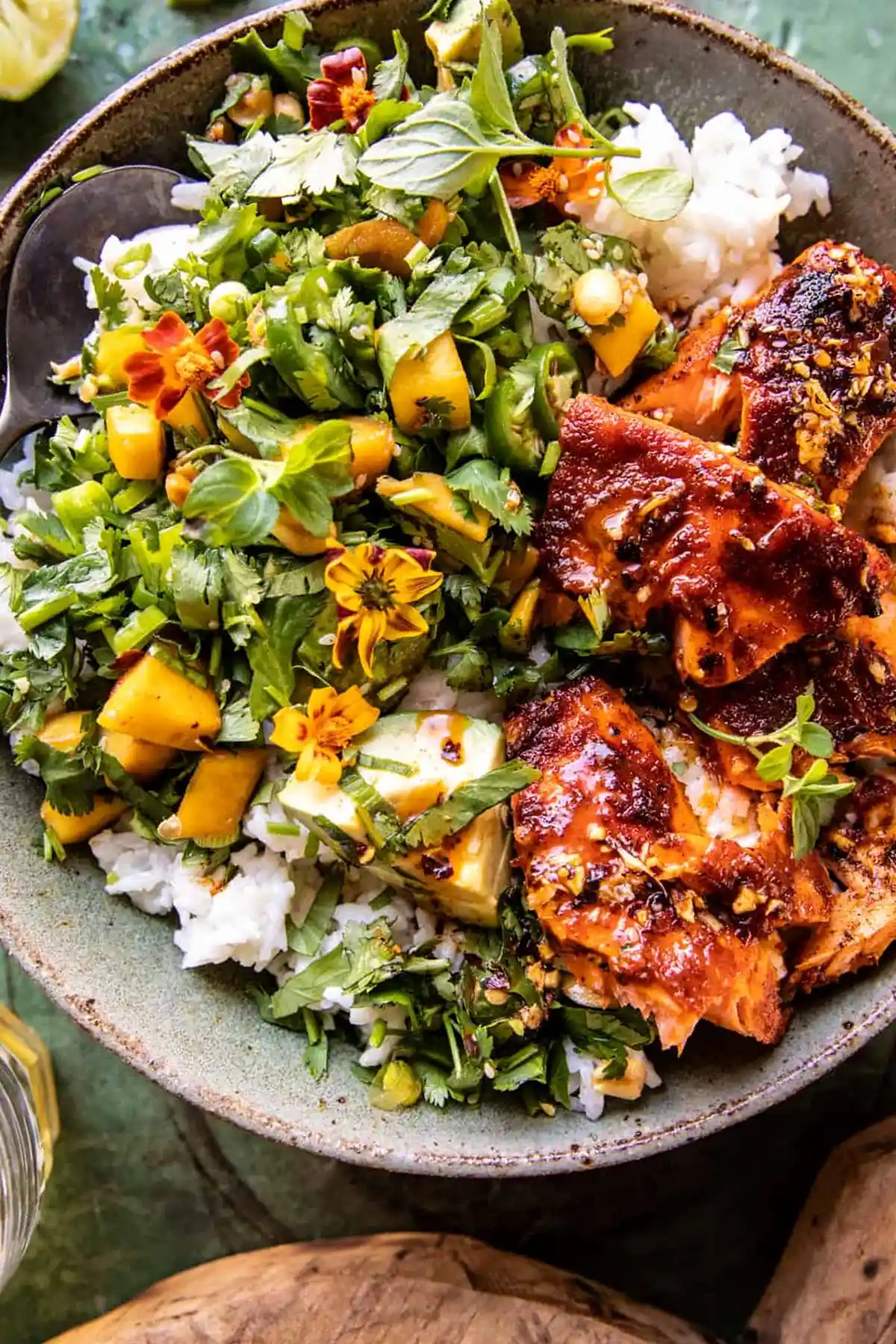
This vibrant meal combines spicy curry-rubbed salmon with a refreshing mango avocado salsa for a perfect balance of heat and sweetness. It is an ideal dinner option for spring or summer, bringing together bold Thai-inspired flavors in under 40 minutes.
List of ingredients
- 1 large mango, diced – ensures a sweet and juicy base for the salsa.
- 1 jalapeño pepper, seeded and sliced – provides a mild to moderate heat.
- 1/2 cup fresh cilantro and/or cilantro, chopped – adds a bright, herbal note.
- 3 tablespoons mixed sesame and/or sunflower seeds – adds a nutty crunch.
- 1/4 cup lime juice – provides the necessary acidity to balance the mango.
- 1 avocado, cubed – adds creamy texture and richness.
- 1 1/2 -2 pounds salmon cut into 2-3 pieces – the main protein source.
- 2 tablespoons extra virgin olive oil – used for the marinade base.
- 1/4 cup Thai red curry paste – delivers an authentic spicy and savory flavor.
- 1 tablespoon brown sugar – helps the salmon caramelize during roasting.
- 1 tablespoon spicy curry powder – a blend of cumin, ginger, paprika, cayenne, garlic powder, onion powder, and cinnamon.
- 1 tablespoon fish sauce, tamari sauce, or soy sauce – adds an essential umami depth.
- 6 tablespoons salted butter – the base for the crispy onion sauce.
- 2 cloves garlic, chopped – adds aromatic pungency to the butter.
- 1/4 cup minced onion flakes – creates the signature ‘crisp’ texture in the sauce.
- chili flakes – adds a touch of extra heat to the butter.
- 3-4 cups cooked rice – serves as the hearty base for the bowl.
step-by-step instructions
- Prepare the salsa: Gently toss the diced mango, sliced jalapeño, chopped cilantro, mixed seeds, lime juice, and cubed avocado in a bowl. Season with a pinch of salt to enhance the flavors.
- Prepare for roasting: Preheat your oven to 450° F. Line a baking sheet with parchment paper and place the salmon pieces on top.
- Season and cook the salmon: In a small bowl, whisk together the olive oil, Thai red curry paste, brown sugar, curry powder, and fish sauce. Rub this paste evenly over the salmon filets. Roast for 10 minutes or until cooked to your preference, then switch the oven to broil and char the edges carefully.
- Make the chili onion butter: While the salmon is cooking, melt the salted butter in a small skillet over medium heat. Add the chopped garlic and chili flakes, cooking until the butter browns and the garlic becomes crisp. Stir in the minced onion flakes and remove from heat.
- Assemble the bowls: Divide the cooked rice among bowls. Break the roasted salmon into chunks and place them over the rice. Pour the warm chili onion butter over the fish and top each serving with a generous scoop of the mango avocado salsa.
Expert Salmon Preparation Tips
Pat Salmon Dry Before Rubbing
Use a paper towel to remove all excess moisture from the surface of the salmon before applying the marinade. This prevents the fish from steaming and allows the curry paste to adhere better for a superior crust. A dry surface is key to achieving that caramelized exterior.
Allow Salmon to Reach Room Temperature
Take the salmon out of the refrigerator about 15 to 20 minutes before cooking. Bringing the fish to room temperature ensures that it cooks evenly from the center to the edges. This prevents the outside from overcooking while the middle remains raw.
Monitor the Broiler Closely
The broil setting is extremely high and can go from perfectly charred to burnt in a matter of seconds. Stay by the oven and watch the salmon continuously during this final step. Remove the fish immediately once the edges are lightly browned and caramelized.
Choosing the Right Cut
Center-cut salmon filets provide a consistent thickness, which ensures that every piece cooks at the same rate. If using a whole side of salmon, be mindful that the thinner tail end will cook faster than the thicker head end. Adjust the placement on the baking sheet accordingly.
Alternative Ingredient Options
Using Tamari for a Gluten-Free Version
If you need a gluten-free alternative to soy sauce, tamari is an excellent choice as it maintains the same salty, umami profile. Coconut aminos can also be used for a soy-free and lower-sodium option. These substitutes blend seamlessly into the red curry marinade.
Replacing Rice with Quinoa or Cauliflower Rice
For a lower-carb option, swap the white rice for steamed cauliflower rice. Quinoa is another great alternative that adds extra protein and a slightly nutty flavor to the bowl. Both options pair well with the acidity of the mango salsa.
Substituting Mango with Papaya
If mangoes are out of season, ripe papaya is a fantastic substitute due to its similar texture and sweetness. Ensure the papaya is fully ripe so it provides the necessary contrast to the spicy salmon. You may need to add a bit more lime juice to balance the flavor.
Using Maple Syrup Instead of Brown Sugar
Maple syrup can be used in place of brown sugar to achieve the desired caramelization. While it changes the flavor profile slightly, it provides a deep, earthy sweetness. Use an equal amount of syrup to keep the marinade consistency correct.
Recipe Variations for Different Tastes
Increasing the Heat with Sichuan Pepper
For those who enjoy a more intense numbing heat, add a pinch of ground Sichuan peppercorns to the curry rub. This adds a complex layer of spice that complements the Thai red curry paste. Be careful not to overdo it, as the flavor is very potent.
Adding Fresh Baby Spinach to the Base
Layer a handful of fresh baby spinach or shredded kale at the bottom of the bowl before adding the rice. The heat from the rice and salmon will slightly wilt the greens, adding nutrients and a fresh element. This creates a more balanced meal with added volume.
Substituting Salmon with Firm Tofu
To make this recipe plant-based, replace the salmon with extra-firm tofu that has been pressed to remove excess water. Slice the tofu into thick slabs and apply the same curry rub. Roast the tofu for a slightly longer period to ensure it gets a crispy exterior.
Incorporating Toasted Coconut Flakes
Sprinkle toasted unsweetened coconut flakes over the finished bowl for an extra tropical touch. The coconut enhances the Thai flavors and adds a delightful crunch. This works particularly well if you are using coconut rice as your base.
Serving and Presentation Ideas
Garnish with Fresh Lime Wedges
Serve each bowl with a fresh lime wedge on the side. Squeezing extra lime juice over the salmon right before eating brightens the rich flavors of the butter sauce. This added acidity cuts through the fattiness of the salmon and avocado.
Add Sliced Scallions for Extra Crunch
Finely sliced scallions or chives provide a sharp, fresh contrast to the sweet mango and savory butter. Sprinkle them over the top of the salsa just before serving. This adds a pop of green color and a layer of aromatic flavor.
Serve with a Side of Steamed Bok Choy
Pair the bowls with steamed or sautéed bok choy seasoned with a little garlic and ginger. This adds a traditional Asian green to the meal and makes the dinner more filling. The mild flavor of the bok choy balances the intensity of the chili crisp butter.
Plating for Visual Appeal
Use wide, shallow bowls to showcase the colorful layers of the dish. Place the rice first, then arrange the salmon pieces neatly on one side and the salsa on the other. Drizzle the golden chili butter over the salmon for a professional restaurant-style look.
Storage and Preservation Guidelines
Store Salsa Separately from Salmon
If you are prepping this meal in advance, keep the mango avocado salsa in a separate airtight container. Mixing the salsa with the warm salmon or rice too early will cause the avocado to soften and the mango to release too much juice. Combine them only at the time of serving.
Refrigeration Timelines for Cooked Salmon
Cooked salmon can be safely stored in the refrigerator for 3 to 4 days. Keep it in a sealed container to prevent it from absorbing other odors from the fridge. The curry rub helps preserve the moisture of the fish during storage.
Preventing Avocado Oxidation
To keep the avocado in the salsa from turning brown, ensure it is well-coated in lime juice. You can also press a piece of plastic wrap directly onto the surface of the salsa to minimize air exposure. This keeps the colors vibrant for longer.
Storing the Chili Butter
The brown butter sauce can be stored in a small jar in the refrigerator for up to a week. When you are ready to use it, gently reheat it in a pan or microwave. Be careful not to overheat it, or the butter may separate.
Best Methods for Reheating
Using the Oven for Optimal Texture
To reheat the salmon without drying it out, place it in a 300° F oven for about 10 minutes. This slow heating process preserves the tenderness of the fish better than a microwave. Lightly cover it with foil to retain the internal moisture.
Quick Microwave Heating Tips
If using a microwave, place the salmon and rice on a plate and cover them with a damp paper towel. Heat in 30-second intervals on medium power to avoid overcooking the center. Avoid microwaving the fresh salsa, as the heat will ruin the avocado’s texture.
Reheating the Rice
Sprinkle a teaspoon of water over the rice before reheating it in the microwave. Cover the bowl with a lid or plate to trap the steam. This restores the fluffy texture of the rice, preventing it from becoming hard or dry.
Make-Ahead Preparation Advice
Prepping the Curry Rub in Advance
You can mix the red curry paste, oil, brown sugar, and spices up to three days before you plan to cook. Store the marinade in a small jar in the refrigerator. This allows the flavors to meld and reduces your active prep time on the day of the meal.
Preparing the Rice a Day Early
Cook your rice or quinoa a day in advance and store it in an airtight container. Cold rice actually holds its shape better when plated. You can simply warm it up quickly before assembling the bowls.
Slicing the Mango and Jalapeño
The mango and jalapeño can be diced a few hours ahead of time. Store them in a container without the lime juice or salt to keep them firm. Toss them with the other salsa ingredients only when you are ready to serve.
Common Troubleshooting Solutions
Fixing Overly Spicy Salmon
If the red curry paste or chili flakes make the dish too spicy, increase the amount of avocado in the salsa. The creamy fats in the avocado help neutralize the capsaicin from the peppers. Adding an extra dollop of Greek yogurt or sour cream on the side can also help.
Preventing the Butter Sauce from Burning
Brown butter can turn from golden to burnt very quickly. Keep the heat on medium-low and stir constantly with a whisk or spoon. As soon as you smell a nutty aroma and see small brown bits, immediately remove the pan from the heat.
Correcting Bland Mango Salsa
If the salsa tastes flat, it likely needs more acidity or salt. Add an extra squeeze of fresh lime juice or a pinch of sea salt to wake up the flavors. Ensure the mango is fully ripe, as underripe fruit will lack the necessary sweetness.
Dealing with Dry Salmon
If the salmon comes out of the oven too dry, it was likely roasted for too long. To fix this in the moment, be generous with the chili onion butter sauce to add moisture back into the fish. In the future, use a meat thermometer to pull the fish at 135° F.
Frequently Asked Questions
Which type of rice works best?
Jasmine rice is highly recommended for its floral aroma and slightly sticky texture, which complements Thai flavors perfectly. Basmati rice is another great option if you prefer a fluffier, separate grain. Coconut rice is the most indulgent choice and pairs beautifully with mango.
Can I use frozen salmon fillets?
Yes, you can use frozen fillets, but they must be thawed completely in the refrigerator before cooking. Pat them very dry with paper towels, as frozen fish tends to release more moisture. If cooked from frozen, the exterior may burn before the center is done.
How do I know when the salmon is done?
The salmon is cooked when the flesh changes from translucent pink to an opaque light pink. You can test it by gently pressing the top of the fillet with a fork; if it flakes easily along the natural lines, it is ready. For precision, the internal temperature should be around 145° F.
Can I make the salsa without cilantro?
If you dislike cilantro, you can substitute it with fresh flat-leaf parsley or Thai basil. Basil adds a lovely aromatic quality that fits the Thai theme of the dish. Mint is another bold alternative that adds a refreshing coolness to the mango.
Print
Chili Onion Crisp Salmon Bowl with Avocado Mango Salsa
- Total Time: 35 minutes
- Yield: 6 servings 1x
- Diet: General
Description
Colorful, full of Thai flavors, and so simple…the perfect spring/summer dinner bowl!
Ingredients
- 1 large mango, diced
- 1 jalapeño pepper, seeded and sliced
- 1/2 cup fresh cilantro, chopped
- 3 tablespoons mixed sesame and/or sunflower seeds
- 1/4 cup lime juice
- 1 avocado, cubed
- 1 1/2 – 2 pounds salmon cut into 2–3 pieces
- 2 tablespoons extra virgin olive oil
- 1/4 cup Thai red curry paste
- 1 tablespoon brown sugar
- 1 tablespoon spicy curry powder
- 1 tablespoon fish sauce, tamari sauce, or soy sauce
- 6 tablespoons salted butter
- 2 cloves garlic, chopped
- 1/4 cup minced onion flakes
- chili flakes
- 3–4 cups cooked rice
Instructions
- Step 1: To make the salsa. Gently toss all ingredients in a bowl. Season with salt.
- Step 2: Preheat the oven to 450° F. Place the salmon on a baking sheet.
- Step 3: In a bowl, mix the olive oil, red curry paste, brown sugar, curry powder, and fish sauce. Rub the paste all over the salmon. Roast 10 minutes or until the fish is cooked to your liking. Switch the oven to broil and broil until lightly charred (watch closely!).
- Step 4: Meanwhile, in a small skillet melt together the butter, garlic, and a pinch of chili flakes. Cook until the butter is browning and the garlic is crisp. Mix in the onion flakes.
- Step 5: Break the salmon over the bowls of rice. Pour the chili butter over the salmon. Top with the mango salad. Enjoy!
Notes
Spicy Curry Powder: 2 teaspoons ground cumin, 2 teaspoons ground ginger, 1 teaspoon paprika, 1/2-1 teaspoon cayenne, 1 teaspoon garlic powder, 1 teaspoon onion powder, 1/4 teaspoon cinnamon, kosher salt and black pepper.
- Prep Time: 25 minutes
- Cook Time: 10 minutes
- Category: Main Course
- Method: Baking
- Cuisine: Thai-American
Nutrition
- Serving Size: 1 bowl
- Calories: 472 kcal
- Sugar: 12 g
- Sodium: 610 mg
- Fat: 26 g
- Saturated Fat: 11 g
- Unsaturated Fat: 15 g
- Trans Fat: 0 g
- Carbohydrates: 34 g
- Fiber: 6 g
- Protein: 28 g
- Cholesterol: 85 mg