This hearty one-pan meal combines juicy chicken thighs with creamy white beans and a variety of nutrient-dense leafy greens. It is a practical, balanced dinner that can be prepared in approximately 30 minutes.
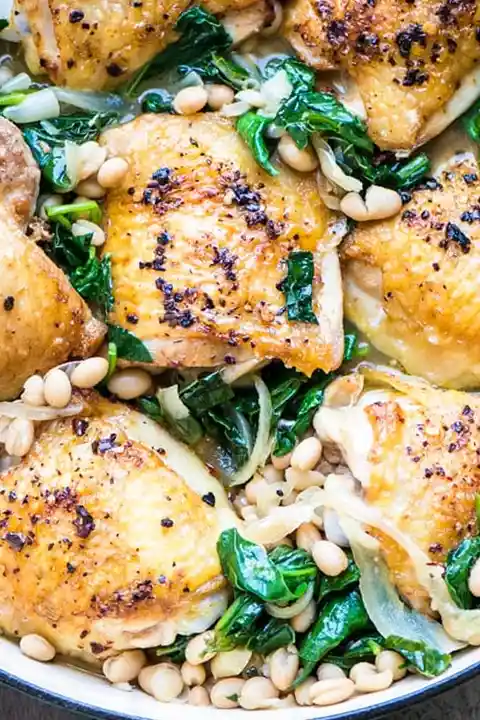
List of ingredients
- 8 bone-in, skin-on chicken thighs – provides richness and flavor.
- Salt – to taste.
- Fresh cracked black pepper – to taste.
- Red chili flakes – adds a subtle heat.
- Olive oil – for searing the chicken.
- 1 medium onion, peeled, halved, and thinly sliced – creates a sweet base.
- 4 cloves garlic, minced or thinly sliced – for aromatic depth.
- 2 tsp minced fresh rosemary – adds earthy notes.
- 2 cups chicken stock – used as the braising liquid.
- 30 ounces canned white beans (such as cannellini), drained and well rinsed – for creaminess and protein.
- 1 bunch kale, stems removed and chopped – adds hearty texture.
- 1 bunch watercress, stems trimmed – provides a peppery flavor.
- 1 lb baby spinach – wilts quickly into the sauce.
- Shavings of Parmesan-Reggiano cheese – for a salty finish.
step-by-step instructions
- Prepare Oven: Set your oven to 375F.
- Season Meat: Season both sides of the chicken thighs with salt, black pepper, and red pepper flakes according to your taste preference.
- Sear Chicken: Lightly coat the bottom of a large braising casserole or Dutch oven with olive oil. Heat over medium-high heat until the oil is hot but not smoking. Brown the chicken skin-side down in batches for 3 minutes, then flip and cook for another minute.
- Finish Cooking: Remove chicken to a baking sheet and bake in the oven for about 12-15 minutes. Use a thermometer to ensure they reach 155F; the temperature will rise to 165F while resting. Cover loosely with foil.
- Sauté Aromatics: In the same pan used for the chicken, sauté the minced garlic, sliced onion, and fresh rosemary. Add more oil if the pan is too dry, and cook for 5-7 minutes until the vegetables are soft and golden.
- Simmer Base: Pour in the chicken stock and bring the mixture to a bubble. Add the drained white beans and let them simmer for a few minutes to absorb the flavors.
- Wilt Greens: Add the kale, watercress, and baby spinach to the pan a few handfuls at a time, stirring constantly until they are just wilted.
- Thicken and Season: Use a spoon or fork to smash some of the beans directly in the pan to thicken the sauce. Taste the mixture and adjust salt, pepper, or red chili flakes. Stir in more fresh rosemary if desired.
- Combine: Nestle the roasted chicken thighs back into the pan with the beans and greens, heating them through for a minute.
- Serve: Plate the dish and top with shavings of Parmesan-Reggiano cheese.
Optimizing Your Choice of Leafy Greens
Using Curly Kale for Texture
Curly kale provides a sturdy structure that holds up well against the weight of the chicken and beans. It requires slightly more heat than spinach to soften, so adding it first among the greens is a practical approach. Ensure the tough center stems are removed to avoid woody bites.
Incorporating Watercress for Peppery Notes
Watercress adds a distinct, peppery bite that cuts through the richness of the chicken skin. Because it is more delicate than kale, it should be added toward the end of the wilting process. Trim the stems and use the tender leaves to maintain a refined texture.
Adding Baby Spinach for Volume
Baby spinach wilts almost instantly and adds a smooth, buttery consistency to the vegetable base. It is an excellent way to increase the volume of nutrients without altering the flavor profile significantly. Stir it in during the final minute of cooking to prevent it from becoming overcooked.
Substituting with Swiss Chard
Swiss chard is a great alternative if you prefer a slightly salty, earthy flavor. Chop the stems finely and sauté them with the onions and garlic before adding the leaves. This ensures the stems are tender and fully cooked.
Integrating Beet Greens for Earthiness
Beet greens are highly nutritious and offer a flavor similar to spinach but with a deeper, earthier tone. They are best used when fresh and should be washed thoroughly to remove any soil. Wilt them quickly to preserve their bright green color.
Using Arugula for a Sharp Finish
Arugula can be added at the very end or used as a fresh garnish on top of the finished dish. Its sharp, peppery taste complements the creamy white beans and salty Parmesan. Avoid overcooking arugula, as it can become bitter when exposed to high heat for too long.
Advanced Searing and Roasting Techniques
Achieving Maximum Skin Crispness
To get the crispiest skin, pat the chicken thighs completely dry with paper towels before seasoning. This prevents the meat from steaming and ensures a deep golden-brown sear. Avoid overcrowding the pan, which lowers the oil temperature and leads to soggy skin.
Managing Pan Heat for Aromatics
When sautéing the onion and garlic, maintain a medium heat to avoid burning the garlic. Burnt garlic becomes bitter and can ruin the delicate flavor of the rosemary. If the pan is too hot from the chicken searing, remove it from the heat for a minute before adding the oil and vegetables.
The Importance of the Searing Process
Searing the chicken creates a Maillard reaction, which develops complex flavors and a savory crust. The browned bits left in the pan, known as fond, are essential for the sauce. Deglazing these bits with chicken stock incorporates all that concentrated flavor back into the beans and greens.
Monitoring Internal Temperatures
Using a meat thermometer is the only way to guarantee the chicken is safe and juicy. Pulling the chicken at 155F allows for carry-over cooking to reach the safe 165F mark without drying out the meat. Resting the chicken under foil helps the juices redistribute throughout the thigh.
Guide to Working with White Beans
Choosing the Best Bean Variety
Cannellini beans are the preferred choice due to their creamy texture and mild flavor. Great Northern beans are a suitable substitute as they have a similar size and consistency. Avoid using black beans or kidney beans, as their stronger flavors and colors would clash with the greens.
Properly Rinsing Canned Legumes
Rinsing canned beans in a colander under cold water removes excess sodium and the thick canning liquid. This prevents the final dish from tasting overly salty and ensures the sauce is clean and bright. It also helps the beans maintain their individual shape during simmering.
Creating a Natural Thickening Agent
Smashing a small portion of the beans creates a natural starch slurry that thickens the chicken stock. This transforms the liquid from a thin broth into a rich sauce that clings to the greens. Use the back of a wooden spoon to press the beans against the side of the pan.
Preparing Dried Beans for This Recipe
If using dried beans, soak them overnight in water or use a pressure cooker to soften them before adding to the pan. Ensure they are simmered until tender but not mushy. This method is more cost-effective and often provides a superior texture.
Flavor Balancing and Enhancements
Maximizing Fresh Rosemary
Fresh rosemary is much more potent than dried versions and provides a woody aroma. Mince the needles finely to ensure they distribute evenly throughout the sauce. Adding a small amount of fresh rosemary at the very end can brighten the overall scent of the dish.
Controlling Heat with Chili Flakes
Red chili flakes provide a background warmth rather than an intense spice. Add them during the seasoning phase to toast them in the oil, which releases more flavor. Adjust the quantity based on your tolerance, keeping in mind that the beans will absorb some of the heat.
Adding Acidity to Brighten Greens
Greens and beans can sometimes taste heavy or overly earthy. A squeeze of fresh lemon juice or a teaspoon of apple cider vinegar added just before serving can brighten the flavors. Acidity cuts through the richness of the chicken fat and Parmesan cheese.
Alternative Cheese Toppings
While Parmesan-Reggiano is traditional, Pecorino Romano offers a saltier, sharper alternative. For a milder flavor, use a shaved Asiago or a high-quality Gruyère. Avoid using pre-shredded cheeses, as they contain cornstarch which prevents them from melting smoothly.
Meal Management and Storage
Make-Ahead Preparation Strategy
You can prepare the bean and greens mixture and the roasted chicken separately a day in advance. Store them in airtight containers in the refrigerator. This allows the flavors of the sauce to develop and simplifies the assembly process on the day of serving.
Best Methods for Reheating
To maintain the texture of the chicken skin, reheat the thighs in the oven or under a broiler for a few minutes. Warm the beans and greens in a saucepan over medium heat. Combine them just before serving to prevent the greens from overcooking and the skin from softening.
Refrigerator Storage Guidelines
Store leftovers in a sealed container for up to three to four days. The greens will continue to soften over time, and some liquid may separate from the sauce. Stir the mixture well before reheating to reintegrate the flavors.
Freezing Considerations
This dish is not ideal for freezing because the greens will lose their texture and become mushy upon thawing. However, the chicken and beans can be frozen together. If you choose to freeze them, add fresh greens only after reheating the base.
Troubleshooting Common Issues
Preventing Mushy Greens
The most common mistake is adding greens too early or cooking them for too long. They should only be heated until they just begin to collapse. Residual heat in the pan will continue to cook them even after the stove is turned off.
Fixing a Sauce That Is Too Thin
If the sauce remains watery after simmering, increase the amount of smashed beans. Alternatively, you can simmer the stock and beans for an additional five minutes before adding the greens to reduce the liquid. Avoid adding flour, as it can make the sauce taste gummy.
Handling Softened Chicken Skin
If the chicken skin loses its crispness after being nestled back into the pan, use a broiler. Place the pan under the high heat of the broiler for 2-3 minutes. Keep a close eye on it to prevent the cheese or skin from burning.
Balancing Excessive Saltiness
If the dish tastes too salty due to the stock or canned beans, add a splash of water or a bit more unsalted chicken stock. Adding a pinch of sugar or a squeeze of lemon can also mask excess salt. Always taste the sauce before adding the Parmesan cheese.
Frequently Asked Questions
Can I use boneless chicken thighs?
Yes, you can use boneless thighs, but they cook much faster and have a different flavor profile. Reduce the roasting time to 8-10 minutes and be careful not to overcook them. Bone-in thighs are recommended for more depth of flavor and juiciness.
What if I cannot find watercress?
If watercress is unavailable, you can replace it with extra spinach or a handful of arugula. Both provide a similar leaf structure and will work well with the beans and chicken. Arugula will provide the closest peppery flavor profile.
Can this be made in a slow cooker?
This specific recipe relies on searing and roasting for texture, which a slow cooker cannot replicate. However, you can slow-cook the chicken and beans together and then stir in the greens during the last 15 minutes of cooking. You will lose the crispy skin, though.
Is this recipe gluten-free?
Yes, this recipe is naturally gluten-free as it uses only whole ingredients. Ensure that your chicken stock is certified gluten-free if you have a severe sensitivity. The beans and greens are naturally free of gluten.
Print
Chicken Thighs with White Beans and Wilted Greens
- Total Time: 30 minutes
- Yield: 6 servings 1x
- Diet: General
Description
Chicken Thighs with White Beans and Greens is a healthy family meal you can whip up in 30 minutes!
Ingredients
- 8 bone-in skin-on chicken thighs
- Salt
- Fresh cracked black pepper
- Red chili flakes
- Olive oil
- 1 medium onion, peeled, halved, and thinly sliced
- 4 cloves garlic, minced or thinly sliced
- 2 tsp minced fresh rosemary
- 2 cups chicken stock (or 1 cup stock and 1 cup alcohol-free white wine alternative)
- 30 ounces canned white beans, drained and well rinsed
- 1 bunch kale, stems removed and chopped
- 1 bunch watercress, stems trimmed
- 1 lb baby spinach
- Shavings of Parmesan-Reggiano cheese
Instructions
- Step: Set oven to 375F.
- Step: Season both sides of the chicken with salt, pepper, and red pepper flakes, to taste.
- Step: Lightly coat the bottom of a large braising casserole or Dutch oven with olive oil and heat over medium high heat; brown the chicken, skin side down and in batches, for 3 minutes, then flip and cook for another minute.
- Step: Remove chicken to a baking sheet and bake for 12-15 minutes, or until a thermometer reads 155F; cover loosely with foil.
- Step: Saute the garlic, onion, and rosemary in the same pan the chicken was browned in for 5-7 minutes, until soft and golden.
- Step: Add the stock (or stock and alcohol-free white wine alternative) to the pan and bring up to a bubble, then add the beans and simmer for a few minutes.
- Step: Add the greens to the pan, a few handfuls at a time, stirring to wilt them.
- Step: Smash some of the beans to thicken the sauce, and taste to adjust the salt, pepper, or red chili flakes.
- Step: Nestle the chicken thighs back into the pan and heat through.
- Step: Serve topped with shavings of Parmesan.
Notes
Pork-free sausage would be wonderful in place of the chicken thighs. Leave out the meat and make this vegan or vegetarian using alcohol-free flavorings or vegetable stock in place of the chicken stock.
- Prep Time: 10 minutes
- Cook Time: 30 minutes
- Category: dinner
- Method: Braising
- Cuisine: Italian
Nutrition
- Serving Size: 1 serving
- Calories: 648 kcal
- Sugar: 3 g
- Sodium: 342 mg
- Fat: 34 g
- Saturated Fat: 9 g
- Unsaturated Fat: 21 g
- Trans Fat: 0.2 g
- Carbohydrates: 39 g
- Fiber: 10 g
- Protein: 47 g
- Cholesterol: 191 mg