This one-pot cheesy ground beef and rice casserole is a hearty meal that simplifies weeknight cooking. It combines savory beef with tender rice and melty cheese for a satisfying family dinner.
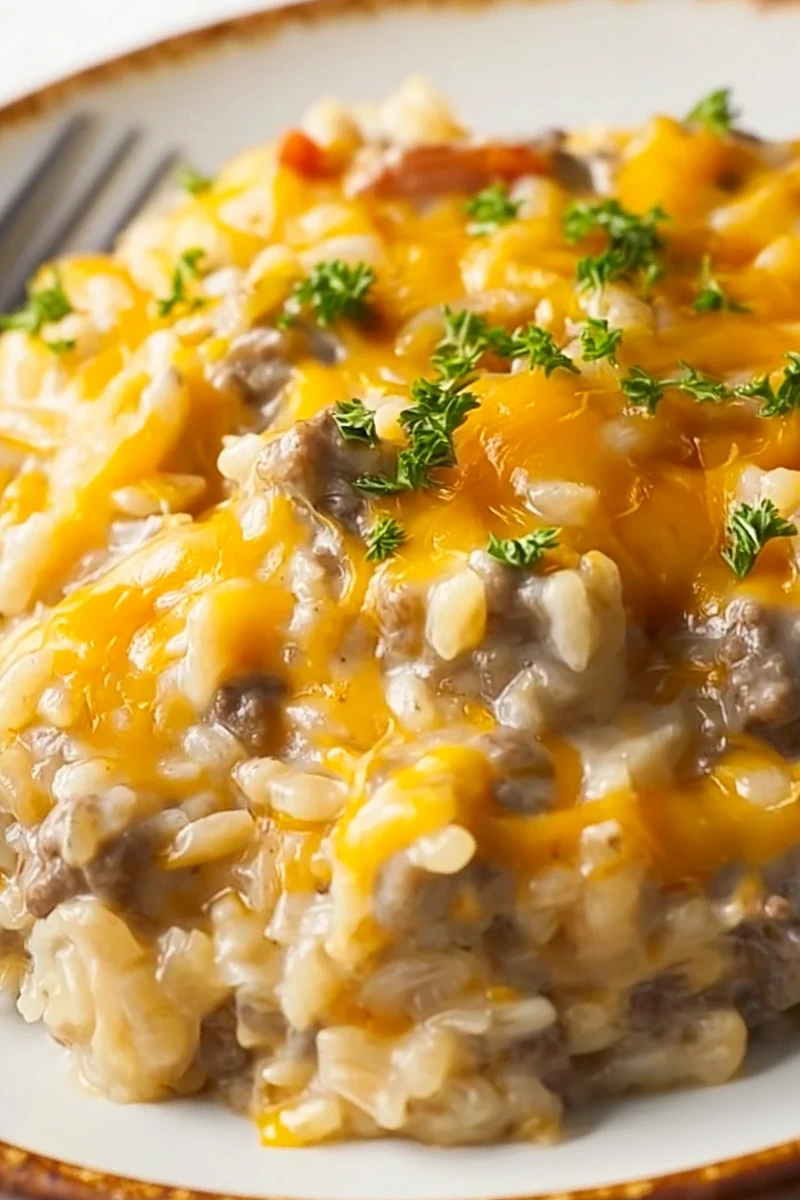
List of ingredients
- 1 pound ground beef – lean is recommended for less grease.
- 1 teaspoon salt – to enhance the natural flavors.
- 1 teaspoon ground black pepper – for a subtle spicy bite.
- 1 small onion, finely chopped – adds a sweet aromatic base.
- 1 teaspoon minced garlic – provides a punch of flavor.
- 1 can (14.5 ounces) diced tomatoes, undrained – adds acidity and moisture.
- 1 cup long-grain white rice – absorbs the beef broth for tenderness.
- 2 cups beef broth – the primary cooking liquid for the rice.
- 1 teaspoon Italian seasoning – a blend of herbs for depth.
- 1 cup shredded cheddar cheese – for a sharp, melty finish.
- 1 cup shredded mozzarella cheese – for a creamy, stretchy texture.
- 2 tablespoons chopped fresh parsley – used for a fresh garnish.
step-by-step instructions
- Brown the beef: In a large skillet, brown the ground beef over medium heat. Season the meat with salt and black pepper as it cooks.
- Sauté aromatics: Add the chopped onion and minced garlic to the skillet. Cook until the onion is soft and translucent, then drain any excess fat.
- Combine base: Stir in the undrained diced tomatoes, long-grain rice, beef broth, and Italian seasoning. Stir well to ensure the rice is evenly distributed.
- Simmer the mixture: Bring the liquid to a boil, then reduce the heat to low. Cover with a tight lid and simmer for 20 minutes until the rice is tender.
- Melt the cheese: Remove the skillet from the heat. Stir in the shredded cheddar and mozzarella until the cheeses are melted and creamy.
- Finish and serve: Garnish the casserole with chopped fresh parsley. Serve warm immediately.
Pro Techniques for Maximum Flavor
The Importance of Maillard Browning
Ensure the ground beef is browned thoroughly until it develops a deep brown color. This process, known as the Maillard reaction, creates complex flavors that raw or grey meat lacks. Avoid crowding the pan too much to allow the meat to sear rather than steam.
Managing Garlic Sautéing
Add the minced garlic only after the onions have begun to soften. Garlic burns much faster than onions and can become bitter if exposed to high heat for too long. Sautéing it for just a minute or two is sufficient to release its oils.
Controlling Liquid Evaporation
Use a heavy-bottomed skillet and a tight-fitting lid during the simmering phase. A loose lid allows steam to escape, which can leave the rice undercooked or dry. If the rice is still hard after 20 minutes, add a small splash of extra broth.
Optimizing Meat Texture
Break the ground beef into small, uniform crumbles using a wooden spoon. This ensures that every bite of the casserole has a balanced ratio of meat to rice. Avoid over-working the meat to prevent it from becoming tough.
Balancing Salt Levels
Taste the mixture after adding the beef broth and tomatoes but before the final simmer. Since beef broth and canned tomatoes both contain sodium, you may need to adjust the added salt. This prevents the final dish from being overly salty.
Ingredient Substitutions and Modifications
Substituting Brown Rice for White
You can use brown rice for a nuttier flavor and more fiber. However, brown rice requires more liquid and a longer cooking time, typically 40 to 45 minutes. Add an extra quarter-cup of beef broth to compensate for the longer simmer.
Using Alternative Cheese Blends
If you prefer a sharper taste, replace mozzarella with extra sharp cheddar or Pepper Jack for a spicy kick. Gruyere or Fontina are also excellent options for a more sophisticated, nutty flavor profile. Always shred your own cheese for a smoother melt.
Integrating Fresh Vegetables
Dice bell peppers or carrots and sauté them along with the onions for added nutrition. Spinach or frozen peas can be stirred in at the very end with the cheese. These additions provide color and a fresh contrast to the rich beef.
Low-Sodium Broth Options
To reduce the salt content, use low-sodium beef broth or a homemade vegetable stock. If using unsalted broth, you may need to increase the salt and pepper slightly during the browning phase. This allows you to control the overall sodium levels of the meal.
Rice Variety Adjustments
Basmati or Jasmine rice can be used as a substitute for standard long-grain white rice. These varieties offer a more fragrant aroma and a slightly different texture. Keep the cooking time the same, but monitor the liquid levels closely.
Adding Zesty Elements
Stir in a teaspoon of Worcestershire sauce or a pinch of smoked paprika during the beef browning stage. These ingredients add a layer of umami and smokiness that complements the beef. A squeeze of fresh lemon juice at the end can also brighten the flavors.
Meal Pairing and Presentation
Pairing with Acidic Garden Salads
Serve this casserole with a fresh garden salad tossed in a lemon-based vinaigrette. The acidity of the dressing cuts through the richness of the melted cheese and beef. Use mixed greens, cucumbers, and radishes for maximum crunch.
Complementing with Garlic Bread
Warm garlic bread or toasted baguette slices are ideal for scooping up the cheesy rice. The buttery texture of the bread pairs perfectly with the savory elements of the dish. Brush the bread with garlic butter and broil for two minutes before serving.
Selecting Steamed Green Vegetables
Steamed broccoli or sautéed zucchini provide a light and healthy balance to the hearty casserole. These vegetables add a vibrant green color to the plate. Season them simply with salt, pepper, and a drizzle of olive oil.
Adding a Tangy Side of Coleslaw
A vinegar-based coleslaw adds a sharp, tangy contrast to the creamy texture of the cheese. The crunch of the cabbage provides a necessary textural difference. Avoid creamy slaws to prevent the meal from feeling too heavy.
Serving Style Options
For a family-style meal, serve the casserole directly from the skillet to maintain heat. For a more formal presentation, scoop individual portions into ramekins. Garnish each portion with a fresh sprig of parsley for a professional look.
Preservation and Reheating Guide
Cooling Before Refrigeration
Allow the casserole to cool to room temperature before transferring it to an airtight container. Placing hot food directly in the fridge can raise the internal temperature of the appliance. Once cooled, store it in the refrigerator for up to three days.
Preventing Freezer Burn
For long-term storage, freeze the casserole in a freezer-safe container or wrap it tightly in aluminum foil. Remove as much air as possible to prevent freezer burn. The dish will remain high in quality for up to two months in the freezer.
Reheating with Extra Moisture
When reheating on the stovetop, add a tablespoon of beef broth or water to the pan. This restores the moisture lost during cooling and prevents the rice from tasting dry. Heat over medium-low and stir occasionally until warmed through.
Microwave Reheating Tips
Place an individual portion in a microwave-safe dish and cover it with a damp paper towel. Heat on medium power in 1-minute intervals, stirring in between. This method ensures the cheese melts evenly without overcooking the rice.
Oven Reheating Process
Preheat your oven to 350°F and transfer the leftovers to a baking dish. Cover the dish with foil to lock in moisture and bake for 20 minutes. This method is best for larger quantities and maintains the casserole’s original texture.
Solving Common Cooking Problems
Fixing Mushy Rice
Mushy rice usually occurs from overcooking or using too much liquid. To prevent this, avoid stirring the rice too frequently during the simmering process. If the result is too soft, you can bake it uncovered for a few minutes to evaporate excess moisture.
Solving Under-Cooked Grains
If the liquid is absorbed but the rice is still hard, add another quarter-cup of broth. Cover the pan again and simmer for an additional 5 to 10 minutes. Ensure the lid is tight to trap the necessary steam for cooking.
Correcting Over-Salted Casseroles
If the dish is too salty, stir in a small amount of unsalted ricotta cheese or a splash of heavy cream. This helps neutralize the saltiness without altering the flavor too significantly. Adding extra steamed vegetables on the side also balances the palate.
Preventing Cheese Separation
Avoid boiling the casserole after the cheese has been added. High heat can cause the fats in the cheese to separate, resulting in an oily texture. Remove the pan from the heat source before stirring in the shreds.
Addressing Bottom-of-Pan Burning
If the rice sticks to the bottom, your heat may be too high. Use a heat diffuser or ensure your burner is set to a true low simmer. Using a heavy-bottomed cast iron skillet can also provide more even heat distribution.
Common Recipe Inquiries
Can I use brown rice instead of white?
Yes, you can use brown rice, but you must increase the cooking time to approximately 45 minutes. You will also need to add about 1/4 cup more beef broth to account for the longer absorption time.
Is this casserole suitable for meal prep?
This dish is excellent for meal prep as it holds its structure and flavor well. It can be portioned into containers and stored in the fridge for three days or frozen for two months.
How can I make this dish lower in fat?
Use 90% lean ground beef and replace the full-fat cheese with reduced-fat versions. You can also increase the ratio of vegetables to beef to lower the overall calorie density per serving.
Do I need to rinse the rice first?
Rinsing the rice removes excess surface starch, which prevents the casserole from becoming too sticky. For the best texture, rinse the rice in a fine-mesh sieve until the water runs clear.
Can I add other types of meat?
While ground beef is traditional, ground turkey or chicken can be used as a leaner alternative. If using turkey, consider adding a bit more Italian seasoning or a pinch of paprika to enhance the milder flavor.
Print
Cheesy Ground Beef and Rice Casserole
- Total Time: 40 minutes
- Yield: 6 servings 1x
- Diet: General
Description
Indulge in the comforting flavors of Cheesy Ground Beef and Rice Casserole, a perfect dish for busy weeknights or family gatherings. This one-pot meal combines seasoned ground beef, tender rice, zesty tomatoes, and a delightful blend of melted cheeses, creating a rich and creamy texture that will satisfy everyone at the table.
Ingredients
- 1 pound ground beef
- 1 teaspoon salt
- 1 teaspoon ground black pepper
- 1 small onion, finely chopped
- 1 teaspoon minced garlic
- 1 can (14.5 ounces) diced tomatoes, undrained
- 1 cup long-grain white rice
- 2 cups beef broth
- 1 teaspoon Italian seasoning
- 1 cup shredded cheddar cheese
- 1 cup shredded mozzarella cheese
- 2 tablespoons chopped fresh parsley
Instructions
- Step 1: In a large skillet, brown the ground beef over medium heat; season with salt and black pepper.
- Step 2: Add chopped onion and minced garlic; cook until the onion is soft and translucent, then drain any excess fat.
- Step 3: Stir in diced tomatoes (with juice), long-grain rice, beef broth, and Italian seasoning. Bring to a boil.
- Step 4: Reduce heat to low, cover, and simmer for about 20 minutes, or until the rice is tender and the liquid is absorbed.
- Step 5: Remove from heat and stir in the cheddar and mozzarella cheeses until melted and evenly mixed.
- Step 6: Garnish with chopped fresh parsley and serve warm.
Notes
Opt for lean ground beef to reduce excess fat. For added nutrition, incorporate bell peppers or spinach. Allow the casserole to rest for 5–10 minutes before serving to help it set.
- Prep Time: 10 minutes
- Cook Time: 30 minutes
- Category: Main
- Method: Cooking
- Cuisine: American
Nutrition
- Serving Size: 1 serving
- Calories: 490 kcal
- Sugar: 4 g
- Sodium: 850 mg
- Fat: 22 g
- Saturated Fat: 10 g
- Unsaturated Fat: 9 g
- Trans Fat: 0 g
- Carbohydrates: 47 g
- Fiber: 2 g
- Protein: 28 g
- Cholesterol: 70 mg