This baked beef spaghetti casserole is a hearty, satisfying dinner that transforms classic pasta and meat sauce into a comforting baked dish. It is an efficient way to feed a crowd or prepare meals for the week ahead.
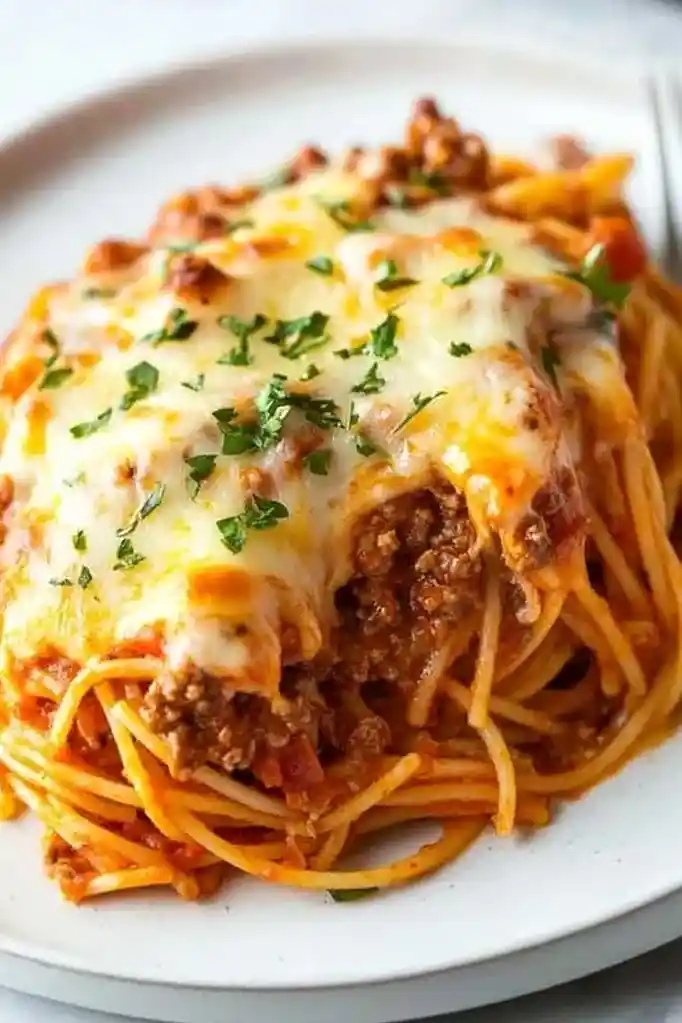
List of ingredients
- 12 oz spaghetti pasta – cooked al dente for the best texture.
- 1 lb lean ground beef – provides the savory protein base.
- 2 cups marinara sauce – use a high-quality jarred or homemade version.
- 1 medium yellow onion, chopped – adds essential aromatic flavor.
- 2 cloves garlic, minced – enhances the richness of the meat sauce.
- 1 teaspoon Italian seasoning – brings a balanced herb profile to the dish.
- 1 ½ cups shredded mozzarella cheese, divided – creates the melty, gooey topping.
- ½ cup grated parmesan cheese, divided – adds a salty, sharp finish.
- 1 large egg, beaten – binds the noodles and cheese together during baking.
- Salt & pepper, to taste – used for basic seasoning of the beef and pasta.
- Cooking spray, for greasing – prevents the casserole from sticking to the pan.
step-by-step instructions
- Cook the Pasta: Boil the spaghetti in salted water until it is just al dente. Drain the noodles thoroughly and set them aside.
- Make the Meat Sauce: Sauté the chopped onion and minced garlic in a large skillet over medium heat until softened. Add the ground beef and cook until fully browned, then drain off any excess grease. Stir in the marinara sauce and Italian seasoning, letting it simmer for 10 minutes to blend flavors.
- Prepare the Cheese Mixture: In a large mixing bowl, combine 1 cup of mozzarella, ¼ cup of parmesan, and the beaten egg. Toss the cooked spaghetti into this mixture and stir until the noodles are evenly coated.
- Assemble the Casserole: Spray a 9×13-inch baking dish with cooking spray. Layer half of the spaghetti-cheese mixture on the bottom, followed by half of the meat sauce. Repeat the layers and top the final sauce layer with the remaining mozzarella and parmesan.
- Bake the Dish: Cover the dish with aluminum foil and bake at 350°F (175°C) for 30 minutes. Remove the foil and bake for an additional 10–15 minutes until the cheese is bubbly and golden brown.
- Rest and Serve: Allow the casserole to rest for 5–10 minutes before slicing. This helps the layers set for cleaner portions.
Beef Selection and Preparation
Choose Lean Ground Beef
Using lean ground beef, such as 90% lean, reduces the amount of excess fat in the final dish. This prevents the casserole from becoming greasy and ensures the sauce clings better to the noodles.
Properly Browning the Meat
Cook the beef over medium-high heat until no pink remains to develop a deep savory flavor. Avoid crowding the pan too much to ensure the meat browns rather than steams in its own juices.
Draining Excess Fat
Always drain the rendered fat after browning the beef before adding the marinara sauce. This step is critical to prevent a layer of oil from forming on top of the baked spaghetti.
Seasoning the Protein
Add salt and pepper directly to the beef while it is browning. This builds flavor layers into the meat itself before the marinara sauce is introduced to the skillet.
Pasta Texture Secrets
Understanding Al Dente
Cook the spaghetti for 1-2 minutes less than the package directions suggest. Since the pasta continues to cook in the oven, undercooking it initially prevents the noodles from becoming mushy.
Salting the Pasta Water
Use a generous amount of salt in the boiling water to season the noodles from the inside out. This is the only chance to add salt to the pasta itself before it is mixed with other ingredients.
Preventing Noodle Clumping
Once drained, toss the pasta immediately with the egg and cheese mixture. This coats the strands and prevents them from sticking together in a large mass before layering.
Using Alternative Pasta Shapes
While spaghetti is traditional, short pastas like penne or rigatoni are easier to scoop. If using these, ensure they are also cooked al dente to maintain their structure during the bake.
Enhancing the Meat Sauce
Selecting the Right Marinara
Choose a marinara with a balanced acidity and a thick consistency. If the sauce is too thin, the casserole may become watery, so a robust, chunky sauce often works best.
Optimizing Simmer Time
Allowing the sauce to simmer for 10 minutes after adding the beef helps the Italian seasoning permeate the meat. This reduces the raw taste of the herbs and thickens the sauce slightly.
Adding Extra Garlic
If you prefer a bolder flavor, increase the minced garlic to three or four cloves. Sauté the garlic last so it doesn’t burn, which would introduce a bitter taste to the sauce.
Balancing the Sauce Acidity
If your marinara is too tart, add a small pinch of sugar to the skillet. This neutralizes the acidity and complements the richness of the beef and melted cheese.
Cheese Selection Guide
The Role of Mozzarella
Mozzarella provides the classic stretch and mild flavor associated with baked pasta. For the best melt, use low-moisture mozzarella rather than fresh mozzarella balls, which release too much water.
Adding Sharpness with Parmesan
Parmesan cheese adds a salty, nutty depth that balances the sweetness of the marinara. Grating your own cheese from a block often results in a smoother melt than pre-shredded options.
Using a Cheese Blend
You can substitute a portion of the mozzarella with provolone or mild white cheddar. This adds a slightly more complex flavor profile while maintaining the gooey texture.
Preventing Cheese Burning
Keep the casserole covered with foil for the first 30 minutes of baking. This protects the cheese from browning too quickly while the center of the dish heats through.
Vegetable Add-In Guide
Incorporating Sautéed Peppers
Dice red and green bell peppers and sauté them with the onions. This adds a subtle sweetness and a pop of color to the meat sauce without altering the texture.
Adding Fresh Spinach
Stir fresh baby spinach into the hot meat sauce just before assembling. The heat of the sauce will wilt the spinach quickly, adding nutrients and a mild earthy flavor.
Using Sliced Mushrooms
Sauté mushrooms until they release their moisture before adding the beef. This ensures the mushrooms are flavorful and prevents them from making the sauce too thin.
Integrating Diced Zucchini
Small cubes of sautéed zucchini blend well with the ground beef. Ensure they are cooked until tender but not mushy to maintain a bit of bite in the final bake.
Assembly and Baking Techniques
Choosing the Correct Pan
A 9×13-inch rectangular baking dish is ideal for this recipe. It provides enough surface area for even heat distribution and allows for easy slicing into square portions.
The Importance of Layering
Distributing the pasta and sauce in two distinct layers prevents the dish from becoming a disorganized mix. This creates a more professional presentation and a better ratio of sauce to noodle in every bite.
Sealing with Aluminum Foil
Ensure the foil is crimped tightly around the edges of the pan. This traps the steam, which keeps the spaghetti moist and ensures the cheese melts evenly before the top is browned.
Letting the Dish Rest
Waiting 10 minutes before serving allows the proteins and starches to firm up. This prevents the casserole from sliding apart when you slice and serve it.
Storage and Preservation
Refrigeration Guidelines
Store leftover baked spaghetti in an airtight container in the refrigerator for up to 4 days. Cool the dish completely before sealing it to prevent condensation from making the cheese soggy.
Freezing the Casserole
You can freeze the assembled, unbaked casserole for up to 3 months. Wrap it tightly in plastic wrap and then aluminum foil to protect it from freezer burn.
Thawing Process
Thaw a frozen casserole in the refrigerator overnight before baking. This ensures the center reaches a safe internal temperature without overcooking the edges.
Managing Scent Transfer
Use glass containers for storage to prevent the garlic and onion aromas from permeating other foods in the fridge. Glass also reheats more evenly in the oven.
Reheating for Freshness
Oven Reheating Method
Reheat individual slices at 325°F (160°C) covered with foil. This is the best method for maintaining the texture of the cheese and the integrity of the noodles.
Microwave Quick Heat
For a faster option, microwave a slice on medium power for 2-3 minutes. Add a teaspoon of water to the plate to create steam, which prevents the pasta from drying out.
Maintaining Moisture
If the leftovers look dry, add a tablespoon of extra marinara sauce on top before reheating. This re-hydrates the spaghetti and refreshes the flavor of the dish.
Avoiding Overcooking
Reheat only until the center is warm. Overheating baked pasta can cause the noodles to break down and the cheese to become oily.
Common Troubleshooting
Preventing Dry Noodles
If the pasta seems dry after baking, it is likely because it was overcooked during the initial boil. Always stick to the al dente timing to leave room for oven moisture absorption.
Fixing Watery Sauce
Watery sauce usually results from not draining the beef properly or using a thin marinara. Simmer the sauce longer to reduce the liquid before assembling the layers.
Managing Burnt Cheese
If the cheese browns too quickly, lower the oven temperature by 25 degrees. You can also tent the dish with a piece of foil if the top looks golden before the center is hot.
Correcting Bland Flavor
If the final dish tastes bland, sprinkle a bit of extra parmesan or a pinch of salt on top after baking. Freshly cracked black pepper can also brighten the rich flavors of the beef.
Frequently Asked Questions
Can I freeze baked beef spaghetti?
Yes, it freezes very well. You can freeze it either before baking or after it has been cooked and cooled completely, provided it is wrapped airtight.
Can I use a different type of pasta?
Absolutely. Penne, rotini, or ziti are excellent alternatives that hold up well during the baking process and are easier for children to eat.
Can I add vegetables?
Yes, you can add sautéed mushrooms, bell peppers, or spinach to the meat sauce. This is a great way to add nutrition without compromising the taste.
Is this recipe kid-friendly?
Yes, the combination of melted cheese and savory beef is generally very appealing to children. You can even blend finely diced vegetables into the sauce for picky eaters.
Print
Cheesy Baked Beef Spaghetti Casserole
- Total Time: 1 hour
- Yield: 6 servings 1x
- Diet: General
Description
This Baked Beef Spaghetti Casserole is your go-to solution for a comforting, make-ahead family dinner that tastes like a hug in a dish. With minimal prep, simple ingredients, and big flavors, it’s a weeknight win you’ll want on repeat.
Ingredients
- 12 oz spaghetti pasta
- 1 lb lean ground beef
- 2 cups marinara sauce
- 1 medium yellow onion, chopped
- 2 cloves garlic, minced
- 1 teaspoon Italian seasoning
- 1 ½ cups shredded mozzarella cheese, divided
- ½ cup grated parmesan cheese, divided
- 1 large egg, beaten
- Salt & pepper, to taste
- Cooking spray
Instructions
- Cook the Pasta: Boil spaghetti in salted water until just al dente. Drain and set aside.
- Make the Meat Sauce: In a large skillet over medium heat, sauté onion and garlic until soft. Add ground beef; cook until browned. Drain grease. Stir in marinara sauce and Italian seasoning. Simmer 10 minutes.
- Make Cheese Mixture: In a large bowl, combine 1 cup mozzarella, ¼ cup parmesan, and the beaten egg. Toss in the spaghetti and mix well.
- Assemble: Spray a 9×13-inch baking dish. Layer half the spaghetti mixture, then half the meat sauce. Repeat. Top with remaining mozzarella and parmesan.
- Bake: Cover with foil and bake at 350°F (175°C) for 30 minutes. Uncover and bake another 10–15 minutes, until cheese is golden and bubbly.
- Rest & Serve: Let rest for 5–10 minutes. Slice and serve warm.
Notes
Cook pasta just until al dente so it finishes baking in the oven. This dish is freezer-friendly and tastes even better the next day.
- Prep Time: 15 minutes
- Cook Time: 45 minutes
- Category: Main Course
- Method: Baking
- Cuisine: American
Nutrition
- Serving Size: 1 slice
- Calories: 480 kcal
- Sugar: 7 g
- Sodium: 820 mg
- Fat: 24 g
- Saturated Fat: 11 g
- Unsaturated Fat: 13 g
- Trans Fat: 0 g
- Carbohydrates: 36 g
- Fiber: 4 g
- Protein: 31 g
- Cholesterol: 110 mg