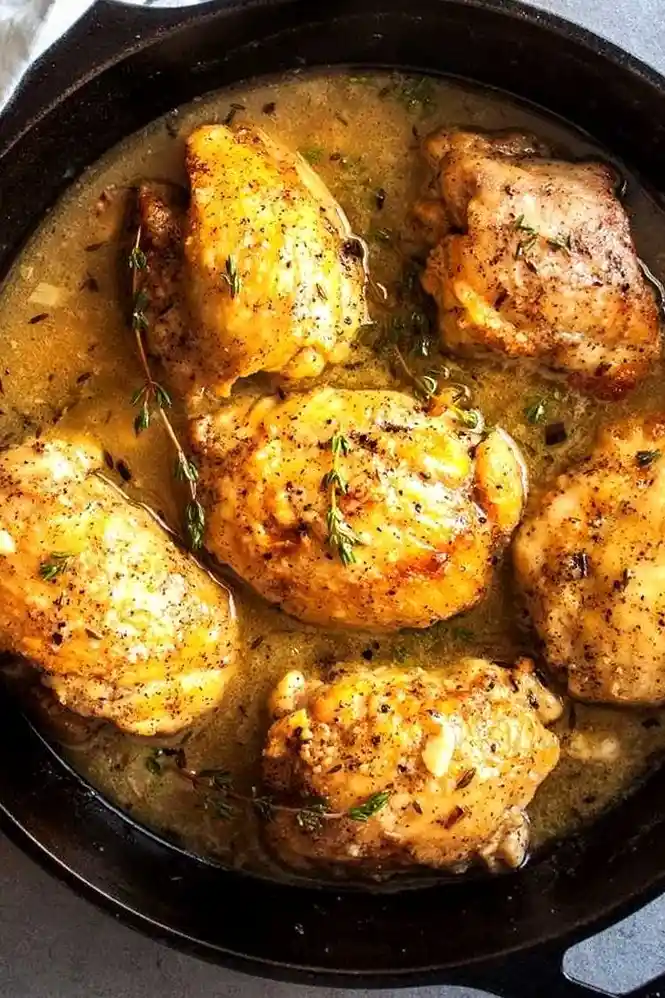
This recipe delivers juicy, tender chicken thighs with a rich pan sauce using a single cast iron skillet. By combining a high-heat sear with a gentle oven finish, you achieve a professional crust and moist interior.
List of ingredients
- 2 lbs boneless skinless chicken thighs – typically about 6 pieces.
- 1 1/2 tbsp flour – used for dredging and thickening the pan sauce.
- 1 tsp salt – increase to taste.
- 1/2 tsp pepper – increase to taste.
- 1 tbsp cooking oil – such as olive oil.
- 3-4 cloves garlic – rough chop to prevent burning.
- 4-5 sprigs fresh thyme – plus more for garnish.
- 1 3/4 cups chicken stock – used for both deglazing and the simmering sauce.
step-by-step instructions
- Prepare the meat: Bring the chicken thighs to room temperature and trim any excess fat, though leaving a small amount adds flavor to the sauce. Pat the meat dry with paper towels.
- Dredge: Combine the flour, salt, and pepper in a bowl. Coat each chicken thigh evenly in the mixture and set aside.
- Preheat: Set your oven to 350 F. If you prefer to cook entirely on the stove, you can skip this step.
- Sear: Heat the cast iron skillet over medium-high heat and add the oil. Sear the chicken in batches to avoid crowding, cooking each side until golden brown, then remove to a warm plate.
- Cool the pan: Lower the heat to medium and temporarily move the skillet to a cold burner for one minute to prevent the aromatics from burning.
- Sauté aromatics: Add another teaspoon of oil if the pan is dry. Add the chopped garlic and thyme sprigs, stirring until they become fragrant.
- Deglaze: Pour in about 1/4 cup of chicken stock and scrape the brown bits (fond) from the bottom of the skillet.
- Simmer: Return the seared chicken thighs and any accumulated juices to the skillet. Pour in the remaining chicken stock and bring the liquid to a simmer.
- Finish cooking: Transfer the skillet to the oven and bake until the internal temperature reaches 165 F. Alternatively, cover the pan with a lid on the stove and simmer until the temperature is reached.
- Serve: Spoon the pan sauce over each thigh and garnish with fresh thyme sprigs.
Professional Searing Techniques
Batch Cooking to Avoid Crowding
When searing chicken, it is critical to work in batches. Overcrowding the skillet lowers the surface temperature, which causes the meat to release moisture and steam instead of searing. This results in a pale, rubbery texture rather than a golden-brown crust.
Managing Pan Temperature
The cast iron skillet should be hot enough that the oil shimmers but does not smoke. If the oil is too cold, the flour coating will absorb the fat and become greasy. If it is too hot, the flour will burn before the meat is properly seared.
The Role of Flour Dredging
Coating the chicken in flour serves two practical purposes. First, it promotes the Maillard reaction, creating a crispier, more flavorful exterior. Second, the residual flour on the meat naturally thickens the pan sauce as the chicken simmers.
Choosing and Preparing Your Meat
Selecting the Best Thighs
Boneless skinless thighs are preferred over breasts because their higher fat content makes them more forgiving. They remain moist even if slightly overcooked. Look for pieces of similar size to ensure they cook evenly in the oven.
Temperature Regulation
Bringing chicken to room temperature for about 15 minutes before cooking ensures more even heat penetration. Cold meat can drop the pan temperature significantly and may cook unevenly, leaving the center underdone while the outside overcooks.
Trimming Excess Fat
While some fat is necessary for flavor and moisture, large clumps of excess fat can make the pan sauce overly greasy. Trim only the largest protruding pieces of fat to maintain a balanced sauce consistency.
Ingredient Substitutions and Customizations
Cornstarch for Gluten-Free Coating
If you need a gluten-free option, substitute the flour with an equal amount of cornstarch. Cornstarch often produces an even crispier exterior, though it may change the viscosity of the final pan sauce slightly.
Alternative Herb Pairings
While thyme is classic, rosemary or sage provide excellent earthy alternatives. If using sage, consider adding a small amount of apple cider vinegar to the deglazing liquid to complement the herbal notes.
Swapping Garlic for Shallots
For a milder, sweeter aromatic base, replace the garlic with two finely chopped shallots. Sauté the shallots for about two minutes before deglazing to allow their sugars to caramelize.
Creating a Creamy Honey Mustard Sauce
To transform the sauce, deglaze with stock and then stir in a mixture of 2 tablespoons Dijon mustard, 2 tablespoons honey, and 1 cup of heavy cream. Simmer gently until the sauce thickens to your liking.
Serving Suggestions and Side Dish Pairings
Grains and Starches
Couscous, quinoa, and rice are ideal for soaking up the pan sauce. For added flavor, cook these grains in chicken stock instead of water and stir in fresh chopped herbs before serving.
Roasted and Sauteed Vegetables
Broccolini, spaghetti squash, or roasted butternut squash pair well with the richness of the chicken. Parmesan-crusted yellow squash also provides a salty contrast to the savory pan sauce.
Fresh Salad Accompaniments
A bright, acidic salad can balance the heartiness of the dish. Consider a barley salad with lemon vinaigrette or a roasted corn salad with lime and cilantro.
Storage and Reheating Guidelines
Refrigeration and Shelf Life
Store leftover chicken and sauce in an airtight container in the refrigerator. This dish will remain safe and flavorful for up to five days when stored properly.
Proper Reheating for Juiciness
To prevent the meat from drying out, avoid the microwave. Instead, place the chicken and sauce in a small frying pan over medium heat, adding a splash of water or oil to restore moisture.
Using Leftovers in Other Meals
Cold chicken thighs can be shredded and added to chicken pot pie fillings. They also work well in wraps or sliced thinly over a fresh garden salad.
Cast Iron Skillet Management
Preheating for Consistent Heat
Cast iron takes longer to heat than stainless steel but retains heat much better. Always preheat the pan slowly over medium heat to avoid warping and to ensure an even temperature across the cooking surface.
Managing the Deglazing Process
Deglazing is the process of loosening the browned food particles from the bottom of the pan. Using a liquid like stock and a wooden spoon to scrape the bottom incorporates all that concentrated flavor into the sauce.
Post-Cooking Pan Care
After cooking, allow the cast iron to cool slightly before washing. Use warm water and a mild soap, then dry it immediately and apply a thin layer of oil to maintain the seasoning and prevent rust.
Cooking Troubleshooting and FAQs
Why is my pan sauce too thin?
If the sauce is too watery, simmer it on the stovetop without the lid for a few minutes after removing the chicken. This reduces the liquid and concentrates the flavor through evaporation.
How do I prevent the garlic from burning?
Garlic burns quickly at high temperatures. Moving the pan to a cold burner for one minute before adding the garlic lowers the temperature just enough to let it soften without scorching.
Can I use chicken breasts instead?
You can, but breasts cook much faster and dry out quickly. Reduce the oven time and use a meat thermometer to remove them immediately when they hit 165 F.
What if I don’t have a cast iron skillet?
A stainless steel skillet is the best alternative because it also allows for the creation of brown bits (fond). Avoid non-stick pans for this recipe, as they do not brown the meat as effectively and cannot be used in the oven at high temperatures.
Is the oven step mandatory?
No, you can finish the chicken on the stovetop. Simply cover the skillet with a lid and simmer until the internal temperature reaches 165 F, though the oven provides a superior finish on top.
Print
Cast Iron Pan-Seared Chicken Thighs with Savory Sauce
- Total Time: 30 minutes
- Yield: 4 servings 1x
- Diet: General
Description
Baked boneless skinless chicken thighs cooked in a cast iron skillet with a delicious pan sauce. This recipe uses a combination of stovetop searing and oven baking for a crispy finish and juicy interior.
Ingredients
- 2 lbs boneless skinless chicken thighs
- 1 1/2 tbsp flour
- 1 tsp salt
- 1/2 tsp pepper
- 1 tbsp cooking oil
- 3–4 cloves garlic, rough chopped
- 4–5 sprigs thyme, plus more for garnish
- 1 cup chicken stock (substitute for beer or wine)
- 3/4 cup chicken stock
Instructions
- Prep: Bring the chicken thighs to room temperature and trim any excess fat. Pat dry. Mix flour, salt and pepper and dredge the chicken thighs. Set aside.
- Preheat: Turn on the oven to 350 F.
- Sear: Heat the cast iron skillet over medium-high. When hot add the oil. Working in batches sear the flour mixture coated chicken thighs on both sides until golden. Remove to a warm plate.
- Cool: Lower the heat to medium. Temporarily place the skillet on a cold burner to allow it to cool down for 1 minute.
- Sauté & Deglaze: Add 1 tsp cooking oil to the skillet if needed. Add the rough chopped garlic and the thyme and move around the skillet until fragrant. Deglaze with about 1/4 cup chicken stock and scrape off brown bits from the bottom.
- Simmer: Return the chicken thighs to the skillet, place the skillet on the original burner. Add the remaining chicken stock and bring to simmer.
- Finish: Transfer to the oven to finish cooking until the internal temperature of the chicken thighs registers 165 F when measured in the thickest center parts. Alternatively, partially cover with a lid and let simmer until chicken is 165 F. Spoon a bit of pan sauce over the thighs. Serve garnished with thyme.
Notes
Typically consists of 6 thighs. Thyme can be substituted with rosemary, sage, or oregano.
- Prep Time: 5 minutes
- Cook Time: 25 minutes
- Category: Main Course
- Method: Baking
- Cuisine: American
Nutrition
- Serving Size: 1 serving
- Calories: 474 kcal
- Sugar: 1 g
- Sodium: 1051 mg
- Fat: 22 g
- Saturated Fat: 6 g
- Unsaturated Fat: 16 g
- Trans Fat: 0 g
- Carbohydrates: 8 g
- Fiber: 0 g
- Protein: 57 g
- Cholesterol: 278 mg