This one-pan meal utilizes a cast iron skillet to achieve perfectly roasted chicken thighs and caramelized root vegetables. It is a streamlined approach to a complete dinner that prioritizes high-heat roasting for maximum texture.
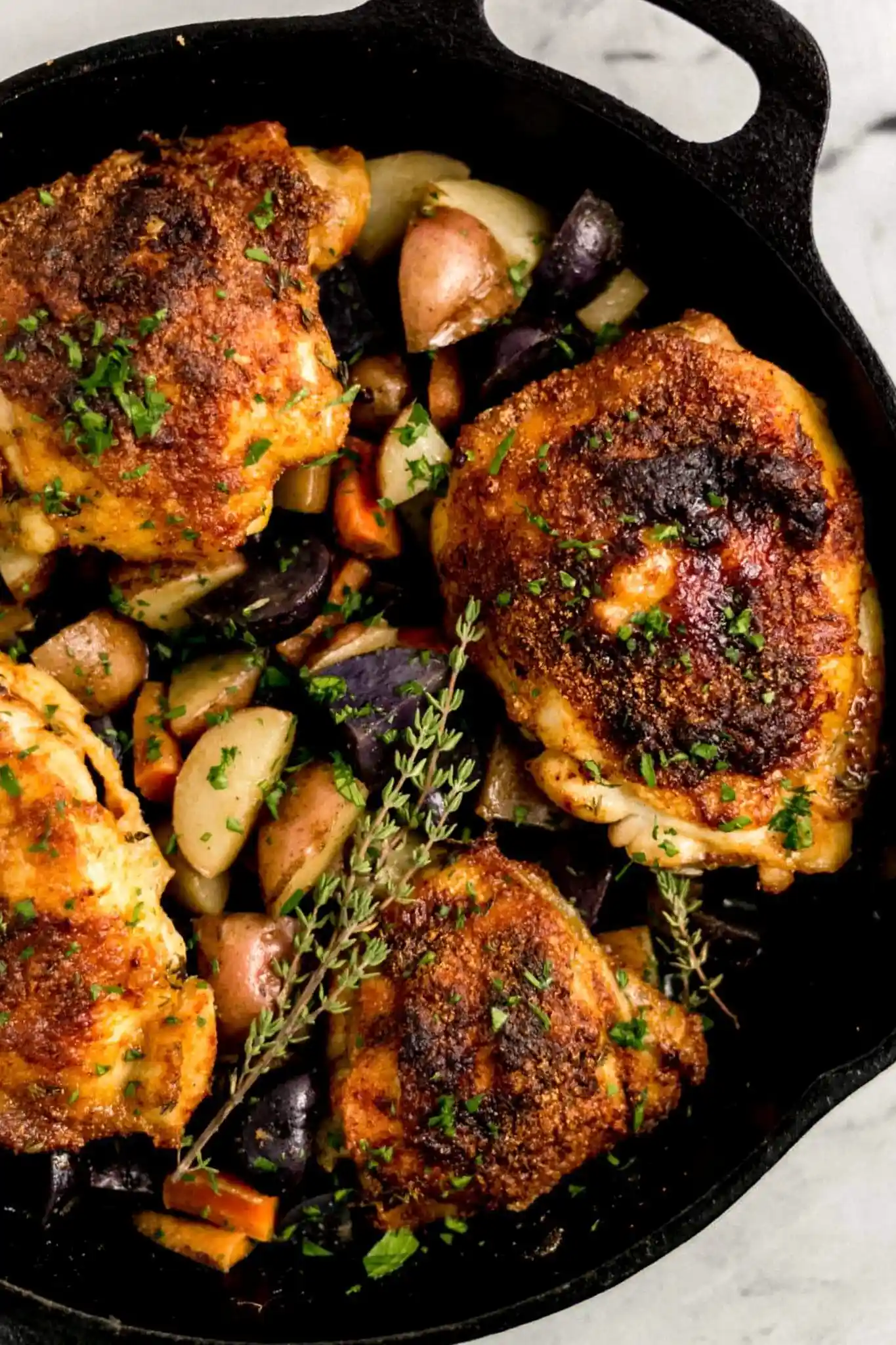
List of ingredients
- 1 1/2 cups small potatoes, quartered – use Yukon Gold for a creamy interior.
- 1/3 cup baby carrots, cut in 1-inch pieces – ensures they cook at the same rate as the chicken.
- 1 tablespoon olive oil – used to coat vegetables and prevent sticking.
- 1/2 teaspoon salt – for seasoning the vegetable base.
- 1/4 teaspoon ground black pepper – adds a mild heat to the potatoes and carrots.
- 2 teaspoons brown sugar – helps the chicken skin caramelize and brown.
- 1 teaspoon garlic powder – provides a consistent savory base for the rub.
- 1 teaspoon fresh thyme – adds an earthy, herbal aromatic quality.
- 1/2 teaspoon paprika – contributes to the deep golden color of the skin.
- 1/2 teaspoon salt – for the chicken spice mixture.
- 4 chicken thighs (1 to 1.5 pounds) – bone-in, skin-on pieces are recommended for juiciness.
- 1 tablespoon butter, cubed and softened – acts as a binder for the dry rub.
step-by-step instructions
- Prepare the oven and pan: Preheat your oven to 400°F. In a cast iron skillet, combine the 1 1/2 cups quartered potatoes, 1/3 cup carrots, 1 tablespoon olive oil, 1/2 teaspoon salt, and 1/4 teaspoon ground black pepper; toss them until evenly coated and spread them in a single layer across the bottom of the skillet.
- Create the seasoning rub: In a small shallow dish, stir together the 2 teaspoons brown sugar, 1 teaspoon garlic powder, 1 teaspoon fresh thyme, 1/2 teaspoon paprika, and 1/2 teaspoon salt.
- Season the chicken: Rub each of the 4 chicken thighs with a portion of the softened butter, including the area under the skin for deeper flavor, then generously apply the spice mixture to all sides until fully coated.
- Assemble the skillet: Place the seasoned chicken thighs skin-side up directly on top of the vegetable layer. Sprinkle any remaining spice mixture over the chicken and the surrounding vegetables.
- Roast to temperature: Bake in the oven for 25 to 30 minutes, or until the chicken reaches an internal temperature of 165°F and the vegetables are tender when pierced with a fork.
- Rest and serve: Carefully remove the skillet from the oven and allow the chicken to rest for 5 minutes before serving to ensure the juices redistribute.
Optimizing Your Roasting Results
Remove Surface Moisture for Crispy Skin
Use paper towels to pat the chicken skin completely dry before applying butter or spices. Any remaining moisture creates steam, which prevents the skin from reaching a crispy, crackling texture regardless of the oven temperature.
Maintain Proper Spacing in the Pan
Avoid crowding the chicken thighs or piling the vegetables too high. Leaving space between the meat allows hot air to circulate freely, ensuring the edges of the potatoes caramelize rather than steaming in their own juices.
Use a Meat Thermometer for Precision
Insert an instant-read thermometer into the thickest part of the thigh without touching the bone. Pull the chicken when it hits 165°F to prevent the meat from drying out while ensuring it is safely cooked through.
Bring Chicken to Room Temperature
Remove the chicken from the refrigerator 20 to 30 minutes before roasting. This reduces the temperature shock when the meat hits the pan, allowing the skin to begin searing and crisping immediately upon entering the oven.
Utilize the Pan Drippings
The fat and browned bits left in the skillet after roasting contain concentrated flavor known as fond. Drizzle these juices back over the meat and vegetables before serving or use them as a base for a quick pan sauce.
Avoid Flipping the Chicken
Keep the chicken thighs skin-side up throughout the entire roasting process. Flipping the meat will cause the crispy skin to stick to the cast iron and tear, ruining the visual appeal and texture.
Alternative Ingredients and Flavor Profiles
Mediterranean Spice Adjustments
Replace the brown sugar, paprika, and thyme with a blend of dried oregano, lemon zest, and a pinch of cinnamon. This shift creates a brighter, more acidic profile that pairs well with feta cheese garnish.
Substituting Root Vegetables
Swap the potatoes and carrots for parsnips, turnips, or sweet potatoes. Ensure all vegetables are cut into uniform 1-inch chunks so they finish cooking at the same time as the chicken.
Incorporating Citrus Elements
Place fresh lemon or orange slices underneath the chicken thighs before roasting. The citrus juices mingle with the chicken fat to create a natural sauce that cuts through the richness of the butter and skin.
Adding Fresh Woody Herbs
Tuck whole sprigs of fresh rosemary or sage around the vegetables in the skillet. As the herbs roast in the oil, they infuse the potatoes and carrots with a deep, aromatic flavor.
Adapting for Boneless Thighs
If using boneless, skinless thighs, increase the oven temperature to 425°F and reduce the cook time to 20-25 minutes. Since there is no skin to protect the meat, brush them with olive oil more frequently to prevent drying.
Adding Heat to the Rub
Incorporate 1/2 teaspoon of cayenne pepper or red pepper flakes into the dry rub for a spicy kick. Alternatively, drizzle the finished dish with hot honey for a balance of sweetness and heat.
Complementary Side Dishes
Sautéed Green Beans
Fresh green beans sautéed with garlic and a splash of lemon juice provide a crisp, bright contrast to the roasted vegetables. The snap of the beans balances the softness of the roasted carrots.
Tangy Garden Salad
A simple mix of arugula or spring greens with a sharp vinaigrette helps cleanse the palate. The acidity of the dressing cuts through the richness of the butter and chicken skin.
Buttery Cornbread
Serve with a side of warm cornbread to soak up the pan drippings. The sweetness of the corn complements the brown sugar rub used on the chicken.
Garlic Mashed Potatoes
While the recipe includes roasted potatoes, serving additional creamy mashed potatoes is ideal for larger crowds. The different textures of potato provide a more diverse plate.
Preservation and Reheating Methods
Refrigeration Guidelines
Store leftover chicken and vegetables in an airtight glass or plastic container in the refrigerator. This dish remains safe and flavorful for up to 4 days when stored at 40°F or below.
Oven Reheating for Texture
To restore the crispiness of the skin, reheat the leftovers on a baking sheet at 375°F for 15 to 20 minutes. Avoid covering the pan with foil, as this traps steam and softens the skin.
Microwave Reheating Tips
For a quick reheat, use the microwave for 2 to 3 minutes on medium power. Be aware that this method will make the skin soft and the vegetables more tender than the original roast.
Freezing and Thawing
The cooked chicken and vegetables can be frozen for up to 3 months in freezer-safe bags. Thaw them completely in the refrigerator overnight before reheating in the oven for the best results.
Planning and Advanced Preparation
Pre-Seasoning the Meat
Rub the butter and spice mixture onto the chicken thighs up to 24 hours in advance. Store them in a covered container in the fridge to allow the flavors to penetrate deeper into the meat.
Prepping the Vegetable Base
Quarter the potatoes and cut the carrots ahead of time, storing them in a sealed container. When ready to cook, toss them with the oil and seasonings directly in the skillet to save prep time.
Adjusting for Cold Starts
If adding pre-seasoned chicken and vegetables directly from the refrigerator to the oven, add 5 to 10 minutes to the total roasting time. This ensures the center of the chicken reaches the safe 165°F mark.
Common Cooking Questions
Can I use boneless, skinless chicken thighs instead?
Yes, but the cooking time must be reduced and the temperature increased to 425°F to avoid overcooking. You will lose the crispy skin, so consider brushing the meat with extra olive oil or melted butter halfway through.
Why is my chicken skin not getting crispy?
This is usually caused by excess surface moisture or overcrowding the pan. Ensure the skin is patted dry with paper towels and that each thigh has at least an inch of space around it for air circulation.
How do I know when the chicken is done?
The most accurate method is using a meat thermometer to check that the thickest part of the thigh reaches 165°F. You can also check if the juices run clear when the meat is pierced.
My vegetables are burning before the chicken is done, what happened?
The vegetable pieces may be cut too small or spread too thin. Cut them into larger 1.5 to 2-inch chunks and tuck them slightly under the chicken to shield them from direct heat.
What is the best way to reheat leftovers while keeping the skin crispy?
Reheating in a 375°F oven on an open baking sheet is the most effective method. The dry heat evaporates surface moisture and re-crisps the fats in the skin.
Can I use chicken drumsticks or breasts instead of thighs?
Drumsticks work well and require about 40-45 minutes. Breasts cook faster (25-30 minutes) and dry out easily, so they require closer monitoring and an earlier temperature check.
Print
Cast Iron Chicken Thighs with Potatoes and Carrots
- Total Time: 45 minutes
- Yield: 4 servings 1x
- Diet: Gluten-Free
Description
Crispy cast iron chicken thighs roasted in one pan with golden potatoes and carrots, seasoned with a buttery brown-sugar thyme rub.
Ingredients
- 1 1/2 cups small potatoes, quartered
- 1/3 cup baby carrots, cut in 1-inch pieces
- 1 tablespoon olive oil
- 1/2 teaspoon salt
- 1/4 teaspoon ground black pepper
- 2 teaspoons brown sugar
- 1 teaspoon garlic powder
- 1 teaspoon fresh thyme
- 1/2 teaspoon paprika
- 1/2 teaspoon salt
- 4 chicken thighs (1 to 1.5 pounds)
- 1 tablespoon butter, cubed and softened
Instructions
- Step 1: Preheat the oven to 400°F.
- Step 2: In a cast iron skillet, combine the quartered potatoes, carrots, olive oil, 1/2 teaspoon salt, and 1/4 teaspoon ground black pepper; toss evenly and spread on the bottom of the skillet.
- Step 3: In a small shallow dish, stir together brown sugar, garlic powder, fresh thyme, paprika, and 1/2 teaspoon salt.
- Step 4: Rub each chicken thigh with a portion of the softened butter, then generously coat all sides with the spice mixture.
- Step 5: Place the chicken thighs on top of the vegetables in the skillet, sprinkling any remaining spice mixture over the top.
- Step 6: Bake for 25 to 30 minutes until the chicken reaches an internal temperature of 165°F and vegetables are fork-tender.
- Step 7: Remove from oven and allow the chicken to rest for 5 minutes before serving.
Notes
Pat chicken skin completely dry before seasoning to ensure maximum crispiness. Avoid crowding the pan to prevent steaming.
- Prep Time: 15 minutes
- Cook Time: 30 minutes
- Category: Main Course
- Method: Roasting
- Cuisine: American
Nutrition
- Serving Size: 1 serving
- Calories: 431 kcal
- Sugar: 3 g
- Sodium: 728 mg
- Fat: 30 g
- Saturated Fat: 9 g
- Unsaturated Fat: 19 g
- Trans Fat: 0.2 g
- Carbohydrates: 14 g
- Fiber: 2 g
- Protein: 25 g
- Cholesterol: 149 mg