This refreshing Caprese pasta salad uses burst cherry tomatoes to create a light, natural sauce. It is an ideal dish for summer gatherings or a quick weekday lunch.
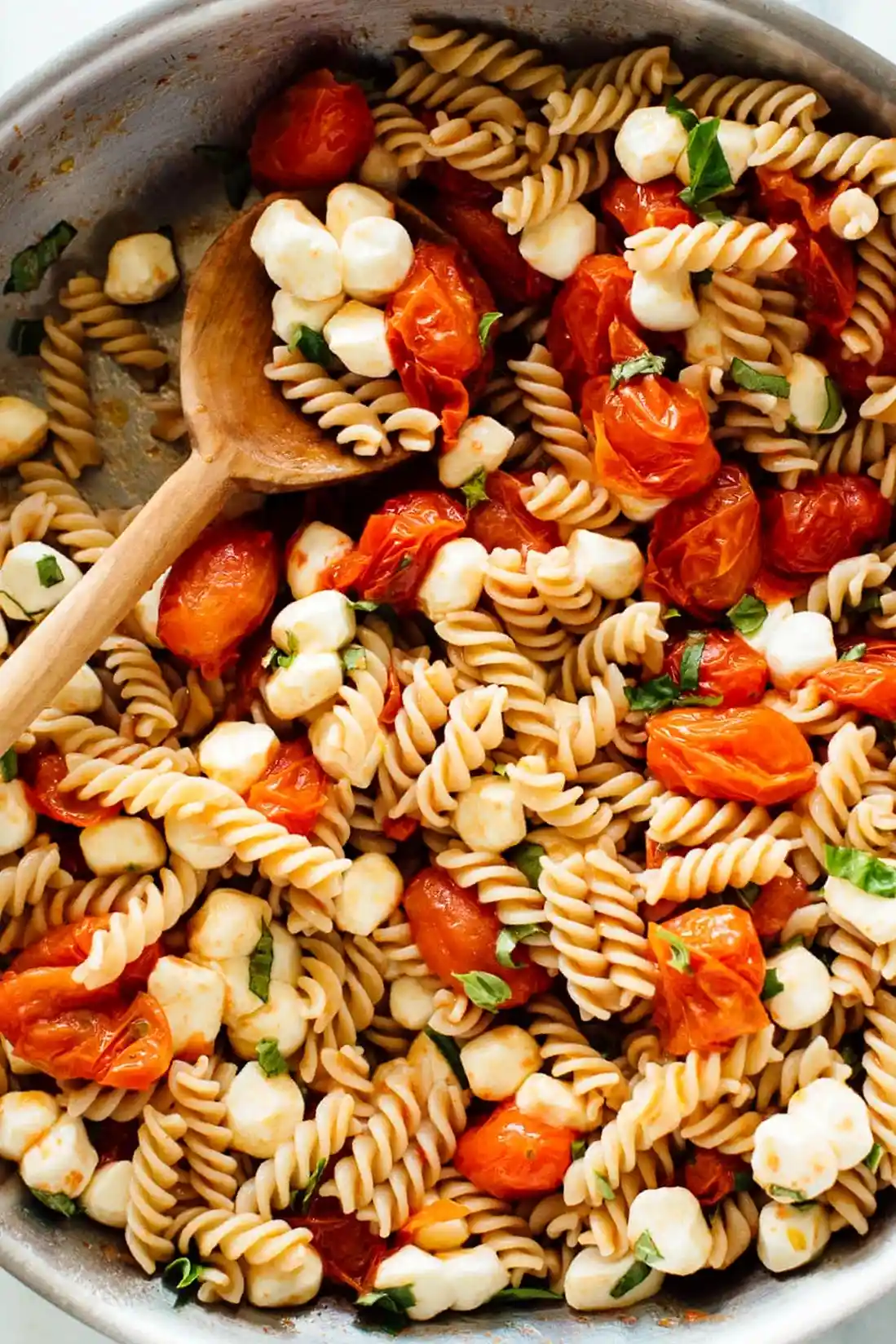
List of ingredients
- 6 ounces (2 cups) whole grain fusilli or rotini pasta – provides a nutty flavor and holds sauce well.
- 1/3 cup extra-virgin olive oil – used for sautéing and as a base for the sauce.
- 2 pints cherry or grape tomatoes – these will burst to create the sauce.
- 1/2 teaspoon fine sea salt – enhances the natural flavors of the vegetables.
- 8 ounces mozzarella pearls – or one large mozzarella ball torn into small pieces.
- Several sprigs of fresh basil – enough to yield at least 2 tablespoons when chopped.
- 2 to 3 teaspoons white balsamic vinegar or regular balsamic vinegar – added to taste for acidity.
step-by-step instructions
- Cook the pasta: Bring a large pot of salted water to a boil. Cook the pasta until al dente according to the package directions, then drain and set it aside.
- Sauté the tomatoes: While the pasta is boiling, combine the olive oil, tomatoes, and salt in a large, non-reactive skillet or Dutch oven over medium heat. Cover the pan with a lid or baking sheet and cook, stirring occasionally, for 6 to 12 minutes until the tomatoes burst and the oil turns light red.
- Combine pasta and tomatoes: Remove the skillet from the heat and stir in the cooked pasta. Let the mixture cool for a few minutes until it is lightly warm but not hot.
- Add final ingredients: Stir in the mozzarella pearls and chopped basil. Add the balsamic vinegar, then taste and adjust with more vinegar or salt if needed.
- Rest and serve: Let the salad rest for about 20 minutes to allow the pasta to absorb the sauce. Serve immediately or refrigerate for later.
Professional Cooking Techniques
Choosing the Best Cherry Tomatoes for Bursting
Select tomatoes that are firm and bright red. Overripe tomatoes may collapse too quickly, while underripe ones will not release their juices efficiently. Cherry tomatoes usually burst more readily than grape tomatoes due to their rounder shape.
Salting Pasta Water for Maximum Flavor
Add a generous amount of salt to the boiling water before adding the pasta. This is the only opportunity to season the pasta itself, ensuring the final dish is not bland. Use about one tablespoon of salt per gallon of water.
Achieving the Perfect Al Dente Texture
Cook the pasta for one minute less than the package instructions suggest. Since the pasta will continue to soften as it absorbs the tomato sauce and rests, undercooking slightly prevents it from becoming mushy.
Managing Heat to Prevent Tomato Burning
Keep the skillet over medium heat and use a lid to trap steam. This steam helps the skins burst without scorching the olive oil. Stir occasionally to ensure the tomatoes heat evenly and do not stick to the pan.
Ingredient Substitutions
Selecting the Best Gluten-Free Pasta Alternatives
Brown rice pasta is a great choice as it maintains its structure well when tossed with sauce. Chickpea pasta adds more protein but can have a stronger flavor that may compete with the fresh basil. Corn-based pastas offer a lighter taste but may soften more quickly.
Using Fresh Mozzarella Balls Instead of Pearls
If you cannot find pre-made mozzarella pearls, purchase a large ball of fresh mozzarella. Tear it by hand into irregular, bite-sized pieces. Tearing creates more surface area than slicing, which helps the cheese hold onto the sauce better.
Swapping White Balsamic for Red Wine Vinegar
White balsamic is preferred for its mild sweetness and light color. If unavailable, red wine vinegar provides a similar acidity but a sharper tang. Use a slightly smaller amount initially and adjust to taste.
Replacing Whole Grain Pasta with Semolina Pasta
Standard white semolina pasta works well if you prefer a more neutral flavor profile. While whole grain adds fiber and a nuttier taste, semolina pasta offers a smoother texture and a traditional Italian feel.
Flavor Variations and Add-ins
Incorporating Baby Spinach for Added Nutrition
Stir in two handfuls of fresh baby spinach just before adding the cheese. The residual heat from the pasta will wilt the spinach slightly without overcooking it. This adds a vibrant green color and extra vitamins to the dish.
Adding Grilled Chicken for a Heartier Meal
To turn this salad into a full entree, add sliced grilled chicken breast. Ensure the chicken is cooked and cooled slightly before adding it to the mix. This provides lean protein that complements the Caprese flavors.
Including Kalamata Olives for a Salty Punch
Add a quarter cup of pitted, sliced Kalamata olives to introduce a salty, briny element. This shifts the flavor profile slightly toward a Greek-inspired pasta salad. Balance the saltiness by reducing the fine sea salt in the initial sauté.
Using Pine Nuts for Added Crunch
Toast a small handful of pine nuts in a dry pan until golden brown. Sprinkle them over the finished salad just before serving. The buttery crunch of the nuts contrasts well with the soft mozzarella and burst tomatoes.
Adding Sliced Red Onions for Sharpness
Finely dice some red onion and stir it in with the basil. The raw onion provides a sharp contrast to the sweet tomatoes and creamy cheese. For a milder taste, soak the diced onions in cold water for ten minutes before adding them.
Serving and Presentation
Serving the Salad at Room Temperature
This dish is most flavorful when served at room temperature. This allows the olive oil to remain fluid and the flavors of the basil and garlic to be more prominent. Avoid serving it ice-cold, as the fats in the cheese and oil can mute the taste.
Plating the Salad for a Party Platter
Transfer the salad to a wide, shallow platter rather than a deep bowl. This prevents the pasta from compressing and keeps the mozzarella pearls visible on top. Garnish with whole basil leaves for a professional look.
Pairing the Dish with Crusty Garlic Bread
Serve the salad alongside toasted baguette slices rubbed with raw garlic. The crunchy bread is perfect for scooping up the extra burst tomato sauce at the bottom of the bowl. A light drizzle of olive oil on the bread enhances the pairing.
Adding a Garnish of Fresh Basil Leaves
While chopped basil is mixed into the salad, adding a few whole, small leaves on top adds visual appeal. Use the smallest leaves from the top of the basil sprig. This signals the freshness of the ingredients to your guests.
Storage and Long-term Freshness
Using Airtight Glass Containers for Refrigeration
Store leftovers in glass containers with airtight lids to prevent the pasta from absorbing fridge odors. Glass is preferable to plastic because it does not retain smells from the balsamic vinegar or garlic. Ensure the container is large enough to avoid crushing the mozzarella.
Managing Moisture During Cold Storage
The pasta will continue to absorb the sauce as it sits in the fridge. If the salad seems too dry the next day, stir in a teaspoon of olive oil or a squeeze of fresh lemon juice to refresh the moisture level.
Maximizing Shelf Life of Fresh Basil
If you are preparing the salad a day in advance, add the basil just before serving. Fresh basil can oxidize and turn dark when exposed to acid and cold temperatures. Keeping it separate until the end ensures a bright green color.
Reheating Guidelines
Gently Warming on the Stovetop
Place the salad in a skillet over low heat. Stir gently until the pasta is warmed through, but avoid high heat. High temperatures will cause the mozzarella to melt completely, changing the texture from a salad to a pasta dish.
Using the Microwave for Quick Heating
Heat the pasta in short 30-second bursts, stirring in between. This ensures the heat is distributed evenly and prevents the cheese from overcooking in hot spots. Stop heating as soon as the pasta is lukewarm.
Handling Melted Mozzarella During Reheating
Be aware that reheating will melt the mozzarella pearls into gooey strings. While some prefer this, it removes the distinct ‘pearl’ texture. If you want to keep the pearls intact, only warm the pasta and tomatoes first, then fold in the cheese.
Troubleshooting Common Issues
Fixing a Watery Pasta Sauce
If the sauce looks too thin after mixing, let the dish rest for a full 20 to 30 minutes. The pasta starch will naturally thicken the liquid. If it remains too watery, you can simmer the tomatoes for an extra 2-3 minutes before adding the pasta.
Adjusting the Acidity of the Vinegar
If the salad tastes too flat, add balsamic vinegar one teaspoon at a time. The acidity cuts through the richness of the olive oil and mozzarella. Taste after every addition, as balsamic flavors intensify as the dish rests.
Preventing Pasta from Clumping Together
Toss the cooked pasta with a small amount of the tomato-oil mixture immediately after draining. This coats the noodles in fat, which prevents them from sticking together as they cool. Avoid rinsing the pasta with cold water, as this removes the necessary starch.
Balancing Salt Levels in the Final Dish
Taste the salad after adding the mozzarella, as some cheeses are saltier than others. If it is too salty, add a pinch of sugar or a bit more fresh basil to balance the flavor. If it is under-salted, a final sprinkle of flaky sea salt on top works best.
Frequently Asked Questions
Can I use sun-dried tomatoes instead?
You can use sun-dried tomatoes, but the texture will be different. Sun-dried tomatoes are more concentrated and chewy, whereas burst cherry tomatoes create a juicy sauce. If using sun-dried, add a tablespoon of water or broth to the pan to create moisture.
Is this recipe suitable for meal prep?
Yes, this salad keeps well for up to 4 days in the refrigerator. It is an excellent option for cold lunches. Just remember to add fresh basil leaves right before eating to keep them from wilting.
Can I make this without a Dutch oven?
Any wide skillet or non-stick pan with a lid will work. The key is having a cover to trap the steam, which helps the tomatoes burst. If you don’t have a lid, a piece of aluminum foil or a baking sheet works perfectly.
What is the best way to chop basil without bruising?
Use a very sharp knife and a slicing motion rather than a chopping motion. Avoid pressing down hard on the leaves. This prevents the edges from turning black and preserves the essential oils in the herb.
Should I rinse the pasta after draining?
Do not rinse the pasta. The starch remaining on the surface of the noodles helps the tomato and oil sauce adhere to the pasta. Rinsing makes the pasta slippery and prevents the sauce from thickening.
How do I stop the mozzarella from sliding off?
Ensure the pasta has rested for at least 20 minutes. This allows the sauce to thicken and create a ‘grip’ on the noodles. Adding the cheese when the pasta is slightly warm, rather than boiling hot, also helps the cheese stay in place.
Print
Caprese Pasta Salad with Burst Cherry Tomatoes
- Total Time: 15 minutes
- Yield: 4 servings 1x
- Diet: Vegetarian
Description
This Caprese pasta salad recipe is easy, delicious and perfect for summertime! Just cook cherry tomatoes with olive oil to make the perfect pasta sauce.
Ingredients
- 6 ounces (2 cups) whole grain fusilli or rotini pasta
- 1/3 cup extra-virgin olive oil
- 2 pints cherry or grape tomatoes
- 1/2 teaspoon fine sea salt
- 8 ounces mozzarella pearls
- 2+ tablespoons chopped fresh basil
- 2 to 3 teaspoons white balsamic vinegar or regular balsamic vinegar
Instructions
- Step: Bring a large pot of salted water to boil and cook the pasta until al dente, according to package instructions. Drain the pasta and set it aside.
- Step: While the pasta is cooking, combine the olive oil, tomatoes and salt in a large, non-reactive skillet or Dutch oven over medium heat. Cover the skillet (use a baking sheet if you don’t have a better lid). Cook, stirring occasionally, until most of the tomatoes have started to burst out of their skins and the olive oil has a light red hue (about 6 to 12 minutes).
- Step: Remove the skillet from the heat and stir in the cooked pasta. Let the mixture cool for a few minutes while you chop the basil. We don’t want the cheese to melt on contact, so wait to proceed to the next step until your pasta is lightly warm (not hot).
- Step: Stir the mozzarella balls and basil into the pasta. Add the vinegar, then taste and add additional vinegar and/or salt, if it doesn’t quite taste spectacular yet. For best flavor, let the mixture rest for about 20 minutes, so the pasta can absorb some of the sauce. Or, refrigerate it for future use.
Notes
Make it gluten free: Use your favorite gluten-free noodles. Make it vegan: This recipe would still be nice without the mozzarella. Recommended equipment: An enameled cast iron Dutch oven is the perfect cooking pot for the cherry tomatoes.
- Prep Time: 5 minutes
- Cook Time: 10 minutes
- Category: Entree
- Method: Stovetop
- Cuisine: Italian
Nutrition
- Serving Size: 1 serving
- Calories: 540 kcal
- Sugar: 6 g
- Sodium: 610 mg
- Fat: 30 g
- Saturated Fat: 11 g
- Unsaturated Fat: 19 g
- Trans Fat: 0 g
- Carbohydrates: 46 g
- Fiber: 6 g
- Protein: 23 g
- Cholesterol: 65 mg