This vibrant asparagus orzo salad is a refreshing dish that combines the tender texture of pasta with the bright, snappy bite of fresh spring vegetables. It is perfectly suited for casual gatherings, picnics, or a light and nutritious weekday lunch. The combination of zesty lemon, honey, and savory feta creates a balanced profile that makes this salad an instant crowd-pleaser for any occasion.
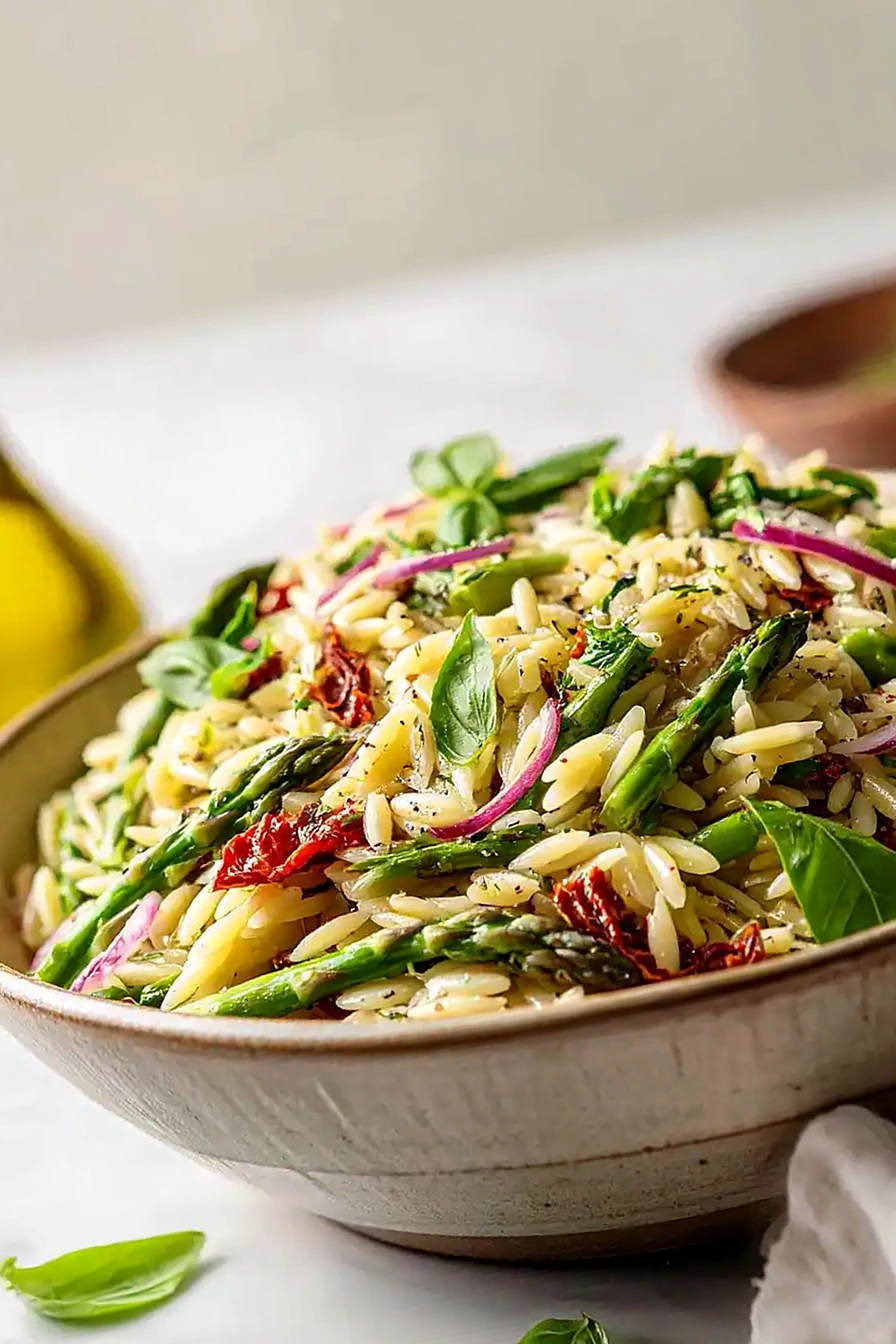
List of ingredients
- 1 cup orzo
- 1 bundle asparagus, trimmed and cut into 1-inch diagonal pieces
- 1/2 cup sun-dried tomatoes, thinly sliced
- 1/3 cup red onion, finely diced
- 1/3 cup fresh basil, thinly sliced
- 3/4 cup feta cheese, crumbled
- 1 tablespoon lemon zest
- 1/4 cup toasted pine nuts
- 1/2 teaspoon cracked black pepper
- 1/2 cup extra-virgin olive oil
- 1/4 cup lemon juice
- 1 1/2 tablespoons honey
- 2 garlic cloves, minced
- 1 teaspoon sea salt
- 1/2 teaspoon black pepper
- 1/2 teaspoon dried oregano
step-by-step instructions
- Step: While waiting for water to boil, trim and cut the asparagus, dice the red onion, slice the sun-dried tomatoes, mince the garlic, zest the lemon, and slice the fresh basil.
- Step: Bring a large pot of salted water to a boil and cook the orzo according to package directions. In a skillet, heat 1 tablespoon of olive oil over medium-high heat and sauté the asparagus for 5-8 minutes until tender-crisp. Drain the orzo and set aside.
- Step: In a medium bowl, whisk together the lemon juice, honey, minced garlic, and dried oregano. Slowly drizzle in the remaining 1/2 cup olive oil while whisking to emulsify. Season with sea salt and cracked black pepper.
- Step: In a large bowl, combine the cooked orzo, sautéed asparagus, red onion, sun-dried tomatoes, and lemon zest. Pour the vinaigrette over the mixture and toss. Fold in the fresh basil and feta cheese, then top with toasted pine nuts.
- Step: Taste and adjust seasoning with additional salt, pepper, or lemon juice. Serve immediately while slightly warm.
Refining Your Salad Techniques
Achieving the Perfect Al Dente Texture
When cooking orzo for a cold or room-temperature salad, it is crucial to pull it from the heat just before it reaches full softness. Because the pasta continues to absorb moisture from the dressing, starting slightly firm prevents the final dish from becoming gummy or overly soft. If you are preparing the pasta well in advance, you can rinse it with a quick splash of cold water to halt the cooking process entirely.
Selecting and Preparing Fresh Asparagus
For the best results, choose asparagus spears that are uniform in thickness so they cook at the same rate. Before slicing, snap off the woody ends—they are fibrous and unpleasant to eat, even after cooking. Cutting the spears on a diagonal not only looks more professional but also increases the surface area for the dressing to cling to during mixing.
Customizing Your Flavor Profile
Exploring Ingredient Swaps
If you find yourself missing specific items, many pantry staples work beautifully as alternatives. Ditalini or small shells are excellent substitutes if you run out of orzo, as they hold the dressing in their crevices similarly well. For the feta, goat cheese provides a similar creamy tang, while shaved parmesan offers a deeper, saltier punch that pairs wonderfully with the sun-dried tomatoes.
Enhancing the Vinaigrette Complexity
The dressing is the core of the flavor experience, and you can tweak it to suit your preferences. If you prefer a more herbal note, adding a pinch of dried thyme or finely chopped fresh parsley to the vinaigrette adds depth. For those who enjoy a bit of heat, a tiny pinch of red pepper flakes can be whisked into the dressing to provide a gentle, warming finish that contrasts with the bright citrus.
Planning and Organization
Strategies for Make-Ahead Preparation
This salad is an excellent candidate for advance preparation because the flavors intensify as they sit in the refrigerator. If making this a day before a gathering, store the vinaigrette in a separate container and wait to toss it with the salad until about 30 minutes before serving. Adding the fresh basil and pine nuts just before bringing the dish to the table ensures that the herbs stay vibrant and the nuts remain crunchy.
Proper Cooling for Texture Retention
If you prefer to serve your salad cold, let the orzo reach room temperature before mixing in the other components. Adding a cold vinaigrette to hot pasta can occasionally cause the olive oil to separate, whereas allowing the components to cool slightly encourages the dressing to coat the grains uniformly. Once combined, refrigerate the salad in a covered container to keep it crisp and fresh for up to four days.
Serving and Storage Recommendations
Optimal Temperature for Maximum Flavor
While the salad can be kept refrigerated, it is often best when served at cool room temperature. Removing the bowl from the refrigerator about 20 to 30 minutes before serving allows the olive oil in the dressing to lose its chill, which makes the flavors of the honey, lemon, and herbs much more pronounced. This simple step significantly elevates the quality of the dish, especially when it is meant for an outdoor picnic or summer dinner.
Managing Leftovers Effectively
If you have leftovers, store them in a glass airtight container to prevent odor absorption from other foods in your refrigerator. Because the orzo is a thirsty ingredient, it may appear slightly dry the next day as it soaks up the vinaigrette. You can easily revive the salad by stirring in a small teaspoon of fresh lemon juice or a drizzle of high-quality olive oil to restore the desired moisture level.
Addressing Common Salad Questions
Why does my pasta stick together?
Pasta often clumps if it is drained and left to sit without any fat or dressing. To prevent this, toss the freshly drained orzo with a tiny drizzle of olive oil while it is still warm, which prevents the individual pieces from sticking together as they cool. This helps ensure that the texture remains light and airy rather than clumpy.
How can I make the pine nuts last longer?
Toasted pine nuts are delicious but can soften if they absorb moisture from the salad ingredients. For the best texture, toast them in a dry skillet over medium heat for 2-3 minutes, watching them closely as they brown quickly. Keep them in a separate small bowl or baggie and sprinkle them over the top of the salad immediately before you are ready to serve the meal.
Is it necessary to use fresh basil?
Fresh basil provides a specific aromatic quality that dried versions cannot replicate. If fresh basil is not available, fresh flat-leaf parsley is the best alternative as it provides a clean, green brightness. Dried herbs are much more concentrated and can sometimes feel gritty in a pasta salad, so try to prioritize fresh leaves whenever possible for this specific recipe.
Can I add other vegetables to this base?
The base of this salad is quite versatile and welcomes additions like blanched green beans, halved cherry tomatoes, or even thinly sliced cucumber. If you choose to add high-moisture vegetables like cucumbers, be sure to slice them just before serving so they don’t release excess water into the salad bowl. Adding a handful of baby arugula just before serving can also introduce a nice peppery finish.
What is the benefit of the diagonal cut on asparagus?
Cutting the asparagus on a diagonal does more than just enhance the visual appeal of the dish. It creates a larger surface area on each piece, allowing the asparagus to cook more evenly while ensuring that every bite contains both the tender stalk and the crunchy tip. This consistency is key to a high-quality, professional-tasting result in any vegetable-forward salad.
How do I know when the orzo is perfectly cooked?
The term al dente literally means to the tooth, suggesting that the pasta should still have a very slight bite to it. Start testing your orzo one minute before the package instructions suggest by biting into a single grain; it should be soft but not squishy throughout. Once it reaches this point, drain it immediately and proceed with your cooling or mixing steps to ensure it doesn’t cross over into overcooked territory.
Why use honey instead of sugar in the dressing?
Honey provides a deeper, more rounded sweetness that acts as a perfect foil to the sharp lemon juice and the salty feta. Unlike granulated sugar, which can sometimes leave a grainy texture if not fully dissolved, honey incorporates smoothly into the oil and citrus, creating a silky mouthfeel for the vinaigrette. If you prefer a neutral sweetness, maple syrup or agave nectar are effective liquid substitutes that maintain the same texture.
Print
Best Asparagus Orzo Salad
- Total Time: PT25M
- Yield: 6 servings 1x
- Diet: Vegetarian
Description
A vibrant and refreshing asparagus orzo salad featuring tender asparagus, sun-dried tomatoes, and salty feta, all tossed in a sweet-tangy lemon honey vinaigrette.
Ingredients
- 1 cup orzo
- 1 bundle asparagus, trimmed and cut into 1-inch diagonal pieces
- 1/2 cup sun-dried tomatoes, thinly sliced
- 1/3 cup red onion, finely diced
- 1/3 cup fresh basil, thinly sliced
- 3/4 cup feta cheese, crumbled
- 1 tablespoon lemon zest
- 1/4 cup toasted pine nuts
- 1/2 teaspoon cracked black pepper
- 1/2 cup extra-virgin olive oil
- 1/4 cup lemon juice
- 1 1/2 tablespoons honey
- 2 garlic cloves, minced
- 1 teaspoon sea salt
- 1/2 teaspoon black pepper
- 1/2 teaspoon dried oregano
Instructions
- Step: While waiting for water to boil, trim and cut the asparagus, dice the red onion, slice the sun-dried tomatoes, mince the garlic, zest the lemon, and slice the fresh basil.
- Step: Bring a large pot of salted water to a boil and cook the orzo according to package directions. In a skillet, heat 1 tablespoon of olive oil over medium-high heat and sauté the asparagus for 5-8 minutes until tender-crisp. Drain the orzo and set aside.
- Step: In a medium bowl, whisk together the lemon juice, honey, minced garlic, and dried oregano. Slowly drizzle in the remaining 1/2 cup olive oil while whisking to emulsify. Season with sea salt and cracked black pepper.
- Step: In a large bowl, combine the cooked orzo, sautéed asparagus, red onion, sun-dried tomatoes, and lemon zest. Pour the vinaigrette over the mixture and toss. Fold in the fresh basil and feta cheese, then top with toasted pine nuts.
- Step: Taste and adjust seasoning with additional salt, pepper, or lemon juice. Serve immediately while slightly warm.
Notes
This salad tastes even better the next day as the flavors meld. Store in an airtight container in the refrigerator for up to 4 days.
- Prep Time: PT10M
- Cook Time: PT15M
- Category: Salad
- Method: Stovetop
- Cuisine: Mediterranean
Nutrition
- Serving Size: 1 serving
- Calories: 221 kcal
- Sugar: 6 g
- Sodium: 480 mg
- Fat: 14 g
- Saturated Fat: 3 g
- Unsaturated Fat: 10 g
- Trans Fat: 0 g
- Carbohydrates: 20 g
- Fiber: 2 g
- Protein: 6 g
- Cholesterol: 15 mg