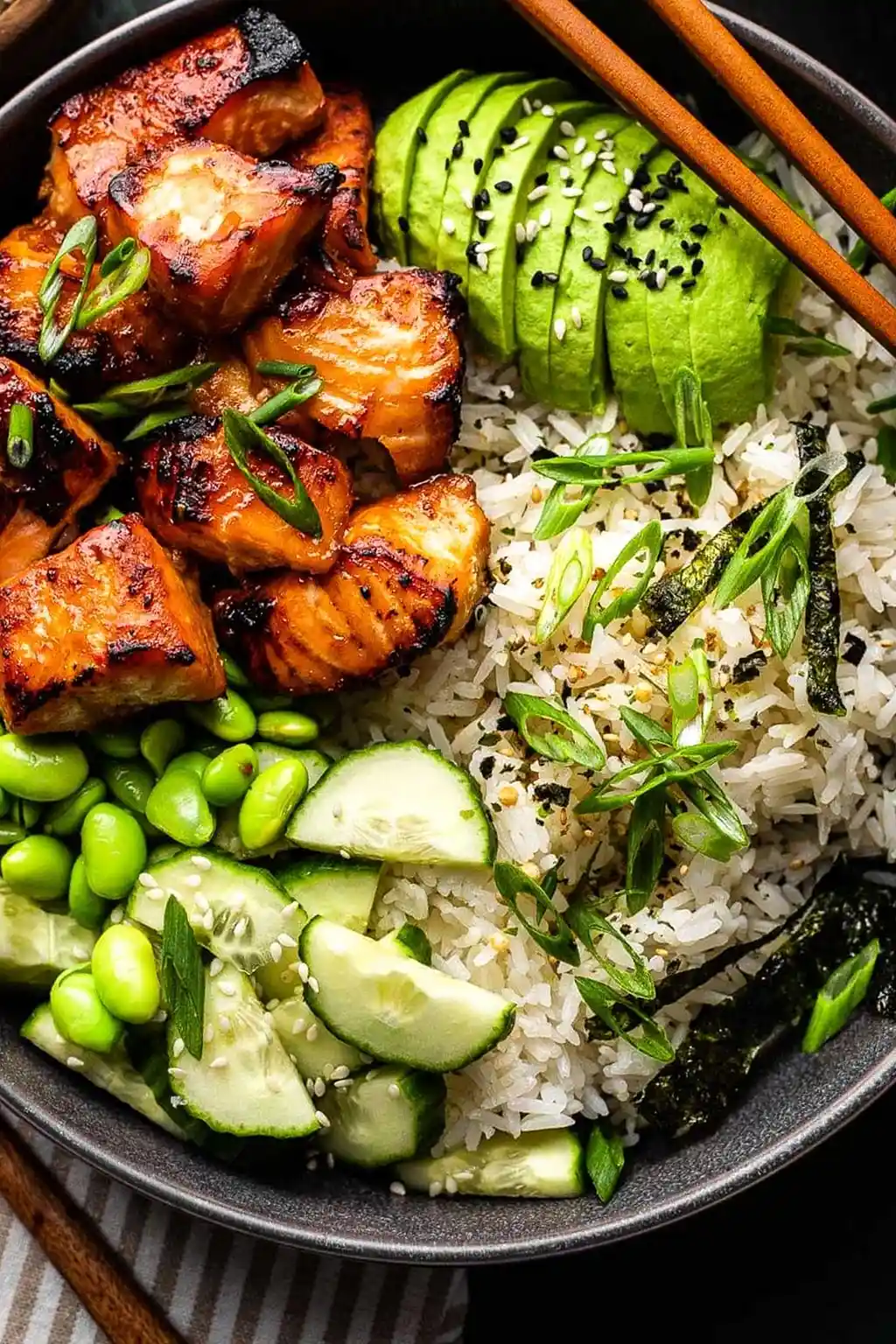
These salmon rice bowls combine oven-baked marinated fish with fresh vegetables and a creamy spicy sauce. They provide a balanced meal that is efficient for both weekday dinners and healthy meal prep.
List of ingredients
- 1 1/2 lbs center-cut salmon filet, skin removed – ensures even cooking across all cubes.
- 1/4 cup soy sauce – provides the primary salty base for the marinade.
- 2 tablespoons honey – adds sweetness to balance the heat and aids in caramelization.
- 1 tablespoon sriracha or chili garlic paste – adds a spicy kick to the marinade.
- 2 garlic cloves, grated – adds pungent aromatics to the fish.
- 2 teaspoons grated ginger or ginger paste – provides a fresh, zesty flavor profile.
- 1/3 cup kewpie mayo or regular mayonnaise – the creamy base for the spicy drizzle.
- 1 tablespoon sriracha or chili garlic paste – gives the mayo its signature spicy taste.
- 1 teaspoon grated ginger or ginger paste – adds depth to the sauce.
- 1 teaspoon toasted sesame oil – provides a nutty aroma to the dressing.
- 1 tablespoon soy sauce – adds saltiness to the spicy mayo.
- 4 cups steamed rice – serves as the hearty base of the bowl.
- 2 Persian or baby cucumbers, cut into half moons – adds a refreshing crunch.
- 1 avocado, sliced – provides creaminess and healthy fats.
- 1 cup shelled edamame, steamed – adds plant-based protein and color.
- Sesame seeds – used for garnish and texture.
- Nori sheets – used for serving as wraps or cut into strips.
step-by-step instructions
- Prepare the marinade: In a mixing bowl, whisk together the soy sauce, honey, sriracha, garlic, and ginger until the mixture is smooth. Ensure the honey is fully incorporated.
- Prepare the salmon: Pat the salmon filet dry with paper towels to remove excess moisture. Cut the fish into 1 1/2 inch cubes for consistent cooking.
- Marinate the fish: Toss the cubed salmon in the marinade until evenly coated. Let the fish marinate for 20-30 minutes, or up to 8 hours in the refrigerator for deeper flavor.
- Create the spicy mayo: In a small bowl, whisk together the kewpie mayo, sriracha, ginger, soy sauce, and sesame oil until smooth. Store this in the refrigerator until assembly.
- Preheat the oven: Set your oven to 400 F to ensure a hot surface for roasting.
- Bake the salmon: Line a rimmed baking sheet with parchment paper to prevent sticking. Remove salmon from the marinade and spread the cubes in a single layer. Bake for 8-10 minutes, then broil for 1-2 minutes to achieve a light char.
- Assemble the bowls: Divide the steamed rice among four bowls. Top with the baked salmon, cucumber half-moons, sliced avocado, and steamed edamame. Drizzle with the prepared spicy mayo and garnish with sesame seeds and nori.
Guide to Selecting and Preparing Salmon
Choosing the Right Cut
Use a center-cut salmon filet to ensure that all the cubes are of similar thickness. This consistency prevents smaller pieces from overcooking while larger pieces remain raw. Center cuts are typically the most uniform part of the fish.
Effective Skin Removal
If your salmon comes with skin, use a sharp filet knife to slide between the skin and the flesh. Start at the tail end and move toward the head, keeping the knife flat against the skin. This ensures you keep as much usable meat as possible.
Cubing for Even Cooking
Cut the salmon into exactly 1.5-inch cubes to maximize the surface area for the marinade. Larger cubes may take longer to cook through, while smaller cubes may dry out too quickly under the broiler. Use a sharp knife to avoid tearing the delicate flesh.
The Importance of Patting Dry
Always pat the salmon dry with paper towels before applying the marinade. Removing surface moisture allows the marinade to adhere better to the fish. This step is also critical for achieving a better char during the broiling phase.
Optimizing Your Grain Base
Preparing Jasmine Rice
Jasmine rice is recommended for its floral aroma and slightly sticky texture. Rinse the rice under cold water until the water runs clear to remove excess surface starch. This prevents the rice from becoming overly gummy or clumping together.
Using Brown Rice for More Fiber
Brown rice is a great alternative for those seeking more fiber and a nuttier flavor. Note that brown rice requires a longer cooking time and more water than white rice. Follow the package instructions strictly to avoid undercooked grains.
Low-Carb Cauliflower Rice Alternatives
Substitute steamed cauliflower rice for a low-carb or grain-free option. Sauté the cauliflower rice in a pan with a small amount of oil for 5 minutes. This removes excess moisture and improves the texture of the bowl.
Experimenting with Quinoa or Couscous
Quinoa adds an additional punch of protein and a slightly different texture. Cook quinoa in vegetable broth instead of water for added flavor. Couscous is a much faster alternative that only requires soaking in boiling water.
Expanding Your Topping Options
Adding Crunch with Cabbage
Shredded red or green cabbage provides a fresh, crisp contrast to the tender salmon. Toss the cabbage with a splash of rice vinegar and a pinch of salt. This creates a quick slaw that brightens the overall flavor of the bowl.
Incorporating Sweetness with Mango
Diced fresh mango adds a tropical sweetness that pairs well with the spicy mayo. Use a ripe but firm mango to ensure the cubes hold their shape. This provides a sweet-and-spicy balance common in Asian-inspired dishes.
Using Roasted Vegetables
Roasted broccoli or carrots can be added to the bowl for more depth. Roast them on the same baking sheet as the salmon if space permits. This adds a warm, earthy element to the meal.
Fresh Herb Garnishes
Fresh cilantro or sliced green onions add a burst of color and a sharp, fresh taste. Chop them finely and sprinkle them over the finished bowl just before serving. This prevents the herbs from wilting under the heat of the salmon.
Marinade and Sauce Customization
Adjusting the Heat Level
If the sriracha is too spicy, replace half of it with a mild chili garlic paste. For those who prefer more heat, add a pinch of cayenne pepper or red chili flakes to the marinade. Always taste the sauce before drizzling it over the bowls.
Gluten-Free Soy Alternatives
Replace soy sauce with tamari or coconut aminos to make the recipe gluten-free. Tamari has a similar flavor profile to soy sauce but lacks wheat. Coconut aminos are slightly sweeter and lower in sodium.
Fresh Ginger versus Ginger Paste
Freshly grated ginger provides a sharper, more aromatic flavor than the bottled paste. To grate ginger easily, use a microplane or the small holes of a box grater. If using paste, ensure it is a pure ginger paste without added thickeners.
The Role of Kewpie Mayo
Kewpie mayo uses only egg yolks and a touch of MSG, giving it a richer, creamier taste than American mayonnaise. If using regular mayo, add a small squeeze of lemon juice to mimic the tanginess. This ensures the sauce remains vibrant and balanced.
Advanced Cooking Techniques
Air Fryer Method
For a faster cook time, place the marinated salmon cubes in an air fryer basket. Cook at 400 F for 6 to 8 minutes, shaking the basket halfway through. This method often results in crispier edges than the oven.
Pan-Searing for a Deep Crust
If you prefer a heavy sear, heat a skillet with a tablespoon of oil over medium-high heat. Sear the salmon cubes for 2-3 minutes per side until golden brown. This method requires more attention to prevent the honey in the marinade from burning.
Managing the Broiler
The broiler is used to create a charred, caramelized exterior on the salmon. Keep a close eye on the fish, as it can go from charred to burnt in seconds. Position the oven rack in the upper third of the oven for the best results.
Preventing Overcooking
Salmon is best when it is just barely opaque in the center. Use an instant-read thermometer to check for an internal temperature of 145 F. Removing the fish slightly early and letting it rest for 2 minutes allows carry-over cooking to finish the process.
Storage and Freshness Tips
Separate Component Storage
Store the cooked salmon, steamed rice, and fresh vegetables in separate airtight containers. Mixing them too early leads to soggy vegetables and mushy rice. This method keeps each ingredient at its peak texture.
Refrigeration Limits
Cooked salmon and rice should be stored in the refrigerator for no more than 3 days. The spicy mayo can stay fresh in a separate sealed container for up to one week. Always ensure the containers are airtight to prevent odors from transferring.
Preventing Avocado Browning
Toss sliced avocado in a small amount of lemon or lime juice before storing. The citric acid slows down the oxidation process that turns avocado brown. Store the avocado in a separate container from the other ingredients.
Freezing Considerations
While the cooked salmon can be frozen, the fresh vegetables and avocado cannot. If freezing the salmon, wrap it tightly in foil and place it in a freezer bag. Thaw it completely in the refrigerator before reheating.
Reheating and Assembly
Microwave Reheating Tips
Reheat the rice and salmon together in the microwave for 60 to 90 seconds. Add a teaspoon of water to the rice to steam it back to life. Use a medium power setting to avoid toughening the salmon.
Maintaining Texture
Avoid reheating the cucumbers, avocado, or edamame. These should always be added fresh to the bowl after the salmon and rice are warm. This preserves the temperature contrast between the warm protein and cool vegetables.
The Emily Mariko Style
For a different experience, mix the reheated salmon and rice together with a generous amount of spicy mayo. Fold in the ingredients until the rice is creamy and coated. Serve this mixture with small pieces of toasted nori for wrapping.
Oven Reheating
To maintain the char on the salmon, reheat it in the oven at 350 F for 5-7 minutes. Cover the rice with a damp paper towel and microwave it separately. This prevents the salmon from becoming rubbery in the microwave.
Troubleshooting Common Issues
Salmon is Too Dry
Dry salmon usually occurs from overcooking or using a cut that is too lean. Stick to the 8-10 minute baking window and use a thermometer. Adding an extra drizzle of spicy mayo can help mask a slightly overcooked piece of fish.
Watery Vegetables
Watery cucumbers happen when they are sliced too early or salted too soon. Slice the cucumbers immediately before assembling the bowls. If they release too much water, pat them dry with a paper towel before adding them to the rice.
Sauce Separation
If the spicy mayo separates, it is usually due to temperature changes or improper mixing. Whisk the sauce vigorously with a small fork or whisk until emulsified. Ensure all ingredients are at room temperature when first mixing for the best stability.
Rice is Too Mushy
Mushy rice is often caused by adding too much water or overcooking. Use a measured cup for both water and rice. If the rice is already mushy, let it cool completely and store it in the fridge; it will firm up slightly.
Frequently Asked Questions
Can I use frozen salmon for this recipe?
Yes, but you must defrost it completely before use. Thaw the salmon in the refrigerator overnight and pat it very dry with paper towels. Excess water from frozen fish can dilute the marinade and prevent the salmon from searing.
Are there alternatives to Kewpie mayo?
You can use any standard mayonnaise. To get closer to the Kewpie flavor, add a tiny pinch of sugar and a teaspoon of rice vinegar. This mimics the sweetness and tang of the Japanese version.
How long can the salmon marinate?
The salmon is best marinated for 20 to 30 minutes for a light flavor, or up to 8 hours for a deep flavor. Do not marinate beyond 12 hours, as the acidity and salt in the soy sauce can start to break down the texture of the fish, making it mushy.
Can I make this recipe vegan?
Replace the salmon with extra-firm tofu cubes and use a vegan mayonnaise. Ensure the soy sauce is a vegan variety. Use the same marinade and spicy mayo ratios for a similar flavor profile.
What is the best way to slice the cucumbers?
Cut the Persian cucumbers into half-moons by slicing them lengthwise first, then cutting crosswise. This creates a shape that is easy to eat with chopsticks or a fork and looks visually appealing in the bowl.
How do I keep the nori crisp?
Store nori sheets in a dry, airtight container away from humidity. Only cut the nori into strips or squares immediately before serving. If the nori becomes chewy, you can briefly toast it in a dry pan over medium heat.
Print
Baked Spicy Salmon Rice Bowls
- Total Time: 30 minutes
- Yield: 4 bowls 1x
- Diet: General
Description
These baked salmon rice bowls are quick and easy to make, not to mention packed with fresh flavors. A delicious and filling meal featuring tender salmon with slightly crispy edges served over steamed rice with fresh veggies and spicy mayo.
Ingredients
- 1 1/2 lbs center-cut salmon filet, skin removed
- 1/4 cup soy sauce
- 2 tablespoons honey
- 1 tablespoon sriracha
- 2 garlic cloves, grated
- 2 teaspoons grated ginger
- 1/3 cup kewpie mayo
- 1 tablespoon sriracha
- 1 teaspoon grated ginger
- 1 teaspoon toasted sesame oil
- 1 tablespoon soy sauce
- 4 cups steamed rice
- 2 Persian or baby cucumbers, cut into half moons
- 1 avocado, sliced
- 1 cup shelled edamame, steamed
- sesame seeds
- nori sheets
Instructions
- Step: In a mixing bowl, whisk together the soy sauce, honey, sriracha, garlic, and ginger until smooth to make the marinade.
- Step: Pat the salmon dry with paper towels and cut into 1 1/2 inch cubes.
- Step: Toss the cubed salmon with the marinade and let it marinate for 20-30 minutes, up to 8 hours.
- Step: In a small bowl, whisk together the kewpie, sriracha, ginger, soy, and sesame oil until smooth; refrigerate until ready to use.
- Step: Preheat oven to 400 F.
- Step: Line a rimmed baking sheet with parchment paper, remove the salmon from the marinade, spread on the baking sheet, bake for 8-10 minutes, and broil for 1-2 minutes to get a light char.
- Step: Divide rice between bowls, then top with salmon, cucumbers, avocado, veggies, and any other desired toppings; drizzle with spicy mayo.
Notes
You can swap tamari or coconut aminos for the soy sauce to make this recipe gluten-free.
- Prep Time: 15 minutes
- Cook Time: 15 minutes
- Category: Main Dishes
- Method: Baking
- Cuisine: Asian
Nutrition
- Serving Size: 1 bowl
- Calories: 634 kcal
- Sugar: 11 g
- Sodium: 1316 mg
- Fat: 21 g
- Saturated Fat: 3 g
- Unsaturated Fat: 15 g
- Trans Fat: 0 g
- Carbohydrates: 65 g
- Fiber: 6 g
- Protein: 45 g
- Cholesterol: 94 mg