This vibrant baked feta salmon and pasta dish transforms simple, wholesome ingredients into a satisfying, high-protein meal. By roasting salmon alongside a base of cherry tomatoes, garlic, and crumbled feta, you create a naturally creamy sauce that coats your favorite pasta perfectly. It is an efficient, nutrient-dense recipe designed for busy schedules and weeknight meal prep.
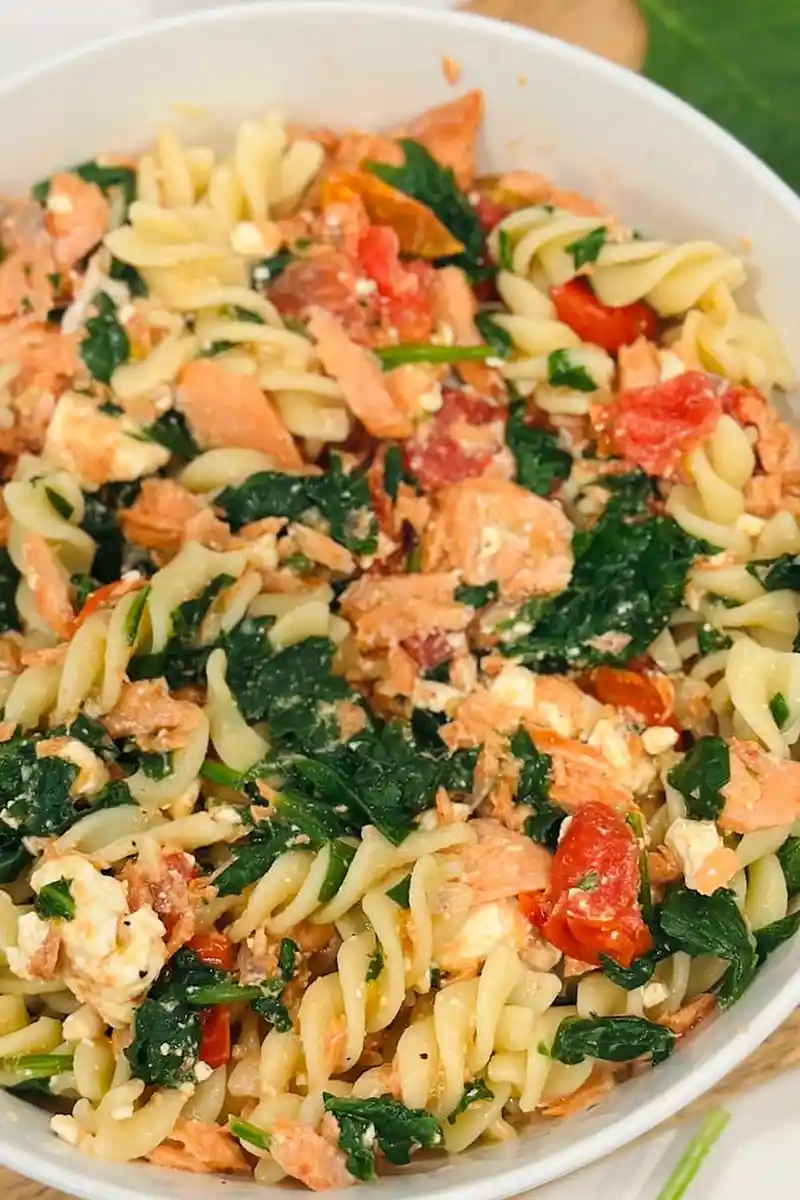
List of ingredients
- 8 oz dry pasta (such as fusilli, penne, rotini)
- 8 oz spinach, chopped
- 16 oz cherry tomatoes, halved
- 6 oz crumbled feta
- 4 garlic cloves, minced
- 1 Tbsp olive oil, divided
- 1/4 tsp salt
- 1/4 tsp ground black pepper
- 1 lb salmon
- 1/4 tsp dried oregano
step-by-step instructions
- Step: Prepare pasta according to package instructions. Prior to draining, add chopped spinach and submerge under water. Spinach should wilt quickly. Once spinach is cooked to your preference, drain water.
- Step: While pasta is being prepared: Preheat oven to 400°F. Prepare a 9×13-inch baking pan by spraying a light coat of oil on the bottom. Add tomatoes, feta, garlic, 2 tsp olive oil, salt, and pepper to baking pan. Stir to combine and evenly coat tomatoes and feta with oil, salt, and pepper.
- Step: Pat salmon dry. Place skin side down on top of tomatoes and feta. Drizzle remaining 1 tsp of olive oil and oregano on salmon. Bake for 15-20 minutes, or until fish flakes easily with fork and internal temperature reaches 145°F.
- Step: Move salmon to a plate and flake fish away from skin. Add flaked fish back to tomatoes and feta. Add drained pasta and spinach. Stir to evenly combine.
Essential Preparation Techniques
Managing Pasta Texture for Even Results
When preparing pasta for a casserole or mixed dish, aim for a slightly firm texture. Because the pasta will sit in the tomato and feta sauce, it can soften further during the mixing stage. Stopping the boiling process just before the pasta reaches full tenderness keeps the final meal from becoming mushy during storage.
Achieving the Ideal Salmon Roast
For the best results, ensure your salmon fillets are roughly uniform in thickness. If the tail ends are much thinner than the center, tuck them underneath to ensure even cooking. This prevents the thinner parts from drying out while the thicker portions reach the necessary internal temperature for safe eating.
Maximizing the Feta-Tomato Emulsion
As the cherry tomatoes roast, their liquid combines with the melting feta to create a naturally velvety emulsion. Ensure the tomatoes are evenly distributed beneath the salmon so they release their juices across the entire base of the dish. Stirring the mixture vigorously once the salmon is flaked helps fully emulsify the cheese and juices into a uniform sauce.
Refining Your Ingredient Selection
Selecting the Best Pasta Shapes
Pasta with ridges, such as fusilli, rotini, or penne, works significantly better than smooth varieties like spaghetti. The ridges and hollow centers catch the small bits of feta and juices from the roasted tomatoes. This ensures that every forkful is coated in flavor rather than the sauce sliding off the noodles.
Choosing High-Quality Feta Cheese
Blocks of feta stored in brine generally melt much smoother than pre-crumbled varieties, which are often coated in anti-caking agents. If you prefer a creamier sauce, buy a block of feta and crumble it yourself right before roasting. The higher moisture content of fresh feta makes for a superior, more cohesive sauce.
Varying the Green Leafy Additions
If you prefer a different texture than spinach, consider using baby kale or Swiss chard. Remove the tough stems from kale or chard before chopping, as these will require a slightly longer wilt time in the boiling pasta water. These alternatives provide a similar boost of nutrients while standing up well to the heat of the roasting pan.
Practical Serving and Hosting Advice
Enhancing Presentation for Guests
When serving this to others, consider garnishing the dish with a sprinkle of fresh, chopped parsley or a light dusting of extra pepper. The bright green contrast of fresh herbs against the roasted tomatoes adds a professional look to the meal. Adding a squeeze of fresh lemon juice just before serving can also cut through the richness of the feta, balancing the heavy notes of the dish.
Balancing the Meal Components
This dish is quite hearty, so it pairs well with light, crisp sides to round out your dinner. A simple side salad of fresh greens with a light balsamic vinaigrette provides a refreshing contrast to the warm, creamy pasta. You could also serve it with grilled zucchini or steamed asparagus to maintain the healthy, nutrient-focused theme of the recipe.
Storage and Reheating Reliability
Optimizing Fridge Longevity
Transfer the pasta to airtight containers once it has reached room temperature, usually within an hour of cooking. Glass containers with locking lids are ideal for keeping the fish and pasta fresh for up to 4 days. If the dish seems a bit dry after a few days, add a tiny splash of water or a drizzle of olive oil before sealing the container.
Safely Reheating Portions
To reheat, prioritize gentle heat to keep the salmon tender. If using a microwave, cover the container and reheat in 45-second intervals, stirring in between to ensure the heat is distributed evenly. Avoid high power settings, which can cause the fish to become tough or rubbery while the pasta continues to cook.
Meal Prep Organization
This recipe is an excellent candidate for batch cooking because the flavors improve after resting for a day. If you are preparing this for the entire week, you can roast the salmon and tomatoes on Sunday evening. Keep the pasta separate until you are ready to assemble for individual lunches, which prevents the noodles from soaking up too much of the sauce ahead of time.
Addressing Common Cooking Inquiries
How do I know the fish is fully cooked?
The safest way to check for doneness is to use a digital meat thermometer inserted into the thickest part of the salmon. You are looking for a temperature of 145°F. Alternatively, the fish should be opaque and flake apart easily when pressed gently with the side of a fork.
Can I substitute other types of fish?
While salmon provides the best flavor and healthy oils for this recipe, trout is a great, similar alternative. Trout cooks faster than salmon, so reduce the baking time by about 3-5 minutes to avoid overcooking. Avoid using delicate white fish like tilapia or cod, as they may fall apart too easily during the final mixing step.
What should I do if the sauce is too thick?
If the mixture seems too dry when you combine the pasta and the roasted ingredients, add a tablespoon of the pasta cooking water. This liquid contains starch, which helps bind the cheese and oil into a smooth, creamy consistency. Be careful not to add too much at once, as the goal is a coating sauce, not a soupy consistency.
Print
Baked Feta Salmon and Pasta Meal Prep
- Total Time: 30 minutes
- Yield: 4 servings 1x
- Diet: Pescatarian
Description
Inspired by the viral baked feta pasta, this Baked Feta Salmon and Pasta incorporates the same rich flavors along with flaky salmon for an omega-3 rich and high protein meal ready in about 30 minutes.
Ingredients
- 8 oz dry pasta (such as fusilli, penne, rotini)
- 8 oz spinach, chopped
- 16 oz cherry tomatoes, halved
- 6 oz crumbled feta
- 4 garlic cloves, minced
- 1 Tbsp olive oil, divided
- 1/4 tsp salt
- 1/4 tsp ground black pepper
- 1 lb salmon
- 1/4 tsp dried oregano
Instructions
- Step: Prepare pasta according to package instructions. Prior to draining, add chopped spinach and submerge under water. Spinach should wilt quickly. Once spinach is cooked to your preference, drain water.
- Step: While pasta is being prepared: Preheat oven to 400°F. Prepare a 9×13-inch baking pan by spraying a light coat of oil on the bottom. Add tomatoes, feta, garlic, 2 tsp olive oil, salt, and pepper to baking pan. Stir to combine and evenly coat tomatoes and feta with oil, salt, and pepper.
- Step: Pat salmon dry. Place skin side down on top of tomatoes and feta. Drizzle remaining 1 tsp of olive oil and oregano on salmon. Bake for 15-20 minutes, or until fish flakes easily with fork and internal temperature reaches 145°F.
- Step: Move salmon to a plate and flake fish away from skin. Add flaked fish back to tomatoes and feta. Add drained pasta and spinach. Stir to evenly combine.
Notes
Store in airtight containers in the refrigerator for 3-4 days. Enjoy leftovers cold like a pasta salad, or reheat to soften the feta. Nutrition information is provided as a courtesy only.
- Prep Time: 10 minutes
- Cook Time: 20 minutes
- Category: Main Course
- Method: Baking
- Cuisine: American
Nutrition
- Serving Size: 1 serving
- Calories: 533 kcal
- Sugar: 4 g
- Sodium: 680 mg
- Fat: 18.5 g
- Saturated Fat: 6 g
- Unsaturated Fat: 12.5 g
- Trans Fat: 0 g
- Carbohydrates: 48.5 g
- Fiber: 4.5 g
- Protein: 40 g
- Cholesterol: 95 mg