This vibrant shrimp and avocado salsa combines zesty lime, crisp vegetables, and perfectly seared shrimp for a refreshing appetizer. It is a quick-prep dish that works well for parties, game days, or a light summer lunch.
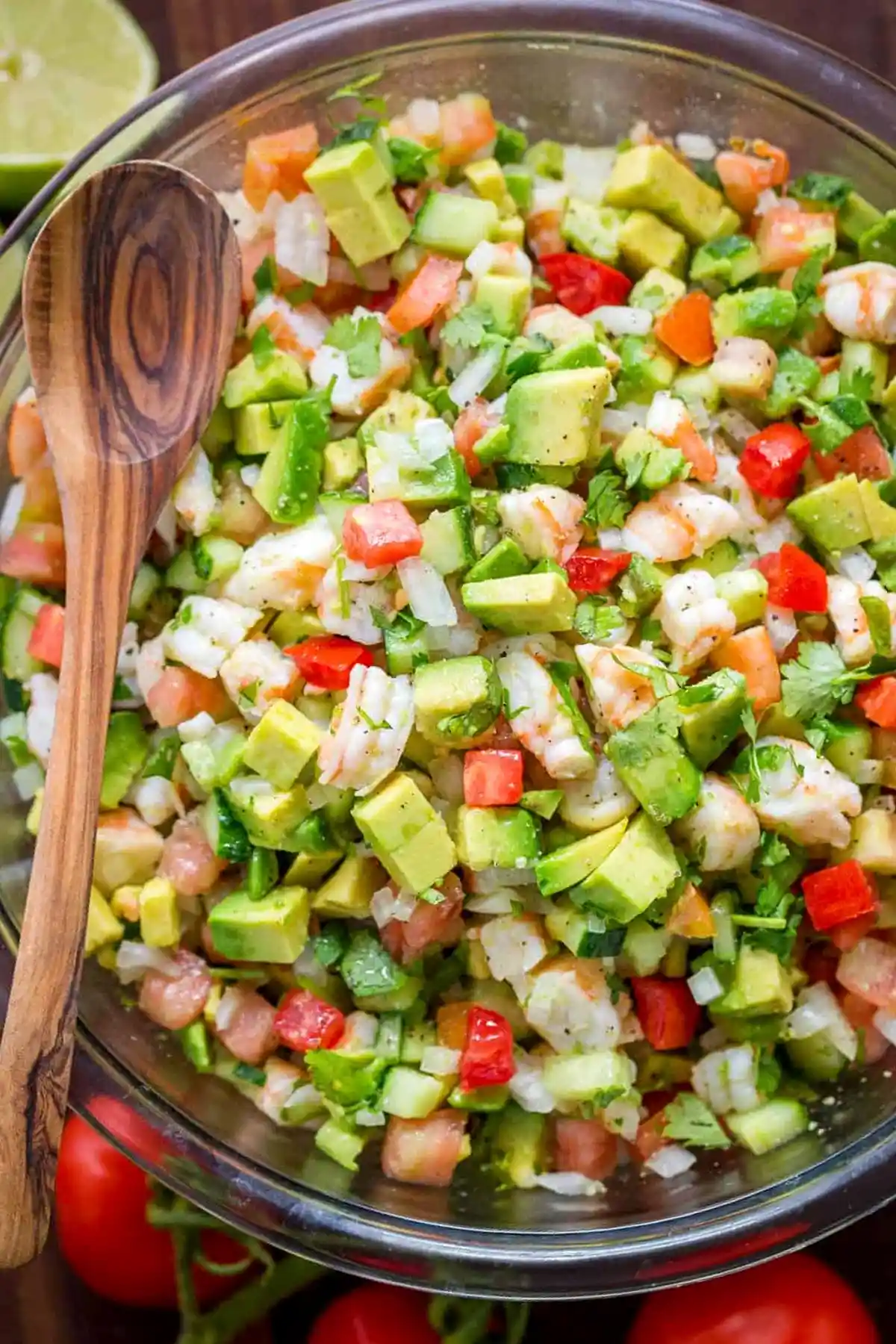
List of ingredients
- 1 lb raw shrimp (peeled and deveined) – use medium size for the best texture.
- 1/4 tsp salt and black pepper – adjusted to taste for seasoning.
- 1 Tbsp olive oil – used for sautéing the shrimp.
- 3 medium limes, juiced – providing the essential acidity and preservative qualities.
- 2 medium/large avocados – ensure they are ripe but firm.
- 1/2 english cucumber – peeled or unpeeled based on preference.
- 3 medium or 4 roma tomatoes – firm tomatoes prevent the salsa from becoming too watery.
- 1 small onion, finely diced – white or red onion both work well.
- 1/2 cup cilantro (1/2 bunch), chopped – fresh leaves and tender stems.
step-by-step instructions
- Cook the Shrimp: Season the raw shrimp lightly with salt and pepper. Place a large skillet over medium-high heat and add 1 Tbsp of olive oil. Once the pan is hot, add the shrimp in a single layer and cook for 3 minutes total, turning them once halfway through. Sauté just until cooked through, then remove them from the pan immediately to avoid overcooking. Transfer the shrimp to a cutting board, coarsely chop them, and place the pieces into a large mixing bowl.
- Marinate: Squeeze the juice of 3 medium limes directly over the chopped shrimp. Stir well and set the shrimp aside to marinate while you prepare the remaining vegetables.
- Prepare Main Vegetables: Dice the cucumber, tomato, and avocado into uniform small pieces. Add these diced vegetables to the mixing bowl containing the marinated shrimp.
- Final Mix: Finely dice the onion and chop the fresh cilantro. Add both to the mixing bowl and stir all ingredients together until well combined. Serve immediately with tortilla chips and a dash of hot sauce like Tabasco.
Expert Preparation Techniques
Selecting the Ideal Shrimp Size
For this salsa, medium shrimp (typically 31/40 count) are the best choice. They provide a consistent bite that matches the size of the diced vegetables. If using larger shrimp, ensure you chop them into smaller, uniform pieces after cooking to maintain a balanced texture in every spoonful.
Achieving the Perfect Shrimp Sear
To prevent the shrimp from steaming and becoming rubbery, ensure the olive oil is shimmering before adding the shrimp. Cook them in a single layer; crowding the pan lowers the temperature and releases excess moisture. Remove the shrimp the moment they turn opaque and curl into a ‘C’ shape rather than a tight ‘O’.
Precision Dicing for Avocado
To maintain the structure of the avocado, use a very sharp chef’s knife. Cut the avocado in half and remove the pit, then score the flesh into a grid pattern while still in the skin. Scoop the cubes out gently with a spoon to prevent bruising the fruit, which ensures the salsa looks professional and clean.
Removing Excess Cucumber Moisture
English cucumbers are preferred for their thinner skins and smaller seeds. If your cucumber is particularly watery, scoop out the center seed core with a spoon before dicing. This step prevents the salsa from becoming diluted and keeps the vegetables crisp for a longer period.
Selecting the Best Tomatoes
Roma tomatoes are ideal because they have a meatier texture and fewer seeds than beefsteak or globe tomatoes. This lower water content prevents the salsa from turning into a soup. Ensure the tomatoes are firm to the touch so they hold their shape when diced.
Ingredient Substitutions and Modifications
Replacing Cucumber with Jicama
For an extra crunch and a slightly nuttier flavor, substitute the English cucumber with peeled and diced jicama. Jicama holds its texture even longer than cucumber when exposed to lime juice. This is a great option if you are preparing the salsa several hours in advance.
Using Red Onion for Sharpness
While white onion provides a clean, crisp bite, red onion offers a bolder flavor and a pop of color. If the red onion is too pungent, soak the finely diced pieces in cold water for ten minutes, then drain and pat dry before adding them to the bowl. This removes the harsh sulfurous bite.
Cilantro Alternatives
If you have the gene that makes cilantro taste like soap, substitute it with fresh Italian flat-leaf parsley. Parsley provides a similar herbal brightness and green color without the polarizing taste. Alternatively, a small amount of fresh mint can add a unique, refreshing twist.
Increasing the Heat Level
While Tabasco is suggested for serving, you can build heat directly into the salsa. Finely mince one jalapeño or serrano pepper, removing the seeds for mild heat or keeping them for a spicy kick. Stir the minced pepper in along with the onions and cilantro.
Optimal Serving Suggestions
Choosing the Best Tortilla Chips
Thick, restaurant-style corn tortilla chips are best for this salsa because the shrimp and avocado add significant weight. Thin chips may break under the load of the chunky ingredients. Look for chips that are lightly salted to complement the lime juice without overpowering the fresh flavors.
Using Salsa as a Taco Topping
This mixture functions excellently as a topping for grilled fish or blackened shrimp tacos. Spoon a generous amount of the salsa over the protein in a warm corn tortilla. The lime juice in the salsa acts as a built-in dressing for the taco.
Low-Carb Serving Alternatives
For a low-carb or grain-free option, serve the shrimp salsa inside sturdy romaine lettuce leaves or hollowed-out cucumber slices. This maintains the freshness of the dish while removing the processed carbohydrates found in chips.
Pairing with Refreshing Drinks
Pair this dish with sparkling water infused with lime and mint to echo the flavors in the salsa. A chilled hibiscus tea or a non-alcoholic mojito also complements the acidity of the lime and the richness of the avocado.
Storage and Preservation Guidelines
Preventing Avocado Oxidation
The lime juice in this recipe acts as a natural antioxidant, slowing down the browning process of the avocado. To further prevent oxidation, press a piece of plastic wrap directly onto the surface of the salsa before sealing the container. This eliminates the air gap that causes the avocado to turn brown.
Optimal Refrigeration Containers
Store the salsa in an airtight glass container rather than plastic. Glass is non-reactive and will not absorb the strong scent of onions and cilantro. It also keeps the ingredients colder, which is essential for maintaining the safety and texture of the cooked shrimp.
Shelf Life and Freshness Window
For the best quality, consume the salsa within 24 to 48 hours. While the lime juice preserves the color, the vegetables will naturally release water over time, which can soften the cucumber and onion. Stir the salsa gently before serving the next day to redistribute the juices.
Managing Water Release Over Time
If you notice too much liquid at the bottom of the bowl after a night in the fridge, use a slotted spoon to serve the salsa. Alternatively, you can carefully drain some of the excess liquid before serving, though this liquid is packed with lime and shrimp flavor.
Troubleshooting Common Issues
Fixing a Watery Consistency
If the salsa becomes too watery, it is usually due to the tomatoes or cucumbers releasing juice. To fix this, you can stir in a few more small cubes of firm avocado, which helps thicken the mixture. In the future, ensure you are using Roma tomatoes and removing cucumber seeds.
Balancing Excess Acidity
If the lime juice feels too overpowering, do not add salt immediately, as this can enhance the perception of sourness. Instead, add a small amount of additional diced avocado or a pinch of sugar. The creaminess of the avocado naturally neutralizes the sharp acidity of the lime.
Avoiding Rubbery Shrimp
Rubbery shrimp is a result of overcooking. If your shrimp are too tough, ensure you are using a high-heat sear for a very short duration. If you are using pre-cooked shrimp, skip the sauté step entirely and simply rinse, pat dry, and chop them to avoid further cooking.
Frequently Asked Questions
Can I use frozen shrimp for this recipe?
Yes, you can use frozen shrimp. Ensure they are fully thawed in the refrigerator overnight or under cold running water before cooking. Pat them completely dry with paper towels before seasoning and sautéing to ensure they sear properly instead of steaming.
Is this recipe suitable for meal prep?
This recipe is great for short-term meal prep, but it is best made no more than a day in advance. Because of the fresh avocado and cucumber, the texture degrades after 48 hours. For longer meal prep, prepare the shrimp and vegetable base, then add fresh avocado and lime juice just before eating.
How do I store leftovers safely?
Keep the salsa refrigerated at all times. Since it contains cooked shrimp and fresh produce, it should not sit at room temperature for more than two hours. Use a clean spoon every time you serve to avoid introducing bacteria into the container.
Can I make this without onions?
Yes, you can omit the onions entirely if you prefer a milder flavor. If you want the aromatic quality without the bite of raw onion, you can substitute them with finely chopped chives or green onion tops, which provide a softer flavor profile.
Print
Avocado Shrimp Salsa Recipe
- Total Time: 20 minutes
- Yield: 6 servings 1x
- Diet: General
Description
This Avocado Shrimp Salsa is a party favorite! Loaded with shrimp, avocado and a surprising ingredient! Easy, excellent avocado shrimp salsa recipe.
Ingredients
- 1 lb raw shrimp (peeled and deveined)
- 1/4 tsp Salt and black pepper, or to taste
- 1 Tbsp olive oil
- 3 medium limes, juiced
- 2 medium/large avocados
- 1/2 english cucumber
- 3 medium or 4 roma tomatoes
- 1 small onion (finely diced)
- 1/2 cup Cilantro (chopped)
Instructions
- Step 1: Season shrimp lightly with salt and pepper. Place a large skillet over medium high heat. Once the pan is hot, add 1 Tbsp olive oil. Add shrimp in a single layer and cook 3 minutes total, turning once halfway. Saute just until cooked through then remove from the pan. Transfer to cutting board, coarsely chop and place into a large mixing bowl.
- Step 2: Squeeze the juice of 3 medium limes over the shrimp, stir and set aside to marinate while you prepare remaining salsa ingredients.
- Step 3: Dice cucumber, tomato and avocado and add them to the mixing bowl with shrimp.
- Step 4: Finely dice onion and chop 1/2 bunch of fresh cilantro. Add to the mixing bowl then stir together all of the ingredients until well combined and serve.
Notes
If using any sized pre-cooked shrimp – rinse under cold water, pat dry with paper towels then chop.
- Prep Time: 17 minutes
- Cook Time: 3 minutes
- Category: Appetizer, Salad
- Method: Sautéing
- Cuisine: American, Mexican
Nutrition
- Serving Size: 1 serving
- Calories: 242 kcal
- Sugar: 4 g
- Sodium: 722 mg
- Fat: 13 g
- Saturated Fat: 1 g
- Unsaturated Fat: 12 g
- Trans Fat: 0 g
- Carbohydrates: 15 g
- Fiber: 7 g
- Protein: 18 g
- Cholesterol: 190 mg