This hearty Greek pasta bake combines seasoned ground beef, tubular pasta, and a thick, creamy béchamel topping. It is a rich, comforting meal perfect for large gatherings or family dinners.
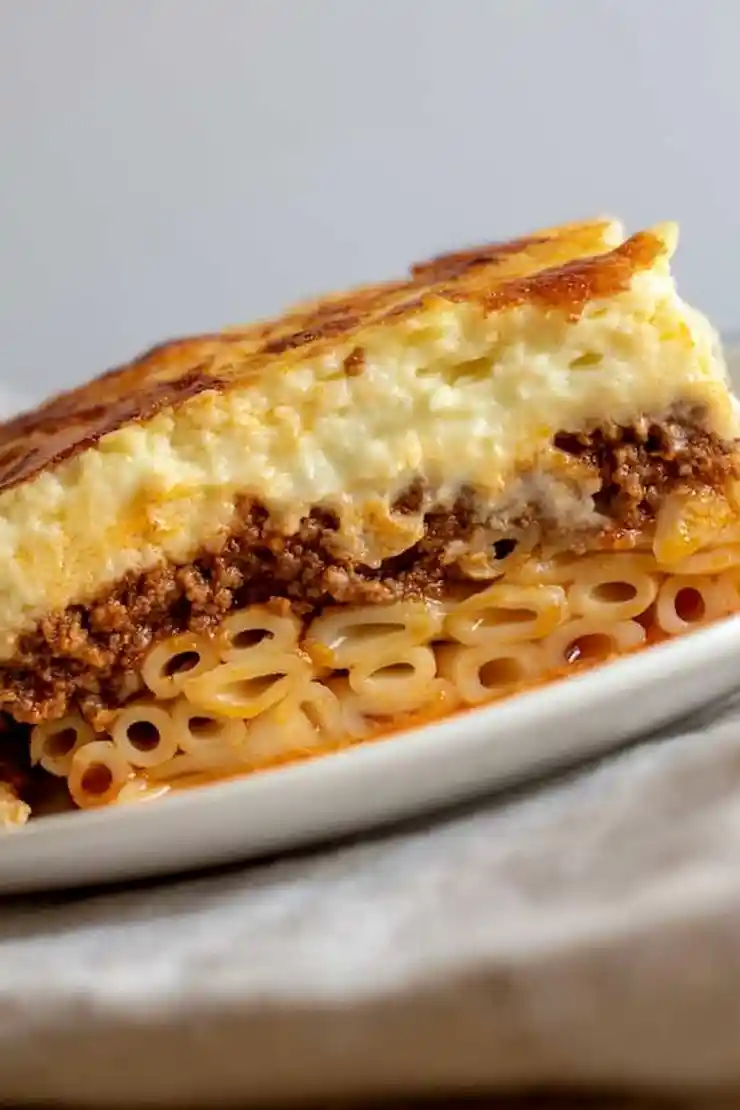
List of ingredients
- 3 pounds ground beef – use ground sirloin for best flavor.
- 1 large onion, chopped – provides a savory aromatic base.
- 2 15-ounce cans tomato sauce – creates the base for the ragù.
- 1 tablespoon ground cinnamon – adds the signature warm Greek flavor.
- Coarse kosher salt – for seasoning layers and the sauce.
- 1 package pastitsio noodles, or mostaccioli – long tubular pasta.
- 1/2 pound or more kasseri cheese, grated (about 4 cups) – or use asiago or an Italian blend.
- 4 eggs – used for binding the noodles and thickening the topping.
- 1 1/2 sticks unsalted butter – divided for the béchamel and the crust.
- 1 cup flour – creates the thickening agent for the sauce.
- 5 1/2 cups whole milk – ensures a rich and creamy béchamel.
step-by-step instructions
- Prepare Meat Sauce: Heat olive oil in a large pot over medium heat. Sauté chopped onions with a pinch of salt until translucent.
- Brown the Beef: Add ground beef and stir until no longer pink, breaking it up with a wooden spoon.
- Simmer the Ragù: Stir in tomato sauce and cinnamon. Bring to a simmer and season with salt. Cook with a lid slightly askew for 3 hours, stirring occasionally.
- Chill the Sauce: Let the meat sauce cool completely and refrigerate overnight to develop flavors.
- Prep for Assembly: Bring the chilled sauce to room temperature or warm it gently. Grate at least 4 cups of kasseri cheese.
- Cook the Pasta: Boil noodles in salted water until al dente, typically 1-2 minutes less than package instructions.
- Bind the Noodles: Drain the noodles. Once cool enough to touch, mix in one beaten egg by hand in a large bowl.
- Prepare the Pan: Preheat oven to 350°. Grease a lasagna pan or large baking dish with olive oil or cooking spray.
- Layer Base: Spread the egg-tossed noodles evenly in the pan. Sprinkle with one-third of the grated cheese.
- Add Meat Layer: Use a slotted spoon to spread the meat mixture evenly over the noodles and cheese.
- Add Second Cheese Layer: Sprinkle another third of the grated cheese over the meat.
- Make the Roux: In a heavy pot, melt 1 stick of butter. Whisk in flour and cook for 1-2 minutes while stirring constantly.
- Thicken the Béchamel: Slowly whisk in 5 cups of milk. Cook until the mixture starts to bubble, then remove from heat.
- Temper the Eggs: Beat 3 eggs with 1/2 cup of milk. Slowly whisk this mixture into the pot.
- Final Sauce Cook: Return the pot to medium-high heat. Whisk until the sauce is thick and bubbly, then let it rest for a few minutes.
- Final Assembly: Melt 1/2 stick of butter in a small pan. Pour the béchamel over the meat and cheese, spreading it evenly.
- Top and Brown: Sprinkle the remaining cheese over the béchamel. Drizzle the melted butter over the top.
- Bake: Place the pan on a baking sheet. Bake at 350° for 1 hour. Broil for 3-5 minutes if a deeper brown is desired.
- Rest and Serve: Let the pastitsio rest for 10 minutes before slicing.
Optimizing the Meat Sauce
Simmering for Flavor Depth
Simmering the beef and tomato mixture for three hours allows the cinnamon and tomato acids to mellow. This long process breaks down the proteins in the beef for a more tender texture. Keep the lid slightly open to allow excess moisture to evaporate, which concentrates the flavors.
Benefits of Overnight Refrigeration
Chilling the meat sauce overnight allows the spices to fully permeate the beef. This step also ensures the sauce is firm enough to layer without mixing too much into the pasta. Cold sauce creates a more distinct boundary between the meat and the creamy topping.
Managing the Beef Texture
Breaking the meat into small crumbles ensures an even distribution of sauce in every bite. Avoid overworking the meat during the initial browning to prevent it from becoming tough. Using a wooden spoon helps maintain the right consistency without crushing the meat.
Perfecting the Béchamel Sauce
Creating a Stable Roux
The combination of butter and flour forms the foundation of the sauce. Cooking the roux for a few minutes removes the raw flour taste without browning the butter. This ensures the final topping has a clean, creamy flavor profile.
Preventing Egg Curdling
Beating the eggs and milk separately before adding them to the hot roux prevents the eggs from scrambling. Adding the mixture slowly while whisking constantly maintains a smooth emulsion. This technique provides the lift and structure needed for the topping to set.
Determining the Ideal Thickness
The béchamel should be thick enough to hold its shape but fluid enough to spread evenly. It should coat the back of a spoon without running off immediately. Removing it from the heat just as it bubbles prevents the sauce from breaking.
Pasta Selection and Preparation
Using Authentic Pastitsio Noodles
Pastitsio noodles are traditionally long, hollow tubes that hold the meat sauce inside. These provide a structural integrity that prevents the dish from collapsing when sliced. Ensure they are boiled in heavily salted water to enhance the pasta’s flavor.
Mostaccioli as a Practical Alternative
Mostaccioli is an excellent substitute if specialty Greek pasta is unavailable. Use smooth tubes rather than ridged penne to better mimic the original texture. The smooth surface allows the egg coating to adhere more evenly.
The Role of the Egg Binder
Mixing a beaten egg into the cooked noodles serves as a binding agent. This prevents the pasta from sliding apart when the dish is cut into squares. It also creates a slight barrier that stops the noodles from absorbing too much moisture from the meat sauce.
Cheese Selection and Substitutions
Characteristics of Kasseri Cheese
Kasseri is a traditional Greek sheep and goat milk cheese known for its mild, salty taste. It has a high fat content, which allows it to melt smoothly into the layers. This cheese provides the authentic savory note required for this dish.
Using Asiago for Sharpness
Asiago is a suitable substitute if you prefer a sharper, more pungent flavor. It melts well and provides a similar saltiness to Kasseri. Use it in a 1:1 ratio to replace the original cheese.
Italian Blend for Mildness
A shredded Italian blend often contains mozzarella and provolone, making the dish milder. This is a great option for those who find traditional Greek cheeses too strong. It still provides the necessary stretch and golden color when baked.
Assembly and Baking Logic
Strategic Layering Order
The sequence of noodles, cheese, meat, and béchamel is critical for structural stability. The initial layer of cheese protects the pasta from the meat sauce. The final layers of cheese and béchamel create a protective seal that keeps the interior moist.
The Purpose of the Butter Drizzle
Drizzling melted butter over the final cheese layer is the secret to a golden-brown crust. The butter conducts heat more efficiently than the cheese alone, promoting a Maillard reaction. This results in a professional, restaurant-style finish.
Managing the Broiler
The broiler should only be used in short bursts of 3-5 minutes. Because of the high fat content in the butter and cheese, the top can burn quickly. Keep a close watch to avoid scorching the béchamel.
Storage and Reheating Advice
Refrigeration Guidelines
Store leftover pastitsio in an airtight container in the refrigerator for up to four days. Allow the dish to cool completely before covering to prevent condensation from making the topping soggy. Slicing the dish before storing makes reheating individual portions easier.
Freezing for Later Use
This dish freezes well if sliced into portions and wrapped tightly in foil. Freeze for up to three months for long-term storage. Avoid freezing the entire pan, as the center may not thaw evenly.
Best Reheating Methods
For the best texture, reheat slices in the oven at 325° until warmed through. This preserves the crispness of the béchamel topping. Microwave reheating is faster but may result in a softer, less structured slice.
Customization and Variations
Adjusting the Spice Profile
If you prefer a more aromatic dish, you can slightly increase the cinnamon amount. Some variations include a pinch of nutmeg in the béchamel for added depth. Keep the additions subtle to avoid overpowering the beef.
Incorporating Leaner Meats
If using very lean ground beef, add a tablespoon of olive oil to the meat sauce to compensate for the lack of fat. If using higher-fat beef, drain the excess grease after browning but before adding the tomato sauce. This prevents an oily layer from forming between the pasta and meat.
Adding Vegetable Aromatics
Adding finely diced carrots or celery to the onion sauté adds a layer of sweetness and complexity. Ensure the vegetables are minced very small so they blend into the meat sauce. This increases the nutritional value without altering the classic taste.
Troubleshooting Common Issues
Fixing Béchamel Lumps
If the béchamel becomes lumpy, use a whisk vigorously over medium heat to smooth it out. For stubborn lumps, pass the sauce through a fine-mesh strainer before adding the eggs. Ensuring the milk is added slowly is the best way to prevent this.
Preventing Soggy Noodles
Cooking the pasta slightly under the al dente point is crucial. The noodles continue to cook in the oven for an hour, absorbing moisture from the sauce. Overcooking the pasta during the boiling stage will lead to a mushy texture.
Solving a Pale Crust
If the top remains pale after an hour of baking, ensure you have used enough melted butter on top. Increase the oven temperature by 10 degrees for the last 10 minutes. The broiler is the most effective tool for achieving a deep golden color.
Frequently Asked Questions
Can I make this in a slow cooker?
The meat sauce can be made in a slow cooker on low for 6-8 hours. However, the assembly and baking of the pasta and béchamel must still be done in an oven to achieve the correct structure and browned top.
Why does the recipe call for cinnamon?
Cinnamon is a staple in Greek savory cooking and provides a warm, earthy contrast to the acidity of the tomato sauce. It is the defining flavor that separates pastitsio from a standard lasagna.
How do I cut clean slices?
The 10-minute resting period is essential for the layers to set. Use a sharp serrated knife to cut through the béchamel and pasta in one smooth motion. Avoid pressing down too hard to prevent the layers from compressing.
Can I use skim milk for the béchamel?
While skim milk can be used, it will result in a thinner sauce and a less rich flavor. Whole milk is recommended to achieve the traditional creamy consistency and stable structure of the topping.
Print
Authentic Greek Pastitsio
- Total Time: 5 hours
- Yield: 12 servings 1x
- Diet: General
Description
Authentic Pastitsio, or Greek lasagna ~ layers of pasta, cinnamon-laced beef, Kasseri cheese and béchamel.
Ingredients
- 3 pounds ground beef
- 1 large onion, chopped
- 2 15-ounce cans tomato sauce
- 1 tablespoon ground cinnamon
- coarse kosher salt
- 1 package pastitsio noodles, or mostaccioli
- 1/2 pound or more kasseri cheese, grated, about 4 cups
- 4 eggs
- 1 1/2 sticks unsalted butter
- 1 cup flour
- 5 1/2 cups whole milk
Instructions
- Prepare Meat Sauce: In a large pot, add a little olive oil and heat over medium heat. Add the chopped onions and sprinkle with a generous pinch of salt, cook until onions are just translucent.
- Brown Beef: Add the ground beef and cook and stir until no longer pink, breaking it up with a wooden spoon as it cooks.
- Simmer Sauce: Add the 2 cans of tomato sauce and cinnamon, stir and bring to a simmer. Season with salt to taste.
- Stew: Let meat sauce stew for 3 hours with a lid on, slightly askew. Stir occasionally. Let cool and then refrigerate overnight.
- Prepare Cheese: Bring sauce to room temperature or warm gently before layering the pastitsio. Grate the kasseri cheese and set aside, you want at least 4 cups.
- Cook Pasta: Cook noodles in boiling salted water until al dente. Drain noodles and when cool enough to handle, put them in a large bowl and mix one beaten egg into the pastitsio noodles with your hands.
- Layer Noodles: Preheat oven to 350º. In a lasagna pan, or other large pan, drizzle a little olive oil in the bottom or coat lightly with cooking spray. Put all of the noodles which were tossed with egg in the bottom of the pan and arrange evenly.
- Layer Cheese and Meat: Sprinkle with a third of the shredded cheese. Using a slotted spoon, cover the noodles and cheese evenly with all or most of the meat mixture, leaving room for the béchamel layer on top. Sprinkle another third of the cheese over the meat layer.
- Make Roux: In a heavy bottomed large pot, melt 1 stick of butter. Add the flour to the melted butter and whisk to combine well and cook, stirring constantly for a minute or two.
- Thicken Béchamel: Slowly add 5 cups of milk, whisking the whole time. Cook and whisk until it just starts to boil, when it starts to bubble. Turn off heat.
- Combine Egg Mixture: In a separate bowl, beat 3 eggs and 1/2 cup milk with a hand mixer. Add this mixture to the pot, slowly, whisking the whole time.
- Final Cook Béchamel: Put back on medium-high heat and cook and whisk until thick and bubbly. When at the desired consistency, cut the heat and let the béchamel sit for a few minutes.
- Top the Dish: In a small sauce pan, melt 1/2 stick of butter. Pour the béchamel over the meat and cheese layer, spreading evenly over the top. Sprinkle the remaining cheese over the béchamel, then drizzle or spoon the melted butter on top of the cheese.
- Bake: Place pan on a baking sheet and then into preheated oven and bake for 1 hour, until browned and center is hot. If not browned enough, turn on broiler and cook another 3 – 5 minutes.
- Rest: Let pastitsio rest for 10 minutes before serving.
Notes
The sauce takes 3 hours to simmer and is best refrigerated overnight. Assembling the pastitsio takes about 30 – 45 minutes. Baking time is about 1 hour and then it needs to rest a bit. Use a very large pan, such as a 12 by 18-inch baking pan.
- Prep Time: 15 minutes
- Cook Time: 4 hours 45 minutes
- Category: Main Course
- Method: Baking
- Cuisine: Greek
Nutrition
- Serving Size: 1 serving
- Calories: 690 kcal
- Sugar: 7 g
- Sodium: 446 mg
- Fat: 39 g
- Saturated Fat: 20 g
- Unsaturated Fat: 15 g
- Trans Fat: 2 g
- Carbohydrates: 43 g
- Fiber: 2 g
- Protein: 40 g
- Cholesterol: 188 mg