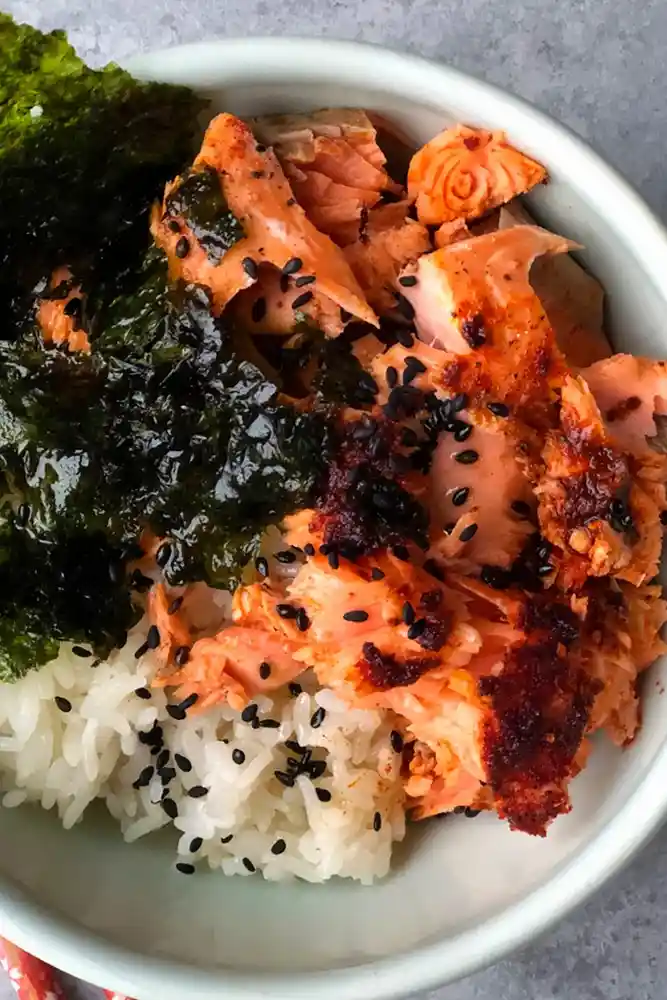
This vibrant Asian-inspired salmon rice bowl offers a perfect harmony of flaky, seasoned fish and fluffy, aromatic grains. It is a highly versatile, nutrient-dense meal that comes together in less than twenty minutes, making it ideal for busy weeknight dinners or a quick midday refuel. By utilizing high-heat baking for the salmon, you achieve a moist texture with a beautiful crust that pairs perfectly with the savory notes of sesame oil and crisp, salty nori.
List of ingredients
- 1 to 2 salmon fillets
- 1 tbsp olive oil
- 1 tsp lemon pepper seasoning
- 1/2 tsp smoked paprika
- Salt and pepper to taste
- 2 cups cooked white or brown rice
- 1 tsp sesame oil
- 1 tbsp low sodium soy sauce
- 1 tsp sesame seeds or Furikake
- 1 tsp fresh lemon juice
- 1 sheet seasoned nori, shredded
step-by-step instructions
- Step: Preheat your oven to 425 degrees Fahrenheit and line a baking sheet with parchment paper.
- Step: Pat the salmon fillets dry with a paper towel.
- Step: Lightly drizzle the salmon with olive oil, then season evenly with lemon pepper seasoning, smoked paprika, salt, and pepper.
- Step: Bake in the oven for 8 to 10 minutes, or until the salmon is cooked through and flakes easily with a fork.
- Step: Remove the salmon from the oven and break it into bite-sized pieces using a fork.
- Step: To assemble, place the cooked rice into a bowl, lightly drizzle with sesame oil and soy sauce, then top with the prepared salmon pieces.
- Step: Garnish with sesame seeds (or Furikake), a squeeze of fresh lemon juice, and shredded nori before serving.
Refining Your Salmon Preparation
Achieving the Perfect Flake
When roasting salmon at high heat, monitoring the internal structure is vital to prevent overcooking. You want the fish to transition from translucent to opaque, with the flakes separating easily under light pressure from a fork. If you notice a white substance known as albumin appearing on the surface, it is a sign that the proteins are constricting due to the heat; while harmless, removing the fish a minute earlier can prevent this and keep the meat more succulent.
The Role of High-Heat Roasting
Using a 425-degree oven creates a fast, efficient thermal environment that sears the exterior of the fish while keeping the inside tender. This method mimics the effect of a grill or a hot pan without requiring constant monitoring or the risk of the fish sticking to a surface. By focusing on shorter, intense cook times, you preserve the natural moisture of the salmon, ensuring it remains silky rather than dry and tough.
Perfecting the Rice Base
Selecting the Right Grain Variety
Choosing between white and brown rice changes the texture and nutritional profile of your bowl. Short-grain or medium-grain white rice offers a soft, slightly sticky consistency that creates a cohesive bowl where the ingredients cling together comfortably. Brown rice provides a nuttier chew and added fiber, but ensure it is cooked until tender so that it does not feel overly firm or grainy against the soft, flaky salmon.
Maximizing Grain Absorption
To ensure your rice isn’t bland, mix the sesame oil and soy sauce in while the grains are still steaming hot. The warmth helps the oil penetrate the starch, ensuring every bite carries a consistent flavor rather than having concentrated pockets of saltiness. If you are preparing rice in advance, reheat it with a splash of water to restore its fluffiness before adding the final seasonings.
Flavor Balancing and Enhancements
Managing Salt Levels in Bowls
Because soy sauce, Furikake, and seasoned nori all contribute varying levels of sodium, it is safer to season the rice lightly and add more only after assembling the bowl. Start with a very small drizzle of soy sauce, as you can always add more, but it is impossible to remove excess salt once it has soaked into the grains. This approach allows the natural sweetness of the salmon and the brightness of the lemon to remain at the forefront.
Adding Fresh Citrus Elements
Fresh lemon juice acts as a crucial bridge between the fatty elements of the salmon and the earthiness of the rice. If you do not have fresh lemons, a splash of rice vinegar can also provide a pleasant, subtle acidity that brightens the bowl. Focus on adding the acid at the final moment of serving so that the citrus notes remain vibrant and do not get lost during the heating process.
Storage and Reheating Procedures
Handling Leftover Components
It is best to store the cooked salmon and the rice in separate airtight containers if you plan on eating the leftovers later. Salmon can dry out quickly if stored uncovered, so wrap the fish tightly or keep it in a small container to limit air exposure. Storing components separately prevents the rice from absorbing too much liquid from the fish, which can lead to a mushy texture after refrigeration.
Reheating for Optimal Texture
When reheating salmon, use a low-power setting on the microwave or, preferably, a toaster oven to prevent the edges from becoming leathery. A quick steam in a pan with a tablespoon of water can also revive the moisture in the fish, as the gentle heat warms the protein through without cooking it a second time. Always reheat the rice with a drop of water to regain its initial soft, steamed quality.
Managing Common Bowl Issues
Troubleshooting Dry Salmon
If your salmon tends to come out dry, check that your oven is accurately calibrated with an external thermometer, as internal dials can often be inaccurate. Even a difference of twenty degrees can significantly impact the moisture level of a delicate fillet. Additionally, ensure you are not over-trimming the fat on the salmon, as this natural oil is essential for maintaining a juicy result during the short, high-heat bake.
Preventing Soggy Nori
Seasoned nori is highly sensitive to moisture and will lose its crispness if it sits too long in contact with warm rice or fish. To maintain that important textural contrast, always add the shredded nori as the absolute final step immediately before serving. If you are packing these bowls for a later meal, store the nori in a small separate bag or container and sprinkle it over the top just before you are ready to eat.
FAQ
How can I tell when the salmon is fully cooked?
The best way to tell if the salmon is ready is to test it with a fork; the flesh should be opaque and flake easily along the natural lines of the muscle. If you use a food thermometer, the thickest part of the fillet should register between 125 and 130 degrees Fahrenheit for a moist, medium-cooked finish.
Can I swap the salmon for another protein?
Yes, this flavor profile works excellently with white fish like cod or tilapia, though you should adjust your cooking time as these varieties are often thinner and require less heat. You could also use firm tofu cubes, prepared in the same manner with the lemon pepper and paprika, for a plant-forward variation that still holds up well to the bowl’s seasonings.
What should I do if the Furikake is too salty?
Furikake varies by brand and often contains seaweed, salt, and dried fish flakes, so check the label for sodium content. If you find your specific blend is quite salty, simply reduce the amount of added soy sauce in your rice base to keep the overall bowl balanced and flavorful without becoming overwhelming.
Is it necessary to use olive oil?
The olive oil helps create a protective barrier on the salmon, which keeps the fish from sticking to the parchment and helps the spices adhere uniformly. If you prefer to avoid added oils, you can use a light brush of water or even a little bit of lemon juice, though the texture of the crust will be less pronounced without the oil.
How can I make this bowl more filling?
If you need a more substantial meal, add steamed vegetables like snap peas, broccoli, or bok choy to the sides of the bowl. These vegetables pair perfectly with the sesame and soy components and add a satisfying crunch that rounds out the meal’s nutritional profile effectively.
Print
Asian Salmon Rice Bowl
- Total Time: 20 minutes
- Yield: 2 servings 1x
- Diet: Pescatarian
Description
A quick, nutritious, and flavorful Asian-inspired salmon bowl featuring lemon pepper seasoned salmon served over fluffy rice, finished with sesame oil, fresh lemon, and crispy nori.
Ingredients
- 1 to 2 salmon fillets
- 1 tbsp olive oil
- 1 tsp lemon pepper seasoning
- 1/2 tsp smoked paprika
- Salt and pepper to taste
- 2 cups cooked white or brown rice
- 1 tsp sesame oil
- 1 tbsp low sodium soy sauce
- 1 tsp sesame seeds or Furikake
- 1 tsp fresh lemon juice
- 1 sheet seasoned nori, shredded
Instructions
- Step: Preheat your oven to 425 degrees Fahrenheit and line a baking sheet with parchment paper.
- Step: Pat the salmon fillets dry with a paper towel.
- Step: Lightly drizzle the salmon with olive oil, then season evenly with lemon pepper seasoning, smoked paprika, salt, and pepper.
- Step: Bake in the oven for 8 to 10 minutes, or until the salmon is cooked through and flakes easily with a fork.
- Step: Remove the salmon from the oven and break it into bite-sized pieces using a fork.
- Step: To assemble, place the cooked rice into a bowl, lightly drizzle with sesame oil and soy sauce, then top with the prepared salmon pieces.
- Step: Garnish with sesame seeds (or Furikake), a squeeze of fresh lemon juice, and shredded nori before serving.
Notes
Ensure the salmon reaches an internal temperature of 145 degrees Fahrenheit for food safety. You can customize the bowl by adding steamed vegetables like broccoli or snap peas.
- Prep Time: 10 minutes
- Cook Time: 10 minutes
- Category: Main
- Method: Baking
- Cuisine: Asian-Inspired
Nutrition
- Serving Size: 1 bowl
- Calories: 450 kcal
- Sugar: 1 g
- Sodium: 380 mg
- Fat: 18 g
- Saturated Fat: 3 g
- Unsaturated Fat: 14 g
- Trans Fat: 0 g
- Carbohydrates: 42 g
- Fiber: 2 g
- Protein: 30 g
- Cholesterol: 75 mg