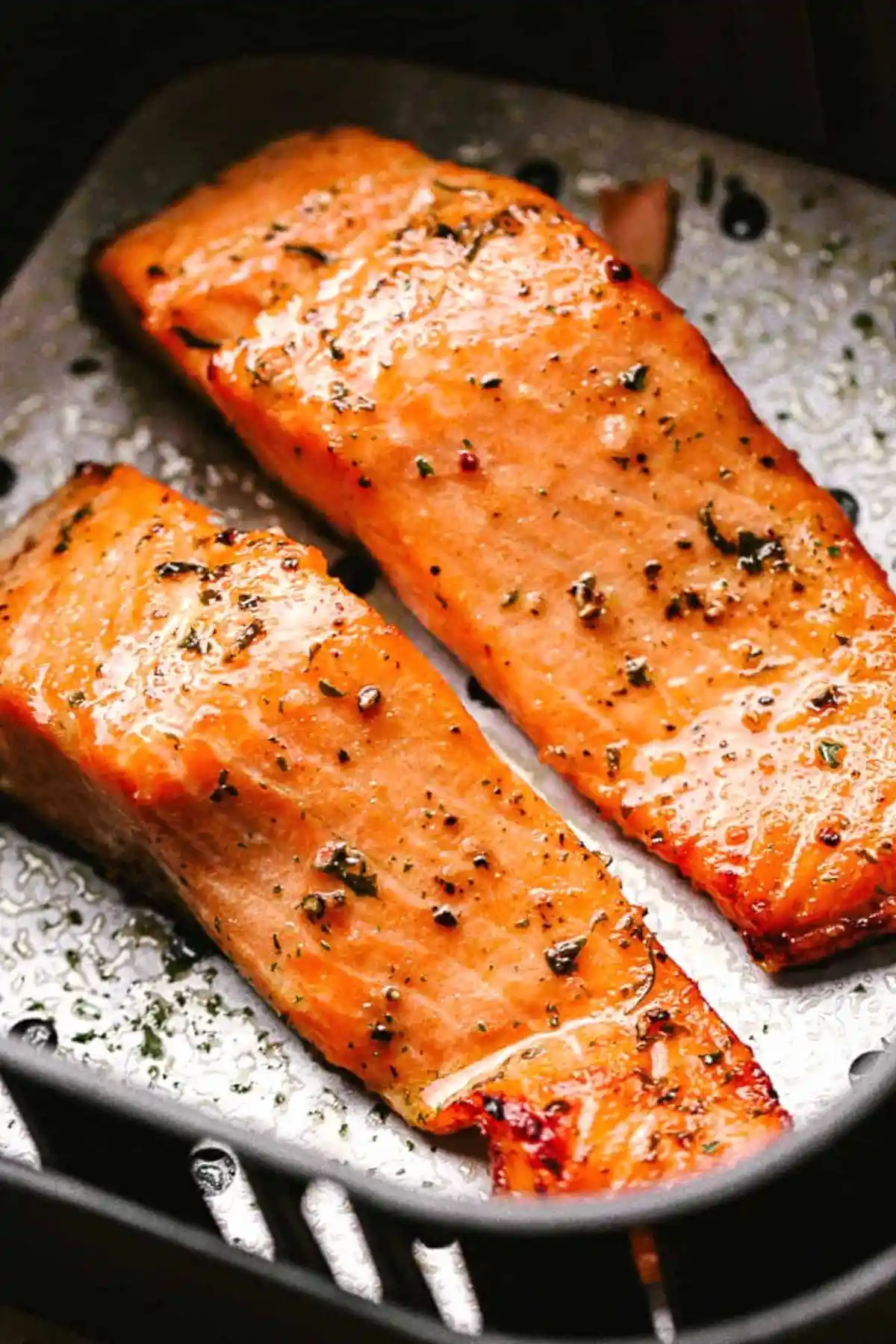
Preparing perfectly flaky and succulent salmon at home is incredibly simple when you use the efficiency of an air fryer. This method locks in moisture while creating a beautiful, flavorful crust that rivals any professional restaurant dish. It is a nutritious and reliable choice for busy evenings when you need a high-protein meal on the table in under fifteen minutes.
List of ingredients
- 2 salmon fillets (5 to 6 ounces each)
- 1½ tablespoons butter (melted)
- 2 cloves garlic (minced)
- 1 tablespoon lemon juice
- 2 teaspoons brown sugar
- 2 teaspoons chopped fresh parsley
- ½ teaspoon dried Italian Seasoning
- salt and fresh ground black pepper (to taste)
step-by-step instructions
- Step: Pat dry the salmon fillets with paper towels.
- Step: Melt the butter and whisk in the minced garlic, lemon juice, brown sugar, parsley, and Italian seasoning. Brush the salmon fillets with the butter mixture and season the filets with salt and pepper.
- Step: Transfer the salmon to the air fryer basket. Set the air fryer to 390˚F and cook the fish for 7 to 8 minutes or to your desired doneness. Salmon is cooked through when its internal temperature registers at 145˚F.
- Step: Remove the fillets from the air fryer and let them rest for a few minutes before serving.
Refining your technique
Ensuring consistent internal temperature
Using an instant-read thermometer is the most reliable way to prevent overcooking delicate seafood. Because air fryers vary in power and internal basket size, visual estimation can often lead to dry, chalky fish. Always aim for the 145˚F threshold to ensure the fish is opaque and flaky while remaining juicy inside.
Managing basket space for airflow
Air fryers function by circulating extremely hot air at high speeds, which is what creates the desirable exterior texture. If the basket is too crowded, the air cannot move effectively around the sides of the salmon, resulting in uneven cooking and soft, pale edges. If you find your basket is undersized, cook your fillets in two separate batches rather than forcing them into a cramped position.
Flavor variations and substitutions
Adjusting the sweetness
If you prefer not to use brown sugar, you can substitute it with an equal amount of pure maple syrup or honey. These liquid sweeteners provide a slightly different flavor profile and will still assist in achieving a beautiful golden-brown color on the surface of the salmon. Ensure you whisk the butter mixture well if using honey, as its viscosity can make it slightly more difficult to integrate with the citrus juice.
Herbal alternatives
While Italian seasoning is a standard, robust blend, you can customize your salmon by rotating in fresh dill, tarragon, or chives. Dill is particularly well-suited to salmon because its grassy, slightly sweet notes highlight the natural richness of the oily fish. Add fresh herbs at the very end of the cooking process or just before serving to maintain their bright color and aromatic intensity.
Practical serving suggestions
Pairing with roasted vegetables
The high heat of the air fryer is excellent for preparing side dishes simultaneously or shortly after the salmon is done. Asparagus, broccoli florets, or thick-sliced zucchini rounds all take well to the same 390˚F temperature and require minimal seasoning. Cooking your side dishes in the air fryer creates a unified, low-effort meal that minimizes kitchen cleanup.
Serving with grains or salads
Salmon pairs exceptionally well with light, refreshing bases like a citrus-forward quinoa salad or a bed of peppery arugula dressed with olive oil. The richness of the buttery salmon acts as a great contrast to the clean, crisp nature of raw greens or slightly nutty grains. For a heartier meal, consider serving the fillets over a bed of fluffy couscous or jasmine rice that can absorb any extra pan juices.
Common concerns and solutions
Can I cook salmon skin-side down?
Yes, cooking with the skin on is often preferred as it provides a protective barrier against the high heat, keeping the flesh moist during the cooking process. If you prefer the skin to be crispy, ensure it is completely dry before seasoning and place it skin-side down against the basket floor. Some people prefer to remove the skin after cooking, which is much easier to do once the fillet has rested, as the skin will naturally pull away from the cooked meat.
Is it necessary to use oil?
The butter in this recipe provides sufficient fat to facilitate the cooking process and prevent the salmon from sticking to the air fryer rack. If you prefer to use oil, a high-smoke-point oil like avocado oil is a better choice than extra virgin olive oil for temperatures reaching 400˚F. However, butter provides a savory, rich flavor that is difficult to replicate with oil alone, so it is highly recommended for this specific preparation.
Why does the salmon look dry on the edges?
If your salmon is drying out at the edges before the center is cooked, the fillet may be too thin, or the temperature might be set slightly too high for the specific size of the piece. Ensure that the fillets you select are of similar thickness; if you have a piece that tapers significantly at the end, tuck the thinner end under itself to create a uniform block. This prevents the thin part from overcooking while the thick center catches up to the required internal temperature.
Storage and reheating strategy
Managing leftovers
Leftover cooked salmon should be stored in an airtight container in the refrigerator and consumed within 48 hours. To prevent the fish from drying out while stored, try to keep it in a single layer or wrap it tightly in parchment paper before placing it in a container. Cold leftover salmon is excellent when flaked into cold salads or served as a topping for grain bowls.
Gentle reheating methods
The best way to reheat salmon is in the air fryer at a lower temperature, such as 300˚F, for about 3 to 4 minutes. Using a lower heat setting prevents the proteins from tightening further, which is what usually leads to the tough, rubbery texture often associated with reheated fish. If you prefer not to use the air fryer again, a quick steam in a skillet with a tablespoon of water covered by a lid can also help retain moisture during the reheating process.
Can I freeze the cooked fish?
While cooked salmon can technically be frozen for up to two months, the texture will be significantly softer upon thawing. It is generally better to use leftover cooked salmon in recipes where the texture is secondary, such as stirred into a chowder, mashed into fish cakes, or folded into a pasta sauce. Always ensure the fish is cooled completely before placing it in a freezer-safe bag to prevent excess ice crystal formation on the surface of the fillet.
Print
Air Fryer Salmon
- Total Time: 15 minutes
- Yield: 2 servings 1x
- Diet: Pescatarian
Description
Juicy, flaky, and deliciously flavored Air Fryer Salmon! This easy seafood recipe is the perfect choice anytime you want a fabulous and quick dinner.
Ingredients
- 2 salmon fillets (5 to 6 ounces each)
- 1½ tablespoons butter (melted)
- 2 cloves garlic (minced)
- 1 tablespoon lemon juice
- 2 teaspoons brown sugar
- 2 teaspoons chopped fresh parsley
- ½ teaspoon dried Italian Seasoning
- salt and fresh ground black pepper (to taste)
Instructions
- Step: Pat dry the salmon fillets with paper towels.
- Step: Melt the butter and whisk in the minced garlic, lemon juice, brown sugar, parsley, and Italian seasoning. Brush the salmon fillets with the butter mixture and season the filets with salt and pepper.
- Step: Transfer the salmon to the air fryer basket. Set the air fryer to 390˚F and cook the fish for 7 to 8 minutes or to your desired doneness. Salmon is cooked through when its internal temperature registers at 145˚F.
- Step: Remove the fillets from the air fryer and let them rest for a few minutes before serving.
Notes
Don’t overcrowd the air fryer basket to ensure proper airflow for optimal cooking and browning. If doubling the recipe, cook in batches. Use uniform salmon sizes for even cooking. Frozen fillets can be used by adding a few extra minutes to the cooking time.
- Prep Time: 5 minutes
- Cook Time: 8 minutes
- Category: Dinner
- Method: Air Frying
- Cuisine: American, Mediterranean
Nutrition
- Serving Size: 1 fillet
- Calories: 332 kcal
- Sugar: 2 g
- Sodium: 151 mg
- Fat: 19 g
- Saturated Fat: 7 g
- Unsaturated Fat: 12 g
- Trans Fat: 0 g
- Carbohydrates: 4 g
- Fiber: 1 g
- Protein: 34 g
- Cholesterol: 116 mg