Preparing salmon in an air fryer delivers a restaurant-quality texture with minimal effort, resulting in a crispy exterior and tender, flaky meat. This honey dijon glaze creates a perfectly balanced flavor profile, blending savory depth with a light, natural sweetness. It is an ideal solution for a nutritious, protein-packed meal that fits into the busiest of schedules.
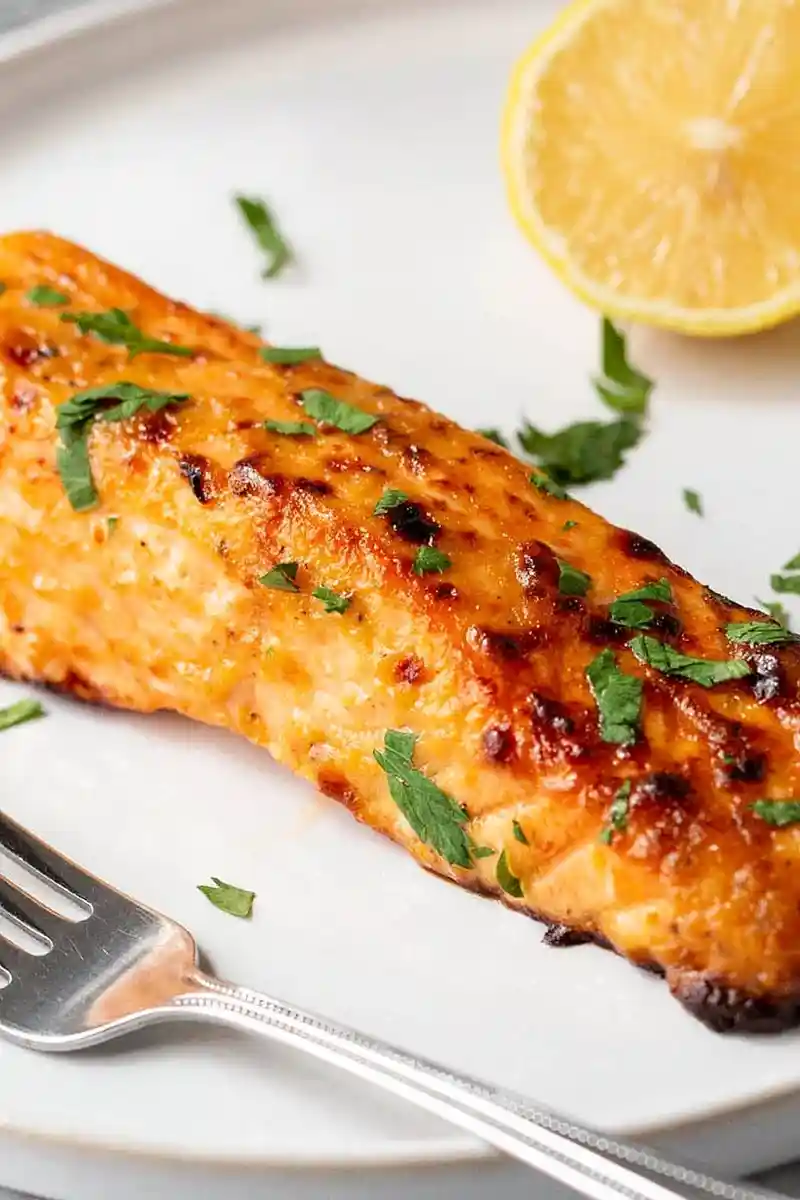
List of ingredients
- 6 oz salmon
- 1 Tablespoon dijon mustard
- 1 Tablespoon honey
- 1 teaspoon olive oil
- 1/2 teaspoon garlic powder
- a pinch of salt
- a pinch of pepper
- lemon wedges (optional, for serving)
step-by-step instructions
- Step: Preheat air fryer for 5 minutes at 400 degrees F.
- Step: In a small bowl, add the honey, dijon mustard, garlic powder, and olive oil. Stir to combine.
- Step: Take your salmon filets and pat dry with a paper towel. Remove any bones. If desired, remove the skin. Season with salt and pepper.
- Step: Spoon the honey dijon glaze over the top of the salmon and rub into all sides of the salmon to coat. Reserve a little glaze if you want to spoon a little on top after cooking (optional).
- Step: Place the salmon filets in the air fryer, skin side down (if skin was left on).
- Step: Cook at 400 degrees F for 7-9 minutes.
- Step: Remove and top with remaining glaze (optional) and lemon wedges (optional).
Essential Preparation Techniques
Ensuring Proper Surface Moisture
Moisture is the primary enemy of a good sear in an air fryer environment. Even if the salmon appears dry, microscopic droplets on the surface can prevent the honey glaze from setting correctly. Always use a clean paper towel to press gently against the salmon to pull away excess surface humidity before you apply your glaze components.
Selecting the Right Salmon Cut
The thickness of your fillet is the most important factor in determining the cooking time. A thick center-cut fillet will require the full 9 minutes to reach internal safety standards, while thinner tail pieces may reach the desired temperature in closer to 6 minutes. Try to select fillets of uniform thickness to ensure the edges do not become overcooked while the center remains raw.
Refining the Cooking Process
Managing Air Circulation
Air fryers operate by circulating high-speed, hot air around the food, effectively mimicking a convection oven. Never crowd your air fryer basket if you are preparing multiple portions, as restricted airflow leads to steaming instead of roasting. Place the salmon in the center of the basket to allow the air to flow freely around all sides of the fish.
Monitoring Internal Doneness
A digital meat thermometer is the most reliable way to achieve perfect results every time you use an air fryer. Insert the probe into the thickest part of the salmon fillet, ensuring it does not touch any bones, which can provide an inaccurate reading. Once the temperature reaches 145 degrees Fahrenheit, the salmon is fully cooked and safe for consumption.
Flavor Enhancements and Adjustments
Adjusting Glaze Consistency
If you find that your honey dijon mixture is too thick to brush on easily, you can whisk in a half-teaspoon of lukewarm water or additional olive oil. Conversely, if you prefer a thicker, more syrupy glaze that stays put during the high-heat cooking process, allow the mixed glaze to sit for five minutes before application so the mustard proteins and honey can stabilize.
Incorporate Herbal Aromatics
Fresh herbs such as chopped dill or tarragon complement the sharp notes of dijon mustard exceptionally well. Stir a small amount of finely minced herbs directly into your honey dijon mixture before glazing the salmon. Alternatively, add a sprinkle of dried parsley or chives after the salmon has finished cooking to add a vibrant pop of color to the final presentation.
Frequently Asked Questions
Can I cook this salmon from a frozen state?
While fresh is preferred for the best texture, you can air-fry frozen salmon. However, you must extend the cooking time by about 3 to 5 minutes, and it is best to apply the glaze during the final 3 minutes of cooking to prevent the honey from burning due to the longer exposure to heat.
Why did the honey in the glaze darken quickly?
Honey contains natural sugars that caramelize rapidly at temperatures above 375 degrees Fahrenheit. If you notice your glaze browning faster than the salmon is cooking, reduce your air fryer temperature to 375 degrees and add an extra minute to the overall cooking time to compensate for the lower heat.
What is the best way to prevent the fish from sticking?
The most effective method to prevent sticking is to lightly brush the air fryer rack with a small amount of high-smoke-point oil before placing the salmon inside. You can also place the fish on a small piece of perforated parchment paper specifically designed for air fryers to ensure a clean removal every time.
How do I know if the salmon skin is edible?
When salmon is prepared in an air fryer at 400 degrees, the skin often becomes thin and crispy, which many people find delicious. Ensure the scales have been thoroughly removed by your fishmonger before cooking, as any remaining scales will create an unpleasant, papery texture on the palate when consumed.
What can I serve alongside this dish for a balanced meal?
This salmon pairs excellently with roasted root vegetables or a light cucumber salad tossed in a vinaigrette. Because the honey dijon glaze is relatively rich and flavorful, serving it alongside steamed quinoa or fluffy jasmine rice helps to absorb the extra sauce and rounds out the meal with complex carbohydrates.
Can I prepare this recipe for a larger group?
You can certainly scale this recipe to suit your needs as long as you do not overlap the fillets in the air fryer basket. If your air fryer is small, it is better to cook in batches, keeping the first batch warm in a low-temperature oven set to 200 degrees while the second batch finishes cooking.
Print
Air Fryer Honey Dijon Salmon
- Total Time: 13 minutes
- Yield: 1 serving 1x
- Diet: Pescatarian
Description
Air fryer honey dijon salmon is quick and easy to make for lunch or dinner. It takes less than 10 minutes to cook, and is flavorful and delicious!
Ingredients
- 6 oz salmon
- 1 Tablespoon dijon mustard
- 1 Tablespoon honey
- 1 teaspoon olive oil
- 1/2 teaspoon garlic powder
- a pinch of salt
- a pinch of pepper
- lemon wedges (optional, for serving)
Instructions
- Step: Preheat air fryer for 5 minutes at 400 degrees F.
- Step: In a small bowl, add the honey, dijon mustard, garlic powder, and olive oil. Stir to combine.
- Step: Take your salmon filets and pat dry with a paper towel. Remove any bones. If desired, remove the skin. Season with salt and pepper.
- Step: Spoon the honey dijon glaze over the top of the salmon and rub into all sides of the salmon to coat. Reserve a little glaze if you want to spoon a little on top after cooking (optional).
- Step: Place the salmon filets in the air fryer, skin side down (if skin was left on).
- Step: Cook at 400 degrees F for 7-9 minutes.
- Step: Remove and top with remaining glaze (optional) and lemon wedges (optional).
Notes
The recipe serves 1 as written. To make 2 salmon fillets, double the recipe. Salmon should be cooked to an internal temperature of 145 degrees F for complete safety.
- Prep Time: 5 minutes
- Cook Time: 8 minutes
- Category: Main Course
- Method: Air Frying
- Cuisine: American
Nutrition
- Serving Size: 1 fillet
- Calories: 355 kcal
- Sugar: 17 g
- Sodium: 242 mg
- Fat: 15 g
- Saturated Fat: 2 g
- Unsaturated Fat: 12 g
- Trans Fat: 0 g
- Carbohydrates: 19 g
- Fiber: 1 g
- Protein: 35 g
- Cholesterol: 94 mg