This air fryer blackened salmon delivers bold, Cajun-inspired flavors in under 15 minutes. It is a practical, high-protein meal that achieves a vibrant crust without the need for heavy cast-iron searing.
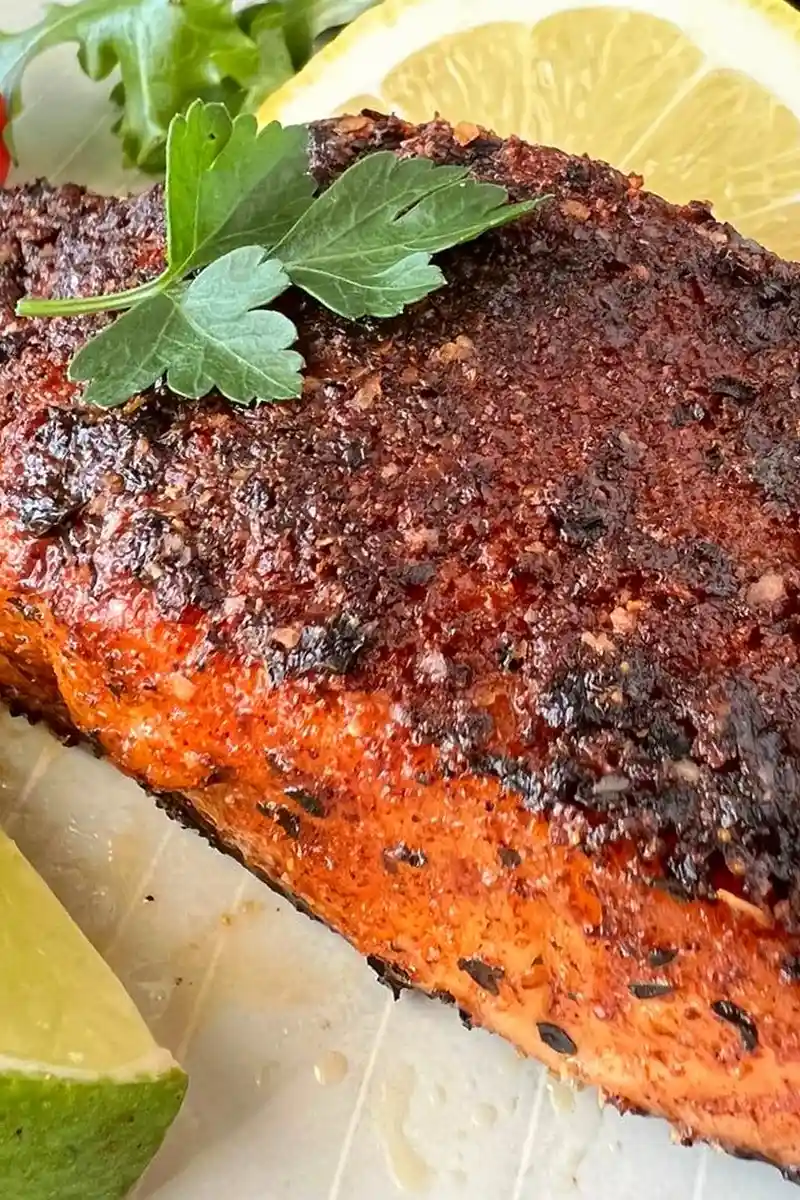
List of ingredients
- 2 6oz salmon filets (fresh, skinless or with skin)
- 1 tsp smoked paprika – provides deep color and smoky flavor.
- 1/2 tsp onion powder – adds a savory base.
- 1/2 tsp garlic powder – enhances the aromatic profile.
- 1/2 tsp oregano – contributes earthy notes.
- 1/4 tsp cumin – adds warmth and complexity.
- 1/4 tsp black pepper – provides a sharp bite.
- 1/4 tsp kosher salt – balances the spices.
- 1/4 tsp ground mustard – adds a slight tang.
- 1/4 tsp cayenne – provides the signature Cajun heat.
- 1 tsp olive oil – used to bind the spices and prevent sticking.
step-by-step instructions
- Preheat the Air Fryer: Set your air fryer to 400°F and let it run for 5 minutes. This ensures the salmon begins searing immediately upon contact.
- Prepare the Salmon: Brush the olive oil evenly over the surface of the salmon filets. This creates a barrier that prevents the fish from sticking and helps the spices adhere.
- Apply the Rub: Combine the smoked paprika, onion powder, garlic powder, oregano, cumin, black pepper, salt, ground mustard, and cayenne in a small bowl. Generously apply the mixture to the salmon, pressing it in to form a thick crust.
- Air Fry: Place the seasoned salmon in the air fryer basket or on the middle tray. Set the temperature to 400°F and cook for 8-10 minutes. The exact time depends on the thickness of the filets; the salmon is done when the internal temperature reaches 145°F.
- Rest the Fish: Remove the filets from the air fryer and let them rest on a plate for 2-3 minutes. This allows the juices to redistribute for a more tender texture.
Selecting the Best Salmon for Blackening
Choosing Between Wild-Caught and Farmed Salmon
Wild-caught salmon generally has a more intense flavor and a deeper red color. It is often leaner, which means it can cook faster in the air fryer and may dry out more quickly if overcooked. Farmed salmon typically has a higher fat content, resulting in a milder taste and a more buttery texture that is more forgiving during the high-heat air frying process.
Identifying Fresh Salmon Quality
Fresh salmon should have a vibrant color and a firm texture that springs back when pressed. Avoid filets that look dull, have brownish edges, or possess a strong fishy odor. The flesh should be moist but not slimy, and there should be no gaps or separation in the muscle fibers.
Skin-On versus Skinless Filets
Keeping the skin on provides a natural barrier that prevents the fish from overcooking and helps the filet maintain its shape. If you prefer skinless salmon, ensure the filets are patted completely dry before applying oil to avoid steaming. Skin-on salmon can be served as is or the skin can be easily removed after cooking.
Considering Filet Thickness
The thickness of the salmon significantly impacts the cooking time. Filets that are 1 inch thick usually adhere to the 8-10 minute window, while thinner cuts may only need 6-7 minutes. Always use a thermometer for thickness variations to avoid drying out the center.
Mastering the Blackened Seasoning
The Role of Smoked Paprika in the Crust
Smoked paprika is essential for achieving the dark, rich color characteristic of blackened fish. Unlike sweet paprika, the smoked variety adds a layer of depth that mimics the char of a grill. It helps create a visual ‘blackened’ effect without needing to burn the fish.
Adjusting Heat Levels with Cayenne Pepper
Cayenne provides the primary heat in this Cajun rub. If you prefer a milder flavor, you can reduce the amount to a pinch or omit it entirely. For those who enjoy a more aggressive spice profile, increasing the cayenne to a half teaspoon will intensify the heat.
Adding Depth with Ground Mustard
Ground mustard adds a subtle acidity and pungency that cuts through the richness of the salmon. It helps balance the earthy notes of the cumin and oregano. This ingredient is key to replicating the complexity of traditional restaurant-style blackening rubs.
Substituting Common Spices
If you lack oregano, dried thyme or basil can be used as a substitute for the herbal component. For onion or garlic powder, you can use a high-quality garlic salt, but you must reduce the kosher salt in the recipe to prevent the dish from becoming too salty. Smoked paprika can be replaced with regular paprika and a drop of liquid smoke if available.
Air Fryer Technical Tips for Success
The Importance of Preheating the Basket
Preheating the air fryer for 5 minutes is a critical step. When the salmon hits a hot surface, the proteins sear immediately, which helps lock in moisture and develops the crust. Placing fish into a cold basket often leads to a soggy exterior and a longer cooking time.
Ensuring Optimal Airflow
Air fryers work by circulating hot air rapidly around the food. To maximize this, do not overlap the salmon filets in the basket. Ensure there is at least an inch of space between each piece of fish to allow the air to hit all sides, ensuring an even cook.
Preventing Salmon from Sticking
While olive oil is used in the recipe, you can also lightly grease the air fryer basket with a high-smoke-point oil or a cooking spray. This provides an extra layer of protection. If using a tray, placing the salmon on a small piece of perforated parchment paper can make cleanup easier, though it may slightly reduce the crispness of the bottom.
Managing the Cooking Temperature
Maintaining a consistent 400°F is necessary for the blackening process. If your air fryer tends to run very hot, you may notice the paprika burning before the fish is cooked through. In this case, lower the temperature to 375°F and extend the cooking time by 2-3 minutes.
Achieving Perfect Doneness
Using an Instant-Read Thermometer
The only way to guarantee perfectly cooked salmon is by using a digital meat thermometer. Insert the probe into the thickest part of the filet. The USDA recommends an internal temperature of 145°F, but many prefer pulling the salmon at 135°F to 140°F and letting carry-over cooking finish the process during the resting phase.
Recognizing the Flake Point
If you do not have a thermometer, use a fork to gently press the top of the filet. The salmon is done when the flesh separates easily along the natural lines, or ‘flakes,’ when pressed. If the center remains translucent or resists flaking, it needs more time.
Preventing Overcooking
Salmon can go from perfectly moist to dry in a matter of sixty seconds. To avoid overcooking, start checking the temperature two minutes before the timer is expected to go off. Overcooked salmon becomes chalky and loses its vibrant pink color, turning a pale, opaque shade.
The Benefits of Resting the Meat
Letting the salmon rest for 2-3 minutes allows the internal fibers to relax. During cooking, the heat pushes juices toward the center; resting allows those juices to redistribute throughout the filet. This results in a more succulent piece of fish.
Serving and Pairing Recommendations
Pairing with Complex Carbohydrates
Serve blackened salmon alongside quinoa, brown rice, or farro to balance the bold spices. A wild rice pilaf with sautéed onions and celery complements the Cajun profile well. For a lower-carb option, cauliflower rice sautéed with garlic is an excellent substitute.
Balancing with Fresh Greens
The heat of the blackened rub pairs well with cooling vegetables. Steamed asparagus, sautéed kale, or a fresh cucumber and tomato salad provide a refreshing contrast. A side of steamed broccoli with a squeeze of lemon can help cleanse the palate between bites.
Adding a Citrus Finish
A fresh squeeze of lemon or lime juice over the salmon just before serving brightens the overall flavor. The acidity of the citrus cuts through the richness of the salmon and the smokiness of the paprika. You can also serve the dish with a wedge of lime on the side for individual adjustment.
Creating a Creamy Sauce Contrast
For those who want to tone down the heat, a dollop of tartar sauce, a lemon-caper butter, or a Greek yogurt-based dill sauce works perfectly. These creamy additions provide a cooling effect that balances the cayenne and smoked paprika.
Storage and Reheating Guidelines
Optimal Refrigerator Storage
Place cooked salmon in an airtight glass container to preserve the flavor and prevent the fish from absorbing other fridge odors. It will remain safe to eat for up to 3 days. Ensure the salmon is completely cooled before sealing the container to prevent excess moisture from softening the crust.
Freezing for Long-Term Use
Cooked blackened salmon can be frozen for up to 2 months. Wrap each filet tightly in freezer-safe plastic wrap or place them in a vacuum-sealed bag to prevent freezer burn. Squeeze out as much air as possible before sealing.
Reheating Without Drying the Fish
The best way to reheat air fryer salmon is to return it to the air fryer at 350°F for 2-3 minutes. This restores the crispness of the crust without overcooking the interior. Avoid using the microwave, as it often makes the fish rubbery and destroys the blackened texture.
Using Leftover Salmon in Other Dishes
Cold blackened salmon is excellent when flaked into a salad or used in a salmon cake. You can also slice it thinly and place it on top of an avocado toast with a drizzle of olive oil. The bold spices make it a great addition to a breakfast wrap with scrambled eggs.
Troubleshooting Common Issues
Dealing with Sticking Salmon
If your salmon sticks to the basket, it is usually due to insufficient oil or a lack of preheating. Ensure you brush the filet thoroughly with olive oil. If sticking persists, try using a high-smoke-point oil like avocado oil, which can withstand the 400°F heat better than some olive oils.
Preventing the Rub from Burning
Because paprika contains natural sugars, it can burn if the temperature is too high or the cook time is too long. If the rub looks charred but the fish is raw, lower the heat to 375°F. You can also add a small amount of brown sugar to the rub to help it caramelize rather than burn, though this changes the flavor profile.
Fixing Unevenly Cooked Filets
Uneven cooking usually happens when filets are different thicknesses or are crowded together. To fix this, ensure all filets are of similar size or remove smaller pieces from the air fryer earlier than the larger ones. Using a middle rack position ensures the heat is distributed more evenly than the bottom of the basket.
Addressing a Lack of Crust
If the salmon is cooked through but lacks a crust, it may be due to too much moisture on the surface of the fish. Always pat the salmon dry with paper towels before adding oil and spices. Additionally, ensure the air fryer is fully preheated to trigger the immediate searing process.
Frequently Asked Questions
Can this recipe be doubled?
Yes, you can double the ingredients, but you must ensure the filets fit comfortably in the air fryer. Do not crowd the basket, as this will block airflow and result in steamed rather than blackened fish. If your air fryer is small, cook the salmon in two separate batches.
Can I use frozen salmon filets?
Fresh salmon is recommended for the best texture and flavor. If using frozen filets, thaw them completely in the refrigerator overnight or run them under cold water for several minutes. Pat them very dry before seasoning, and be prepared to add 3-5 minutes to the cooking time.
What is the best oil for blackening?
Olive oil is great for flavor, but avocado oil or grapeseed oil are better for high-heat cooking because they have higher smoke points. This prevents the oil from breaking down and creating smoke in your kitchen at 400°F.
Can I use a different type of white fish?
This rub works well with other firm fish like mahi-mahi, halibut, or cod. However, white fish typically cook faster than salmon. Reduce the air frying time to 6-8 minutes and check the internal temperature frequently to avoid overcooking.
Print
Air Fryer Blackened Salmon with Cajun Seasoning
- Total Time: 15 minutes
- Yield: 2 servings 1x
- Diet: General
Description
With deep, bold, vibrant flavors, this air fryer blackened salmon is sure to excite the taste buds. Made with all simple ingredients, this Cajun cuisine favorite is on your plate in under 15 minutes.
Ingredients
- 2 6oz salmon filets (fresh, skinless or with skin)
- 1 tsp smoked paprika
- 1/2 tsp onion powder
- 1/2 tsp garlic powder
- 1/2 tsp oregano
- 1/4 tsp cumin
- 1/4 tsp black pepper
- 1/4 tsp kosher salt
- 1/4 tsp ground mustard
- 1/4 tsp cayenne
- 1 tsp olive oil
Instructions
- Preheat: Preheat air fryer at 400°(F) for 5 minutes.
- Brush: Brush salmon filets with olive oil.
- Season: Mix dry ingredients and generously apply to salmon.
- Air Fry: Place seasoned salmon in air fryer basket or middle tray position, set to air fry at 400°(F) for 8-10 minutes (depending on thickness of salmon). Salmon will be done when internal temperature is 145°(F).
- Rest: Remove from air fryer and let rest 2-3 minutes before enjoying.
Notes
For salmon filets smaller than 8oz, it may be a minute or 2 less. For thicker, larger salmon filets, it may need a minute or 2 more.
- Prep Time: 5 minutes
- Cook Time: 10 minutes
- Category: Dinner
- Method: Air Fryer
- Cuisine: American
Nutrition
- Serving Size: 1 filet
- Calories: 360 kcal
- Sugar: 1 g
- Sodium: 620 mg
- Fat: 22 g
- Saturated Fat: 4 g
- Unsaturated Fat: 18 g
- Trans Fat: 0 g
- Carbohydrates: 3 g
- Fiber: 1 g
- Protein: 34 g
- Cholesterol: 90 mg