Baked chicken thighs offer a streamlined approach to preparing a protein-packed meal that balances convenience with flavor. By focusing on a precise spice rub and consistent oven temperature, you can achieve juicy, tender results every time you step into the kitchen. This recipe is an ideal solution for busy evenings when you need reliable nourishment without spending hours over the stove. With minimal hands-on preparation, the oven handles the transformation of simple pantry staples into a savory, aromatic dinner that anchors any meal.

List of ingredients
- 1 1/2 teaspoons smoked paprika
- 1 1/4 teaspoons garlic powder
- 1 1/4 teaspoons white sugar
- 1 teaspoon freshly ground black pepper
- 1/2 teaspoon onion powder
- 1/2 teaspoon cayenne pepper
- 1/2 teaspoon salt
- 2 tablespoons olive oil
- 1 1/2 pounds boneless skinless chicken thighs
- Fresh snipped herbs (optional)
step-by-step instructions
- Preparation: Preheat your oven to 400°F (200°C). In a mixing bowl, combine smoked paprika, garlic powder, white sugar, black pepper, onion powder, cayenne pepper, and salt. Add olive oil to the spice mix and stir to create a cohesive paste.
- Coating the Chicken: Place the boneless, skinless chicken thighs in a baking dish. Coat each thigh with the spice mixture, massaging it in for maximum flavor. Arrange the thighs evenly in the baking dish for proper cooking.
- Baking: Bake in the preheated oven until cooked through, approximately 20 minutes. Check for doneness; the outside should be slightly crisped and the meat tender. Let the chicken rest for a few minutes before serving. Optionally, sprinkle fresh herbs on top before serving.
Refining Your Baking Technique
Achieving Consistent Internal Temperatures
Using a digital meat thermometer is the most reliable way to monitor the cooking progress of boneless chicken thighs. Aiming for an internal temperature of 165°F ensures that the meat is fully cooked while avoiding the common pitfall of overcooking, which makes chicken rubbery. If you notice the chicken is browning too quickly before the center is cooked, tent the baking dish loosely with aluminum foil for the final few minutes of the cooking duration.
The Role of Sugar in Meat Rubs
Including white sugar in the spice blend helps in creating a subtle, caramelized crust on the surface of the chicken. Because sugar has a lower burning point than salt or spices, it reacts quickly to the 400°F heat to form a savory-sweet layer that locks in moisture. Watch the oven closely during the final five minutes to ensure the sugar creates a glaze rather than turning dark or bitter.
Selecting the Best Chicken
Benefits of Boneless Thighs
Boneless, skinless chicken thighs are preferred for this recipe because they offer a consistent thickness and fat content that prevents them from drying out during high-heat cooking. Unlike breast meat, which can become stringy when cooked rapidly, thighs contain enough connective tissue and intramuscular fat to remain tender. Always trim any excess large chunks of fat from the edges before seasoning if you prefer a leaner result, but keep in mind that a small amount of fat keeps the meat succulent.
Temperature of the Protein
For the best results, pull your chicken thighs out of the refrigerator about 15 to 20 minutes before seasoning. Cooking meat straight from the fridge can lead to the exterior seizing up while the interior remains cold, causing uneven heat penetration. Allowing the chicken to come closer to room temperature facilitates a faster, more uniform roast throughout the entire thickness of the meat.
Practical Flavor Adjustments
Balancing the Heat Levels
The cayenne pepper in this recipe provides a baseline of warmth that complements the smokiness of the paprika. If your household prefers a milder dinner, you can swap the cayenne for mild chili powder or omit it entirely and replace it with a pinch of cumin. Cumin offers an earthy aroma that pairs beautifully with garlic and onion powder without adding any spicy heat, maintaining the depth of flavor without the intensity.
Customizing the Savory Base
If you find that your spice cabinet is missing specific items, there are several reliable swaps available for this blend. Dried oregano or thyme can act as excellent substitutes for extra savory notes if you are out of onion powder. If you lack smoked paprika, a combination of sweet paprika and a tiny drop of liquid smoke can provide a similar flavor profile, provided you mix it well into the oil before applying it to the chicken.
Serving and Accompaniment Strategies
Pairing with Roasted Root Vegetables
Since the oven is already at 400°F, this is an excellent opportunity to roast vegetables alongside your chicken. Potatoes, carrots, or parsnips can be tossed in the same oil and spice blend used for the chicken and roasted on a separate baking sheet. They require similar cooking times, making them the most efficient companion for a 30-minute dinner rotation.
Lightening the Meal with Fresh Greens
Because the spice rub provides a robust, savory flavor, pairing the chicken with a crisp, acidic side dish can cleanse the palate between bites. A simple green salad tossed in a vinaigrette made from lemon juice and olive oil balances the richness of the chicken. The acidity cuts through the fat and brings out the aromatic qualities of the smoked paprika and garlic.
Troubleshooting Common Cooking Issues
Dealing with Excessive Liquid
Occasionally, chicken releases more moisture during baking than expected, resulting in a pool of liquid at the bottom of the dish. This usually happens if the chicken was frozen and not completely thawed or if it was washed prior to seasoning. If this occurs, carefully remove the chicken from the pan to a serving plate and let the liquid evaporate in the hot oven for a few minutes before spooning it over the cooked meat as a light pan sauce.
Preventing Sticking to the Dish
If your chicken tends to stick to your ceramic or metal baking pans, lightly grease the surface with a small amount of oil before placing the chicken inside. Alternatively, using a piece of parchment paper to line the bottom of your baking dish simplifies cleanup significantly. The paper prevents the sugar and fat from caramelizing onto the pan surface, meaning you can pull the parchment away and discard it rather than scrubbing the dish.
Frequently Asked Questions
Can I double the recipe for a larger group?
Yes, you can easily scale up this recipe by simply increasing the quantities of the spices and chicken. Ensure you use a large enough baking dish or two separate dishes so the chicken remains in a single layer. Overcrowding a single pan will result in the chicken steaming rather than roasting, which compromises the texture of the outer spice rub.
Is it necessary to use white sugar?
The sugar is recommended to balance the acidity of the spices and promote browning, but it is not strictly required for the chicken to cook safely. If you prefer a strictly savory version, you can omit the sugar. You may notice that the surface of the chicken remains lighter in color, but the internal moisture and the aromatic flavor profile of the remaining spices will remain largely unchanged.
How do I know when the chicken is perfectly done without a thermometer?
While a thermometer is the standard for accuracy, you can look for visual cues to gauge doneness. The juices should run clear when the thickest part of the thigh is pierced with a knife, and the meat should have an opaque, white-to-light-pink interior without any translucent or reddish parts. If the meat offers slight resistance or feels firm to the touch when gently pressed, it is usually ready to be removed from the heat.
Can this recipe be prepared in an air fryer?
This spice blend and method work very well in an air fryer. If using an air fryer, set the temperature to 375°F and reduce the cooking time to roughly 12 to 15 minutes, flipping the thighs halfway through. Because air fryers move heat much more aggressively than conventional ovens, keeping a close eye on the sugar content in the rub is important to prevent it from scorching.
What is the best way to handle leftovers for lunch?
Leftover chicken can be thinly sliced and served cold over a bed of grains or greens, or gently warmed and tucked into warm pita bread with a smear of hummus. To keep the meat from drying out during reheating, add a tablespoon of water or broth to your container before covering it. Microwaving on a lower power setting for a longer time is more effective at maintaining the juiciness of the meat than a short, high-heat burst.
Print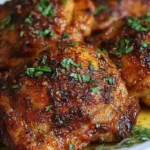
Baked Chicken Thighs
- Total Time: 30 minutes
- Yield: 4 servings 1x
- Diet: Gluten-Free
Description
These baked chicken thighs are juicy, flavorful, and come together easily with a simple spice mix, making them perfect for busy weeknights or casual gatherings.
Ingredients
- 1 1/2 teaspoons smoked paprika
- 1 1/4 teaspoons garlic powder
- 1 1/4 teaspoons white sugar
- 1 teaspoon freshly ground black pepper
- 1/2 teaspoon onion powder
- 1/2 teaspoon cayenne pepper
- 1/2 teaspoon salt
- 2 tablespoons olive oil
- 1 1/2 pounds boneless skinless chicken thighs
- Fresh snipped herbs (optional)
Instructions
- Preparation: Preheat your oven to 400°F (200°C). In a mixing bowl, combine smoked paprika, garlic powder, white sugar, black pepper, onion powder, cayenne pepper, and salt. Add olive oil to the spice mix and stir to create a cohesive paste.
- Coating the Chicken: Place the boneless, skinless chicken thighs in a baking dish. Coat each thigh with the spice mixture, massaging it in for maximum flavor. Arrange the thighs evenly in the baking dish for proper cooking.
- Baking: Bake in the preheated oven until cooked through, approximately 20 minutes. Check for doneness; the outside should be slightly crisped and the meat tender. Let the chicken rest for a few minutes before serving. Optionally, sprinkle fresh herbs on top before serving.
Notes
For best results, ensure the chicken is evenly coated. Let it rest post-baking to retain juices. Adjust spice levels based on your preference. Consider using parchment paper for easy cleanup.
- Prep Time: 10 minutes
- Cook Time: 20 minutes
- Category: Dinner
- Method: Baking
- Cuisine: American
Nutrition
- Serving Size: 1 thigh
- Calories: 300 kcal
- Sugar: 2 g
- Sodium: 450 mg
- Fat: 18 g
- Saturated Fat: 3 g
- Unsaturated Fat: 12 g
- Trans Fat: 0 g
- Carbohydrates: 3 g
- Fiber: 0.5 g
- Protein: 28 g
- Cholesterol: 110 mg