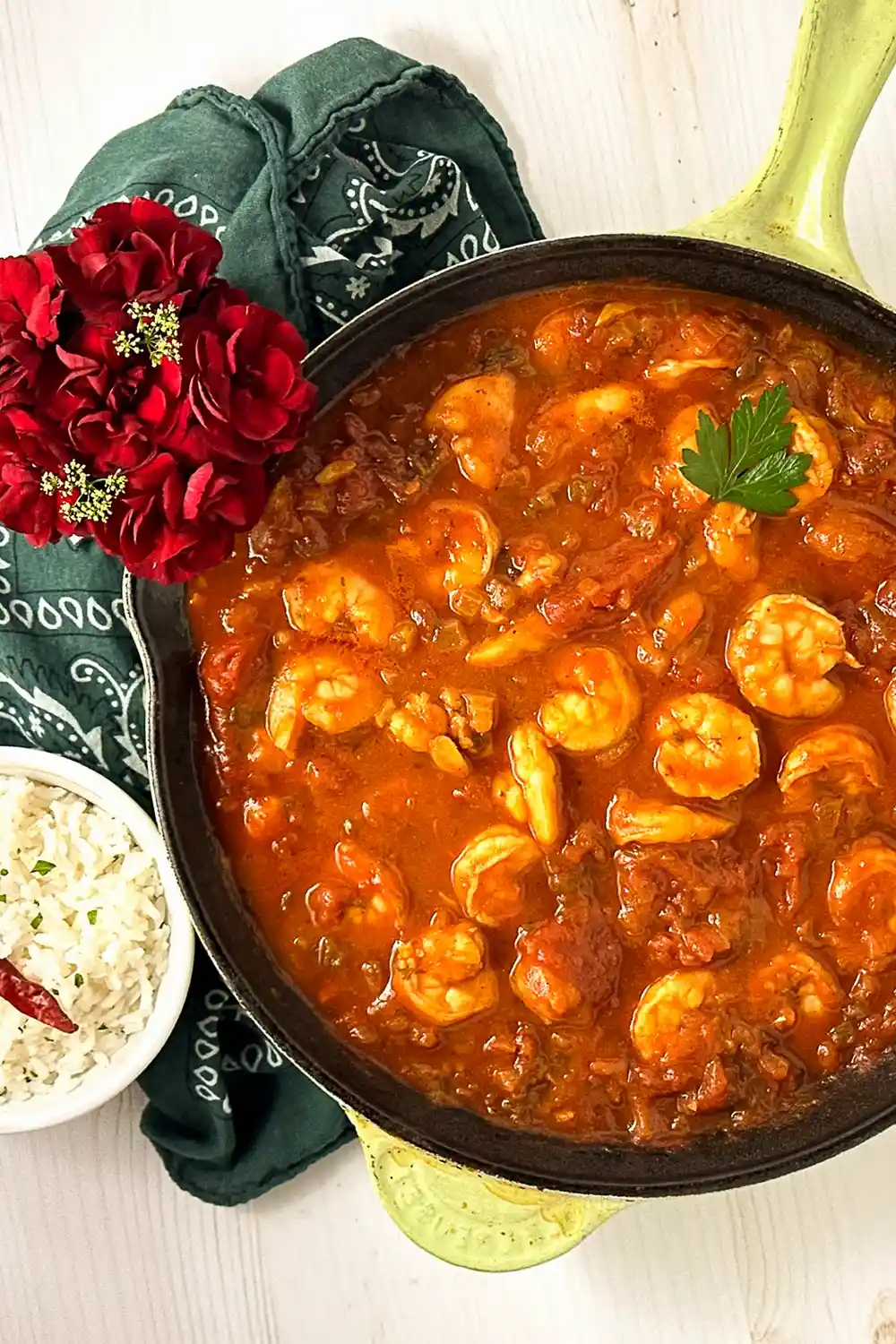
This traditional Louisiana dish combines tender, seasoned shrimp with a rich, aromatic tomato base that defines Creole cooking. By utilizing the classic “Cajun trinity” of aromatics and a slow-simmered sauce, this recipe delivers a restaurant-quality meal right in your home kitchen. It serves as an excellent main course that balances bold spices with the natural sweetness of succulent, perfectly cooked Gulf-style shrimp.
List of ingredients
- 1 pound raw shrimp, peeled and deveined
- 1 teaspoon lemon zest
- 1/2 teaspoon paprika
- 1 teaspoon parsley flakes
- 1 teaspoon Louisiana hot sauce
- 1 teaspoon onion powder
- salt, black pepper, and cayenne pepper to taste
- 3 tablespoons butter or oil
- 1 onion, chopped
- 1 green bell pepper, chopped
- 2 celery ribs, chopped
- 3 garlic cloves, minced
- 1 14.5-ounce can stewed tomatoes
- 1 1/2 cups tomato sauce
- 1/4 cup chicken broth
- 1 dried bay leaf
- rice or cauliflower rice for serving
step-by-step instructions
- Step: Season the shrimp with the lemon zest, paprika, parsley flakes, hot sauce, onion powder, and a bit of salt, black pepper, and cayenne pepper to taste. Cover and refrigerate until ready to use.
- Step: Brown the Cajun trinity of onion, bell pepper and celery in the oil or butter in an enameled cast iron skillet set atop medium heat.
- Step: When browned, add the garlic and cook for one additional minute.
- Step: Stir the stewed tomatoes, tomato sauce, broth, and dried bay leaf into the skillet.
- Step: Reduce heat to low. Simmer for 20 to 30 minutes, stirring often, or until the sauce turns dark crimson.
- Step: Add the seasoned shrimp to the skillet. Cook for an additional 7 to 10 minutes, stirring often, or until the shrimp turn opaque and are well incorporated into the Creole sauce. Insert a digital thermometer into the shrimp to ensure that the shrimp reach an internal temperature of 145 degrees Fahrenheit before removing the skillet from heat.
- Step: Serve as is, or with rice or cauliflower rice.
Refining the Vegetable Texture
Cutting the Stewed Tomatoes for Uniformity
To ensure the sauce has a pleasant, consistent texture, remove the whole stewed tomatoes from their canning liquid before adding them to the pot. Chop these tomatoes into small, bite-sized pieces on a cutting board, which allows them to break down more effectively into the sauce during the simmer. Make sure to reserve all the flavorful juices from the can, as they provide essential acidity that carries the seasoning throughout the entire dish.
Achieving the Perfect Vegetable Browning
The secret to a deep, savory flavor lies in properly sautéing the onion, bell pepper, and celery. Do not rush this step, as letting these vegetables caramelize slightly creates a sweet, complex flavor base that canned tomatoes alone cannot provide. Maintain a consistent medium heat and stir regularly to ensure even browning without scorching any of the delicate vegetable sugars.
Managing Shrimp Temperature and Texture
Avoiding Overcooked Seafood
Shrimp are notorious for becoming rubbery when exposed to high heat for too long, so timing is critical in this recipe. Adding the shrimp in the final 7 to 10 minutes ensures they are perfectly plump and tender rather than tough. The internal temperature of 145 degrees Fahrenheit is the gold standard for safety while preserving the juicy, snap-like texture that makes this dish so enjoyable.
The Role of Citrus Zest in Seasoning
The lemon zest applied during the initial marination stage serves a functional role beyond simple fragrance. The volatile oils in the lemon zest penetrate the shrimp meat, helping to tenderize the fibers slightly while providing a bright contrast to the heavy, savory notes of the tomato-based gravy. This zesty undertone makes every bite feel fresher and more vibrant on the palate.
Storage and Make-Ahead Strategies
Managing Leftovers Safely
If you have leftovers, allow the dish to cool completely before transferring it to an airtight container. Keep the shrimp Creole refrigerated for no more than three days to ensure the best quality and safety. When storing, try to keep the shrimp and sauce in a single layer if possible, which prevents the shrimp from compressing under their own weight and becoming mushy during the cooling process.
Advance Prep for Efficient Cooking
You can significantly reduce your active kitchen time by preparing components a day in advance. Chop your “Cajun trinity” (onions, bell pepper, and celery) and store them in a sealed container in the refrigerator overnight. Similarly, you can season the shrimp and keep them chilled, which allows the flavors of the paprika, onion powder, and hot sauce to fully marinate into the meat before cooking begins.
Alternative Ingredients and Adjustments
Adjusting the Heat Level
The level of spice in this dish is meant to be balanced rather than overwhelming, but you can customize it to your personal preference. If you prefer a milder version, reduce or omit the cayenne pepper and use a lower amount of hot sauce. Conversely, if you enjoy more heat, feel free to add an extra pinch of crushed red pepper flakes or a hotter variety of Louisiana-style sauce during the simmering stage.
Adapting the Liquid Base
While chicken broth is recommended for its savory depth, you can substitute it with a high-quality vegetable stock if you prefer a lighter profile. Avoid using plain water, as it dilutes the concentrated flavors of the tomatoes and spices. The liquid base should be kept relatively thin at the start, as the tomatoes will naturally thicken the sauce as they reduce during the 30-minute simmer.
Troubleshooting Common Issues
Thin or Runny Sauce
If your sauce remains too thin after the simmering time, increase the heat slightly for the final five minutes of the tomato-only phase to encourage evaporation. Do not add starch or flour thickeners, as these will muddy the bright red color of the sauce and mute the delicate flavors of the shrimp. A proper reduction is the best way to achieve a thick, gravy-like consistency naturally.
Salting and Seasoning Balance
It is important to season in layers, beginning with the shrimp and adding further salt only after the sauce has finished its initial simmer. Since canned tomatoes and commercial sauces often contain varying levels of sodium, always taste the gravy before adding extra salt. If the dish feels too acidic, a small pinch of sugar or a half-teaspoon of butter can help mellow the sharpness of the stewed tomatoes.
Frequently Asked Questions
Can I use pre-cooked shrimp for this recipe?
It is strongly recommended to use raw, peeled, and deveined shrimp for this dish. Pre-cooked shrimp will likely become tough and rubbery when simmered in the sauce for the required 7 to 10 minutes. By starting with raw shrimp, you ensure the meat absorbs the Creole seasonings and stays succulent throughout the cooking process.
Does the type of tomato matter?
Yes, using both stewed tomatoes and tomato sauce is key to achieving the correct texture and body. Stewed tomatoes provide chunks that offer a rustic mouthfeel, while the tomato sauce creates the smooth, velvety consistency of the gravy. If you only have crushed tomatoes, you can use them, but the dish will lack the distinct, varied textures of an authentic Creole sauce.
Why should I use a bay leaf?
The bay leaf is essential for providing an aromatic, slightly herbal undertone that cuts through the richness of the tomato and butter. It acts as a bridge between the savory vegetables and the bright citrus notes of the lemon zest. Be sure to remove the bay leaf before serving, as its tough, waxy texture is unpleasant to eat.
Is it necessary to use an enameled cast iron skillet?
While an enameled cast iron skillet is ideal because it retains heat steadily and prevents the acidic tomatoes from reacting with the metal, any heavy-bottomed pot will work. Ensure your pot is deep enough to prevent splashing during the simmer and has enough surface area to allow the vegetables to brown properly at the start.
Print
Authentic South Louisiana Shrimp Creole
- Total Time: PT60M
- Yield: 4 servings 1x
- Diet: Gluten-Free
Description
Easy and authentic, this south Louisiana shrimp Creole is overflowing with layered, developed flavors and textures.
Ingredients
- 1 pound raw shrimp, peeled and deveined
- 1 teaspoon lemon zest
- 1/2 teaspoon paprika
- 1 teaspoon parsley flakes
- 1 teaspoon Louisiana hot sauce
- 1 teaspoon onion powder
- salt, black pepper, and cayenne pepper to taste
- 3 tablespoons butter or oil
- 1 onion, chopped
- 1 green bell pepper, chopped
- 2 celery ribs, chopped
- 3 garlic cloves, minced
- 1 14.5-ounce can stewed tomatoes
- 1 1/2 cups tomato sauce
- 1/4 cup chicken broth
- 1 dried bay leaf
- rice or cauliflower rice for serving
Instructions
- Step: Season the shrimp with the lemon zest, paprika, parsley flakes, hot sauce, onion powder, and a bit of salt, black pepper, and cayenne pepper to taste. Cover and refrigerate until ready to use.
- Step: Brown the Cajun trinity of onion, bell pepper and celery in the oil or butter in an enameled cast iron skillet set atop medium heat.
- Step: When browned, add the garlic and cook for one additional minute.
- Step: Stir the stewed tomatoes, tomato sauce, broth, and dried bay leaf into the skillet.
- Step: Reduce heat to low. Simmer for 20 to 30 minutes, stirring often, or until the sauce turns dark crimson.
- Step: Add the seasoned shrimp to the skillet. Cook for an additional 7 to 10 minutes, stirring often, or until the shrimp turn opaque and are well incorporated into the Creole sauce. Insert a digital thermometer into the shrimp to ensure that the shrimp reach an internal temperature of 145 degrees Fahrenheit before removing the skillet from heat.
- Step: Serve as is, or with rice or cauliflower rice.
Notes
Remove the tomatoes from the stewed tomatoes can with a fork and chop into small pieces before adding to the sauce. You can use up to 1 1/4 pounds of shrimp in this recipe.
- Prep Time: PT15M
- Cook Time: PT45M
- Category: Main Course
- Method: Stovetop
- Cuisine: Cajun/Creole
Nutrition
- Serving Size: 1 serving
- Calories: 205 kcal
- Sugar: 6 g
- Sodium: 1245 mg
- Fat: 10 g
- Saturated Fat: 6 g
- Unsaturated Fat: 3 g
- Trans Fat: 0.4 g
- Carbohydrates: 12 g
- Fiber: 3 g
- Protein: 18 g
- Cholesterol: 166 mg