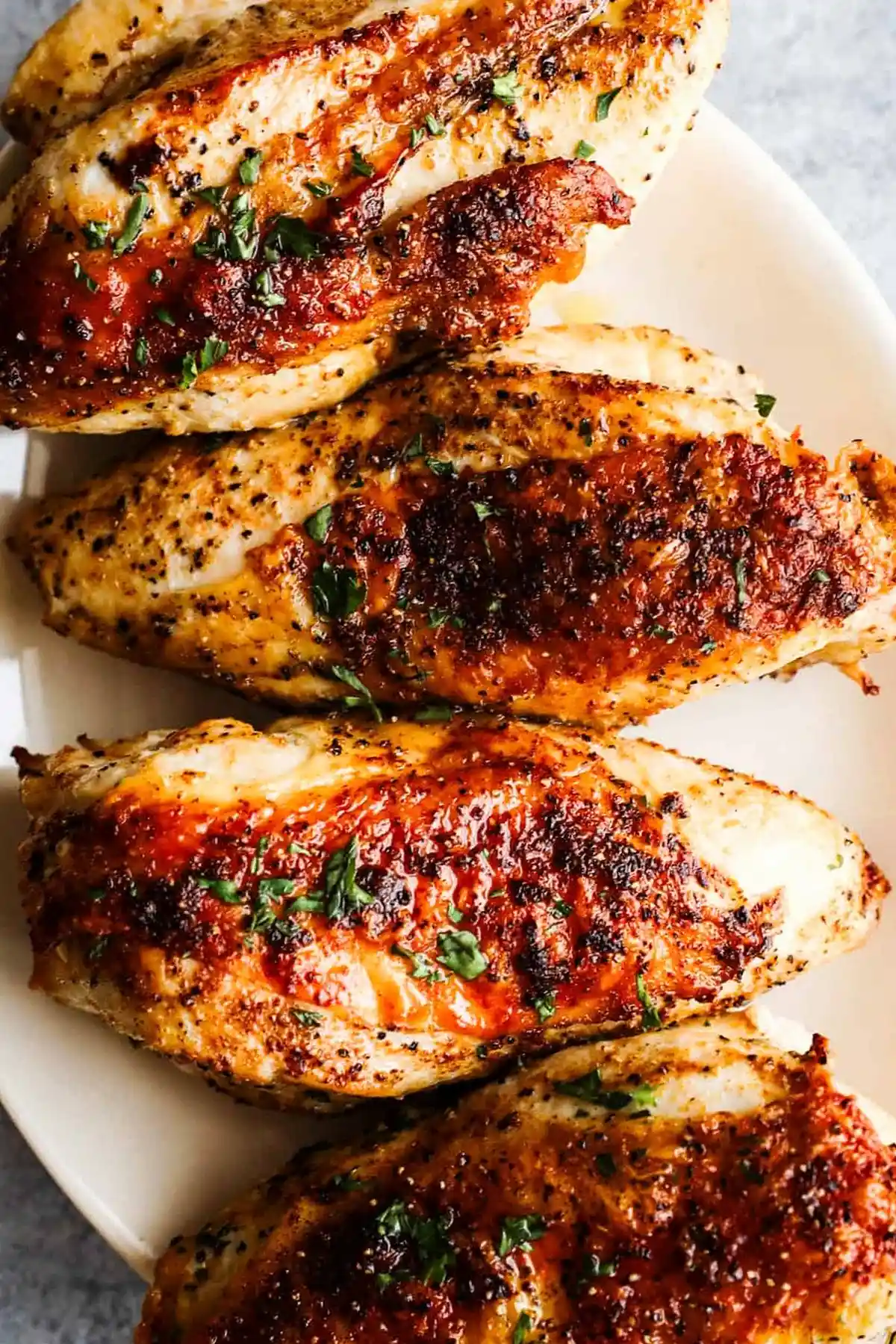
These roasted bone-in chicken breasts provide a simple way to achieve professional-quality results at home with minimal effort. By searing the skin before roasting, you lock in natural juices while creating a texture that is remarkably crispy and satisfying. This preparation is ideal for busy weeknights or organized meal planning, offering a versatile main course that pairs perfectly with a wide range of side dishes.
List of ingredients
- 4 bone-in, skin-on chicken breasts
- 1/2 tsp salt
- 1/2 tsp garlic powder
- 1/2 tsp onion powder
- 1/2 tsp ground black pepper
- 1/4 tsp paprika
- 1/4 tsp chili powder
- 1/2 cup avocado oil (or canola/vegetable oil)
step-by-step instructions
- Step: Preheat the oven to 400°F. Line a baking sheet with foil and place a cooking rack on top. Pat the chicken breasts dry with paper towels to ensure the skin crisps up.
- Step: In a small bowl, combine salt, garlic powder, onion powder, black pepper, paprika, and chili powder. Rub the spice mixture all over the chicken breasts, covering both sides.
- Step: In a large skillet, heat the oil over medium-high heat until hot.
- Step: Carefully place the chicken breasts skin-side down into the hot skillet. Cook for 2 minutes, until the skin is golden and crispy. Flip and cook for another 2 minutes on the other side.
- Step: Place the seared chicken breasts onto the prepared baking sheet with the rack. Drizzle 1 tsp of the oil from the skillet onto each chicken breast.
- Step: Transfer the baking sheet to the preheated oven. Bake for 45 minutes, or until the internal temperature reaches 165°F.
- Step: Remove from the oven and let the chicken sit for 10 minutes before slicing.
Maintaining the Crispy Texture
Drying the Surface Thoroughly
Before applying the spice rub, spend extra time ensuring the skin is completely dry. Any surface moisture will cause the skin to steam rather than sear, leading to a rubbery texture instead of the desired crispness. Use multiple paper towels and press firmly to remove as much residual liquid as possible.
The Role of the Wire Rack
Using a wire rack elevated over the baking sheet is non-negotiable for consistent results. This rack allows hot air to circulate around the entire bottom of the chicken, preventing it from sitting in its own rendered juices and becoming soggy. Without this airflow, the underside of the skin will inevitably lose its crisp finish during the roasting process.
Choosing the Right Cooking Fat
Prioritizing High Smoke Points
Because the searing step requires medium-high heat, it is vital to select an oil that can withstand these temperatures without burning or producing acrid smoke. Avocado oil is the premier choice due to its very high smoke point, but refined sunflower oil or grapeseed oil are also excellent alternatives. Avoid using extra virgin olive oil or butter for this step, as they will burn long before the chicken develops a beautiful golden crust.
Managing Proper Internal Temperature
Verification with a Meat Thermometer
The only way to ensure safety and quality is to rely on an instant-read meat thermometer inserted into the thickest part of the breast, avoiding contact with the bone. The target of 165°F is the standard for safety, but checking at the 40-minute mark can help you avoid overcooking smaller breasts. If the temperature is close, monitor it closely to pull the tray out the moment the target is reached.
Strategic Meal Planning
Reheating Without Drying Out
When reheating leftovers, the goal is to warm the protein through without cooking it further and losing internal moisture. Place the breasts in a baking dish, add a tablespoon of water or broth to the bottom of the dish, and cover tightly with foil. Heat in a 350°F oven until the center is warm; this creates a steam environment that prevents the meat from becoming tough or stringy.
Storing for Quality Retention
Place cooled leftovers into airtight containers as soon as they are no longer steaming. Keeping them in the coldest part of the refrigerator, rather than the door, will help maintain their quality for the full 4-day window. For longer storage, tightly wrap individual portions in heavy-duty plastic wrap before placing them into freezer-safe bags to prevent ice crystal formation.
Frequently Asked Questions
Can I prepare the spice rub in advance?
Yes, mixing the dry ingredients in a jar ahead of time is a fantastic way to streamline your kitchen prep. You can store this spice blend in your pantry for several months, making it easy to season the chicken instantly whenever you decide to roast a batch.
Is it necessary to remove the skin before eating?
While the skin is the most flavorful and crispy component of this recipe, it is entirely a matter of personal preference. If you prefer to remove it, you can do so easily after roasting; the flavor from the spices and rendered fats will have already penetrated the meat during the high-heat cooking process.
Why is resting the chicken so important?
Resting the meat for at least 10 minutes is essential because it allows the muscle proteins to relax and reabsorb the juices that migrate toward the center during the intense oven heat. If you carve the chicken immediately upon removing it from the oven, those flavorful juices will run out onto the cutting board, leaving the meat noticeably drier.
What should I do if the chicken skin isn’t browning enough?
If you find that your oven is not providing enough browning on the skin, you can turn on the broiler for the final 2 minutes of cooking. However, you must remain in the kitchen and watch closely, as the skin can go from perfectly golden to burnt in a very short window of time.
Can I add vegetables to the baking sheet?
Adding vegetables like carrots or potatoes to the baking sheet is a great way to make a complete meal, but they must be cut into uniform sizes to match the cooking time. Ensure you leave enough space between the chicken breasts and the vegetables so that steam doesn’t build up, which could interfere with the crispiness of the chicken skin.
What is the benefit of bone-in chicken over boneless?
Bone-in chicken breasts provide a significantly better barrier against overcooking compared to boneless cuts. The bone acts as a heat shield, insulating the meat and ensuring the cooking process is more gradual and gentle, which results in a much more tender and flavorful end product.
Print
Roasted Bone-In Chicken Breasts
- Total Time: 55 minutes
- Yield: 6 servings 1x
- Diet: Gluten-Free
Description
These roasted bone-in chicken breasts are a total game changer! They feature crispy, golden skin and incredibly tender, juicy meat. By searing the chicken first and roasting it on a rack, you achieve the perfect texture every time.
Ingredients
- 4 bone-in, skin-on chicken breasts
- 1/2 tsp salt
- 1/2 tsp garlic powder
- 1/2 tsp onion powder
- 1/2 tsp ground black pepper
- 1/4 tsp paprika
- 1/4 tsp chili powder
- 1/2 cup avocado oil (or canola/vegetable oil)
Instructions
- Step: Preheat the oven to 400°F. Line a baking sheet with foil and place a cooking rack on top. Pat the chicken breasts dry with paper towels to ensure the skin crisps up.
- Step: In a small bowl, combine salt, garlic powder, onion powder, black pepper, paprika, and chili powder. Rub the spice mixture all over the chicken breasts, covering both sides.
- Step: In a large skillet, heat the oil over medium-high heat until hot.
- Step: Carefully place the chicken breasts skin-side down into the hot skillet. Cook for 2 minutes, until the skin is golden and crispy. Flip and cook for another 2 minutes on the other side.
- Step: Place the seared chicken breasts onto the prepared baking sheet with the rack. Drizzle 1 tsp of the oil from the skillet onto each chicken breast.
- Step: Transfer the baking sheet to the preheated oven. Bake for 45 minutes, or until the internal temperature reaches 165°F.
- Step: Remove from the oven and let the chicken sit for 10 minutes before slicing.
Notes
Ensure the chicken is patted completely dry before seasoning to achieve the crispiest skin possible. Use a high-smoke point oil for searing to prevent smoking in the kitchen.
- Prep Time: 5 minutes
- Cook Time: 50 minutes
- Category: Dinner
- Method: Roasting
- Cuisine: American
Nutrition
- Serving Size: 1 breast
- Calories: 355 kcal
- Sugar: 0.04 g
- Sodium: 258 mg
- Fat: 28 g
- Saturated Fat: 5 g
- Unsaturated Fat: 21 g
- Trans Fat: 0.1 g
- Carbohydrates: 0.5 g
- Fiber: 0.1 g
- Protein: 23 g
- Cholesterol: 78 mg