This method delivers a juicy, flaky salmon fillet with a rich, citrusy finish. By using a garlic lime butter baste, the fish remains moist and flavorful throughout the grilling process.
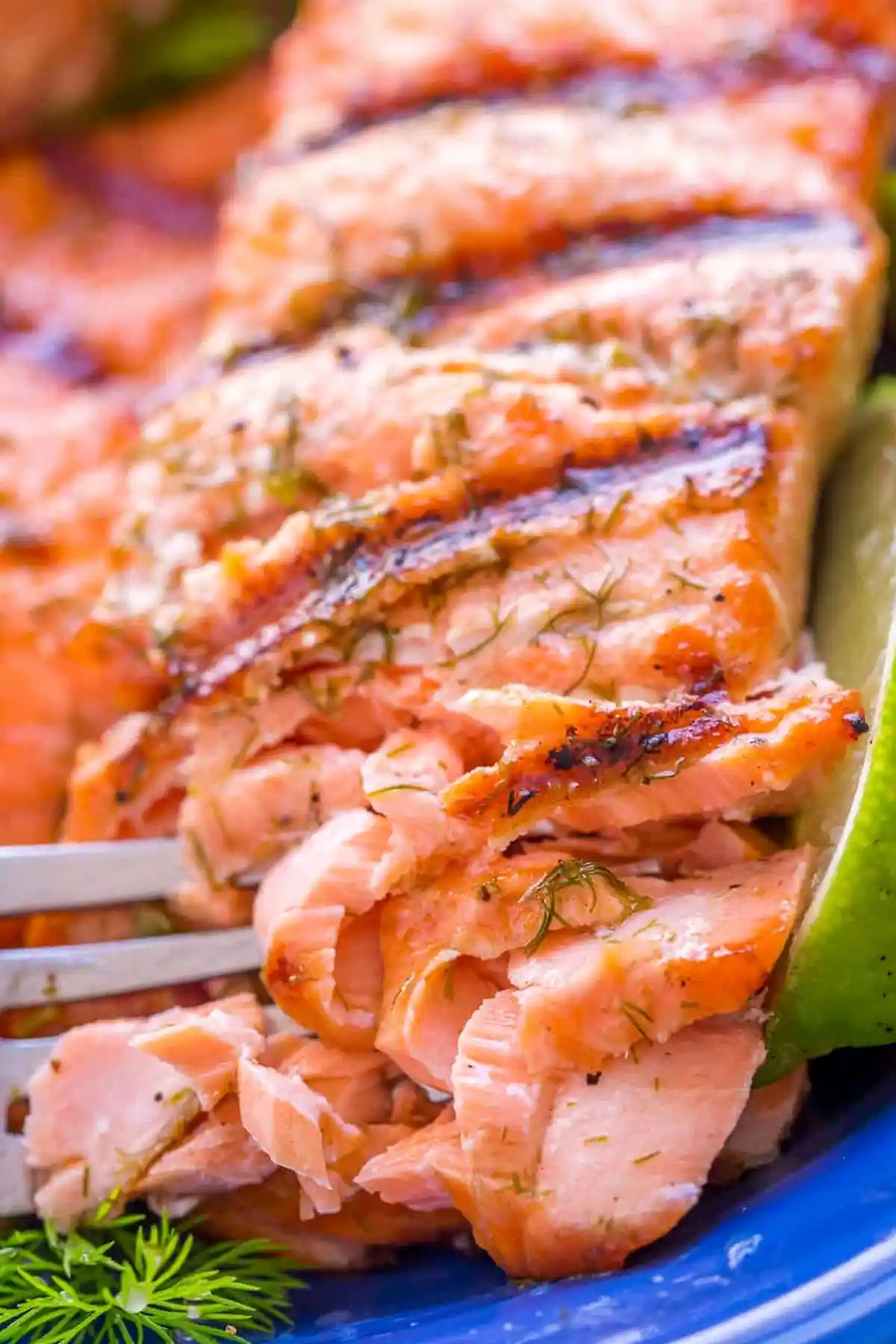
List of ingredients
- 1/2 cup unsalted butter (8 Tbsp) – provides the rich base for the sauce.
- 4 cloves garlic, smashed (NOT PRESSED) – adds a mellow garlic flavor without burning.
- 2 Tbsp lime juice (from 1 lime) plus lime wedges to serve – adds acidity and brightness.
- 2 Tbsp dill, chopped, plus more to garnish – provides a fresh, herbaceous note.
- 1 tsp sea salt – enhances the natural flavor of the fish.
- 1/4 tsp black pepper – adds a subtle spice.
- 2 lbs salmon filet, skin-on, cut into 6 portions – ensures the fish holds together on the grill.
step-by-step instructions
- Prepare the butter sauce: In a sauce pan, melt 1/2 cup butter over medium heat. Smash 4 garlic cloves with the flat side of a knife and add to saucepan with 1 tsp salt and 1/4 tsp pepper. Simmer 1 min or until fragrant. Add chopped dill and 2 Tbsp lime juice then immediately remove from heat.
- Marinate the fish: Arrange salmon fillets on a platter skin-side-down and spoon on 1/3 of butter sauce and brush over the tops. Let salmon marinate while preheating grill.
- Prepare the grill: Preheat grill to medium heat (350°F to 400°F). Oil the hot grates. Place salmon onto preheated grill, skin-side-up. Cover and grill over medium (350°F) heat undisturbed, about 3 minutes on the first side.
- Flip and baste: Carefully flip salmon over (it helps to have a spatula to loosen it and tongs to flip it over), brush on 1/3 of butter sauce then cover and cook another 2 minutes (or according to salmon grilling chart), until internal temperature reaches 140°F (the temperature will continue to rise to an ideal 145°F internal temperature off the grill).
- Final touch: Transfer salmon to a platter and drizzle with remaining 1/3 of sauce in saucepan (if butter has hardened, heat on the stovetop just until melted). Garnish with fresh dill and serve with lime wedges to squeeze over salmon.
Mastering the Grilling Process
Preventing Salmon from Sticking to Grates
To stop the fish from clinging to the metal, oil the grates immediately after preheating. Dip a folded paper towel in a high-smoke point oil and use tongs to rub it across the hot bars. This creates a non-stick barrier that allows for an easy flip.
Using the Right Flipping Tools
Combine a thin metal spatula with a pair of sturdy tongs for the safest results. Use the spatula to gently loosen the edges of the fillet from the grate before using the tongs to flip it. This prevents the delicate flesh from breaking or tearing.
Managing Heat for Different Grill Types
On a gas grill, maintain a consistent medium heat zone to avoid flare-ups from the butter. For charcoal grills, move the coals to the sides to create an indirect heat center if the fish is thicker than one inch. This ensures the inside cooks through without burning the exterior.
Temperature and Doneness Guidelines
Understanding the 140°F Target
Remove the salmon from the heat when the internal temperature reaches 140°F. Due to carry-over cooking, the temperature will naturally rise to 145°F as the fish rests on the platter. This prevents the fish from becoming dry or rubbery.
Adjusting Time for Fillet Thickness
Fillets that are 1 inch thick typically require 3 minutes per side over medium heat. For 3/4 inch fillets, reduce the time to 2-3 minutes per side. Thinner fillets of 1/2 inch only need about 2 minutes per side to reach perfection.
Identifying Overcooked Salmon
Watch for small white beads of protein called albumin pushing out of the sides of the fillet. Once these beads appear, the salmon is nearing the overcooked stage. Remove the fish immediately to preserve the juicy texture.
Ingredient Substitutions and Alternatives
Replacing Lime with Other Citrus
If lime is unavailable, fresh lemon juice is the most effective substitute for a classic flavor profile. For a more complex taste, a blend of lemon and orange juice can add a subtle sweetness. Maintain the same quantity of 2 tablespoons for the sauce.
Herbal Alternatives to Fresh Dill
Fresh parsley or cilantro can be used if you prefer a different herbal note. Parsley offers a cleaner, milder taste, while cilantro provides a more pungent, zesty flavor. Use the same 2 tablespoon measurement for these substitutions.
Butter Alternatives for the Sauce
Ghee is an excellent substitute for unsalted butter because it has a higher smoke point, reducing the risk of burning. You can also use a high-quality plant-based butter substitute. Ensure the alternative is unsalted to maintain control over the seasoning.
Serving and Pairing Ideas
Complementary Grilled Vegetables
Asparagus spears or sliced zucchini are ideal pairings as they can be cooked on the grill alongside the salmon. Toss them in olive oil, salt, and pepper before grilling. Their charred flavor complements the richness of the garlic butter.
Best Starch Pairings
Serve the salmon over a bed of fluffy white rice or quinoa to absorb the extra garlic lime butter. Creamy mashed potatoes also provide a hearty contrast to the acidity of the lime. For a lighter option, try a side of wild rice pilaf.
Fresh Garnish Options
Beyond the requested dill, thinly sliced red onion or capers can add a sharp contrast to the butter sauce. A sprinkle of paprika or lemon zest over the top adds visual appeal and a hint of extra flavor. Always serve with extra lime wedges for fresh squeezing.
Storage and Reheating Instructions
Storing Leftover Grilled Salmon
Place leftover salmon in an airtight container and refrigerate for up to 3 to 4 days. Keep the remaining garlic butter sauce in a separate small container. This prevents the fish from becoming overly soggy during storage.
Best Methods for Reheating
Reheat salmon in the oven at 275°F for about 10-15 minutes to maintain the moisture. Avoid using a high-power microwave, as this often makes the fish rubbery. Adding a small pat of butter or a teaspoon of water before reheating helps restore juiciness.
Freezing Grilled Salmon
While fresh is best, you can freeze cooked salmon for up to two months by wrapping it tightly in foil and then placing it in a freezer bag. Thaw it slowly in the refrigerator overnight before gently reheating. This is a practical option for meal prep.
Preparation and Make-Ahead Advice
Preparing Fillets in Advance
You can portion and season the salmon fillets several hours before grilling. Keep them covered and refrigerated until the moment you apply the butter sauce. This ensures the fish stays cold and firm, making it easier to handle on the grill.
Making the Butter Sauce Ahead
The garlic lime butter can be prepared a day in advance and stored in the refrigerator. When ready to use, simply melt it in a saucepan over low heat. This streamlines the cooking process during dinner preparation.
Efficient Cooking for Large Groups
When grilling for a crowd, use a large platter to marinate all fillets simultaneously. Arrange the fish in rows on the grill to make flipping and basting faster. Ensure you have enough butter sauce prepared to cover all portions throughout the process.
Troubleshooting Common Problems
Managing Butter Flare-ups
Butter can cause flames to jump up when it drips onto the grill burners. If flare-ups occur, move the salmon to a cooler part of the grill immediately. Keep the grill lid closed as much as possible to control the oxygen flow and heat.
Fixing Salmon That Sticks
If a fillet sticks, do not force it, as this will tear the flesh. Wait 30-60 seconds for the fish to sear further, which naturally releases the proteins from the metal. Use a thin metal spatula to gently nudge the edges before attempting another flip.
Preventing Dry Fillets
Dryness usually results from overcooking or using fillets that are too thin for the set time. Always use a meat thermometer to verify the internal temperature. Applying the butter sauce frequently during the second side of grilling helps lock in moisture.
Frequently Asked Questions
Should I leave the skin on?
Yes, leaving the skin on is highly recommended for grilling. The skin acts as a protective barrier that prevents the fish from falling through the grates and helps retain moisture inside the fillet.
Can I use frozen salmon?
You can use frozen salmon, but it must be completely thawed in the refrigerator before grilling. Cooking frozen fillets leads to uneven heat distribution, resulting in edges that are overcooked while the center remains raw.
What is the best type of salmon for grilling?
Atlantic salmon is popular for its high fat content, which makes it very forgiving on the grill. Sockeye salmon offers a bolder flavor but is leaner, meaning it cooks faster and can dry out more quickly.
How do I know when the salmon is done?
The most accurate method is using a digital meat thermometer to reach 140°F. Visually, the salmon should change from a translucent pink to an opaque light pink and flake easily with a fork.
Print
Perfect Grilled Salmon with Garlic Lime Butter
- Total Time: 30 minutes
- Yield: 6 servings 1x
- Diet: Gluten-Free
Description
Grilled Salmon with Garlic Lime Butter and eat like you’re on vacation! Go-To Grilled Salmon recipe – easy, flaky and so juicy!
Ingredients
- 1/2 cup unsalted butter
- 4 cloves garlic, smashed
- 2 Tbsp lime juice
- 2 Tbsp dill, chopped
- 1 tsp sea salt
- 1/4 tsp black pepper
- 2 lbs salmon filet, skin-on, cut into 6 portions
Instructions
- Step 1: In a sauce pan, melt 1/2 cup butter over medium heat. Smash 4 garlic cloves with the flat side of a knife and add to saucepan with 1 tsp salt and 1/4 tsp pepper. Simmer 1 min or until fragrant. Add chopped dill and 2 Tbsp lime juice then immediately remove from heat.
- Step 2: Arrange salmon fillets on a platter skin-side-down and spoon on 1/3 of butter sauce and brush over the tops. Let salmon marinate while preheating grill.
- Step 3: Preheat grill to medium heat (350˚F to 400˚F). Oil the hot grates. Place salmon onto preheated grill, skin-side-up. Cover and grill over medium (350˚F) heat undisturbed, about 3 minutes on the first side.
- Step 4: Carefully flip salmon over, brush on 1/3 of butter sauce then cover and cook another 2 minutes until internal temperature reaches 140˚F.
- Step 5: Transfer salmon to a platter and drizzle with remaining 1/3 of sauce in saucepan. Garnish with fresh dill and serve with lime wedges to squeeze over salmon.
Notes
Salmon Grilling Chart for med/high heat (350˚F): 1″ thick fillets = 3 minutes per side; 3/4″ thick fillets = 2-3 minutes per side; 1/2″ thick fillets = 2 minutes per side.
- Prep Time: 24 minutes
- Cook Time: 6 minutes
- Category: Main Course
- Method: Grilling
- Cuisine: American
Nutrition
- Serving Size: 1 fillet (6 oz)
- Calories: 355 kcal
- Sugar: 1 g
- Sodium: 457 mg
- Fat: 25 g
- Saturated Fat: 11 g
- Unsaturated Fat: 14 g
- Trans Fat: 0 g
- Carbohydrates: 1 g
- Fiber: 1 g
- Protein: 30 g
- Cholesterol: 124 mg