This baked salmon features a rich, sticky glaze made from brown sugar and soy sauce for a perfect balance of salty and sweet. It is a fast and reliable method to ensure the fish remains moist and flavorful.
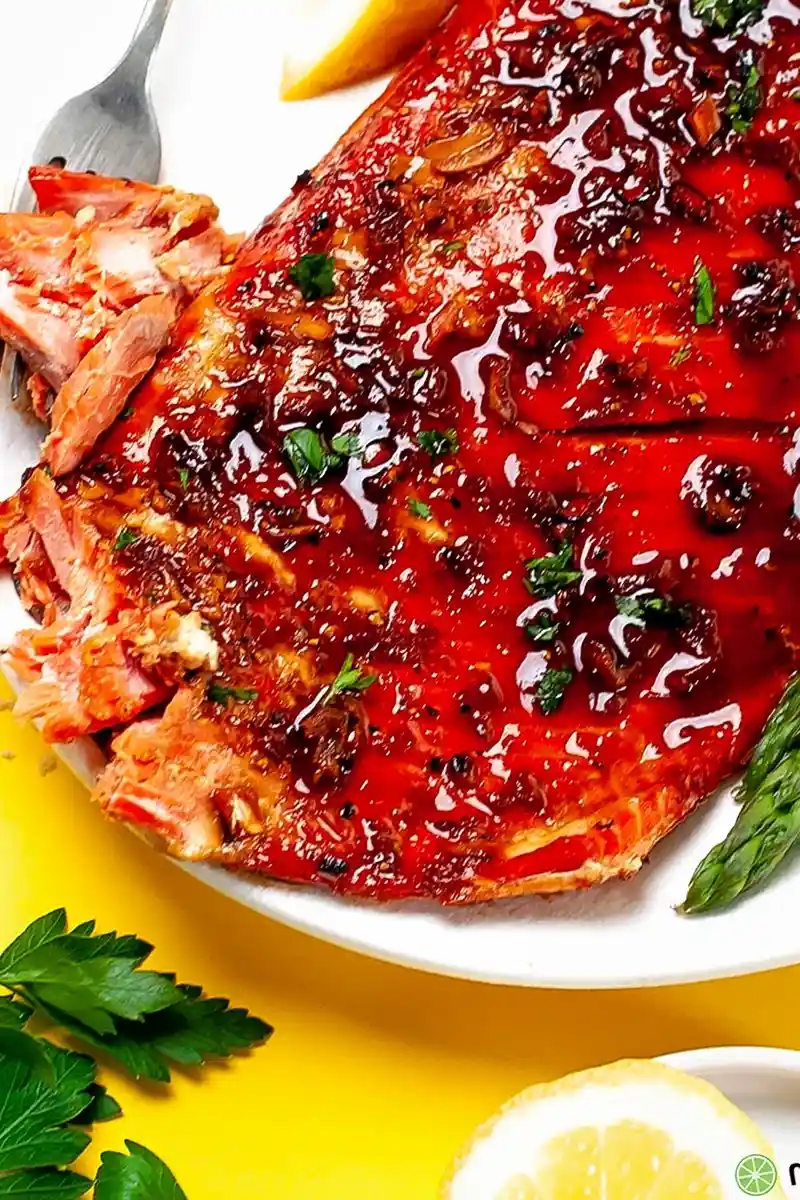
List of ingredients
- 1 1/2 pounds salmon fillet – preferably wild caught for better flavor.
- 1/4 cup low-sodium soy sauce – can be replaced with certified gluten-free Tamari.
- 1/4 cup lightly packed brown sugar – provides sweetness and caramelization.
- 1 teaspoon lemon zest – adds a bright citrus aroma.
- 1 Tablespoon freshly squeezed lemon juice – cuts through the richness of the fish.
- 4 medium cloves garlic – minced by hand for the best texture and flavor.
- 2 Tablespoons unsalted butter – divided into two equal portions.
- 1 Tablespoon Dijon mustard – adds a slight tang and helps emulsify the glaze.
- 1/2 teaspoon kosher salt – to enhance overall flavor.
- 1/4 teaspoon freshly cracked black pepper – for a mild spicy note.
- 1 Tablespoon finely chopped fresh parsley – used for garnish.
step-by-step instructions
- Prepare the fish: Let the salmon sit at room temperature for 10 minutes before baking to ensure even cooking.
- Preheat the oven: Position the oven rack in the center and preheat to 375 F (190 C).
- Simmer the glaze: In a small saucepan over medium heat, combine soy sauce, brown sugar, lemon zest, lemon juice, and garlic. Cook until the sugar melts and the liquid reduces by half, creating a sticky consistency.
- Finish the sauce: Stir in half of the butter until melted, remove the pan from the heat, and then stir in the remaining butter. Add the Dijon mustard and mix well.
- Set up the baking sheet: Line a rimmed baking sheet with aluminum foil, ensuring there is enough to fold the edges and create a tight seal.
- Season and glaze: Place the salmon skin side down on the foil and sprinkle with salt and pepper. Pour the soy sauce glaze over the fillet and seal the foil packet tightly.
- Bake: Bake for 15 to 18 minutes, or until the salmon is nearly cooked through.
- Broil: Open the foil packet, change the oven setting to broil, and cook for 2 minutes until the edges are golden and crispy.
- Garnish: Sprinkle with fresh diced parsley and serve immediately.
Expert Salmon Preparation Tips
Temper the Salmon Before Cooking
Allowing the salmon to reach room temperature for about 10 minutes prevents the outside from overcooking while the center remains cold. This step ensures a more uniform internal temperature throughout the fillet. It reduces the risk of the fish curling or toughening during the baking process.
Select High Quality Fillets
Wild-caught salmon typically offers a more robust flavor and a firmer texture compared to farmed varieties. When shopping, look for fillets with a vibrant, consistent color and no gaps in the flesh. Ensure the fillet is relatively uniform in thickness for consistent cooking times.
Mince Garlic by Hand
Hand-mincing garlic provides a cleaner flavor and better texture than using a garlic press. Presses can sometimes crush the garlic too much, releasing excess bitter compounds that may overpower the glaze. Use a sharp chef’s knife to create fine, consistent pieces.
Flavor Customization and Substitutions
Enhance the Citrus Profile
If you prefer a more zesty flavor, double the amount of lemon zest and lemon juice. To maintain balance, you can omit the Dijon mustard entirely. This creates a brighter, more acidic glaze that pairs well with the richness of the salmon.
Modify the Mustard Element
Dijon mustard provides a sharp contrast to the sugar, but it can be omitted for those who dislike the taste. If removing it, consider adding a pinch more salt or a drop of apple cider vinegar. This maintains the necessary acidity to balance the sweetness of the brown sugar.
Adding Heat to the Glaze
For a spicy variation, add a teaspoon of sriracha or a pinch of red pepper flakes to the saucepan. This introduces a subtle heat that complements the soy sauce and brown sugar. Stir the spice in during the reduction phase to ensure it is evenly distributed.
Cooking Precision and Techniques
Monitor Cooking Based on Thickness
Salmon cooking times vary significantly based on the thickness of the cut. Thin fillets may be fully cooked in 10 minutes, while very thick center-cuts may require 20 to 25 minutes before broiling. Always check the fish a few minutes before the timer ends to avoid drying it out.
Use a Meat Thermometer for Accuracy
The most reliable way to check for doneness is using an instant-read meat thermometer. Insert the probe into the thickest part of the fillet to ensure it has reached 145 F. This ensures the salmon is safe to eat while remaining juicy.
Execute the Broiler Step Carefully
The broiler uses intense direct heat, which can burn the sugars in the glaze very quickly. Keep the oven door slightly ajar or watch through the window constantly during the final 2 minutes. Remove the fish as soon as the edges are golden brown and caramelized.
Serving and Pairing Suggestions
Choose Savory Vegetable Sides
Pair this salmon with steamed broccoli, roasted asparagus, or a fresh cucumber salad. These vegetables provide a crisp texture and savory flavor that offsets the sweetness of the glaze. Avoid pairing the dish with other glazed or sweetened vegetables to keep the meal balanced.
Select Complementary Starches
Wild rice, quinoa, or a simple bed of jasmine rice are excellent choices for absorbing the extra glaze. Mashed cauliflower or roasted baby potatoes also work well as hearty accompaniments. These starches provide a neutral base that lets the salmon flavor shine.
Balance the Meal with Acidity
Serving the dish with a side of fresh greens tossed in a light vinaigrette can refresh the palate. The acidity of a lemon-based dressing cuts through the buttery glaze of the fish. This creates a more rounded dining experience by balancing the sweet and salty notes.
Storage and Reheating Instructions
Proper Refrigeration Methods
Store leftover salmon in an airtight container in the refrigerator for up to three days. Let the fish cool slightly before sealing the container to prevent excess moisture from building up. This helps maintain the integrity of the caramelized glaze.
Avoid Freezing Cooked Salmon
While raw salmon freezes well, cooked salmon can become mushy and lose its flavor when frozen and thawed. It is best to cook only what you need or consume the leftovers within a few days. If you must freeze it, wrap it tightly in foil and plastic wrap to prevent freezer burn.
Gently Reheat to Prevent Drying
To reheat, place the salmon in a low oven at 275 F for about 10 to 15 minutes until warmed through. Avoid using high heat or a microwave on high power, as this can make the fish rubbery. A light drizzle of water or a small pat of butter can help restore moisture.
Troubleshooting Common Issues
Managing Glaze Consistency
If the glaze becomes too thick or burns in the pan, add a tablespoon of water or soy sauce to thin it out. Ensure you are using medium heat, as high heat can cause the brown sugar to scorch. The goal is a syrupy consistency that clings to the fish.
Preventing Foil Leaks
If the glaze leaks out of the foil packet, the salmon may dry out or the pan may burn. Create a deep pouch with high walls and fold the edges tightly into a seal. Using a heavy-duty aluminum foil helps prevent accidental tears during the baking process.
Fixing Undercooked Centers
If the salmon is still too raw in the center after the suggested time, return the foil packet to the oven. Bake for an additional 3 to 5 minutes before attempting the broil step. Always prioritize the internal temperature over the suggested timer.
Frequently Asked Questions
Can I use white sugar instead of brown sugar?
You can use white sugar, but the flavor will be less complex and the caramelization will be lighter. Brown sugar contains molasses, which provides a deeper, richer taste and a darker color to the glaze.
Is it necessary to leave the skin on?
The skin acts as a barrier that protects the fish from the direct heat of the pan, keeping it moist. You can remove the skin after cooking or leave it on for added nutrients. The glaze will not penetrate the skin, but the flesh remains flavorful.
Can I make this recipe on a grill?
Yes, you can grill the salmon by wrapping it in a foil packet and placing it on medium-high heat. Grill for about 10 to 15 minutes depending on the thickness. Open the packet at the end to sear the top for a few minutes for that charred finish.
What is the best soy sauce substitute?
Tamari is the best substitute for those requiring a gluten-free option as it tastes very similar to soy sauce. Coconut aminos can also be used for a lower-sodium, soy-free alternative, though they are slightly sweeter.
Print
Brown Sugar Soy Sauce Baked Salmon
- Total Time: 20 minutes
- Yield: 4 servings 1x
- Diet: General
Description
This Brown Sugar Soy Sauce Salmon is the recipe to win over people who don’t like salmon. It’s so delicious that even the pickiest of eaters will love it!
Ingredients
- 1 1/2 pounds salmon fillet
- 1/4 cup low-sodium soy sauce
- 1/4 cup lightly packed brown sugar
- 1 teaspoon lemon zest
- 1 Tablespoon freshly squeezed lemon juice
- 4 medium cloves garlic, minced
- 2 Tablespoons unsalted butter
- 1 Tablespoon Dijon mustard
- 1/2 teaspoon kosher salt
- 1/4 teaspoon freshly cracked black pepper
- 1 Tablespoon finely chopped fresh parsley
Instructions
- Step 1: Let the salmon sit at room temperature for 10 minutes before you bake it.
- Step 2: Position the rack in the center of the oven and preheat it to 375 F (190 C).
- Step 3: In a small saucepan over medium heat, combine soy sauce, brown sugar, lemon zest, lemon juice, and garlic; cook until reduced by half and sticky. Swirl in butter and stir in Dijon mustard.
- Step 4: Place salmon skin side down on aluminum foil, sprinkle with salt and pepper, pour the soy sauce mixture over it, and seal the foil.
- Step 5: Bake for 15-18 minutes, open the foil, and broil for 2 minutes until the top has golden edges.
- Step 6: Sprinkle with fresh diced parsley and serve hot.
Notes
Use your best judgement with bake time. Thin filets may take 10 minutes, while very thick pieces may need 20-25 minutes before broiling.
- Prep Time: 5 minutes
- Cook Time: 15 minutes
- Category: Shrimp and Fish
- Method: Baking
- Cuisine: American
Nutrition
- Serving Size: 1 fillet
- Calories: 376 kcal
- Sugar: 12.2 g
- Sodium: 640 mg
- Fat: 18.4 g
- Saturated Fat: 6.2 g
- Unsaturated Fat: 12.2 g
- Trans Fat: 0 g
- Carbohydrates: 14.6 g
- Fiber: 0.4 g
- Protein: 39.1 g
- Cholesterol: 95 mg