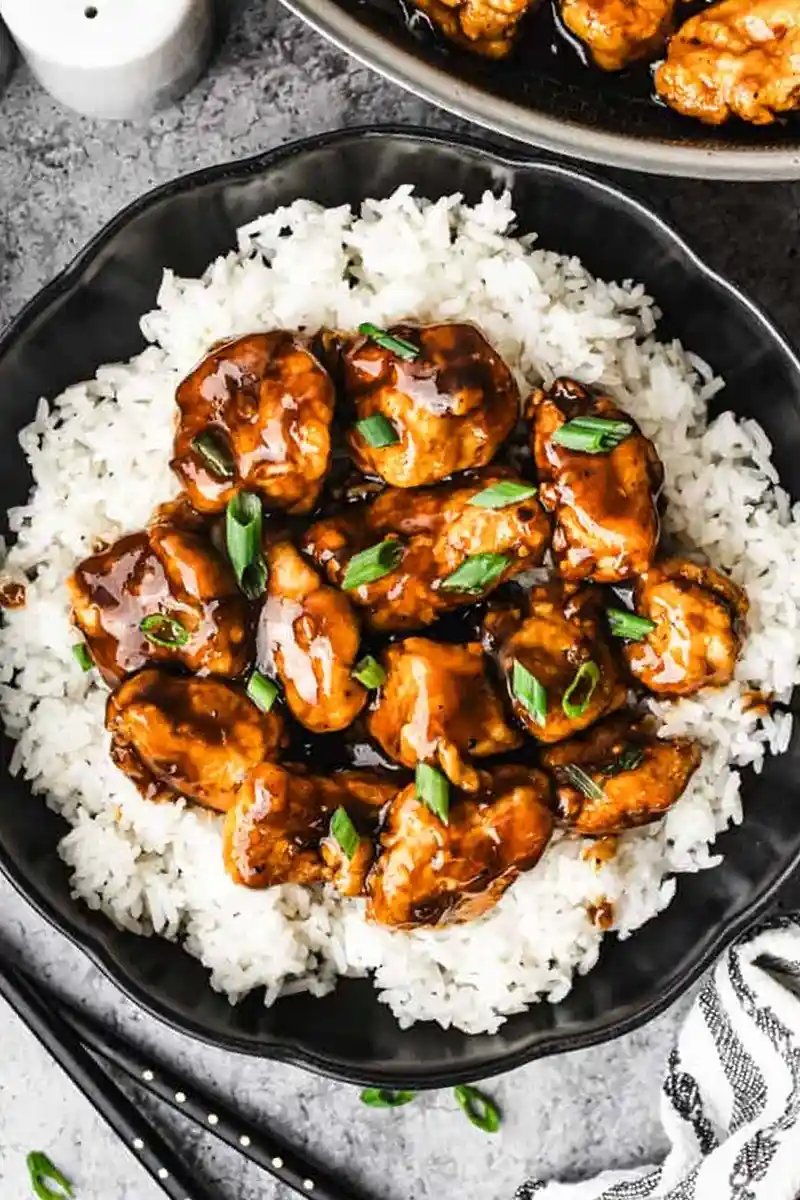
Enjoy a restaurant-quality meal at home with this crispy, sticky General Tso’s Chicken. This easy version balances sweet and spicy flavors using simple pantry staples for a fast dinner.
List of ingredients
- 1 1/2 pounds boneless skinless chicken breasts, cut into small pieces – ensures quick and even cooking.
- 1/2 cup cornstarch – used for both the breading and the sauce thickening.
- 1/2 cup all-purpose flour – provides a sturdy base for the crispy coating.
- salt and freshly ground black pepper – used for basic seasoning of the meat.
- 2 large egg whites – acts as the binding agent for the flour mixture.
- 1/2 cup oil (vegetable or canola oil) – chosen for a high smoke point during frying.
- hot cooked white rice – the traditional base for serving.
- 2/3 cup hoisin sauce – provides the primary sweet and savory depth.
- 1/3 cup rice vinegar – adds a necessary acidic balance to the sugar.
- 1/3 cup low-sodium soy sauce – provides saltiness and color.
- 1/4 cup light brown sugar, packed – creates the sticky glaze.
- 3 cloves garlic, minced – adds a sharp, aromatic punch.
- 1 teaspoon ground ginger (or 1 Tablespoon fresh minced ginger) – provides a warm, spicy undertone.
- 1/2 teaspoon crushed red pepper flakes – controls the heat level of the dish.
- 1 1/2 teaspoons cornstarch – specifically for thickening the final sauce.
step-by-step instructions
- Make General Tso’s Sauce: Add the sauce ingredients to a bowl and whisk well to combine. Set aside for later use.
- Make breading: Add cornstarch, flour, and salt and pepper to a large ziplock bag and shake to combine. Whisk egg whites in a separate bowl.
- Coat chicken: Add chicken pieces to the egg whites and toss to coat. Spoon coated chicken pieces into the ziplock bag, allowing excess egg to drip back into the bowl. Shake the bag to coat chicken evenly in the cornstarch mixture.
- Cook chicken: Heat a large skillet over medium-high heat. Add oil. Once oil is hot, add some of the chicken (it’s best to cook the chicken in 2 or 3 batches, so it browns better). Cook the chicken 2-3 minutes on each side, until the coating is golden brown and the chicken is cooked through. Remove to a plate. Repeat until all of the chicken has cooked, and set aside on a plate.
- Add sauce: Add the sauce to the pan and simmer until warm and thickened. Toss the chicken in the sauce just before serving.
- Serve: Serve with hot cooked white or brown rice. Garnish with chopped green onions.
Optimal Cooking Techniques
Using a Thermometer to Maintain Oil Temperature
Maintain your frying oil between 350°F and 375°F for the best results. If the oil is too cool, the chicken will absorb excess fat and become greasy. If it is too hot, the breading will burn before the meat is cooked through.
Preventing Pan Overcrowding for Better Browning
Cook the chicken in two or three small batches rather than all at once. Overcrowding the pan drops the oil temperature rapidly, which leads to steaming instead of searing. This technique ensures every piece achieves a golden, crispy exterior.
Ensuring a Consistent Breading Layer
Shake the ziplock bag vigorously to ensure every nook and cranny of the chicken is coated. Removing excess egg white before bagging prevents the breading from becoming too thick or clumpy. A thin, even layer creates the most satisfying crunch.
Flavor Adjustments
Modifying the Heat Intensity
The red pepper flakes provide the signature spice of this dish. For a milder version, reduce the amount to 1/4 teaspoon or omit them entirely. For more heat, add a pinch of cayenne pepper or increase the flakes to a full teaspoon.
Enhancing Aromatics with Fresh Ginger
While ground ginger is convenient, fresh minced ginger offers a brighter and more pungent flavor. Use a microplane or fine grater to incorporate the ginger into the sauce. This adds a layer of authenticity to the aromatic profile.
Balancing the Sweetness and Acidity
If the sauce feels too sweet, add an extra tablespoon of rice vinegar to cut through the sugar. Conversely, if the sauce is too tart, a small amount of additional brown sugar can balance the acidity. Always taste the sauce before adding the chicken.
Alternative Cooking Methods
Air Fryer Preparation
Preheat your air fryer to 400°F. After breading the chicken, spread the pieces in a single layer so they do not touch. Spray the pieces with a bit of oil and cook for 15 minutes, shaking the basket halfway through.
Slow Cooker Method
Mix the sauce ingredients and prepare the breaded chicken as usual. Brown the chicken on very high heat for only one minute per side to set the coating. Place the chicken in a greased slow cooker, pour half the sauce over it, and cook on LOW for 2-3 hours before stirring in the remaining sauce.
Oven Baking Option
Place breaded chicken on a wire rack over a baking sheet to allow air circulation. Bake at 425°F for 15-20 minutes until golden and cooked through. Toss the baked pieces in the simmered sauce immediately before serving.
Dietary Modifications
Gluten-Free Adaptations
Replace the all-purpose flour with a gluten-free 1:1 baking flour. Use a certified gluten-free tamari or soy sauce and a gluten-free version of hoisin sauce. These swaps maintain the flavor and texture while removing wheat.
Using Extra-Firm Tofu
Substitute the chicken breasts with extra-firm tofu cut into cubes. Press the tofu between paper towels under a heavy cast-iron skillet for several minutes to remove excess moisture. Follow the same breading and frying steps as the chicken.
Reducing Sodium Content
Use a low-sodium soy sauce and a reduced-sodium hoisin sauce to lower the salt levels. You can also replace some of the soy sauce with a splash of water or unsalted vegetable broth. Adjust the salt and pepper in the breading accordingly.
Serving and Storage Guidelines
Choosing the Right Rice Base
Fragrant Jasmine rice is the traditional choice for this dish. For a nuttier flavor and more fiber, use brown rice or wild rice blends. Some prefer cauliflower rice for a lower-carbohydrate alternative.
Vegetable Side Pairings
Serve the chicken alongside steamed broccoli, snap peas, or sautéed bok choy. The freshness of these vegetables cuts through the richness of the sticky sauce. You can stir-fry the vegetables in the same pan used for the chicken.
Proper Refrigeration and Storage
Store leftovers in an airtight container in the refrigerator for up to 3-4 days. Keep the rice in a separate container from the chicken to prevent the rice from absorbing the sauce. Label the container with the date for safety.
Maintaining Crispiness During Reheating
Avoid the microwave, as it makes the breading soggy. Instead, reheat the chicken in an air fryer at 350°F or in a hot oven for a few minutes. This restores the crunch before you add a fresh drizzle of warmed sauce.
Kitchen Equipment Recommendations
Using a Heavy Bottom Skillet
A cast-iron or heavy stainless steel skillet is ideal because it retains heat better than thin pans. This prevents the temperature from dropping when you add the cold chicken. Stable heat leads to a more consistent golden brown color.
The Benefit of Ziplock Bags for Coating
Using a large plastic bag for breading minimizes the mess in your kitchen. It ensures that the flour and cornstarch are distributed evenly over the meat. It also makes cleanup much faster compared to using a large dredging tray.
Whisking for a Smooth Glaze
Use a wire whisk to combine the sauce ingredients, especially the brown sugar and cornstarch. This prevents lumps from forming in the glaze. A smooth sauce will thicken more evenly and coat the chicken more professionally.
Common Troubleshooting and FAQ
Why is my chicken breading falling off?
This usually happens if the chicken is too damp when dipped in the egg whites. Pat the chicken pieces dry with paper towels before the first coating. Ensure you let excess egg drip off before placing the meat in the flour mixture.
How can I thicken the sauce further?
If the sauce is too thin after simmering, mix an extra teaspoon of cornstarch with a teaspoon of water. Stir this slurry into the simmering sauce and cook for another minute. The sauce should be thick enough to cling to the chicken.
Can I use chicken thighs instead of breasts?
Yes, boneless skinless chicken thighs are a great alternative and are often more juicy. They may require an extra minute of cooking time per side. Follow the same breading and frying process for the best results.
What is a good substitute for hoisin sauce?
If you do not have hoisin, you can mix equal parts soy sauce, honey, and a teaspoon of peanut butter. Add a splash of rice vinegar to mimic the tangy profile of hoisin. While not identical, it provides a similar sweet-savory balance.
Print
Homemade General Tso’s Chicken
- Total Time: 50 minutes
- Yield: 4 servings 1x
- Diet: General
Description
General Tso’s Chicken is one of the most popular Chinese-American takeout dishes, and this easy homemade version delivers all the same flavors at a fraction of the cost. Crispy pan-fried chicken gets coated in a bold, sticky sauce made with hoisin, soy sauce, garlic, and ginger; ready in about 30 minutes.
Ingredients
- 1 1/2 pounds boneless skinless chicken breasts, cut into small pieces
- 1/2 cup cornstarch
- 1/2 cup all-purpose flour
- salt and freshly ground black pepper
- 2 large egg whites
- 1/2 cup vegetable or canola oil
- hot cooked white rice, for serving
- 2/3 cup hoisin sauce
- 1/3 cup rice vinegar
- 1/3 cup low-sodium soy sauce
- 1/4 cup light brown sugar, packed
- 3 cloves garlic, minced
- 1 teaspoon ground ginger (or 1 Tablespoon fresh minced ginger)
- 1/2 teaspoon crushed red pepper flakes
- 1 1/2 teaspoons cornstarch
Instructions
- Make General Tso’s Sauce: Add the sauce ingredients to a bowl and whisk well to combine. Set aside.
- Make breading: Add cornstarch, flour, and salt and pepper to a large ziplock bag and shake to combine. Whisk egg whites in a separate bowl.
- Coat chicken: Add chicken pieces to the egg whites and toss to coat. Spoon coated chicken pieces into the ziplock bag, allowing excess egg to drip back into the bowl. Shake the bag to coat chicken evenly in the cornstarch mixture.
- Cook chicken: Heat a large skillet over medium-high heat. Add oil. Once oil is hot, add some of the chicken (it’s best to cook the chicken in 2 or 3 batches, so it browns better). Cook the chicken 2-3 minutes on each side, until the coating is golden brown and the chicken is cooked through. Remove to a plate. Repeat until all of the chicken has cooked, and set aside on a plate.
- Add sauce: Add the sauce to the pan and simmer until warm and thickened. Toss the chicken in the sauce just before serving.
- Serve: Serve with hot cooked white or brown rice. Garnish with chopped green onions.
Notes
Make the general tso’s sauce up to several days ahead, stored in the fridge. The chicken pieces can be coated a few hours ahead of time, stored in the fridge.
- Prep Time: 25 minutes
- Cook Time: 25 minutes
- Category: Main Course
- Method: Pan-frying
- Cuisine: Chinese
Nutrition
- Serving Size: 1 serving
- Calories: 745 kcal
- Sugar: 26 g
- Sodium: 1743 mg
- Fat: 34 g
- Saturated Fat: 3 g
- Unsaturated Fat: 29 g
- Trans Fat: 0.1 g
- Carbohydrates: 63 g
- Fiber: 2 g
- Protein: 43 g
- Cholesterol: 110 mg