This recipe uses roasted vegetables to create a deeply flavorful and smooth autumn soup. It is a practical, make-ahead meal that stores well in the freezer for long-term use.
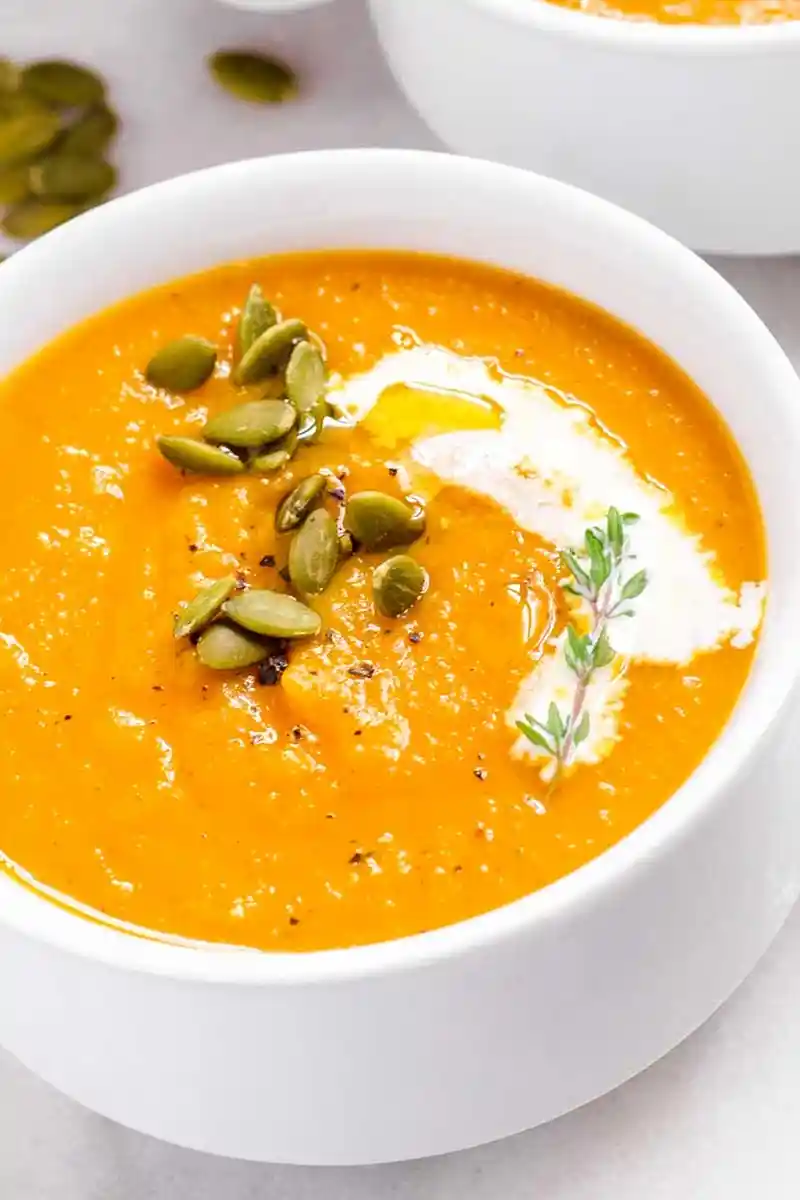
List of ingredients
- 1 small head whole garlic – keep the skin on during roasting.
- Olive oil – used for coating vegetables and garlic.
- Salt and pepper – for seasoning the roasted components.
- 1 medium butternut squash – peeled and cut into 1 inch cubes, approximately 3 pounds.
- 1 medium yellow onion – peeled and roughly chopped.
- 2 teaspoons fresh thyme leaves – or substitute with 3/4 teaspoon dried thyme.
- 4 to 6 cups chicken or vegetable broth – adjust amount to achieve preferred thickness.
step-by-step instructions
- Prepare the Oven and Garlic: Preheat your oven to 425 degrees F. Cut approximately 1/4 inch off the top of the whole garlic head to expose the cloves. Place the head on aluminum foil, drizzle with 1 tablespoon of olive oil, 1/2 teaspoon salt, and black pepper, then seal the foil tightly by twisting the top.
- Roast the Vegetables: Spread the cubed butternut squash and chopped onions on a large sheet pan. Toss them with olive oil, salt, and pepper. Place the foil-wrapped garlic on the same pan, ensuring the vegetables are not overcrowded to prevent steaming. Roast for 30 to 35 minutes, turning once. Remove onions if they brown too quickly, and leave the garlic for up to 40 minutes.
- Combine Ingredients: Transfer the roasted squash and onions into a large pot. Squeeze the softened garlic cloves out of their skins and into the pot. Stir in the thyme and the broth.
- Blend and Season: Use an immersion blender to process the mixture until it is completely smooth. Stir in additional broth if you prefer a thinner consistency. Add salt and pepper to taste.
- Simmer and Finish: Bring the liquid to a boil, then lower the heat to a simmer for 10 to 15 minutes to integrate the flavors. Serve immediately with garnishes like pumpkin seeds, thyme, olive oil, or heavy cream.
The Impact of Roasting on Flavor
Natural Sugar Caramelization
Roasting the butternut squash and onions at high heat triggers the Maillard reaction. This process caramelizes the natural sugars in the vegetables, creating a sweeter and more complex flavor profile than boiling or sautéing. The result is a richer, deeper taste that defines the soup’s character.
Roasted Garlic Depth
Cooking garlic in its skin transforms the sharp, pungent flavor of raw cloves into a mellow, nutty sweetness. Squeezing the cloves directly into the pot ensures the garlic is evenly distributed and fully incorporated into the base. This technique provides a savory foundation without any harsh bite.
Efficiency of One-Pan Preparation
Using a sheet pan for the primary ingredients eliminates the need for multiple pots and pans on the stove. By roasting everything together, you avoid the step of mincing garlic or slowly sautéing onions in a pot. This streamlines the workflow and ensures consistent browning across all vegetables.
Customizing Your Soup
Incorporating Warming Spices
You can modify the flavor profile by adding ground spices during the simmering stage. A pinch of cumin adds an earthy tone, while cinnamon or nutmeg enhances the natural sweetness of the squash. For those who prefer a spicy kick, a small amount of cayenne pepper provides a subtle heat.
Adding Complementary Root Vegetables
To increase the nutritional value and alter the texture, roast other root vegetables alongside the squash. Carrots add more color and sweetness, while parsnips introduce a slightly peppery, herbal note. Celery can also be roasted to add a salty, aromatic layer to the blended soup.
Enhancing Texture with Fats
For a silkier mouthfeel, stir in 2 to 3 tablespoons of unsalted butter during the final simmer. Alternatively, a swirl of heavy cream or coconut milk added at the end creates a creamier consistency. These additions help balance the acidity of the broth and smooth out the vegetable fibers.
Adding a Hint of Sweetness
A small drizzle of maple syrup can be stirred in during the final stages of cooking. This does not make the soup a dessert but rather highlights the autumn flavors of the butternut squash. It provides a subtle contrast to the salty broth and roasted garlic.
Serving and Pairing Suggestions
Ideal Bread Pairings
Serve this soup with a crusty, toasted artisan loaf or Italian bread to balance the smooth texture. Honey rolls or garlic herb rolls provide a soft contrast to the density of the soup. For a more complex flavor, pair it with a walnut or cranberry-based bread.
Fresh Salad Accompaniments
A crisp salad helps cut through the richness of the roasted vegetables. Use a base of kale or mixed greens with sliced apples and a vinaigrette dressing. This combination provides a refreshing acidity that complements the savory notes of the squash.
Savory Topping Ideas
Add texture to the finished bowl with toasted pumpkin seeds (pepitas) or sunflower seeds. Toasted walnuts provide a buttery crunch that pairs well with the thyme. A final drizzle of high-quality olive oil or a pinch of fresh herbs improves the visual presentation and taste.
Storage and Preservation
Refrigeration Guidelines
Store leftover soup in an airtight container in the refrigerator for 3 to 4 days. Ensure the soup has cooled completely before sealing the lid to prevent condensation. This prevents the soup from spoiling and maintains the integrity of the flavors.
Freezing Method
This soup is freezer-friendly and can be stored for up to 3 months. Use freezer-safe containers or silicone molds for pre-portioned servings. Leave a small amount of headspace at the top of the container to allow for expansion as the liquid freezes.
Thawing and Recovery
Thaw frozen soup slowly in the refrigerator overnight before reheating. If you are in a hurry, you can reheat the soup directly from frozen in a pot over low heat. Always stir frequently to ensure the soup heats evenly without burning at the bottom.
Reheating and Texture Adjustment
Stovetop Reheating Process
The most effective way to reheat the soup is in a pot over medium-low heat. This allows you to control the temperature and prevents the soup from separating. Simmer gently until the soup is heated through, stirring occasionally to maintain a smooth consistency.
Correcting Soup Thickness
Roasted butternut squash soup tends to thicken significantly after refrigeration due to the starch in the vegetables. Add a few splashes of chicken or vegetable broth while reheating to return the soup to its original consistency. Adjust the amount of liquid based on your preference for a thick or thin soup.
Avoiding Overheating
Avoid boiling the soup vigorously during the reheating process, as this can cause the emulsion to break. Keep the heat low and stir constantly. If using a microwave, heat in short intervals and stir between each session to avoid hot spots.
Troubleshooting Common Issues
Achieving a Perfectly Smooth Texture
If the soup feels slightly grainy, continue blending with the immersion blender for an additional minute. If you are using a standard countertop blender, process the soup in small batches and use a high speed setting. Be cautious of the steam pressure when blending hot liquids.
Managing Garlic Intensity
If you find the garlic flavor too overpowering, reduce the amount of roasted cloves added to the pot. Start by adding half of the cloves, blend, and taste before adding the rest. This allows you to customize the potency based on your personal preference.
Preventing Vegetable Burning
To prevent the onions from burning before the squash is tender, check them frequently during the roasting process. If the onions brown too quickly, remove them from the sheet pan a few minutes early. Ensure you use two sheet pans if the vegetables are too crowded, as overcrowding leads to steaming rather than roasting.
Frequently Asked Questions
Do I have to use an immersion blender?
An immersion blender is recommended for convenience, but a standard blender works well. If using a standard blender, work in small batches and leave the lid slightly cracked to let steam escape safely.
What spices can I add to the soup?
Cumin, cinnamon, and nutmeg are excellent choices for adding warmth. For a bolder flavor, a pinch of garam masala can be added. For heat, use a small amount of cayenne pepper.
How many cups of diced squash are in a whole squash?
A typical 3-pound butternut squash yields approximately 4.5 to 5 cups of uncooked diced cubes. This is the ideal amount for a batch of 6 servings.
Can I use dried herbs instead of fresh thyme?
Yes, you can use dried thyme as a substitute. Use approximately 3/4 teaspoon of dried thyme for every 2 teaspoons of fresh thyme, as dried herbs have a more concentrated flavor.
How long does the soup last in the freezer?
The soup can be frozen for up to 3 months. For the best quality, ensure it is stored in an airtight, freezer-safe container to prevent freezer burn.
Print
Roasted Butternut Squash Soup
- Total Time: 60 minutes
- Yield: 6 servings 1x
- Diet: General
Description
This comforting roasted butternut squash soup is perfect for fall and winter. It’s loaded with amazing flavors from all the roasted vegetables. It’s an easy recipe that is also make-ahead and freezer friendly.
Ingredients
- 1 small head whole garlic
- Olive oil
- Salt and pepper
- 1 medium butternut squash, peeled and cut into 1 inch cubes (about 3 pounds)
- 1 medium yellow onion, peeled and roughly chopped
- 2 teaspoons fresh thyme leaves (or ¾ teaspoon dried)
- 4 to 6 cups chicken or vegetable broth
Instructions
- Preheat: Preheat oven to 425 degrees F.
- Prep garlic: Cut ¼ inch off the top of the garlic to expose some of the cloves. Do not peel it. Place it on aluminum foil and generously drizzle with about 1 tablespoon of olive oil, ½ teaspoon salt and a few grinds of freshly ground black pepper. Fold up the foil and close tightly by twisting it from the top. Set aside.
- Prepare vegetables: On a large sheet pan, toss the butternut squash and onions with a few drizzles of olive oil, and salt and pepper to taste. Make some room and place the prepared garlic on the sheet pan.
- Roast: Roast for 30 to 35 minutes, or until vegetables are softened, turning midway through. You may need to remove the onions a few minutes early. The garlic may take closer to 40 minutes.
- Combine: Transfer the roasted butternut squash and onions to a large pot. For the garlic, remove the foil and squeeze out the garlic cloves into the pot. Then, add the broth and thyme.
- Blend: Using an immersion blender, blend everything until smooth. At this point, add more broth if needed until desired consistency. Season with salt and pepper to taste.
- Simmer: Bring to a boil and then reduce heat to simmer for 10 to 15 minutes, until all the flavors come together.
- Serve: Serve immediately.
Notes
A medium 3-pound whole butternut squash is equivalent to about 4.5 to 5 cups diced. If you’re worried about the soup being too garlicky, use a smaller head of garlic or half of one. Use an immersion blender for ease and safety. Adjust broth for desired consistency. Reheat over the stovetop adding extra broth as the soup tends to thicken when refrigerated.
- Prep Time: 10 minutes
- Cook Time: 50 minutes
- Category: Soup
- Method: Roasting
- Cuisine: American
Nutrition
- Serving Size: 1 serving
- Calories: 81 kcal
- Sugar: 4 g
- Sodium: 588 mg
- Fat: 1 g
- Saturated Fat: 0.1 g
- Unsaturated Fat: 0.9 g
- Trans Fat: 0 g
- Carbohydrates: 19 g
- Fiber: 3 g
- Protein: 3 g
- Cholesterol: 3 mg