This nutrient-dense cabbage soup is a filling option for those tracking points or calories. It uses fresh vegetables and a savory broth to create a satisfying meal without heavy fats.
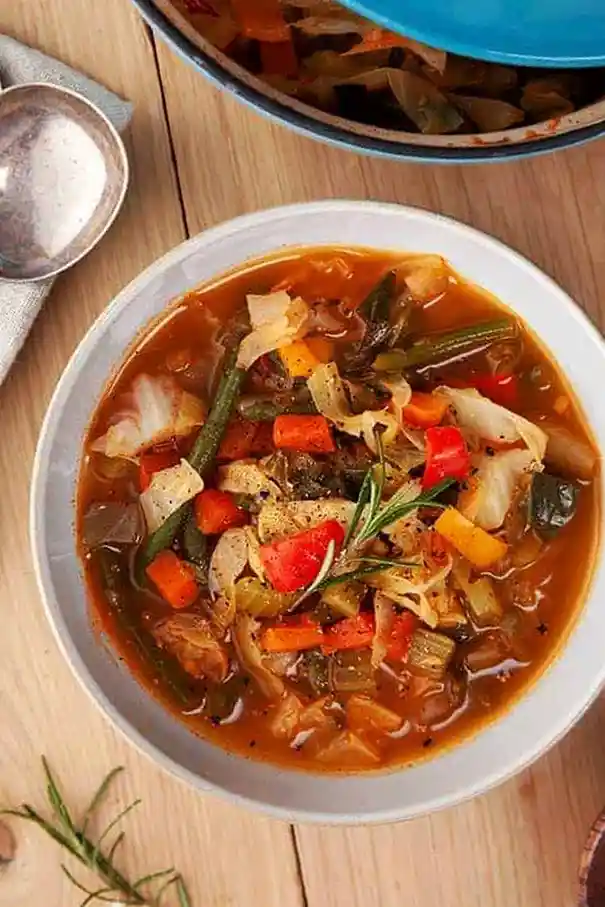
List of ingredients
- Calorie controlled spray oil or up to 1 tsp vegetable oil – used to prevent sticking.
- 2 small onions – roughly chopped for base flavor.
- 4 carrots – chopped into uniform rounds.
- 3 sticks celery – chopped into bite-sized pieces.
- 1 small sweet red pepper – diced.
- 1 small sweet yellow pepper – diced.
- 3 garlic cloves – finely chopped to release aromatic oils.
- 1 medium cabbage – shredded thinly.
- 1 stock / bouillon cube (beef) made up with 3 cups / 700ml boiling water – provide the savory liquid base.
- 1 tbs tomato puree / paste – adds richness and color.
- 1/2 cup green beans – chopped (100g) for extra texture.
- Salt & pepper – to taste.
- Fresh thyme – optional herb for earthy notes.
step-by-step instructions
- Sauté the Base: Spray the bottom of a large saucepan or dutch oven with calorie controlled spray oil. Warm over medium heat, then add onions, carrots, celery, and peppers; saute for 5-6 minutes until softened. Tip: Add a few tablespoons of water if vegetables begin to stick.
- Add Aromatics: Stir in the finely chopped garlic and fresh thyme if using. Saute for another 1-2 minutes until fragrant but not browned.
- Combine Main Ingredients: Stir in the tomato puree, then add the shredded cabbage and prepared stock. Mix thoroughly to ensure the tomato paste is fully integrated.
- Simmer: Bring the mixture to a boil, then immediately reduce the heat. Let it simmer for 8-10 minutes to soften the cabbage.
- Final Vegetable Addition: Stir in the chopped green beans. Simmer for an additional 3-4 minutes until the beans are tender.
- Season: Remove from heat and add salt and pepper according to your taste preferences.
Choosing the Best Produce
Selecting the Right Cabbage
Green cabbage is the standard choice for this soup as it holds its structure well during simmering. Savoy cabbage provides a more crinkled texture and a milder flavor, while spring cabbage is thinner and cooks faster. Avoid red cabbage for this specific recipe as it can turn the broth an unappealing grey or purple color.
Picking Fresh Celery and Carrots
Choose carrots that are firm and bright orange without soft spots or bends. For celery, look for stalks that are crisp and snap easily, ensuring they are free from brown edges. These root vegetables provide the essential aromatic foundation for the soup’s depth.
Selecting Sweet Bell Peppers
Opt for peppers with smooth, taut skin and heavy weight for their size. Using both red and yellow peppers adds a natural sweetness and visual contrast to the soup. Ensure the stems are green and not shriveled to guarantee freshness.
Broth and Flavor Enhancements
Using Low-Sodium Beef Bouillon
A beef bouillon cube offers a rich, savory profile that complements the sweetness of the carrots and peppers. To control salt intake, choose a low-sodium version of the cube. Always dissolve the cube completely in boiling water before adding it to the pot to avoid salty clumps.
Swapping Beef for Vegetable Stock
For a completely plant-based version, replace the beef cube with a high-quality vegetable bouillon. Vegetable stock provides a lighter, cleaner taste that emphasizes the fresh cabbage and thyme. This variation is ideal for those who prefer a garden-fresh flavor profile.
Enhancing Depth with Tomato Paste
Tomato puree acts as a thickening agent and adds a concentrated umami flavor to the broth. It balances the acidity of the vegetables and gives the soup a rich, red hue. Stirring it in before the liquid ensures the paste is toasted slightly, which enhances its sweetness.
The Role of Fresh Thyme
Fresh thyme adds a subtle, earthy fragrance that elevates the overall aroma of the soup. If fresh thyme is unavailable, you can use a pinch of dried thyme, though you should add it earlier in the sauté process. This herb prevents the soup from tasting one-dimensional.
Cooking Techniques for Better Results
Sautéing Without Burning Garlic
Garlic burns quickly and becomes bitter if exposed to high heat for too long. Always add the garlic after the harder vegetables like carrots and onions have already softened. Sautéing it for only 1-2 minutes is sufficient to release the flavor without scorching the cloves.
Managing Pot Heat to Avoid Sticking
Using a heavy-bottomed dutch oven helps distribute heat evenly across the base of the pan. If you notice the vegetables sticking, avoid adding more oil to keep the points low. Instead, use a splash of water or a bit of the stock to deglaze the pan and loosen the brown bits.
Achieving the Perfect Cabbage Texture
Shredding the cabbage uniformly ensures that every piece cooks at the same rate. To avoid overcooking the cabbage into a mushy consistency, stick strictly to the 8-10 minute simmer time. This leaves the cabbage tender but still slightly structured.
Timing the Green Bean Addition
Green beans cook faster than carrots and cabbage and can lose their bright color if boiled too long. Adding them in the last 3-4 minutes of cooking preserves their vibrant green hue. This also ensures they maintain a slight snap, adding a contrasting texture to the soup.
Customizing Your Soup
Adding Lean Protein Sources
To make this soup a more substantial meal, stir in cooked shredded chicken breast or lean turkey. Shrimp can also be added during the last few minutes of simmering. These proteins increase the satiety of the dish without adding significant fat.
Incorporating Hearty Grains
Adding a small amount of cooked quinoa or brown rice can add a chewy texture and extra fiber. If adding raw grains, increase the amount of stock by one cup and extend the simmering time. This transforms the soup into a thicker, heartier stew.
Spicing Up the Flavor Profile
For those who prefer a bit of heat, add a pinch of crushed red pepper flakes during the sauté step. A teaspoon of smoked paprika can also be added to give the broth a woody, campfire-like depth. These additions change the flavor profile without adding calories.
Adjusting Thickness and Consistency
If you prefer a thicker soup, use an immersion blender to puree a small portion of the vegetables directly in the pot. Alternatively, you can simmer the soup uncovered for an extra 10 minutes to reduce the liquid. This concentrates the flavors and creates a denser consistency.
Serving and Pairing Ideas
Choosing Low-Calorie Bread Pairings
Pair this soup with a slice of toasted whole-grain bread or a low-point sourdough. A light rye bread also complements the earthy flavors of the cabbage and thyme. To keep it light, avoid using butter on the toast and use a light spray of olive oil instead.
Garnish Options for Added Freshness
A sprinkle of fresh parsley or chopped chives on top adds a pop of color and a fresh, peppery finish. A squeeze of fresh lemon juice just before serving can brighten the heavy flavors of the beef stock. These small additions make the dish feel more gourmet.
Combining with a Side Salad
Serve the soup alongside a simple green salad with a vinaigrette made of lemon juice and a touch of mustard. This adds a crisp, cold contrast to the hot soup. Using dark leafy greens like spinach or arugula provides additional micronutrients to the meal.
Storage and Preservation
Proper Refrigeration Methods
Allow the soup to cool completely before transferring it to an airtight glass container. Store it in the refrigerator for up to three days to maintain freshness. Keeping it in glass prevents the soup from picking up odors from other foods in the fridge.
Freezing for Long Term Use
This soup freezes exceptionally well for meal prep. Portion the cooled soup into reusable silicone bags or freezer-safe containers, leaving a small gap at the top for expansion. Label each container with the date to ensure you use it within three months.
Thawing and Reheating Instructions
Thaw frozen portions in the refrigerator overnight before heating. To reheat, place the soup in a saucepan over medium heat and stir occasionally until boiling. If the soup has thickened too much during freezing, stir in a tablespoon of water or broth to restore the consistency.
Common Troubleshooting and FAQs
Why is my cabbage too mushy?
Cabbage becomes mushy if it is simmered for too long or if the heat is too high. Ensure you reduce the heat to a low simmer after the initial boil. Follow the timing strictly and remove the pot from the heat as soon as the cabbage reaches your desired tenderness.
How do I reduce the strong cabbage smell?
The characteristic cabbage scent is caused by sulfur compounds released during cooking. To minimize this, ensure your kitchen is well-ventilated by using an exhaust fan. Adding a splash of lemon juice or apple cider vinegar at the end can also neutralize the aroma.
Can I use frozen vegetables instead?
Yes, you can use frozen diced carrots, onions, and green beans. However, frozen vegetables release more water than fresh ones, so you may need to simmer the soup for a few extra minutes to achieve the right thickness. Add frozen green beans at the same time as you would fresh ones.
What can I use instead of tomato puree?
If you do not have tomato puree, you can substitute it with two tablespoons of tomato sauce or a tablespoon of crushed canned tomatoes. While tomato puree is more concentrated, these alternatives still provide the necessary acidity and color. You may need to simmer the soup slightly longer to thicken the broth.
Print
Hearty Vegetable Cabbage Soup
- Total Time: 35 minutes
- Yield: 6 servings 1x
- Diet: Low Calorie
Description
This tasty Zero Smart Point Cabbage Soup is a perfect Weight Watchers Freestyle recipe. It is zero SmartPoints on the myWW Blue, Purple & Green plans.
Ingredients
- Calorie controlled spray oil (or up to 1 tsp vegetable oil)
- 2 small onions, roughly chopped
- 4 carrots, chopped
- 3 sticks celery, chopped
- 1 small sweet red pepper
- 1 small sweet yellow pepper
- 3 garlic cloves, finely chopped
- 1 medium cabbage, shredded
- 1 beef stock / bouillon cube made up with 3 cups / 700ml boiling water
- 1 tbs tomato puree / paste
- 1/2 cup green beans, chopped (100g)
- Salt & pepper
- Fresh thyme (optional)
Instructions
- Step 1: Spray the bottom of a large saucepan / dutch oven with calorie controlled spray oil. Warm over a medium heat and then add the onions, carrots, celery and peppers and saute for 5 – 6 minutes until they have softened. If you find the vegetables starting to stick to the bottom of the pan then add a couple of tablespoons of water and stir.
- Step 2: Add the garlic (& fresh thyme if using) and saute for a further 1 – 2 minutes.
- Step 3: Stir in the tomato puree and then add the shredded cabbage and stock. Mix thoroughly.
- Step 4: Bring the mixture to the boil then reduce and simmer for 8 – 10 minutes.
- Step 5: Add the green beans and simmer for a further 3 – 4 minutes until tender.
- Step 6: Add salt and pepper to taste.
Notes
This soup lasts up to 3 days in the fridge or can be frozen in single portion bags after chilling completely.
- Prep Time: 15 minutes
- Cook Time: 20 minutes
- Category: Soups
- Method: Simmering
- Cuisine: American
Nutrition
- Serving Size: 1 cup
- Calories: 84 kcal
- Sugar: 9 g
- Sodium: 235 mg
- Fat: 1 g
- Saturated Fat: 1 g
- Unsaturated Fat: 2 g
- Trans Fat: 0 g
- Carbohydrates: 19 g
- Fiber: 7 g
- Protein: 4 g
- Cholesterol: 1 mg