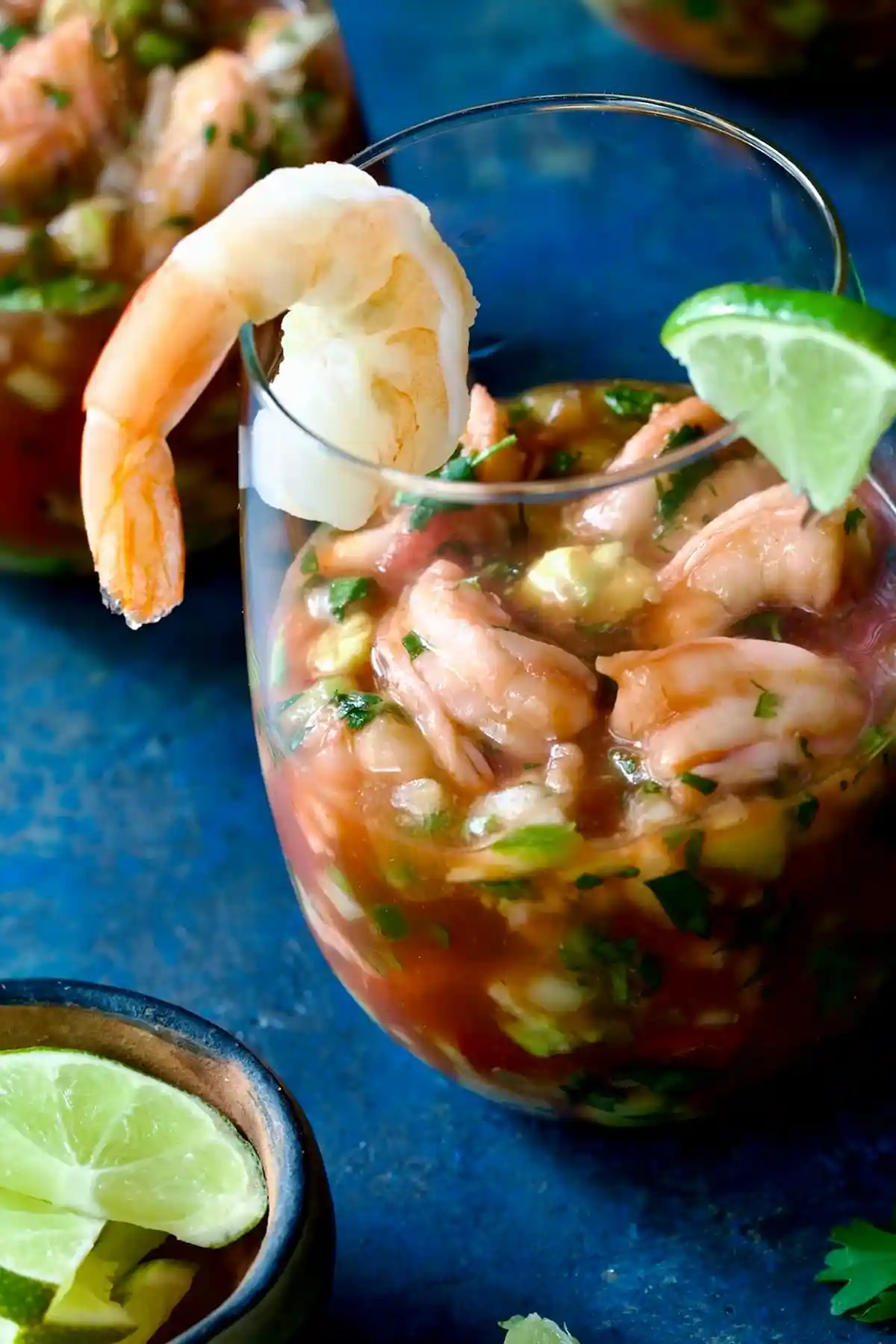
This refreshing Mexican Shrimp Cocktail combines cooked shrimp with a crisp medley of vegetables in a zesty tomato-based sauce. It is an ideal appetizer or light meal for warm weather dining.
List of ingredients
- 1 medium white onion – half for poaching and half for the fresh mix.
- 6 large cloves garlic – coarsely chopped for the poaching liquid.
- 2 tablespoons salt – plus additional amounts to taste.
- 1 tablespoon coarsely ground black pepper – adds basic seasoning.
- 1 pound medium shrimp (31-35 count) – peeled and deveined, with 4 tails left intact for garnish.
- 1 1/2 cups Clamato juice – chilled for a crisp temperature.
- 2 tablespoons ketchup – adds a sweet-savory depth.
- 3 tablespoons lime juice – freshly squeezed for acidity.
- Hot sauce – use a Mexican variety to taste.
- 1/2 small jicama – peeled and diced into about 1 cup.
- 1/2 large English cucumber – seeded and diced into about 1 cup.
- 1 medium plum tomato – seeded and chopped.
- 2 medium avocados – peeled, pitted and chopped.
- 1 large jalapeno or serrano pepper – optional, seeded and chopped.
- 1 cup chopped cilantro – loosely packed.
- Lime wedges – for final serving.
- Cilantro sprigs – for final serving.
step-by-step instructions
- Prepare the Onion: Cut the onion in half. Dice one half and cut the other half into large chunks. Place the diced portion in a sieve and rinse under cold tap water for 30 seconds to remove harshness, then drain.
- Poach the Shrimp: Fill a saucepan with water and add the onion chunks, chopped garlic, salt, and black pepper. Bring the water to a boil.
- Cook the Shrimp: Add the shrimp to the boiling water, then immediately turn off the heat. Let the shrimp sit in the hot water for 1 minute or until they turn pink and are cooked through to avoid toughness.
- Cool and Process: Drain the shrimp and let them cool completely. Discard the poached onion and garlic. Set aside the four shrimp with intact tails for garnishing. If the remaining shrimp are large, slice them in half lengthwise for easier eating.
- Mix the Sauce: In a small mixing bowl, combine the chilled Clamato juice, ketchup, lime juice, and hot sauce. Stir until well blended.
- Combine Vegetables and Shrimp: In a separate large bowl, combine the rinsed diced onion, diced jicama, diced cucumber, chopped tomato, chopped avocado, chopped pepper (if using), and chopped cilantro. Gently fold in the cooked shrimp.
- Assemble the Dish: Scoop the shrimp and vegetable mixture into large, wide-rimmed glasses or bowls.
- Final Touch: Pour the prepared dressing evenly over the mixture. Garnish each glass with a whole shrimp (tail on), a lime wedge, and a few cilantro sprigs.
Ingredient Selection and Substitutions
Using Freshly Squeezed Lime Juice
Fresh lime juice provides a bright, sharp acidity that bottled concentrates cannot replicate. It helps balance the saltiness of the Clamato and the richness of the avocado. Always squeeze fresh limes immediately before mixing to maintain the volatile citrus oils.
Clamato Juice Alternatives
If Clamato is unavailable, you can create a similar base by mixing 1 cup of tomato juice with 1/2 cup of clam juice. For a different variation, use 3/4 cup of ketchup and 3/4 cup of clam juice. This maintains the briny seafood profile essential to the dish.
Jicama Substitutions
Jicama provides a unique, nutty crunch and starchy texture. If you cannot find it, you can substitute it with extra cucumber or diced celery. Celery offers a similar crispness, though it has a more distinct herbal flavor than the mild jicama.
Choosing the Best Tomatoes
Plum or Roma tomatoes are preferred because they have a meatier texture and less water content than round slicing tomatoes. This prevents the cocktail from becoming too watery as the salt draws moisture out of the vegetables. Always remove the seeds to keep the mixture chunky.
Selecting the Right Shrimp
Wild-caught shrimp generally offer a cleaner taste and firmer texture than farmed alternatives. Medium size (31-35 count) is ideal for this dish as it fits well in a spoon. If using pre-cooked shrimp, skip the poaching step but rinse them in cold water first.
Professional Preparation Tips
The Kitchen Shears Method for Shrimp
To peel and devein shrimp quickly, use kitchen shears to cut through the shell along the back from the head toward the tail. This allows you to remove the shell and the vein in one motion without needing to set the scissors down repeatedly. This method is significantly faster than using a knife.
Reducing Onion Pungency
Rinsing diced white onion under cold running water for 30 seconds removes the sulfurous compounds that can overpower other flavors. This process, known as leaching, keeps the onion crisp while making the taste milder. It ensures the raw onion does not linger too long on the palate.
Precision Poaching Technique
Turning off the heat immediately after adding shrimp prevents them from becoming rubbery. The residual heat of the water is sufficient to cook medium shrimp in about 60 seconds. Overcooking shrimp leads to a tough texture that ruins the delicacy of the cocktail.
Preventing Avocado Oxidation
Avocados brown quickly once exposed to air due to enzymatic browning. To prevent this, chop the avocado last and toss it immediately with a small amount of lime juice. The citric acid acts as a barrier, keeping the fruit vibrant green during preparation.
Flavor Customization Ideas
Adjusting Heat Levels
For a mild heat, use a seeded jalapeno. For a more intense spice, substitute the jalapeno with serrano peppers, which are naturally hotter. You can also control the heat by adding more or less of the Mexican hot sauce during the mixing phase.
Balancing Tanginess and Sweetness
If the sauce tastes too acidic, add an extra teaspoon of ketchup to introduce a hint of sweetness. Conversely, if the sauce feels too heavy or sweet, increase the lime juice. A balanced sauce should be tangy, salty, and slightly spicy.
Adding Smoky Dimensions
To introduce a smoky element, stir in a pinch of smoked paprika or a teaspoon of chipotle in adobo sauce. This complements the tomato base and gives the dish a grilled flavor profile. This variation works particularly well if you choose to grill the shrimp instead of poaching them.
Enhancing the Herbaceous Notes
While cilantro is traditional, you can add a small amount of finely chopped fresh parsley to add depth. Ensure the cilantro is chopped loosely to avoid bruising the leaves, which can lead to a bitter taste. Fresh herbs should always be added at the very end.
Serving and Presentation Guidelines
Selecting Appropriate Glassware
Wide-rimmed margarita glasses or large cocktail glasses are the traditional choice for this dish. The wide opening allows the colorful vegetables and shrimp to be visible. For a more casual gathering, clear glass bowls are an excellent alternative.
Artful Garnishing Techniques
Place the tail-on shrimp across the rim of the glass to create a professional look. Adding a bright green cilantro sprig and a yellow-green lime wedge provides a color contrast against the red sauce. This visual appeal increases the perceived quality of the appetizer.
Recommended Side Pairings
Serve the cocktail with salted corn tortilla chips for added crunch and salt. Tostadas are another great option, allowing guests to scoop the mixture onto a crisp tortilla base. A side of extra lime wedges allows guests to customize the acidity to their liking.
Platter Style Presentation
For larger parties, instead of individual glasses, serve the mixture in a large chilled glass bowl. Surround the bowl with a ring of tortilla chips and lime quarters. This family-style presentation encourages sharing and simplifies the serving process.
Storage and Make-Ahead Advice
Component-Based Preparation
To keep the dish fresh, prepare the components separately. Cook and chill the shrimp in one container, dice the vegetables (excluding avocado) in another, and mix the sauce in a jar. Combine them only shortly before serving to maintain the crunch of the vegetables.
Maximum Refrigeration Time
Store leftovers in an airtight container in the refrigerator for 1 to 2 days. Beyond this time, the vegetables may lose their crispness and the sauce may become too thin. Always keep the dish chilled until the moment of consumption.
Managing Avocado Storage
Since avocado cannot be stored well once mixed, always add it fresh to the serving portion. If you must prep the avocado in advance, store it in water or cover it tightly with plastic wrap touching the surface of the fruit to block oxygen.
Cold Serving Requirements
This dish should never be reheated. The fresh vegetables and chilled sauce are essential to the experience. If the mixture has warmed up, place the serving glasses in the freezer for 10 minutes before filling to ensure an icy temperature.
Troubleshooting Common Issues
Preventing a Watery Sauce
If the cocktail becomes too liquid, it is usually because the vegetables released too much water. To prevent this, ensure the cucumber and tomatoes are properly seeded. You can also drain the vegetable mix slightly before adding the sauce.
Correcting Overcooked Shrimp
If you accidentally overcook the shrimp, plunge them immediately into an ice bath. This stops the cooking process instantly and prevents them from shrinking further. While it won’t fully reverse the toughness, it prevents the shrimp from becoming completely rubbery.
Fixing Excessive Saltiness
If the Clamato or added salt makes the dish too salty, increase the volume of diced cucumber and tomato. These water-rich vegetables dilute the salt concentration. Adding an extra squeeze of lime juice can also help mask excessive saltiness through acidity.
Solving Avocado Browning
If the avocado begins to brown before serving, it is usually due to a lack of acid. Gently fold in an additional tablespoon of lime juice to brighten the color. For future batches, ensure the avocado is the very last ingredient added to the bowl.
Frequently Asked Questions
What is the difference between a ceviche and a shrimp cocktail?
Ceviche uses raw seafood that is chemically cooked by the acidity of citrus juices. A shrimp cocktail uses shrimp that have been physically cooked through heat, such as boiling or poaching, before being chilled and mixed with sauce.
Can this be made without clam juice?
Yes, you can replace Clamato with a mixture of tomato juice and a splash of Worcestershire sauce or a pinch of celery salt to mimic the briny flavor. However, the seafood depth provided by clam juice is a signature characteristic of the original recipe.
How do I keep the shrimp plump and juicy?
Avoid boiling the shrimp for several minutes. Using the method of turning off the heat and letting them sit in the residual hot water ensures they stay plump. Overboiling causes the proteins to contract and squeeze out moisture.
Is this dish suitable for a light lunch?
Yes, because it is packed with lean protein from shrimp and fiber from jicama, cucumber, and avocado, it makes a nutritious and filling light lunch. It provides a balance of healthy fats and vitamins without being overly heavy.
Print
Authentic Mexican Shrimp Cocktail
- Total Time: 45 minutes
- Yield: 6 servings 1x
- Diet: Pescatarian
Description
This authentic, elegant Mexican Shrimp Cocktail is packed with crunchy vegetables and shrimp in a spicy, tangy tomato base that’s refreshing with just the right amount of heat. Perfect for hot weather dining!
Ingredients
- 1 medium white onion
- 6 large cloves garlic, coarsely chopped
- 2 tablespoons salt, plus more to taste
- 1 tablespoon coarsely ground black pepper
- 1 pound medium shrimp (31–35 count, peeled, deveined and tails removed except for 4 for garnish)
- 1 1/2 cups Clamato juice, chilled
- 2 tablespoons ketchup
- 3 tablespoons lime juice, or to taste
- Hot sauce, preferably Mexican, to taste
- 1/2 small jicama, peeled and diced (about 1 cup)
- 1/2 large English cucumber, seeded and diced (about 1 cup)
- 1 medium plum tomato, seeded and chopped
- 2 medium avocados, peeled, pitted and chopped
- 1 large jalapeno or serrano pepper, optional, seeded if desired, chopped
- 1 cup chopped cilantro, loosely packed
- Lime wedges, for serving
- Cilantro sprigs, for serving
Instructions
- Step 1: Cut the onion in half. Dice half of the onion and cut the other half into large chunks. Reserve the chunks for cooking the shrimp. Place the diced onion portion in a sieve. Run the onion under cold tap water for 30 seconds; drain and set aside.
- Step 2: Fill a saucepan with water. Add the onion chunks, garlic cloves, 2 tablespoons salt and black pepper. Bring to a boil. Add shrimp, turn off the heat and let sit for 1 minute or until shrimp are pink and cooked through.
- Step 3: Drain and let the shrimp cool. Discard onion and garlic. Pick out the shrimp with intact tails and set aside for the garnish. If your shrimp is large, cut them in half through the middle to make them easier to eat.
- Step 4: Combine Clamato, ketchup, lime juice and hot sauce in a small bowl.
- Step 5: In another bowl, combine diced onion, jicama, cucumber, tomato, avocado, jalapeno or serrano (if using) and cilantro. Fold in the shrimp.
- Step 6: Scoop into large, wide-rimmed glasses.
- Step 7: Pour dressing over the shrimp and vegetable combination.
- Step 8: Serve garnished with a lime wedge and cilantro sprigs.
Notes
If shrimp are large, cut them in half through the middle for easier eating. For a low-sodium version, use low-sodium tomato or vegetable juice and low-sodium ketchup.
- Prep Time: 40 minutes
- Cook Time: 5 minutes
- Category: Appetizers and Snacks
- Method: Boiling
- Cuisine: Mexican
Nutrition
- Serving Size: 1 serving
- Calories: 332 kcal
- Sugar: 9 g
- Sodium: 3715 mg
- Fat: 16 g
- Saturated Fat: 2 g
- Unsaturated Fat: 12 g
- Trans Fat: 0.01 g
- Carbohydrates: 27 g
- Fiber: 11 g
- Protein: 27 g
- Cholesterol: 183 mg