This Shrimp Con Queso is a fast, one-pan meal that combines seasoned shrimp and sautéed vegetables with a rich, creamy cheese sauce. It is an ideal choice for a low-carb dinner that takes only 20 minutes to prepare from start to finish.
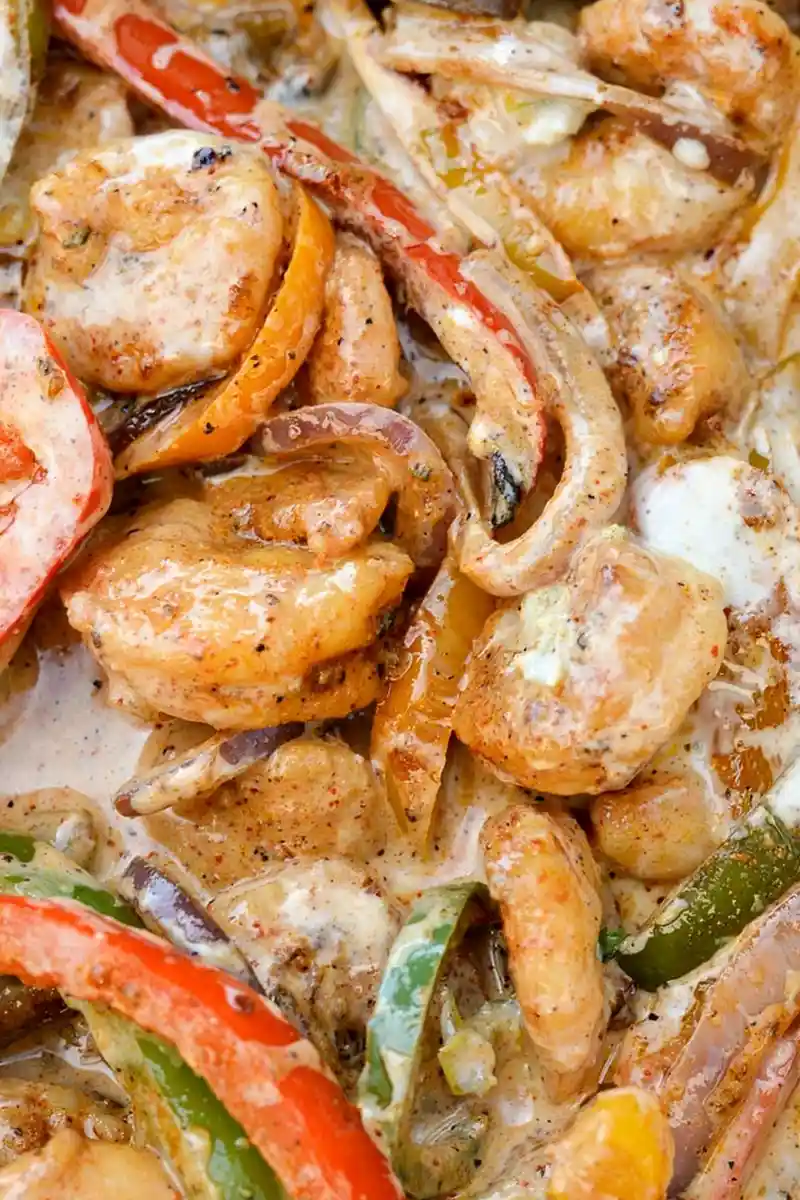
List of ingredients
- 2 tablespoons olive oil – used for searing the vegetables and shrimp.
- 1 1/2 cups bell pepper, mixed colors – diced for color and crunch.
- 1 cup red onion, thinly sliced – adds a sweet and sharp flavor profile.
- 1 cup mushrooms, sliced – adds earthiness and additional texture.
- 1 pound shrimp, thawed, deveined and shelled – the main protein source.
- 3 tablespoons taco seasoning – provides a savory blend of spices.
- 1/4 cup heavy cream – serves as the liquid base for the queso sauce.
- 2 ounces cream cheese, softened – ensures the sauce is creamy and thick.
- 1 1/2 cups shredded pepper jack cheese – adds a slight kick and great meltability.
- 1/2 cup white American cheese – provides a smooth, classic queso consistency.
step-by-step instructions
- Sauté Vegetables: Heat a large skillet over medium heat and pour in the olive oil. Add the sliced bell peppers, red onion, and mushrooms, sautéing for 5 to 6 minutes until they become tender.
- Sear Shrimp: Add the shrimp and taco seasoning to the pan, tossing everything to ensure the shrimp are evenly coated with spices. Sear for 2 to 3 minutes until the shrimp are cooked through, then transfer them and the vegetables to a separate plate.
- Create Sauce Base: Reduce the skillet heat to low and add the softened cream cheese and heavy cream. Stir the mixture constantly until the sauce is smooth and mostly clump-free.
- Melt Cheeses: Gradually add the shredded pepper jack and American cheese in small increments of about 1/2 cup. Stir continuously until all the cheese is completely melted and incorporated into the sauce.
- Adjust Consistency: If you prefer a thinner sauce, stir in a small amount of additional heavy cream or milk until it reaches your desired consistency.
- Combine and Serve: Return the cooked shrimp and vegetables to the skillet. Stir gently to coat every piece in the cheese sauce and serve the dish immediately.
Maximizing Flavor and Texture
Searing Shrimp Correctly
To avoid rubbery shrimp, ensure the pan is properly heated before adding the protein. Cook the shrimp just until they turn opaque and form a C-shape rather than a tight O-shape. Removing them from the pan immediately prevents overcooking during the sauce-making process.
Choosing the Right Pan
A large stainless steel or cast iron skillet is recommended for this recipe to ensure high heat retention. Non-stick pans also work well for the cheese sauce phase to prevent sticking. Ensure the pan is wide enough to prevent overcrowding, which can cause the shrimp to steam rather than sear.
Uniform Vegetable Prep
Slice the red onion and bell peppers into similar widths to ensure they cook at the same rate. Slicing mushrooms uniformly prevents some pieces from remaining raw while others overcook. This consistency ensures a balanced bite in every spoonful.
Utilizing the Pan Fond
The browned bits left in the pan after searing the shrimp are called fond and contain concentrated flavor. When you add the heavy cream and cream cheese, use a spatula to scrape these bits into the sauce. This incorporates the savory shrimp essence directly into the queso.
Ingredient Substitutions and Customizations
Alternative Protein Options
While shrimp is the primary protein, you can substitute it with bay scallops or firm white fish like cod. If using scallops, reduce the searing time to 1-2 minutes per side. Ensure any substitute protein is patted dry before cooking to achieve a better sear.
Vegetable Variations
If bell peppers are unavailable, zucchini or yellow squash can be used for a similar texture. Fresh spinach or kale can be stirred in during the final step for added nutrients. Avoid using vegetables with extremely high water content, as they may thin the cheese sauce.
Cheese Alternatives
If pepper jack is too spicy, substitute it with Monterey Jack or a mild white cheddar. White American cheese is used for its emulsifying properties, but a small amount of processed cheese sauce can be used as a replacement. Avoid using pre-shredded cheeses that contain cellulose, as they may not melt as smoothly.
Dairy-Free Adjustments
For a lighter version, you can replace heavy cream with evaporated milk or a full-fat coconut milk. Substitute the cheeses with high-quality plant-based alternatives that are specifically designed for melting. Be aware that plant-based cheeses may require a lower temperature to avoid separation.
Creating Homemade Taco Seasoning
If you do not have store-bought seasoning, mix 2 teaspoons chili powder, 1 teaspoon paprika, and 1 teaspoon garlic powder. Add 1 teaspoon onion powder, 1 teaspoon cumin, 1/2 teaspoon oregano, and 1/2 teaspoon each of salt and pepper. This provides a controlled level of sodium and spice.
Serving Suggestions and Pairings
Low-Carb Side Pairings
Cilantro lime cauliflower rice is an excellent pairing that complements the creamy sauce. Zucchini noodles or steamed broccoli also work well for those maintaining a ketogenic diet. These sides add freshness and balance to the richness of the queso.
Traditional Accompaniments
For a more traditional experience, serve the dish with warm corn or flour tortillas. Toasted tortilla chips provide a crunchy contrast to the soft shrimp and melted cheese. You can also serve the mixture over a bed of steamed white or brown rice.
Fresh Topping Ideas
Garnish the finished dish with chopped fresh cilantro and a squeeze of lime juice to cut through the richness. Diced avocado or a dollop of sour cream adds creaminess and a cooling effect. Sliced fresh jalapeños can be added for those who prefer more heat.
Buffet Style Presentation
If serving a crowd, transfer the completed mixture into a slow cooker on the warm setting. This keeps the cheese sauce fluid and prevents it from thickening too quickly. Provide bowls of chips and tortillas on the side for a self-serve appetizer station.
Storage and Reheating Guide
Refrigeration Basics
Store any leftovers in an airtight container in the refrigerator for 3 to 4 days. Ensure the dish is cooled slightly before sealing to prevent excessive condensation. Keep the container tightly sealed to prevent the shrimp from absorbing other odors in the fridge.
Stovetop Reheating Method
Reheating on the stove is the best way to maintain the sauce’s texture. Place the leftovers in a skillet over low heat and add a tablespoon of water or heavy cream. Stir gently until the cheese melts again and the shrimp are warmed through.
Microwave Reheating Tips
When using a microwave, heat the food in 30-second increments. Stir the mixture between each session to ensure even heat distribution and prevent hot spots. Adding a splash of milk before heating helps the sauce regain its creamy consistency.
Freezing Guidelines
It is recommended to freeze only the cooked shrimp and vegetables, as the cheese sauce may separate upon thawing. Store the seafood mixture in a freezer-safe bag for up to 6 months. Thaw overnight in the fridge and then fold into a freshly made batch of queso sauce.
Troubleshooting Common Issues
Preventing Cheese Separation
Cheese separates when the fats break away from the proteins, usually due to excessive heat. Always keep the burner on low when stirring in the shredded cheeses. Adding the cheese in small, gradual increments allows each portion to emulsify fully before adding more.
Managing Excess Liquid
If the vegetables release too much water during sautéing, the sauce may become runny. Increase the heat slightly during the vegetable phase to evaporate excess moisture. You can also pat the shrimp dry with paper towels before adding them to the pan.
Handling Overcooked Shrimp
Shrimp cook very quickly and can become rubbery if left in the pan too long. Remove them as soon as they lose their translucency and turn pink. By setting them aside while the sauce simmers, you ensure they remain tender.
Fixing a Lumpy Sauce
If the cream cheese creates clumps, use a whisk instead of a spoon to incorporate the heavy cream. If lumps persist, gently increase the heat for a few seconds while stirring vigorously. Adding a tiny amount of extra liquid can also help smooth out the texture.
Frequently Asked Questions
Can I use frozen shrimp for this recipe?
Yes, you can use frozen shrimp, but they must be fully thawed and patted dry before cooking. If you add frozen shrimp directly to the pan, they will release too much water, which prevents searing and ruins the sauce consistency.
Is this recipe suitable for meal prep?
This dish is excellent for meal prep, but it is best to slightly undercook the shrimp. Since you will reheat them later, undercooking prevents them from becoming tough. The flavors often meld and improve after a day in the refrigerator.
Can I make this without cream cheese?
You can substitute cream cheese with a traditional roux made from butter and flour. Whisk the roux with milk or cream to create a thick base before adding the shredded cheeses. However, the cream cheese provides a specific tang and stability to the sauce.
How do I make the dish spicier?
To increase the heat, add diced jalapeños or serrano peppers during the vegetable sauté phase. You can also add a pinch of cayenne pepper or red pepper flakes to the taco seasoning. Using a Pepper Jack cheese with higher heat levels also helps.
Can I use a different oil for searing?
While olive oil is recommended, you can use butter, ghee, or avocado oil. Avocado oil is particularly useful if you prefer a higher sear temperature. Butter adds a richer flavor but has a lower smoke point, so keep the heat at medium.
Print
Savory Shrimp Con Queso
- Total Time: 20 minutes
- Yield: 6 servings 1x
- Diet: Keto
Description
Impress your family with this delicious Shrimp Con Queso! This one pan, 20 minute meal features shrimp fajitas covered in a homemade queso sauce!
Ingredients
- 2 tablespoons olive oil
- 1 1/2 cup bell pepper (mixed colors)
- 1 cup red onion (thinly sliced)
- 1 cup mushrooms (sliced)
- 1 pound thawed shrimp (deveined and shelled)
- 3 tablespoons taco seasoning
- 1/4 cup heavy cream
- 2 ounces cream cheese (softened)
- 1 1/2 cup shredded pepper jack cheese
- 1/2 cup white American cheese
Instructions
- Step: Heat a large skillet to medium heat, then add in your olive oil.
- Step: Add the bell peppers, onion and mushrooms. Sauté the vegetables for 5-6 minutes until tender.
- Step: Add the shrimp and taco seasoning and toss to coat everything evenly with the spices. Sear the shrimp 2-3 minutes until cooked through, then remove from skillet and set aside.
- Step: Reduce the heat to low, then add the cream cheese, and heavy cream. Stir to make a smooth sauce with few clumps.
- Step: Add the shredded cheese in small increments (about 1/2 cup at a time), stirring continuously. Stir until all cheese is melted and incorporated into the sauce.
- Step: Finally, add the shrimp and veggies back to the skillet, stirring to cover each piece in the queso. Serve immediately.
Notes
If you do not have taco seasoning, use: 2 tsp chili powder, 1 tsp paprika, 1 tsp garlic powder, 1 tsp onion powder, 1 tsp cumin, 1/2 tsp oregano, 1/2 tsp salt, and 1/2 tsp pepper.
- Prep Time: 5 minutes
- Cook Time: 15 minutes
- Category: Main Course
- Method: Stovetop
- Cuisine: Keto
Nutrition
- Serving Size: 1 1/4 cups
- Calories: 359 kcal
- Sugar: 4.5 g
- Sodium: 561 mg
- Fat: 12.8 g
- Saturated Fat: 7.5 g
- Unsaturated Fat: 5.3 g
- Trans Fat: 0 g
- Carbohydrates: 6.2 g
- Fiber: 1.6 g
- Protein: 28 g
- Cholesterol: 177 mg