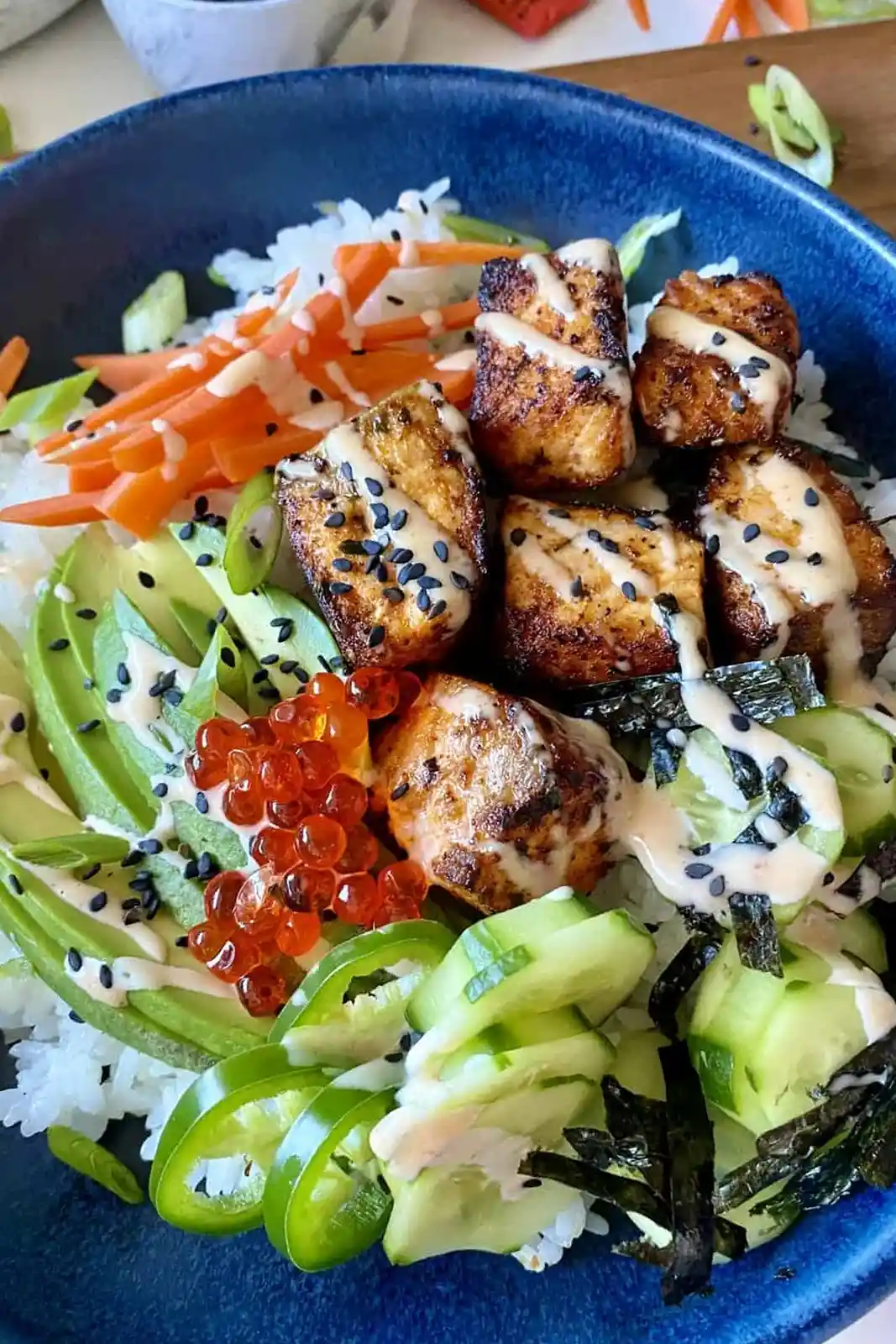
These crispy salmon bowls offer a quick, restaurant-style meal that balances savory seared fish with fresh, crunchy vegetables. By using a simple seasoning blend and a creamy spicy sauce, you can recreate a high-end sushi bowl experience at home in under 30 minutes.
List of ingredients
- 1 cup sushi rice, uncooked – provides the necessary sticky texture for bowls.
- 2 tbs unseasoned rice vinegar – used for seasoning the cooked rice.
- 1 tsp sugar – balances the acidity of the vinegar.
- 1/2 tsp salt – enhances the overall flavor of the rice.
- 2 lbs salmon – skinless, cut into uniform chunks.
- salt, garlic powder, onion powder, chili powder, paprika, and dried oregano – used to taste for the salmon seasoning.
- 1/4 cup sesame oil, divided – used for searing the fish.
- 1/2 cup kewpie mayo – the creamy base for the spicy sauce.
- 2 tbs Sriracha sauce – adds heat and color to the mayo.
- 1 tbs honey – adds a hint of sweetness to the sauce.
- 1 large avocado, sliced – provides a creamy contrast to the spicy salmon.
- 1 large carrot, julienned – adds crunch and color.
- 3 persian cucumbers, sliced – provides a refreshing element.
- 2 scallions, diced – adds a mild onion flavor.
- 4 oz salmon caviar – a salty, luxurious finishing touch.
- 1 nori sheet, sliced thin strips – adds a traditional oceanic taste.
- 1 tbs black sesame seeds – used for garnish and texture.
step-by-step instructions
- Prepare the Rice: Cook the sushi rice according to the package instructions. In a small pot, warm the rice vinegar, sugar, and salt until the mixture is just about to boil, then remove it from the heat immediately. Transfer the cooked rice to a wide platter, pour the warm vinegar mixture evenly over the top, and fluff gently with a fork to combine.
- Prep the Salmon: Remove any remaining skin from the salmon fillets. Pat the fish thoroughly dry with paper towels to ensure a better sear. Cube the salmon into consistent 1.5-inch chunks. Generously apply the salt, garlic powder, onion powder, chili powder, paprika, and dried oregano, tossing the pieces to ensure every side is evenly coated.
- Sear the Salmon: Heat a large skillet over medium-high heat with 2 tablespoons of sesame oil. Working in two separate batches to avoid overcrowding, add half of the salmon pieces. Cook for 3-4 minutes per side, turning gently, until the internal temperature reaches at least 145°F. Transfer the cooked salmon to a platter lined with paper towels to drain excess oil, wipe the pan clean, and repeat the process with the remaining oil and salmon.
- Mix the Spicy Mayo: In a small mixing bowl, whisk together the kewpie mayo, Sriracha sauce, and honey until the consistency is smooth and the color is uniform.
- Assemble the Bowls: Divide the seasoned rice among four bowls. Top each bowl with the seared salmon chunks and the prepared spicy mayo. Arrange the sliced avocado, julienned carrots, sliced cucumbers, and diced scallions around the fish. Finish each bowl with a spoonful of salmon caviar, thin strips of nori, and a sprinkle of black sesame seeds.
Optimizing Your Salmon Preparation
Selecting the Best Salmon Cut
Choose center-cut salmon fillets for the most consistent thickness. This ensures that each cube cooks at the same rate, preventing smaller pieces from overcooking while larger ones remain raw in the center.
Properly Removing the Skin
Use a sharp fillet knife to slide between the skin and the meat at a slight angle. If the silver skin remains, it is generally fine to leave, but the outer scales must be removed for a better texture.
Ensuring the Salmon is Pat Dry
Moisture on the surface of the fish creates steam, which prevents browning. Use heavy-duty paper towels to press firmly on all sides of the salmon before adding seasonings to achieve a truly crispy exterior.
Managing the Searing Process
Avoid overcrowding the pan, as this lowers the temperature and causes the fish to boil in its own juices. Cooking in batches allows the oil to stay hot, ensuring a golden-brown crust on every piece.
Perfecting the Rice Base
Rinsing the Sushi Rice
Rinse the uncooked rice in a fine-mesh strainer under cold water until the water runs clear. This removes excess surface starch, which prevents the rice from becoming overly gummy or clumping too tightly.
Customizing the Vinegar Seasoning
The ratio of sugar and salt to vinegar can be adjusted based on preference. If you prefer a more traditional sushi taste, increase the vinegar slightly; for a milder flavor, add an extra pinch of sugar.
Fluffing the Rice Correctly
Use a slicing motion with a fork or a rice paddle when incorporating the vinegar mixture. Avoid stirring or mashing the rice, as this can break the grains and ruin the light, fluffy texture.
Using Alternative Grains
If sushi rice is unavailable, short-grain white rice is the best substitute due to its starch content. If using brown rice, increase the cooking time and add a tablespoon of extra water to ensure it softens properly.
Vegetable Preparation and Enhancements
Mastering the Julienne Technique
To get thin, consistent carrot strips, slice the carrot into thin planks first. Then, stack the planks and cut them into thin matchsticks, which provides the ideal crunch for the bowl.
Selecting the Right Cucumber
Persian cucumbers are preferred because they have thinner skins and smaller seeds. If using English cucumbers, peel them partially in stripes to add visual interest and remove the watery seed core.
Maintaining Avocado Freshness
Slice the avocado immediately before assembly to prevent browning. If preparing the bowls in advance, toss the avocado slices in a small amount of lemon or lime juice to keep them bright green.
Preparing Nori Strips
Use kitchen shears to cut the nori sheet into very thin, uniform strips. This makes the seaweed easier to eat and distributes the flavor more evenly throughout the bowl.
Sauce Modifications and Substitutions
Substituting Kewpie Mayo
Kewpie mayo is richer and slightly sweeter than regular mayonnaise. If using standard mayo, add a small pinch of sugar and a drop of rice vinegar to mimic the traditional Japanese flavor profile.
Adjusting the Heat Level
For a milder sauce, reduce the Sriracha to one tablespoon or swap it for a mild chili garlic sauce. To increase the heat, add a pinch of cayenne pepper or a few drops of hot sauce.
Alternative Sweeteners for the Sauce
Honey provides a thick, floral sweetness that binds the sauce. Maple syrup or agave nectar can be used as a substitute, though they may slightly alter the flavor profile of the mayo.
Adding Umami to the Sauce
A teaspoon of soy sauce or a dash of toasted sesame oil added to the spicy mayo can deepen the flavor. This adds a savory dimension that complements the richness of the salmon.
Assembly and Presentation Tips
Layering the Bowl for Texture
Place the rice at the bottom to act as a foundation for the heavier ingredients. Arrange the vegetables in distinct sections around the salmon to create a visually appealing, colorful presentation.
Incorporating Salmon Caviar Safely
Keep the caviar chilled until the very moment of assembly. Place it gently on top of the salmon to avoid breaking the delicate eggs, ensuring a burst of saltiness in every bite.
Balancing the Garnish
Distribute the black sesame seeds and scallions evenly across the top of the bowl. These final touches provide small pops of flavor and a professional look to the finished dish.
Storage and Preservation Methods
Storing Leftover Bowls
Store the components separately if you plan to eat them over several days. Keep the cooked rice and salmon in airtight containers in the fridge, and store the sliced vegetables in a separate container with a damp paper towel.
Reheating the Salmon and Rice
Reheat the salmon and rice gently in the microwave using a damp paper towel covering the dish. This prevents the fish from drying out and restores the moisture to the rice grains.
Freezing the Cooked Salmon
The seared salmon cubes can be frozen for up to two months. Flash-freeze them on a baking sheet first before transferring them to a freezer bag to prevent them from clumping together.
Preventing Vegetable Wilt
Do not add the spicy mayo or avocado to the bowl until you are ready to serve. The acidity in the sauce and the oxidation of the avocado can make the vegetables lose their crispness over time.
Common Cooking Challenges and Solutions
Avoiding Sticky Pans During Searing
Ensure the pan is fully heated before adding the sesame oil and salmon. If the salmon sticks, let it sear undisturbed for a few minutes; it will naturally release from the pan once a proper crust has formed.
Managing the Smoke Point of Oil
Sesame oil has a lower smoke point than vegetable oil. If the oil begins to smoke excessively, reduce the heat slightly or use a blend of sesame oil and avocado oil to maintain a high searing temperature.
Preventing Salmon from Breaking Apart
Avoid turning the salmon cubes too frequently. Let them develop a sear on one side before gently flipping them once, which keeps the cubes intact and juicy.
Fixing Overcooked Salmon
If the salmon becomes too dry, drizzle a bit of extra spicy mayo or a splash of soy sauce over the cubes. This adds necessary moisture and masks the dryness of overcooked fish.
Frequently Asked Questions
Can I use a different type of fish?
Yes, tuna or halibut can be used following the same seasoning and searing process. Ensure the fish is cubed to the same 1.5-inch size for consistent cooking results.
How do I know when the salmon is perfectly done?
The salmon should be opaque on the outside with a slight pinkness in the center. Use a meat thermometer to confirm it has reached an internal temperature of 145°F.
Can this recipe be made vegan?
Substitute the salmon with extra-firm tofu, the mayo with a vegan aioli, and the caviar with seasoned seaweed pearls or diced mango.
Why is my rice too sticky?
This usually happens if the rice is overcooked or not rinsed properly. Ensure you follow the water-to-rice ratio on the package and rinse the grains until the water is clear.
What is the best way to slice the nori?
The most precise method is using sharp kitchen scissors. Hold the sheet flat against a cutting board and make thin, parallel cuts across the entire length of the sheet.
Print
Crispy Spicy Salmon Bowls
- Total Time: 25 minutes
- Yield: 4 servings 1x
- Diet: General
Description
The most delicious crispy and spicy salmon sushi bowl hack, ready in 30 minutes.
Ingredients
- 1 cup sushi rice, uncooked
- 2 tbs unseasoned rice vinegar
- 1 tsp sugar
- 1/2 tsp salt
- 2 lbs salmon
- salt, garlic powder, onion powder, chili powder, paprika and dried oregano, to taste
- 1/4 cup sesame oil
- 1/2 cup kewpie mayo
- 2 tbs Sriracha sauce
- 1 tbs honey
- 1 large avocado, sliced
- 1 large carrot, juliened
- 3 persian cucumbers, sliced
- 2 scallions, diced
- 4 oz salmon caviar
- 1 nori sheet, sliced thin strips
- 1 tbs black sesame seeds
Instructions
- Rice: Cook your rice according to package instructions. In a small pot, warm your rice vinegar, sugar and salt until just about to boil and then remove from the burner. Transfer your cooked rice to a platter, evenly pour the mixture on top and fluff with a fork.
- Salmon: Remove the skin from your salmon and pat dry the fish with a paper towel. Cube the salmon into 1.5 inch chunks and season generously with salt, garlic powder, onion powder, chili powder, paprika and dried oregano.
- Cooking: In a large skillet, heat 2 tbs sesame oil on medium high. Add half the salmon and cook for 3-4 minutes per side, gently turning, until the internal temperature is at least 145°F. Transfer to a paper towel lined platter. Wipe the pan and repeat with remaining oil and salmon.
- Spicy Mayo: Whisk together the kewpie mayo, Sriracha sauce, and honey until smooth.
- Assembly: Assemble bowls with rice, crispy salmon, spicy mayo, avocado, carrot, cucumbers, scallions, salmon caviar, nori strips, and black sesame seeds.
Notes
You can use any rice you have on hand. You can also skip the vinegar mixture step. You can sub in any cooking oil for the sesame oil.
- Prep Time: 15 minutes
- Cook Time: 15 minutes
- Category: Dinner
- Method: Pan-frying
- Cuisine: Japanese-inspired
Nutrition
- Serving Size: 1 bowl
- Calories: 974 kcal
- Sugar: 8 g
- Sodium: 787 mg
- Fat: 60 g
- Saturated Fat: 9 g
- Unsaturated Fat: 47 g
- Trans Fat: 1 g
- Carbohydrates: 52 g
- Fiber: 6 g
- Protein: 57 g
- Cholesterol: 243 mg