This refreshing salmon salad is a nutrient-dense meal that combines flaky baked fish with crisp, colorful vegetables. It is a quick preparation that takes only 30 minutes and works perfectly for a light lunch or a healthy dinner.
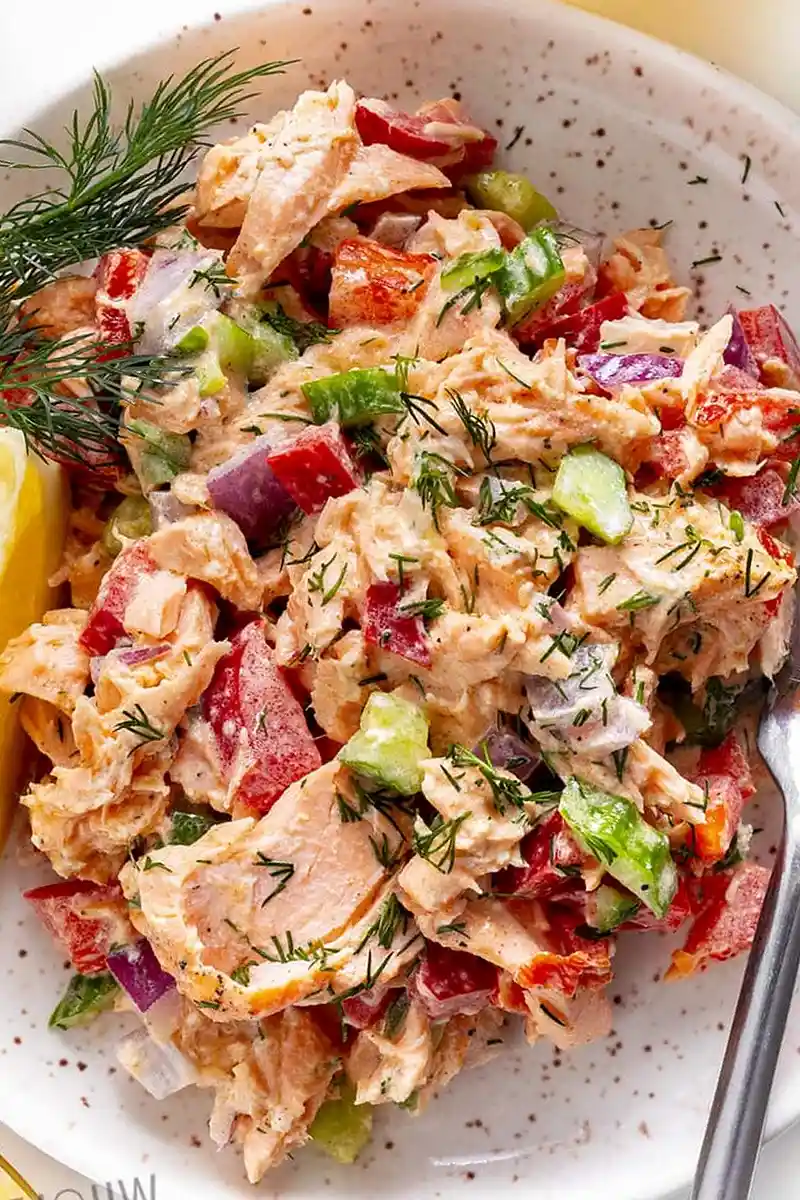
List of ingredients
- 4 6-oz Salmon fillets – ensure they are fresh or properly thawed.
- 3 tbsp Olive oil – used for brushing the fish to prevent sticking.
- 1 tsp Sea salt – for basic seasoning.
- 1/2 tsp Black pepper – to add a mild spice.
- 1/2 cup Mayonnaise – provides the creamy base for the dressing.
- 2 tbsp Lemon juice – adds a bright, acidic contrast.
- 1 tsp Dijon Mustard – enhances the depth of the sauce.
- 2 tbsp Fresh dill (chopped) – gives the salad its signature herby flavor.
- 1/2 tsp Smoked paprika – adds a subtle, woody undertone.
- 1 large Bell pepper (diced finely) – provides crunch and sweetness.
- 1/4 large Red onion (diced finely; ~1/2 cup) – adds a sharp, savory bite.
- 1 cup Cucumbers (diced finely) – keeps the salad hydrating and fresh.
- Black pepper (optional, to taste) – for final seasoning.
- Sea salt (optional, to taste) – for final seasoning.
step-by-step instructions
- Preheat: Set your oven to 400 degrees F (204 degrees C) to ensure it is hot enough for baking.
- Prepare Fish: Place the salmon fillets in a large baking dish with enough space between them. Use paper towels to pat the fillets completely dry to help them sear better.
- Season: Brush both sides of each salmon fillet with olive oil. Season evenly with sea salt and black pepper.
- Bake: Cook for 10-15 minutes until the internal temperature reaches 135 to 140 degrees F (57 to 60 degrees C). The salmon should flake easily when tested with a fork. Allow the fish to cool to room temperature, which typically takes 15-20 minutes.
- Make Dressing: While the fish cools, whisk together the mayonnaise, lemon juice, Dijon mustard, chopped fresh dill, and smoked paprika in a small bowl. You can add salt and pepper here, though seasoning at the end is recommended.
- Combine Vegetables: In a separate large mixing bowl, combine the finely diced bell peppers, red onions, and cucumbers.
- Flake Salmon: Once the salmon has reached room temperature, place it in the refrigerator for 10 minutes to firm up. Flake the fish using a fork and add it to the bowl with the vegetables.
- Mix and Finish: Pour the prepared dressing over the mixture. Use a gentle folding motion to combine the ingredients so that some salmon chunks remain intact. Adjust the final taste with extra salt and pepper if desired.
Ingredient Alternatives and Swaps
Use Canned Salmon for Convenience
If fresh fillets are unavailable, you can use 3 1/2 cups of canned salmon. Drain the liquid thoroughly and flake the meat before adding it to the vegetables. While fresh is preferred for texture, canned is a time-saving alternative.
Swap Mayonnaise for Greek Yogurt
For a tangier and lower-calorie base, replace the mayonnaise with plain Greek yogurt. This change increases the protein content and provides a lighter feel. Ensure the yogurt is thick to maintain the creamy consistency of the dressing.
Try Lime Juice for a Zesty Twist
While lemon juice is standard, lime juice offers a different, more tropical citrus profile. This works exceptionally well if you use a green bell pepper or add a pinch of cilantro. Use the same 2-tablespoon measurement for an equal balance of acidity.
Substitute Fresh Dill with Parsley or Tarragon
If you do not enjoy dill, fresh parsley or tarragon are excellent substitutes. Parsley provides a clean, grassy taste, while tarragon offers a sophisticated anise-like flavor. Chop these finely to ensure they distribute evenly throughout the dressing.
Use Scallions for a Milder Onion Flavor
Red onion can be quite pungent for some palates. Substituting it with sliced scallions or shallots provides a milder, sweeter onion flavor. This makes the salad more approachable for children or those sensitive to raw onions.
Alternative Salmon Cooking Methods
Prepare Salmon via Air Frying
For a faster cook time, place the seasoned salmon in an air fryer basket at 380 degrees F. Cook for approximately 8 to 10 minutes depending on the thickness of the fillets. This method creates a slightly crispier exterior while keeping the inside moist.
Grill Salmon for a Smoky Profile
Grilling adds a charred, smoky depth that complements the smoked paprika in the dressing. Place fillets on a medium-high heat grill for 4 to 5 minutes per side. Be careful when flipping to keep the fillets intact before flaking them.
Pan Sear Salmon for Crispy Edges
Use a non-stick skillet over medium heat with a small amount of oil. Sear the salmon for about 4 to 6 minutes per side until the edges are golden brown. This method allows for precise control over the doneness of the fish.
Additional Mix-in Suggestions
Include Shredded Carrots or Radishes
Adding shredded carrots provides a natural sweetness and a vibrant orange color. Radishes offer a peppery crunch that cuts through the richness of the mayonnaise. Both should be finely diced or shredded to match the texture of the other vegetables.
Add Briny Kalamata Olives
For a Mediterranean twist, fold in a handful of sliced kalamata olives. The saltiness of the olives reduces the need for extra sea salt in the final seasoning. This addition pairs perfectly with the lemon juice and dill.
Incorporate Feta or Goat Cheese
Small crumbles of feta or goat cheese add a creamy, salty dimension to the salad. These cheeses contrast well with the crisp cucumbers and bell peppers. Gently fold them in at the very end to avoid smashing the cheese into the dressing.
Ways to Serve Your Salmon Salad
Create Salmon Salad Sandwiches
This recipe is ideal for sandwiches on toasted sourdough or whole-grain bread. For a lower-carb version, use almond flour bread or a quick 90-second keto bread. Add a leaf of crisp romaine lettuce to separate the bread from the creamy filling.
Stuff Salad into Cucumber Boats
Hollow out a large cucumber to create a natural boat for the salmon salad. This provides a refreshing, low-calorie vessel that enhances the crunch. It is an excellent choice for appetizers or a light summer lunch.
Pair with Flax or Almond Crackers
Serve the salad as a dip with a variety of seed-based crackers. Flax seed crackers or almond flour crisps provide a sturdy base that doesn’t get soggy. This is a great way to serve the dish at a party or social gathering.
Serve as a Salmon Grain Bowl
Spoon the salad over a bed of cooked quinoa, brown rice, or riced cauliflower. This transforms the salad into a more filling, complete meal. Adding a few slices of avocado on top increases the healthy fat content and creaminess.
Storage and Meal Prep Guidelines
Maintain Freshness in Airtight Containers
Store the finished salmon salad in a glass airtight container in the refrigerator. It will remain fresh and flavorful for up to 3 to 4 days. Keep the container sealed tightly to prevent the salad from absorbing other fridge odors.
Implement a Component-Based Meal Prep
If you plan to eat the salad throughout the week, store the components separately. Keep the flaked salmon, diced vegetables, and dressing in individual containers. Mix them together just before serving to ensure the vegetables stay maximumly crisp.
Avoid Freezing the Finished Salad
Do not freeze this salmon salad, as the mayonnaise-based dressing will separate upon thawing. Additionally, the fresh cucumbers and bell peppers will lose their structure and become mushy. Always keep this recipe refrigerated or serve it fresh.
Common Questions and Troubleshooting
Why is the Salmon Too Dry?
Dry salmon usually results from overcooking. Ensure you use a meat thermometer to pull the fillets at 135-140 degrees F. The fish will continue to cook slightly as it rests, reaching the perfect flaky consistency.
How to Prevent the Salad from Becoming Watery?
Cucumbers can release a lot of water once salted. To prevent this, scoop out the seedy center of the cucumber with a spoon before dicing. This ensures the dressing stays thick and creamy over several days.
Can Frozen Salmon Fillets Be Used?
Yes, but they must be completely thawed in the refrigerator overnight before cooking. Pat them very dry with paper towels to remove excess moisture. This allows the olive oil and seasoning to adhere properly to the fish.
How to Ensure a Creamy Consistency?
Whisk the dressing ingredients thoroughly before adding them to the salad. If the dressing feels too thick, add a teaspoon of water or extra lemon juice to thin it out. Fold the ingredients gently to avoid breaking the salmon into a paste.
Print
Creamy Herb Salmon Salad
- Total Time: 30 minutes
- Yield: 6 servings 1x
- Diet: Low Carb, Dairy-Free, Gluten-Free
Description
Make the best salmon salad recipe in just 30 minutes! With fresh veggies, flaky salmon, & creamy herb dressing, it’s an easy, flavorful meal.
Ingredients
- 4 6-oz Salmon fillets
- 3 tbsp Olive oil
- 1 tsp Sea salt
- 1/2 tsp Black pepper
- 1/2 cup Mayonnaise
- 2 tbsp Lemon juice
- 1 tsp Dijon Mustard
- 2 tbsp Fresh dill (chopped)
- 1/2 tsp Smoked paprika
- 1 large Bell pepper (diced finely)
- 1/4 large Red onion (diced finely)
- 1 cup Cucumbers (diced finely)
- Black pepper (optional, to taste)
- Sea salt (optional, to taste)
Instructions
- Preheat: Preheat the oven to 400 degrees F (204 degrees C).
- Prepare: Place the salmon fillets in a large baking dish, with spaces between them. Use paper towels to pat them dry.
- Season: Brush both sides of the salmon with olive oil. Season with salt and pepper.
- Bake: Bake for 10-15 minutes, until the salmon internal temperature reaches 135 to 140 degrees F (57 to 60 degrees C). Let the salmon cool to room temperature.
- Whisk: In a small bowl, whisk together the dressing: mayo, lemon juice, Dijon mustard, fresh dill, and smoked paprika.
- Combine: In a large bowl, combine the diced bell peppers, red onions, and cucumbers.
- Flake: Once the salmon has cooled to room temperature, refrigerate for 10 minutes. Then, flake the salmon with a fork and add to the bowl with the other salad ingredients.
- Mix: Pour the dressing over the salad and mix gently. Adjust salt and pepper to taste if needed.
Notes
Store in an airtight container in the refrigerator for up to 3-4 days. Avoid freezing as it ruins the texture of the fresh vegetables and dressing.
- Prep Time: 20 minutes
- Cook Time: 10 minutes
- Category: Salad
- Method: Baking
- Cuisine: American
Nutrition
- Serving Size: 1 cup
- Calories: 182 kcal
- Sugar: 2 g
- Sodium: 610 mg
- Fat: 8.1 g
- Saturated Fat: 1.5 g
- Unsaturated Fat: 6.6 g
- Trans Fat: 0 g
- Carbohydrates: 3.2 g
- Fiber: 1 g
- Protein: 23.1 g
- Cholesterol: 55 mg