This quick-baked salmon features a sweet and tangy glaze with toasted pecans for a crunchy finish. It is a restaurant-quality meal that comes together in just 20 minutes, making it ideal for busy weeknights.
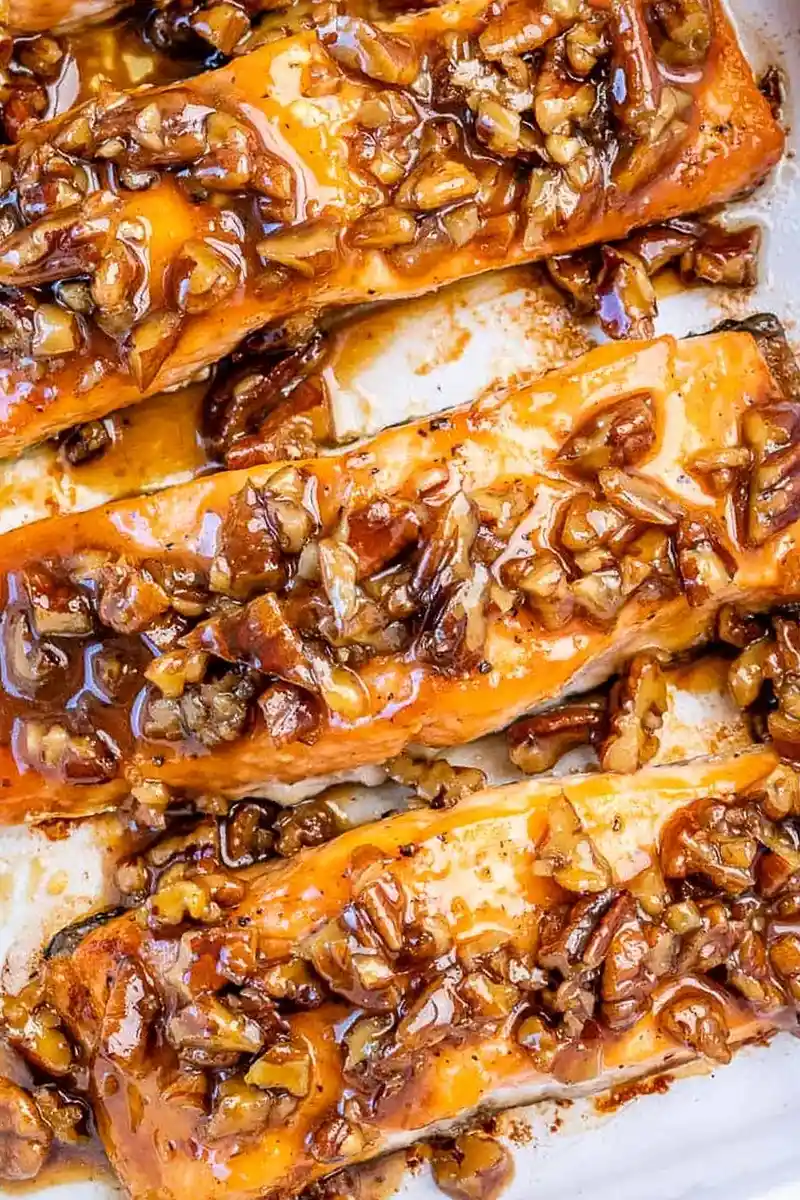
List of ingredients
- 4 salmon fillets (skin on or skinless) – high-quality wild-caught is recommended for better texture.
- 1 teaspoon garlic powder – provides a savory base for the fish.
- Kosher salt and pepper (to taste) – essential for enhancing natural flavors.
- 1 tablespoon olive oil – used for rubbing the fillets.
- 1 tablespoon olive oil (or avocado oil) – used specifically for toasting pecans and the glaze.
- 2/3 cup pecans (chopped) – adds a nutty crunch to the topping.
- 1/3 cup maple syrup – provides sweetness and helps the glaze thicken.
- 2 tablespoons apple cider vinegar – adds a necessary acidic balance to the syrup.
- 1 tablespoon Dijon mustard – contributes a subtle tang and emulsifies the sauce.
step-by-step instructions
- Prepare oven: Preheat the oven to 400ºF.
- Season fish: Rub the 4 salmon fillets with 1 teaspoon garlic powder, Kosher salt, pepper, and 1 tablespoon olive oil.
- Bake: Place the fillets in a rectangular baking dish and bake for 12-15 minutes, or until flaky.
- Toast pecans: While the salmon bakes, heat 1 tablespoon olive oil in a small pan over medium heat. Add the 2/3 cup chopped pecans and cook, stirring often, for 3-4 minutes until they start to darken.
- Simmer glaze: Stir in the 1/3 cup maple syrup, 2 tablespoons apple cider vinegar, and 1 tablespoon Dijon mustard. Allow the sauce to bubble for 3-4 minutes until it thickens enough to coat the back of a spoon.
- Glaze salmon: Remove the salmon from the oven and spoon the maple pecan glaze over the fillets.
- Final touch: Garnish with freshly chopped parsley if desired.
Cooking Tips for Perfect Salmon
Pat Salmon Dry to Improve Texture
Use paper towels to remove all surface moisture from the fillets before applying oil and seasonings. This prevents the fish from steaming in the oven and helps the seasonings adhere better to the surface. Dry fish results in a better overall consistency.
Use a Meat Thermometer for Precision
Aim for an internal temperature of 140°F for a moist and tender result. Salmon continues to cook slightly after being removed from the oven due to carry-over heat. Pulling it at 140°F prevents the fish from becoming dry or rubbery.
Avoid Overcrowding the Baking Dish
Leave ample space between each fillet in the rectangular baking dish. This allows hot air to circulate evenly around every piece of fish. Overcrowded pans can lead to uneven cooking and may result in some pieces being underdone.
Selecting the Right Cut of Salmon
Choose center-cut fillets for the most consistent thickness and cooking time. Tail pieces are thinner and will cook faster, which may lead to overcooking if they are in the same pan as thicker cuts. Consistent thickness ensures all pieces are done at the same time.
Glaze Customization and Substitutions
Alternative Nut Options
If pecans are unavailable, walnuts or slivered almonds serve as excellent replacements. These nuts provide a similar crunch and earthy flavor that complements the sweetness of the maple syrup. Ensure they are chopped to a similar size as the original pecans.
Maple Syrup Replacements
Honey or agave nectar can be used as a substitute for maple syrup. Honey provides a thicker consistency and a different floral sweetness, while agave is a neutral alternative. Adjust the simmering time slightly as honey thickens faster than maple syrup.
Vinegar Alternatives
Rice vinegar or white wine vinegar can be used if apple cider vinegar is missing. Rice vinegar is slightly milder, while white wine vinegar provides a sharper acidity. These alternatives still achieve the goal of balancing the sweetness of the glaze.
Mustard Variations
Whole grain mustard can be used instead of Dijon for a more rustic texture and a slightly punchier flavor. Honey mustard is also an option, though you may want to slightly reduce the maple syrup to avoid over-sweetening the dish. Dijon remains the standard for a smooth, tangy finish.
Accompaniment and Serving Suggestions
Low-Carb Side Dish Options
Serve the salmon with cauliflower rice or a creamy cauliflower mash for a ketogenic-friendly meal. Steamed asparagus or sautéed spinach also pair well with the sweet glaze. These options keep the meal light while providing essential nutrients.
Hearty Grains for Pairing
White rice, brown rice, or quinoa provide a neutral base that absorbs the extra glaze. Cilantro lime rice adds a zesty contrast to the richness of the pecans and salmon. Grains make the meal more filling and balanced.
Roasted Vegetable Combinations
Garlic-charred Brussels sprouts or air fryer green beans add a savory, salty element to the plate. Roasted sweet potatoes or carrots complement the maple flavor of the glaze. These vegetables can often be roasted in the oven at the same temperature as the salmon.
Fresh Salad Pairings
A cucumber tomato salad with a light vinaigrette provides a refreshing contrast to the dense glaze. A black bean tabbouleh salad adds protein and a bright, herbaceous flavor. Fresh greens help cut through the richness of the salmon and nuts.
Storage and Reheating Guidelines
Refrigerator Storage Times
Store leftover salmon in an airtight container in the refrigerator. It will remain fresh and safe to eat for 3 to 4 days. Ensure the container is fully sealed to prevent the fish from absorbing other odors in the fridge.
Low-Temperature Oven Reheating
Reheat the salmon in a 300°F oven for about 10 minutes. This gentle heat method helps maintain the moisture inside the fish while keeping the glaze from burning. It is the best way to preserve the original texture.
Microwave Reheating Tips
If using a microwave, heat the salmon in short 30-second bursts. Use a medium power setting to avoid overcooking the center. Be aware that microwaving can sometimes make the salmon slightly tougher than oven reheating.
Freezing Prepared Salmon
While possible, freezing cooked salmon can alter the texture of the glaze. If you choose to freeze it, wrap the fillets tightly in foil and place them in a freezer bag. Thaw completely in the refrigerator before reheating in the oven.
Cooking Method Variations
Air Fryer Adaptation
Set the air fryer to 400°F and cook the seasoned salmon for 8 to 10 minutes. Transfer the cooked fillets to a plate or serving dish first. Spoon the prepared glaze over the fish after it has finished cooking to prevent the syrup from burning in the air fryer.
Pan-Seared Method
Sear the salmon in a hot pan with olive oil for 4-5 minutes per side. Once the fish is nearly cooked through, pour the glaze directly into the pan. Let the glaze bubble and reduce for 2 minutes while spooning it over the fish to baste.
Grilling Instructions
Place the seasoned fillets on a preheated grill over medium-high heat. Grill for 5-6 minutes per side depending on thickness. Apply the glaze during the last 2 minutes of grilling to avoid scorching the sugars in the maple syrup.
Troubleshooting Common Issues
Preventing Burnt Pecans
Keep the heat at a medium level and stir the pecans constantly during the toasting process. Pecans have high oil content and can transition from toasted to burnt in seconds. Remove them from the heat immediately once they darken.
Fixing a Too-Thin Glaze
If the sauce does not coat the back of a spoon, continue simmering it for another 2-3 minutes. The reduction of water in the vinegar and syrup is what creates the thickness. Avoid adding flour or cornstarch, as this can mask the natural flavors.
Handling Sticking Salmon
If the salmon sticks to the baking dish, use a piece of parchment paper or a silicone baking mat. This creates a non-stick barrier and makes cleanup much easier. Alternatively, ensure the baking dish is well-greased with olive oil before adding the fish.
Nutritional Benefits of Ingredients
Omega-3 Fatty Acids in Salmon
Salmon is a primary source of omega-3 fatty acids, which are essential for heart health and brain function. These fats help reduce inflammation throughout the body. Including salmon in your diet supports overall cardiovascular wellness.
Antioxidants in Pecans
Pecans provide healthy monounsaturated fats and a variety of antioxidants. These nutrients help protect cells from oxidative stress. They also add a satisfying texture that makes the meal more filling.
Benefits of Pure Maple Syrup
Pure maple syrup contains minerals such as manganese and zinc. It is a more natural sweetener than refined sugar, offering a distinct flavor profile. Using pure syrup ensures you avoid artificial additives found in pancake syrups.
Meal Prep Strategies
Pre-portioning Salmon Fillets
Divide your salmon into individual portions and store them in separate freezer bags. This allows you to thaw only what you need for one meal. Pre-portioning saves time during the busy work week.
Batch Cooking the Glaze
The maple pecan glaze can be made in a larger batch and stored in the refrigerator for up to 3 days. Simply warm the glaze in a small saucepan or microwave before spooning it over fresh salmon. This reduces the active cooking time per meal.
Planning Side Dish Prep
Wash and chop your vegetables or cook your grains a day in advance. Having the side dishes ready allows you to focus entirely on the salmon’s timing. This coordination ensures that the fish is served hot and fresh.
Frequently Asked Questions
Do you eat the skin on salmon?
Eating the skin is optional but recommended as it is rich in nutrients. To make removal easier, cook the salmon skin-side down. Once the fish is warm, the skin can be easily lifted off with a fork if you prefer not to eat it.
Can I use frozen Salmon?
Yes, frozen salmon works perfectly for this recipe. Thaw the fillets in the refrigerator overnight to ensure they defrost evenly. Always pat them dry before seasoning to ensure the oil and spices stick to the surface.
Can the glaze be made ahead of time?
Yes, the glaze can be prepared up to 3 days in advance. Store it in an airtight glass jar in the refrigerator. Gently reheat it on the stove over low heat before adding it to the baked salmon.
How do I know when the salmon is done without a thermometer?
Use a fork to gently press into the thickest part of the fillet. If the flesh flakes easily along the natural lines and looks slightly moist in the center, it is done. Avoid overcooking until the fish becomes opaque and dry throughout.
Print
Maple Pecan Glazed Salmon
- Total Time: 20 minutes
- Yield: 4 servings 1x
- Diet: Gluten-Free
Description
Baked salmon with a sweet maple pecan glaze. It takes just 20 minutes to make, one pan for the glaze, and it tastes like something from a restaurant.
Ingredients
- 4 salmon fillets (skin on or skinless)
- 1 teaspoon garlic powder
- Kosher salt and pepper (to taste)
- 1 tablespoon olive oil
- 1 tablespoon olive oil (or avocado oil)
- 2/3 cup pecans (chopped)
- 1/3 cup maple syrup
- 2 tablespoons apple cider vinegar
- 1 tablespoon Dijon mustard
Instructions
- Step: Preheat the oven to 400ºF.
- Step: Rub the 4 salmon fillets with 1 teaspoon garlic powder, Kosher salt and pepper, and 1 tablespoon olive oil.
- Step: Place the filets in a rectangular baking dish and bake for 12-15 minutes, or until flaky.
- Step: Meanwhile, in a small pan, heat the 1 tablespoon olive oil for the glaze over medium heat. Add the 2/3 cup pecans and cook, stirring often, until they start to darken, around 3-4 minutes.
- Step: Add the 1/3 cup maple syrup, 2 tablespoons apple cider vinegar, and 1 tablespoon Dijon mustard. Allow the sauce to bubble for 3-4 minutes, until it thickens to coat the back of a spoon.
- Step: Once the salmon is done baking, remove from the oven and spoon over the maple pecan glaze.
- Step: Garnish with freshly chopped parsley, if desired.
Notes
Store leftover salmon in an airtight container in the fridge for up to 3 to 4 days. To reheat, place in a 300°F oven for about 10 minutes to keep the inside tender and flaky.
- Prep Time: 5 minutes
- Cook Time: 15 minutes
- Category: Main Course
- Method: Baking
- Cuisine: American
Nutrition
- Serving Size: 1 serving
- Calories: 496 kcal
- Sugar: 17 g
- Sodium: 701 mg
- Fat: 30 g
- Saturated Fat: 4 g
- Unsaturated Fat: 25 g
- Trans Fat: 0 g
- Carbohydrates: 21 g
- Fiber: 2 g
- Protein: 36 g
- Cholesterol: 94 mg