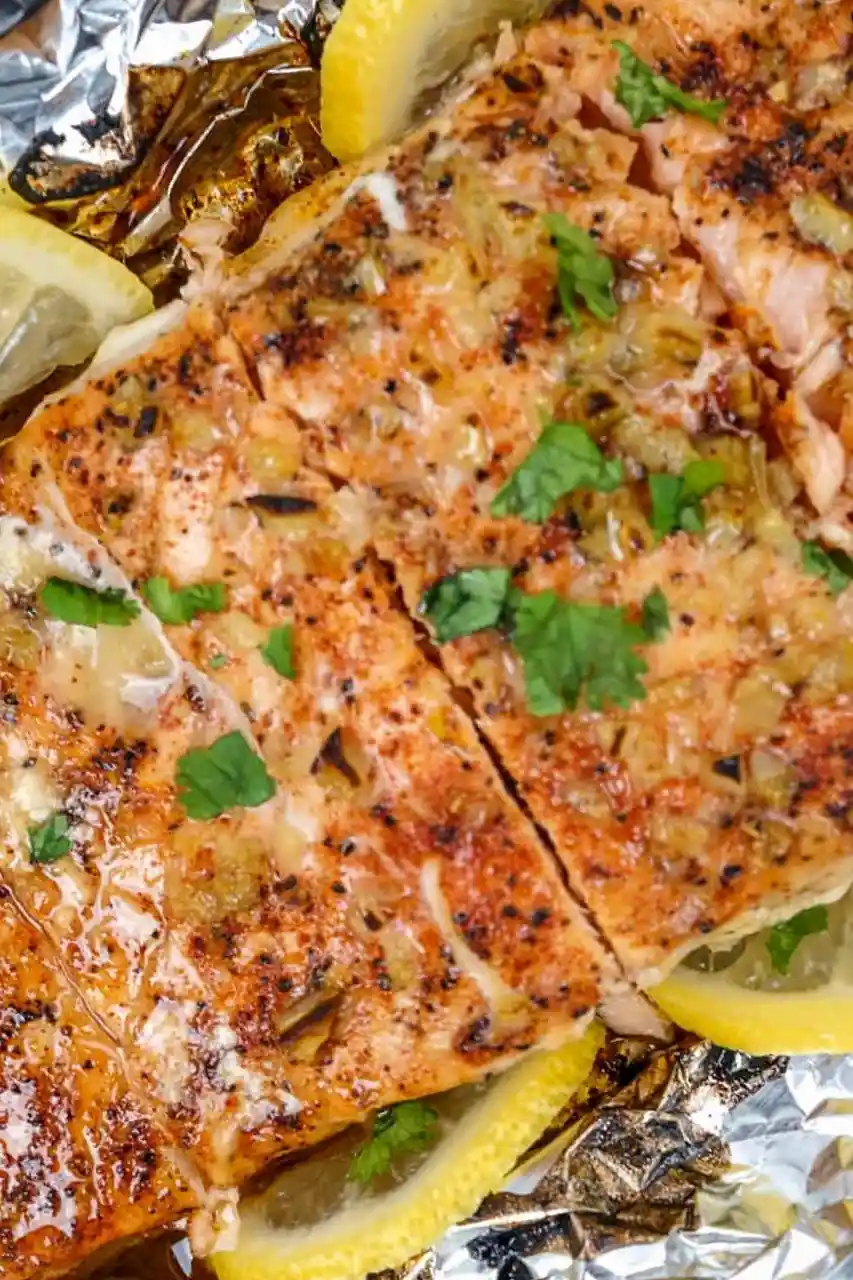
This garlic lemon salmon is a fast, healthy dinner that prepares in under 25 minutes. Baking the fish in foil preserves the natural moisture and locks in a sweet and savory glaze.
List of ingredients
- 1.33 lbs salmon fillets – use wild-caught for a richer flavor.
- 2 garlic cloves, minced – fresh garlic provides the most pungent aroma.
- 1 tbsp butter – adds richness and helps the sauce emulsify.
- 1 tbsp honey – provides a sweet balance to the acidity (omit for low carb).
- 1 tbsp lemon juice – fresh juice adds bright, citrusy notes.
- 1/2 tsp paprika – adds a mild earthiness and red color.
- 1/2 tsp chili powder – optional, for a subtle hint of heat.
- Salt and pepper – essential for enhancing the natural fish flavor.
step-by-step instructions
- Preheat: Set your oven to 375 degrees Fahrenheit to ensure a steady cooking environment.
- Prepare Sauce: Combine minced garlic, butter, honey, and lemon juice in a small microwave-safe container. Heat for 30-45 seconds until the honey and butter are fully melted and combined.
- Season Salmon: Place the salmon fillets on a large piece of aluminum foil set on a baking sheet. Evenly sprinkle the paprika, chili powder, salt, and pepper over the top of the fish.
- Glaze: Pour the melted lemon garlic butter mixture over the fillets. For deeper flavor penetration, let the fish marinate in the sauce for 15 minutes before sealing.
- Create Pouch: Carefully fold the edges of the foil around the salmon, sealing it tightly to create a steam-proof pouch.
- Bake: Place in the oven for 15-20 minutes. The exact time depends on the thickness of your fillets; cook until the thickest part is almost opaque.
- Broil: Carefully open the foil pouch and increase the oven temperature to broil or 500 degrees.
- Brown: Cook for an additional 3 minutes to brown the top of the salmon. Monitor closely to prevent the garlic bits from burning.
- Rest: If the center is still slightly underdone, re-close the foil pouch and let the fish rest for a few minutes to finish cooking with residual heat.
Alternative Preparation Methods
Baking in a Glass Dish
For those who prefer not to use foil, a glass baking dish works well. Place the seasoned salmon in the dish and pour the sauce over the top before baking at 400 degrees for 15-20 minutes. The fish will flake easily with a fork when finished.
Grilling with Foil Packets
Grilling adds a smoky depth to the lemon garlic profile. Place the salmon in a foil pouch and grill for 10-15 minutes over medium heat. Open the pouch for the final two minutes to achieve a charred finish on the surface.
Pan Searing for Texture
Marinate the salmon in the sauce first, then remove the excess liquid. Sear the fillets skin-side down in a hot pan with oil for 3-4 minutes per side. Simmer the remaining marinade in the pan for 2-3 minutes to create a thick reduction for drizzling.
Flavor and Seasoning Variations
Integrating Fresh Herbs
Fresh dill or parsley can be added to the sauce for a brighter, more garden-fresh taste. Thyme and rosemary also pair well with the lemon and garlic base. Add these herbs during the last five minutes of baking to prevent them from scorching.
Using Bold Spice Blends
Replace the paprika and chili powder with Cajun seasoning for a spicy, Southern-style kick. Montreal steak seasoning or Old Bay seafood seasoning are also excellent alternatives. These blends provide a more complex salty and peppery profile.
Adjusting the Sweetness
If you prefer a more savory dish, replace the honey with a small amount of maple syrup or a pinch of brown sugar. For a strictly ketogenic version, omit the sweetener entirely. The lemon and garlic provide enough flavor to carry the dish without sugar.
Optimal Side Dish Pairings
Timing Roasted Root Vegetables
Hearty vegetables like potatoes, carrots, or butternut squash take longer to cook than salmon. Start these in the oven at 400 degrees first, then lower the heat to 375 when adding the salmon pouches. This ensures everything is hot and ready at the same time.
Complementing with Green Vegetables
Roasted Brussels sprouts or asparagus are excellent pairings that cook in a similar timeframe. Toss them in olive oil and salt, then roast them on the same baking sheet as the salmon. The lemon butter from the fish often complements the char of the greens.
Light Low-Carb Options
Zucchini noodles or a fresh spinach salad provide a light contrast to the rich butter sauce. Sauté zucchini noodles with a bit of the extra lemon garlic sauce for a cohesive meal. A simple arugula salad with a vinaigrette also cuts through the fattiness of the salmon.
Guide to Perfect Salmon Doneness
Using a Meat Thermometer
The most accurate way to check salmon is using an instant-read thermometer. Aim for an internal temperature of 135-145 degrees Fahrenheit. Removing the fish at 135 degrees allows the carry-over heat to bring it to the perfect medium temperature.
The Fork-Flake Method
If you do not have a thermometer, use a fork to gently press the thickest part of the fillet. The salmon is done when the flesh separates easily along the natural white lines. If it resists flaking, it needs more time in the oven.
Accounting for Fillet Thickness
Thinner fillets, such as sockeye, cook significantly faster than thick center-cut Atlantic salmon. Reduce the baking time by 3-5 minutes for thin cuts. For very thick fillets, extend the initial bake time and ensure the pouch is tightly sealed to trap steam.
Storage and Reheating Advice
Refrigeration Guidelines
Store leftover salmon in an airtight container in the refrigerator for up to three days. Keep the remaining sauce poured over the fish to prevent the surface from drying out. Ensure the fish is cooled slightly before sealing the lid to avoid excess condensation.
Gentle Reheating Methods
Avoid overcooking the fish during reheating, as salmon can become rubbery. The best method is to warm it in the oven at 275 degrees for 10-15 minutes. If using a microwave, use a low power setting and heat in 30-second intervals.
Freezing Considerations
While cooked salmon can be frozen, the texture may change slightly. Wrap the fillets tightly in foil and then place them in a freezer-safe bag for up to two months. Thaw slowly in the refrigerator overnight before reheating.
Troubleshooting Common Issues
Preventing Burnt Garlic
Garlic can burn quickly under a broiler, becoming bitter. Keep a close eye on the fish during the final 3 minutes of browning. If the garlic begins to darken too rapidly, remove the tray from the oven immediately.
Fixing Undercooked Centers
If you open the foil and find the center is too raw, do not panic. Simply re-seal the foil pouch and let the fish rest for 3-5 minutes. The trapped steam and residual heat will finish the cooking process gently.
Managing Excess Liquid
Sometimes the salmon releases a lot of moisture, making the sauce watery. You can solve this by carefully draining some of the liquid before broiling. This allows the remaining sauce to caramelize and stick to the fish more effectively.
Frequently Asked Questions
Can I use frozen salmon for this recipe?
Yes, but it is best to thaw the salmon completely in the refrigerator before seasoning. If you cook from frozen, the cooking time will increase by 50%, and the texture may be less firm.
What is the best type of salmon to use?
Wild-caught salmon, such as Sockeye or King salmon, typically has a bolder flavor and firmer texture. Atlantic salmon is more buttery and mild, which also works well with the honey-lemon glaze.
Do I have to use aluminum foil?
Foil is recommended because it creates a tight seal for steaming. However, parchment paper can be used as long as you fold it securely or place it inside a baking dish to prevent the sauce from leaking.
Is this recipe suitable for a Paleo diet?
Yes, this recipe is Paleo-friendly as it uses natural fats and sweeteners. To make it strictly Paleo, ensure your butter is grass-fed and your honey is raw and unfiltered.
How do I stop the salmon from sticking to the foil?
Lightly grease the foil with a small amount of oil or butter before placing the salmon on top. The sauce itself also provides lubrication, but an initial grease layer ensures a clean release.
Print
Honey Garlic Lemon Salmon Baked in Foil
- Total Time: 25 minutes
- Yield: 4 servings 1x
- Diet: Clean Eating, Gluten Free, Healthy Eating, High Protein
Description
The best Honey, Garlic, and Lemon Baked Salmon in foil that takes less than 20 minutes and is packed with flavor! Healthy, Paleo-friendly, and super delicious.
Ingredients
- 1.33 lbs salmon (wild if possible)
- 2 garlic cloves, minced
- 1 tbsp butter
- 1 tbsp honey
- 1 tbsp lemon juice
- 1/2 tsp paprika
- 1/2 tsp chili powder (optional)
- Salt and pepper
Instructions
- Step 1: Preheat the oven to 375 degrees.
- Step 2: Add the minced garlic, butter, honey, and lemon juice to a small container. Microwave it for 30-45 seconds until the honey and butter melt together, or use a small sauce pan on the stove.
- Step 3: Place the salmon on a large piece of foil on a baking sheet. Sprinkle the salmon with paprika, chili powder, salt, and pepper.
- Step 4: Pour the lemon garlic butter mixture over the salmon.
- Step 5: Carefully close the foil around the salmon, creating a pouch for the salmon to cook.
- Step 6: Bake the salmon for about 15-20 minutes or until the thickest part of the salmon is almost cooked through.
- Step 7: Carefully open up the foil and turn the oven up to broil or 500 degrees.
- Step 8: Let the salmon cook for 3 more minutes so that the top browns, ensuring the garlic doesn’t burn.
- Step 9: If your salmon isn’t quite cooked through, close the foil pouch and let the salmon rest for a couple of minutes.
Notes
If you have time, let the salmon sit with the sauce for 15 minutes before baking for more intense flavor. For a low carb version, leave out the honey.
- Prep Time: 5 minutes
- Cook Time: 20 minutes
- Category: Dinner
- Method: Baking
- Cuisine: American
Nutrition
- Serving Size: 6 oz
- Calories: 280 kcal
- Sugar: 4 g
- Sodium: 96 mg
- Fat: 23 g
- Saturated Fat: 6 g
- Unsaturated Fat: 17 g
- Trans Fat: 0 g
- Carbohydrates: 6 g
- Fiber: 0 g
- Protein: 31 g
- Cholesterol: 91 mg