This refreshing pasta salad combines the classic flavors of tomato, mozzarella, and basil with a tangy balsamic vinaigrette. It is a quick-prep dish that works perfectly for summer picnics or light weekday lunches.
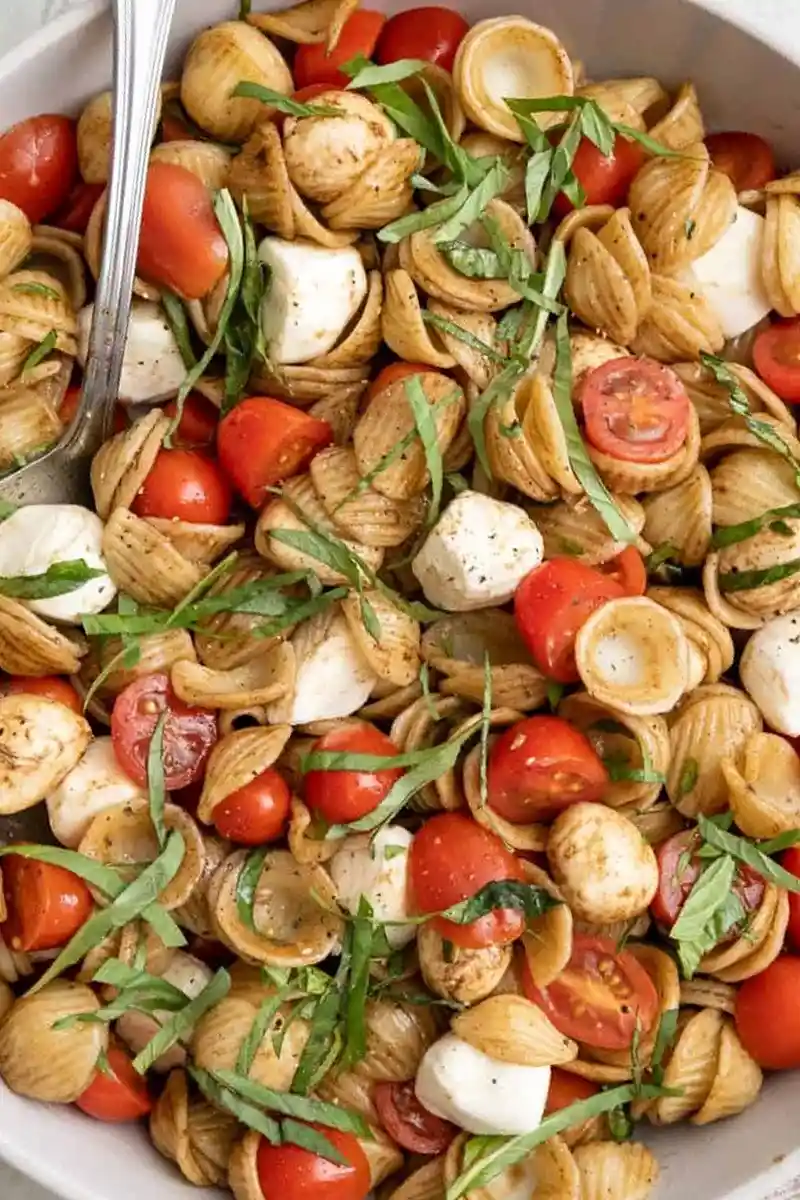
List of ingredients
- 1/2 pound orecchiette pasta – or any other short cut to hold the dressing.
- 8 ounces mozzarella pearls – small fresh balls found in the deli section.
- 1 pint grape tomatoes – halved to ensure flavor in every bite.
- 1/4 cup fresh basil leaves – thinly sliced just before adding.
- 1/4 cup extra-virgin olive oil – a high-quality oil for a rich base.
- 2 tablespoons balsamic vinegar – adds necessary acidity and sweetness.
- 1/4 teaspoon salt – plus extra for the pasta boiling water.
- 1/4 teaspoon freshly ground black pepper – to balance the flavors.
step-by-step instructions
- Cook the pasta: Bring a pot of heavily salted water to a boil over medium-high heat. Add the pasta and cook for 8-10 minutes until al dente, then drain and set aside to cool completely.
- Combine base ingredients: Transfer the cooled pasta to a large mixing bowl. Add the halved grape tomatoes, mozzarella pearls, and sliced basil on top of the pasta.
- Prepare the dressing: In a small bowl, whisk together the olive oil, balsamic vinegar, salt, and pepper. Continue whisking until the mixture is fully emulsified.
- Toss the salad: Drizzle the balsamic dressing over the pasta and vegetables. Toss the ingredients gently to combine without bruising the basil or crushing the tomatoes.
- Serve or chill: Enjoy the salad immediately or place it in the refrigerator for 30 minutes to allow the flavors to meld together.
Optimal Pasta Selection and Preparation
Use Orecchiette for Maximum Dressing Retention
Orecchiette is shaped like small ears, which creates a natural pocket for the balsamic dressing to settle. This ensures that every bite of pasta is fully flavored rather than the dressing simply sliding off the noodle. If you cannot find orecchiette, shell pasta is a great alternative for the same reason.
Prioritize Al Dente Cooking
Cooking the pasta al dente is crucial for cold salads. Because the pasta will continue to soften slightly as it absorbs the dressing, overcooking it initially will lead to a mushy texture. Aim for a firm bite to maintain the structure of the dish.
Avoid Rinsing the Cooked Pasta
It is a common mistake to rinse pasta to cool it down, but the surface starch is valuable. This starch helps the balsamic vinaigrette bind to the noodles, preventing the dressing from pooling at the bottom of the bowl. Rinsing also removes the salt absorbed from the boiling water.
Effective Fast Cooling Methods
To cool pasta quickly without rinsing, spread the cooked noodles in a thin layer on a large baking sheet. This increases the surface area and allows heat to escape rapidly. Alternatively, tossing the warm pasta with a tiny amount of olive oil prevents sticking while it cools.
Ingredient Substitutions and Customizations
Alternative Pasta Shapes
While orecchiette is ideal, other short cuts work well. Fusilli and farfalle provide great ridges and folds to trap the vinegar and oil. Penne or macaroni are also acceptable choices if you prefer a more traditional pasta salad feel.
Using Fresh Mozzarella Logs
If mozzarella pearls are unavailable at your local store, purchase a fresh mozzarella log. Carefully slice the log into small, uniform cubes approximately the size of a pea. This ensures a consistent distribution of cheese throughout the salad.
Cherry Tomatoes as a Substitute
Grape tomatoes are preferred for their firmness, but cherry tomatoes are an excellent alternative. If using larger cherry tomatoes, quarter them instead of halving them. This keeps the scale of the ingredients consistent with the pasta size.
Dried Basil Alternatives
Fresh basil is significantly more aromatic, but dried basil can be used in a pinch. Use only one-third of the amount of dried basil compared to fresh to avoid an overpowering, medicinal taste. Add the dried herbs to the dressing first to rehydrate them.
Gluten-Free Pasta Options
This recipe adapts well to gluten-free alternatives. Brown rice pasta or chickpea pasta provide a similar texture to wheat pasta. Be careful not to overcook gluten-free varieties, as they often transition from al dente to mushy very quickly.
Vinegar Swaps for Different Profiles
Balsamic vinegar is traditional, but red wine vinegar offers a sharper, more acidic punch. Apple cider vinegar provides a slightly fruitier profile. Adjust the amount of salt and pepper if you change the vinegar to balance the new acidity level.
Protein Additions for a Hearty Meal
Adding Grilled Chicken Breasts
To turn this side dish into a main course, add sliced grilled chicken. Season the chicken with salt, pepper, and a touch of garlic powder before grilling. Slice the breast into thin strips and fold them in after the pasta has been dressed.
Integrating Pan-Seared Salmon Flakes
Salmon pairs beautifully with balsamic flavors. Pan-sear a salmon fillet until the skin is crispy, then flake the fish into large chunks. Gently fold the salmon into the salad at the very end to prevent the fish from breaking apart.
Using Garlic Butter Shrimp
Sautéed shrimp adds a sophisticated touch to the caprese profile. Cook the shrimp in garlic and butter until pink, then let them cool before adding them to the bowl. This adds a savory depth that complements the sweetness of the grape tomatoes.
Incorporating Roasted Chickpeas
For a plant-based protein boost, add crispy roasted chickpeas. Toss canned chickpeas with olive oil and salt, then roast at 400 degrees Fahrenheit until crunchy. Add these just before serving to maintain their texture.
Complementary Side Dishes
Grilled Eggplant Slices
Eggplant is a classic companion to mozzarella and basil. Slice eggplant into rounds, brush with olive oil, and grill until tender. Serve the eggplant on the side or layer the salad directly on top of the grilled slices.
Roasted Zucchini Spears
Zucchini adds a nice textural contrast and extra nutrients to the meal. Cut zucchini into spears and roast them with a sprinkle of salt and pepper. The soft, roasted texture of the zucchini balances the chewiness of the pasta.
Charred Broccolini
Broccolini provides a slight bitterness that cuts through the richness of the cheese. Sauté or roast the broccolini until the tips are charred and crispy. This creates a visually appealing and flavor-balanced plate.
Crusty Garlic Bread
A warm piece of garlic bread is the perfect accompaniment for soaking up any leftover balsamic dressing. Use a baguette, slice it lengthwise, and spread with garlic butter before toasted in the oven. This adds a satisfying crunch to the meal.
Storage and Food Safety
Airtight Container Storage
Store leftover pasta salad in a glass or plastic airtight container to prevent the pasta from drying out. Keep the container in the coldest part of the refrigerator. This salad remains fresh and safe to eat for up to five days.
Preventing Basil Browning
Basil is highly sensitive to oxidation and acid, which causes it to turn brown. For the best appearance, store the salad without the basil and stir the fresh leaves in immediately before serving. This keeps the color bright green.
Maintaining Mozzarella Texture
Adding mozzarella to hot pasta can cause the cheese to partially melt, resulting in a rubbery texture. Always ensure the pasta has cooled to room temperature before adding the pearls. This preserves the creamy, soft consistency of the fresh cheese.
Reheating and Refreshing the Salad
Avoiding Microwave Use
This dish is intended to be served cold or at room temperature. Do not microwave the salad, as the mozzarella will melt and the fresh basil will wilt and turn black. If the salad is too cold, let it sit on the counter for 15 minutes.
Adding a Finishing Drizzle
Pasta absorbs liquid over time, which can make the salad look dry after a few hours in the fridge. To refresh it, drizzle a small amount of extra-virgin olive oil and balsamic vinegar over the top. Give it a gentle toss to redistribute the moisture.
Using Flaky Sea Salt
Cold temperatures can dull the perception of saltiness. Before serving refrigerated salad, sprinkle a pinch of flaky sea salt over the top. This brightens the flavors of the tomatoes and cheese without making the dish overly salty.
Troubleshooting Common Issues
Fixing a Bland Taste
If the salad tastes flat, it likely needs more acidity or salt. Add a teaspoon of balsamic vinegar or a squeeze of fresh lemon juice to wake up the flavors. Taste and adjust in small increments to avoid over-seasoning.
Solving Mushy Pasta
Mushy pasta is usually the result of overcooking or rinsing. To fix this in future batches, reduce the boiling time by one or two minutes. If the current batch is mushy, avoid over-mixing the salad to prevent further breakdown.
Preventing Watery Dressing
A watery dressing occurs when the oil and vinegar separate. Ensure you whisk the dressing vigorously until it reaches an emulsified state. Using a small whisk or a jar with a lid can help create a stable, thick vinaigrette.
Frequently Asked Questions
Why does my caprese pasta salad taste bland after sitting in the fridge?
The pasta absorbs the dressing as it sits, which can make the flavors seem muted. To fix this, add a small amount of extra olive oil and balsamic vinegar and toss again before serving.
Why is my mozzarella rubbery?
This typically happens if the mozzarella was added while the pasta was still warm. The residual heat partially melts the cheese, changing its structure. Ensure the pasta is completely cool before mixing.
Can I use a store-bought balsamic glaze?
Yes, you can use a balsamic glaze, but it is much thicker and sweeter than vinegar. Use the recipe’s balsamic vinegar for the dressing and drizzle the glaze on top at the end for a visual accent.
How long does this salad last in the fridge?
When stored in an airtight container, the salad will stay fresh for up to five days. Be mindful that the basil may darken over time, so adding it fresh each day is recommended.
Is it okay to freeze pasta salad?
Freezing is not recommended for this recipe. The fresh mozzarella and tomatoes will lose their texture and release excess water upon thawing, resulting in a soggy and unappealing salad.
Print
Caprese Pasta Salad
- Total Time: 20 minutes
- Yield: 6 servings 1x
- Diet: Vegetarian
Description
This caprese pasta salad is made with fresh mozzarella balls, tomatoes, basil, and a homemade balsamic dressing.
Ingredients
- ½ pound orecchiette pasta (or other short cut)
- 8 ounces mozzarella pearls
- 1 pint grape tomatoes (halved)
- ¼ cup fresh basil leaves (thinly sliced)
- ¼ cup extra-virgin olive oil
- 2 tablespoons balsamic vinegar
- ¼ teaspoon salt
- ¼ teaspoon freshly ground black pepper
Instructions
- Step 1: Bring a pot of heavily salted water to a boil over medium-high heat, cook pasta for 8-10 minutes until al dente, then drain and cool.
- Step 2: Transfer the cooled pasta to a large bowl and add the mozzarella, tomatoes and basil on top.
- Step 3: Whisk together the olive oil, balsamic vinegar, salt and pepper until emulsified, then drizzle over the pasta and toss gently.
- Step 4: Enjoy immediately or refrigerate for 30 minutes before serving.
Notes
Cook pasta al dente to prevent mushiness. Avoid rinsing the pasta to preserve starch for better dressing adherence. Store in an airtight container in the refrigerator for up to 5 days.
- Prep Time: 10 minutes
- Cook Time: 10 minutes
- Category: Main Course
- Method: Boiling, Mixing
- Cuisine: Italian
Nutrition
- Serving Size: 1 serving
- Calories: 334 kcal
- Sugar: 4 g
- Sodium: 131 mg
- Fat: 18 g
- Saturated Fat: 4 g
- Unsaturated Fat: 14 g
- Trans Fat: 0 g
- Carbohydrates: 32 g
- Fiber: 2 g
- Protein: 12 g
- Cholesterol: 14 mg