This one-pan ground beef and potato skillet is a hearty, filling meal that comes together in under 30 minutes. It is an efficient weeknight dinner that balances savory meat with golden-brown potatoes and melted cheese.
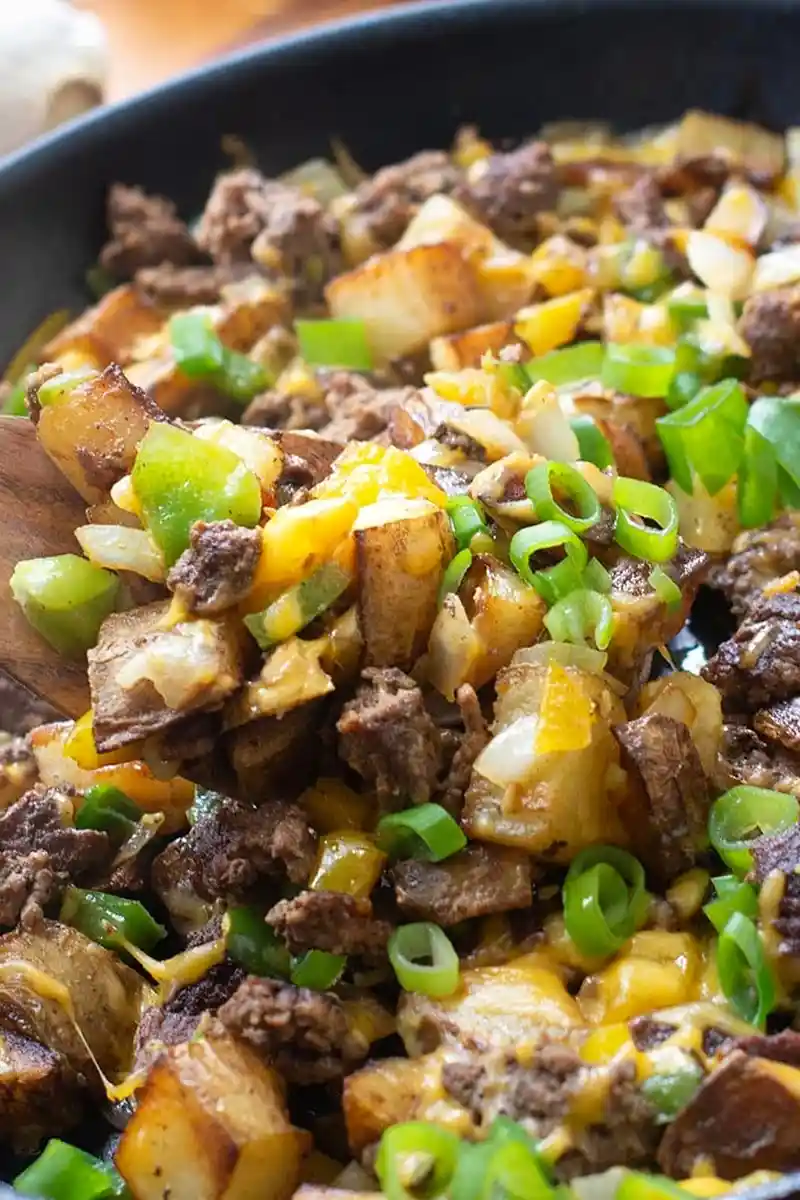
List of ingredients
- 1 Tbsp. oil – used for searing the potatoes.
- 1 lb. potatoes (about 2 medium), 1/2 inch dice – ensures even cooking.
- 1 lb. lean ground beef – provides the protein base.
- 1 and 1/2 tsp. salt – for seasoning meat and vegetables.
- 1/2 tsp. pepper – adds basic spice.
- 1 medium onion, chopped – adds aromatic flavor.
- 1 bell pepper, chopped – adds color and sweetness.
- 2 cloves garlic, minced – for depth of flavor.
- 1/2 tsp. smoked paprika – provides a subtle woody aroma.
- 1 cup shredded Cheddar cheese – for a creamy, melted finish.
- 2 green onions, chopped – used as a fresh garnish.
step-by-step instructions
- Sear the potatoes: Heat the oil in a large non-stick skillet over medium-high heat. Add the diced potatoes in a single layer and cook undisturbed for about 2 minutes until the bottom is lightly browned. Stir them once, then let them cook undisturbed for another 2 minutes to brown the other sides.
- Add the beef: Use a wooden spoon to push the potatoes to one side of the skillet. Add the lean ground beef to the empty side. Sprinkle salt and pepper evenly over both the potatoes and the beef.
- Brown the meat: Use the wooden spoon to break up the ground beef and spread it to cover its half of the skillet. Press down on the beef with the spoon to ensure maximum contact with the pan. Cook for 4 minutes without stirring the beef, while occasionally stirring the potatoes.
- Remove excess fat: If you notice too much liquid fat in the pan from the beef, use a spoon to scoop it out and discard it before proceeding.
- Combine with aromatics: Add the chopped onion, bell pepper, minced garlic, and smoked paprika directly on top of the beef and potatoes. Stir everything together thoroughly until the ingredients are evenly mixed.
- Final cook: Continue cooking and stirring occasionally for 3-4 minutes. Ensure the vegetables are softened, the beef is fully browned with no pink remaining, and the potatoes are fork-tender.
- Melt the cheese: Turn off the heat. Immediately sprinkle the shredded Cheddar cheese over the mixture. Cover for a moment or let the residual steam melt the cheese completely.
- Garnish and serve: Top the skillet with chopped green onions and serve immediately while hot.
Technical Cooking Strategies for Best Results
Ensuring Uniform Potato Browning
To achieve a consistent golden crust, cut the potatoes into precise 1/2 inch cubes. This prevents smaller pieces from burning while larger ones remain raw. Avoid overcrowding the pan, as too many potatoes release excess moisture and cause them to steam rather than sear.
Creating a Professional Beef Crust
Pressing the ground beef firmly against the hot skillet surface maximizes the Maillard reaction. By leaving the meat undisturbed for several minutes, you create a caramelized crust that adds deep flavor. Stirring too frequently prevents this crust from forming and results in gray, boiled-looking meat.
Managing Heat Distribution
Using medium-high heat is critical for this recipe to ensure the oil reaches the smoke point before adding potatoes. If the heat is too low, the potatoes will absorb the oil and become greasy instead of crisp. If it is too high, the garlic and paprika may burn before the potatoes are tender.
Preventing Sticking in the Pan
A high-quality non-stick skillet is recommended for this specific sequence of cooking. If using stainless steel, ensure the pan is fully preheated before adding oil to create a natural non-stick barrier. If potatoes stick, wait another 30 seconds; they usually release naturally once a crust has formed.
Ingredient Substitutions and Alternatives
Choosing the Right Potato Variety
Yukon Gold potatoes are ideal because they have a buttery texture and hold their shape well during stirring. Russet potatoes provide a fluffier interior but may break down more easily. Red potatoes offer a waxy texture and a firmer bite, which is excellent for those who prefer a structured cube.
Beef Lean-to-Fat Ratios
Using 90% lean ground beef minimizes the need to drain fat during the cooking process. If using 80% lean beef, you will likely need to remove more rendered fat after the browning step to prevent the final dish from being oily. Leaner meats ensure the cheese tastes prominent rather than greasy.
Vegetable Variations for Added Nutrition
While bell peppers are standard, you can substitute them with diced carrots or zucchini for different nutrients. Frozen peas or corn can be added during the final 3 minutes of cooking for extra color. Spinach or kale can be stirred in at the very end until wilted.
Alternative Cheese Options
Sharp Cheddar provides the most traditional flavor profile for this skillet. Monterey Jack is a great substitute if you prefer a milder taste and a superior melt. Pepper Jack can be used to introduce a subtle heat into the dish without needing extra spices.
Flavor Enhancements and Customizations
Adding Spicy Elements
For those who prefer heat, add a pinch of cayenne pepper or 1/2 teaspoon of hot sauce when adding the smoked paprika. Sliced jalapeños can also be sautéed along with the onions and bell peppers. These additions cut through the richness of the beef and cheese.
Incorporating Creamy Toppings
A dollop of sour cream on top of each serving adds a cool, tangy contrast to the warm beef. Greek yogurt is a high-protein alternative that provides a similar flavor profile. These toppings balance the smokiness of the paprika and the saltiness of the cheese.
Breakfast-Style Modifications
This dish works exceptionally well as a breakfast hash by topping each portion with a sunny-side-up fried egg. The runny yolk acts as a rich sauce for the potatoes and beef. You can also add diced ham or turkey sausage for a more complex meat blend.
Using Fresh Herb Infusions
Fresh parsley or cilantro added at the end provides a bright, herbaceous note that lightens the dish. Thyme or rosemary can be added during the potato searing phase for a more earthy, aromatic quality. Avoid adding fresh herbs too early, as they will burn at high heat.
Serving and Presentation Ideas
Best Side Dish Pairings
A crisp green salad with a light vinaigrette helps balance the heaviness of the beef and potatoes. Steamed broccoli or roasted asparagus provide a healthy contrast in texture and flavor. A side of sliced avocado adds creaminess and healthy fats to the meal.
Effective Garnish Techniques
Freshly sliced green onions provide both a sharp flavor and a visual pop of color. A sprinkle of fresh paprika or cracked black pepper on top of the melted cheese enhances the presentation. For a gourmet look, serve the meal in the skillet it was cooked in.
Plating for Family Style
Transfer the mixture to a wide, shallow platter to keep the cheese from clumping in a deep bowl. This allows everyone to scoop their portions while keeping the potato cubes intact. Serve with bowls of condiments like salsa or sour cream on the side.
Storage and Preservation Guidelines
Refrigeration Methods
Store leftovers in an airtight container in the refrigerator for up to 3 to 4 days. Ensure the dish has cooled slightly before sealing to prevent excess condensation from making the potatoes mushy. Keep the container tightly sealed to avoid the beef absorbing other fridge odors.
Freezing Instructions
While the beef and potatoes freeze well, the texture of the potatoes can become grainy after thawing. To freeze, portion the mixture into freezer-safe bags and remove as much air as possible. Thaw completely in the refrigerator before reheating to maintain the best possible consistency.
Maintaining Ingredient Quality
If you are prepping ingredients in advance, keep diced potatoes in a bowl of cold water to prevent oxidation and browning. Drain and pat them completely dry before adding them to the hot oil. Pre-chopped onions and peppers can be stored in airtight containers for up to 48 hours.
Reheating and Quality Control
Stovetop Reheating Process
Reheating in a skillet over medium heat is the best way to restore the texture of the potatoes. Add a small splash of water or beef broth to the pan to create steam, which prevents the beef from drying out. Stir gently to avoid breaking the potato cubes.
Microwave Reheating Tips
Place the leftovers in a microwave-safe dish and cover with a damp paper towel. Heat in short 30-second intervals, stirring in between, to ensure the heat is distributed evenly. This method is faster but may result in softer potatoes compared to the stovetop.
Oven Baking for Crispiness
Spread the leftovers in a baking dish and heat at 350°F (175°C) for about 10-15 minutes. This method is ideal for restoring the melted cheese crust and slightly crisping the edges of the potatoes. Avoid overcooking, or the beef may become tough.
Make-Ahead Preparation Advice
Advanced Vegetable Prep
Dice the onions, bell peppers, and potatoes the night before to save time during the weeknight rush. Store them in separate containers or one large container with dividers. This allows you to move straight to the cooking phase without spending 10 minutes on knife work.
Pre-browning the Beef
You can brown the ground beef in advance and store it in the refrigerator. When you are ready to make the skillet, sear the potatoes first, then add the pre-cooked beef during the final vegetable mixing stage. This reduces the total active cooking time by several minutes.
Organizing the Mise en Place
Arrange all measured ingredients in small bowls before turning on the stove. Because this recipe moves quickly from searing to mixing, having the garlic and spices ready prevents the oil from overheating. This organization is key to ensuring no ingredients are forgotten.
Troubleshooting Common Issues
Handling Hard Potatoes
If the potatoes are still hard after the beef is cooked, add two tablespoons of water or broth to the pan and cover it with a lid for 2-3 minutes. The trapped steam will cook the centers of the potatoes quickly. Ensure the lid fits tightly to maintain the temperature.
Managing Excessive Grease
If the pan becomes too oily, do not simply wipe it with a paper towel while the food is inside, as this can be dangerous. Instead, tilt the pan and use a large spoon to remove the fat. Using a leaner grade of beef from the start is the most effective prevention.
Fixing Unmelted Cheese
If the cheese hasn’t melted after turning off the heat, place the skillet back on low heat for 30 seconds. Alternatively, place the skillet under a broiler for 1-2 minutes for a browned, bubbly cheese topping. Watch closely to prevent the cheese from burning.
Preventing Burnt Garlic
Garlic burns much faster than onions and peppers. If you are worried about the heat, add the minced garlic only during the last minute of the vegetable sauté phase. This ensures the garlic releases its oils without turning bitter and brown.
Frequently Asked Questions
Can I use frozen potatoes?
Yes, you can use frozen diced potatoes, but you must sauté them longer to remove the excess moisture. Do not thaw them first; add them directly to the hot oil to ensure they brown properly instead of steaming.
What is the best skillet for this?
A large 12-inch non-stick skillet is best because it provides enough surface area to keep the potatoes and beef separate during the initial browning phase. A cast-iron skillet is a great alternative for a deeper sear, though it requires more oil.
Can I make this low carb?
To make this low carb, replace the potatoes with diced cauliflower or turnips. Follow the same searing method, although cauliflower will cook faster and require less time in the pan than potatoes.
How to prevent potatoes from sticking?
Ensure the oil is shimmering and hot before adding the potatoes, and resist the urge to stir them too early. Once the potatoes develop a golden crust, they will naturally release from the bottom of the pan.
Print
Cheesy Ground Beef and Potato Skillet
- Total Time: 25 minutes
- Yield: 4 servings 1x
- Diet: General
Description
A one-pan ground beef and potato skillet that’s ready in under half an hour? That’s right, this cheesy dish is the perfect weeknight comfort food.
Ingredients
- 1 Tbsp. oil
- 1 lb. potatoes (about 2 medium) in ½ inch dice
- 1 lb. lean ground beef
- 1 and ½ tsp. salt
- ½ tsp. pepper
- 1 medium onion, chopped
- 1 bell pepper, chopped
- 2 cloves garlic, minced
- ½ tsp. smoked paprika
- 1 cup shredded Cheddar cheese
- 2 green onions, chopped
Instructions
- Step: Heat the oil in a large non-stick skillet over medium-high heat.
- Step: Add the potatoes in a single layer and cook undisturbed until lightly browned underneath, about 2 minutes. Stir and then cook undisturbed to brown them some more for another 2 minutes.
- Step: Use a wooden spoon to move potatoes to one side of the skillet. Add ground beef to other side of skillet. Sprinkle the potatoes and the beef evenly with the salt and pepper.
- Step: Use wooden spoon to break up ground beef and then to spread it to cover the half of the skillet that is not taken by potatoes. Press down on the beef with the spoon. Cook the beef for 4 minutes undisturbed while stirring the potatoes occasionally.
- Step: If desired, use a spoon to scoop off any excess fat that has come from the beef.
- Step: On top of the potatoes and beef, add the onion, bell pepper, garlic, and paprika. Flip and stir until everything is evenly mixed together.
- Step: Cook, stirring occasionally, until vegetables are softened, beef is no longer pink anywhere, and potatoes are fork-tender, 3-4 minutes.
- Step: Turn off heat. Sprinkle with the cheese and allow the steam to melt it. Top with the green onions and serve.
Notes
If you want to add some heat, a pinch of cayenne or 1/2 teaspoon of hot sauce is a great addition (add it when you add the paprika). Top each portion with a fried egg, or a good dollop of sour cream, or both!
- Prep Time: 5 minutes
- Cook Time: 20 minutes
- Category: Entrée
- Method: Stovetop
- Cuisine: American
Nutrition
- Serving Size: 1 serving
- Calories: 460 kcal
- Sugar: 6 g
- Sodium: 920 mg
- Fat: 22 g
- Saturated Fat: 10 g
- Unsaturated Fat: 12 g
- Trans Fat: 0 g
- Carbohydrates: 26 g
- Fiber: 4 g
- Protein: 31 g
- Cholesterol: 105 mg