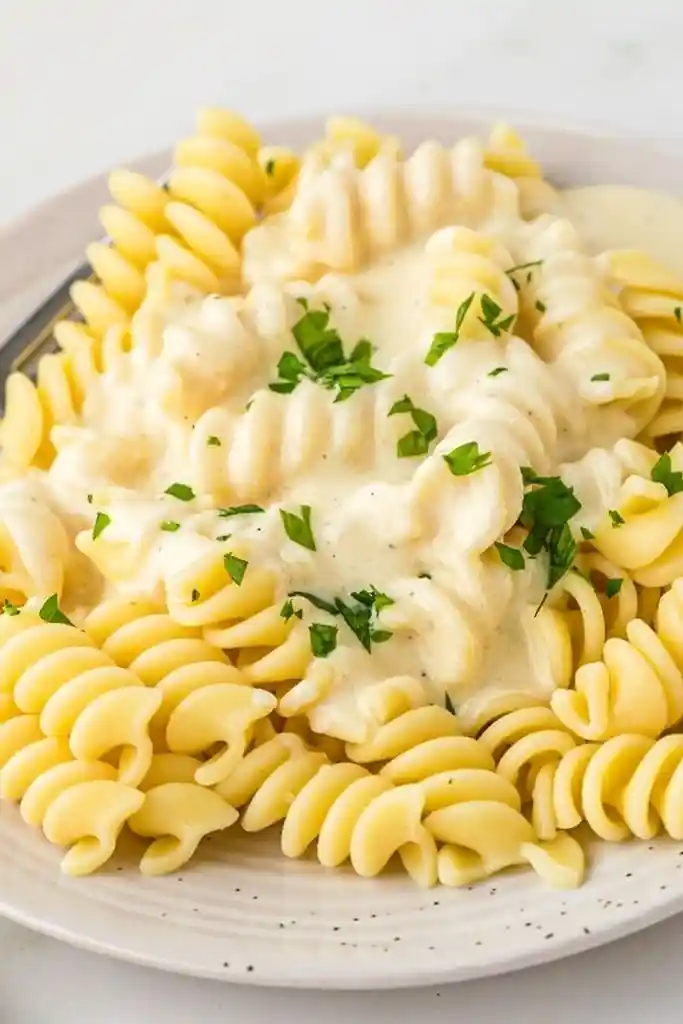
This creamy garlic alfredo sauce comes together in just 15 minutes using simple pantry staples. It is an ideal accompaniment for various pasta shapes or as a rich base for chicken and vegetable dishes.
List of ingredients
- 1/2 cup (1 stick) butter – provides a rich, buttery foundation.
- 1 block (8 oz) cream cheese – cut into chunks for faster melting.
- 1 1/2 teaspoons garlic powder – adds a consistent garlic flavor throughout.
- 1 cup heavy whipping cream – ensures a thick and velvety texture.
- 1 cup chicken broth – balances the richness and adds depth.
- 8 oz wedge parmesan cheese – freshly shredded for a smooth melt.
- 1/2 teaspoon salt – kosher salt is preferred for better control.
- 1/4 teaspoon ground black pepper – provides a subtle spice.
step-by-step instructions
- Melt Butter: Place a skillet or saucepan over medium-high heat and melt the butter completely.
- Combine Base: Add the cubed cream cheese and garlic powder to the melted butter. Stir with a whisk for a couple of minutes until the mixture is mostly combined; it may appear slightly curdled, which is normal.
- Incorporate Liquids: Slowly pour in the heavy whipping cream and chicken broth a little at a time. Whisk constantly while bringing the mixture to a low boil.
- Add Cheese and Seasoning: Reduce the heat to medium-low. Stir in the shredded parmesan cheese, salt, and black pepper. Simmer for 5 to 10 minutes, stirring occasionally, until the sauce thickens slightly.
- Rest and Serve: Remove the pan from the heat and let the sauce sit for 5 minutes to reach its final thickness. Serve over cooked pasta or mix the noodles directly into the pan.
Expert Tips for a Smooth Sauce
Grate Parmesan from a Whole Wedge
Always buy a wedge of Parmesan cheese and shred it yourself. Pre-shredded cheeses are coated in potato starch or cellulose to prevent clumping in the bag. These additives prevent the cheese from melting smoothly and can result in a grainy texture.
Cube the Cream Cheese Before Cooking
Cutting the cream cheese block into small cubes ensures it melts quickly and evenly into the butter. If you add the cream cheese as a whole block, it takes much longer to integrate. This prevents the butter from overcooking or burning while you wait for the cheese to soften.
Prioritize the Five-Minute Resting Period
Do not skip the resting phase after removing the pan from the heat. The sauce continues to thicken as the temperature drops slightly and the fats stabilize. This ensures the sauce clings to the pasta rather than pooling at the bottom of the bowl.
Use a Silicone Whisk for Non-Stick Pans
If you are using a non-stick skillet, always use a silicone-coated whisk. Metal whisks can scratch the coating, which damages the pan and allows food to stick. Silicone is gentle on the surface while still providing the necessary agitation for a smooth emulsion.
Pre-Mix Your Liquids
Combine the heavy cream and chicken broth in a single measuring cup before adding them to the pan. This allows you to pour the liquids in a steady, controlled stream. Constant whisking during this process prevents the cream cheese from separating.
Ingredient Substitutions and Modifications
Replacing Heavy Cream with Half and Half
If you prefer a slightly lighter sauce, you can substitute the heavy whipping cream with half and half. Be aware that the final result will be thinner and less rich. You may need to simmer the sauce for an additional few minutes to achieve the desired consistency.
Using Fresh Garlic Instead of Powder
Freshly minced garlic provides a sharper and more pungent flavor than garlic powder. If using fresh garlic, sauté it in the butter for 30 to 60 seconds before adding the cream cheese. This removes the raw bite and develops a sweeter, toasted flavor.
Reducing Fat with Neufchatel Cheese
You can use reduced-fat cream cheese (Neufchatel) to lower the calorie count. While this works well, the sauce may not be as stable or thick as the full-fat version. Avoid using fat-free versions, as they often lack the emulsifying properties needed for a smooth alfredo.
Substituting Chicken Broth for Vegetable Broth
For a different flavor profile or dietary preference, vegetable broth is an excellent replacement for chicken broth. Most high-quality vegetable broths provide the same salt and umami levels. This keeps the sauce savory without changing the overall structure.
Experimenting with Flavored Cream Cheeses
Try using a flavored cream cheese, such as chive and onion or herb garlic, to add complexity. If using a flavored variety, reduce the amount of additional garlic powder. These flavors blend well with the parmesan and create a gourmet variation of the classic sauce.
Serving Suggestions and Meal Pairings
Choosing the Right Pasta Shape
Long, flat noodles like fettuccine or linguine are traditional because they provide a large surface area for the sauce to cling to. For a more modern approach, use rotini or penne. These shapes have ridges and holes that trap the thick sauce inside every bite.
Adding Grilled Protein
Sliced grilled chicken breast is the most popular addition to this sauce. For a seafood twist, sauté shrimp in butter and garlic before folding them into the final sauce. Both options turn the sauce into a complete, protein-rich meal.
Incorporating Fresh Vegetables
Steam broccoli florets or sauté baby spinach until wilted and stir them into the sauce. Peas are another great addition that adds a pop of color and sweetness. Adding vegetables provides a nutritional balance to the rich dairy base.
Using the Sauce as a Savory Dip
This alfredo sauce works exceptionally well as a dipping sauce for appetizers. Serve it warm alongside toasted breadsticks, mozzarella sticks, or fried zucchini. It provides a creamy, salty contrast to fried or toasted items.
Storage and Reheating Guidelines
Proper Refrigeration Methods
Store leftover sauce in an airtight glass container to prevent it from absorbing other odors in the fridge. It will stay fresh for up to five days. Ensure the sauce is cooled slightly before sealing the container to avoid excessive condensation.
Stovetop Reheating for Best Texture
The best way to reheat alfredo sauce is on the stove over low heat. Add a tablespoon of chicken broth or milk to the pan to help loosen the thickened fats. Stir constantly to prevent the sauce from scorching or separating.
Quick Microwave Reheating
If using a microwave, heat the sauce in 30-second intervals. Stir the sauce thoroughly between each interval to ensure even heating. This prevents hot spots that could cause the dairy to curdle.
Avoiding the Freezer
It is not recommended to freeze this sauce because of the high cream and cream cheese content. Dairy-heavy sauces often separate and become grainy when frozen and thawed. For the best quality, make only what you can consume within a week.
Troubleshooting Common Sauce Issues
Dealing with a Curdled Appearance
If the sauce looks curdled after adding the cream cheese, do not panic. This is often just the result of different fat temperatures meeting. Continue whisking and bring the sauce to a low boil; the emulsion should stabilize and become smooth.
Fixing a Sauce That Is Too Thin
If the sauce is too thin after simmering, continue to cook it on medium-low heat for another few minutes. The water in the broth will evaporate, concentrating the fats and thickening the liquid. Always remember to let the sauce rest for five minutes before deciding it is too thin.
Adjusting Excessive Saltiness
If the sauce tastes too salty, it may be due to the combination of salted butter and aged parmesan. You can balance this by adding a splash more heavy cream or a pinch of sugar. Adding a squeeze of lemon juice can also cut through the salt with acidity.
Preventing Sauce Separation
Separation usually happens when the sauce is boiled too vigorously or heated too quickly during reheating. Keep the temperature at a low simmer once the cheese is added. Avoid using high heat, which can break the emulsion of the fats and liquids.
Managing Lumps in the Sauce
Lumps are usually caused by under-cubed cream cheese or pre-shredded parmesan. If lumps persist, you can pass the finished sauce through a fine-mesh strainer. Alternatively, use an immersion blender for a few seconds to force a completely smooth consistency.
Frequently Asked Questions
Can I make this sauce without a whisk?
While you can use a spoon, a whisk is highly recommended. A whisk incorporates air and breaks up the cream cheese chunks more efficiently, ensuring the sauce doesn’t separate.
What is the best type of butter for this recipe?
Salted butter adds a deeper flavor, but unsalted butter allows you to control the salt levels more precisely. If you use unsalted butter, you may need to increase the salt by a small pinch.
Can I use a different cheese than Parmesan?
Pecorino Romano is a great substitute for Parmesan, though it is saltier and tangier. You can also use a mix of Parmesan and white cheddar for a sharper, creamier taste.
How do I stop the sauce from sticking to the pan?
Keep the sauce moving with constant stirring, especially once the parmesan is added. Using a heavy-bottomed pan also helps distribute heat evenly, preventing the cheese from scorching on the bottom.
Is this sauce suitable for meal prep?
Yes, you can make the sauce in advance and store it in the fridge. However, it is best to store the sauce separately from the pasta to prevent the noodles from absorbing all the liquid and becoming mushy.
Why is my sauce grainy?
Graininess is usually caused by using pre-shredded cheese or overheating the sauce. The starch in pre-shredded cheese doesn’t melt, and overheating can cause the proteins in the cheese to clump.
Can I use milk instead of heavy cream?
You can use whole milk, but the sauce will be significantly thinner. To compensate, you may need to create a roux with more butter and flour to provide the necessary thickness.
Does the garlic powder taste different than fresh garlic?
Garlic powder provides a mellow, uniform flavor that blends into the sauce. Fresh garlic is more intense and aromatic. Both are valid choices depending on the flavor intensity you desire.
Print
Rich Cream Cheese Garlic Alfredo Sauce
- Total Time: 15 minutes
- Yield: 8 servings 1x
- Diet: General
Description
Homemade Cream Cheese Alfredo Sauce is a rich, creamy family favorite made with simple ingredients and ready in just 15 minutes. Serve over pasta noodles or use in any recipe that calls for alfredo sauce.
Ingredients
- 1/2 cup butter
- 8 oz cream cheese, cut into chunks
- 1 1/2 teaspoons garlic powder
- 1 cup heavy whipping cream
- 1 cup chicken broth
- 8 oz wedge parmesan cheese, shredded
- 1/2 teaspoon salt
- 1/4 teaspoon ground black pepper
Instructions
- Melt: Melt butter in a skillet pan or saucepan over medium-high heat.
- Mix: Add the chunked cream cheese and garlic powder, stirring with a whisk until mostly smooth.
- Boil: Gradually whisk in the whipping cream and chicken broth, bringing the mixture to a low boil.
- Simmer: Reduce heat to medium-low and stir in the parmesan cheese, salt, and pepper; simmer for 5-10 minutes until slightly thickened.
- Rest: Remove from heat and let sit for 5 minutes to thicken before serving over pasta.
Notes
For best results, grate a wedge of parmesan cheese manually rather than using pre-shredded cheese. Allowing the sauce to rest for 5 minutes is essential for the final consistency.
- Prep Time: 5 minutes
- Cook Time: 10 minutes
- Category: Dinner
- Method: Stovetop
- Cuisine: Italian
Nutrition
- Serving Size: 1/3 cup
- Calories: 319 kcal
- Sugar: 1 g
- Sodium: 820 mg
- Fat: 30 g
- Saturated Fat: 19 g
- Unsaturated Fat: 11 g
- Trans Fat: 0 g
- Carbohydrates: 2 g
- Fiber: 1 g
- Protein: 11 g
- Cholesterol: 91 mg