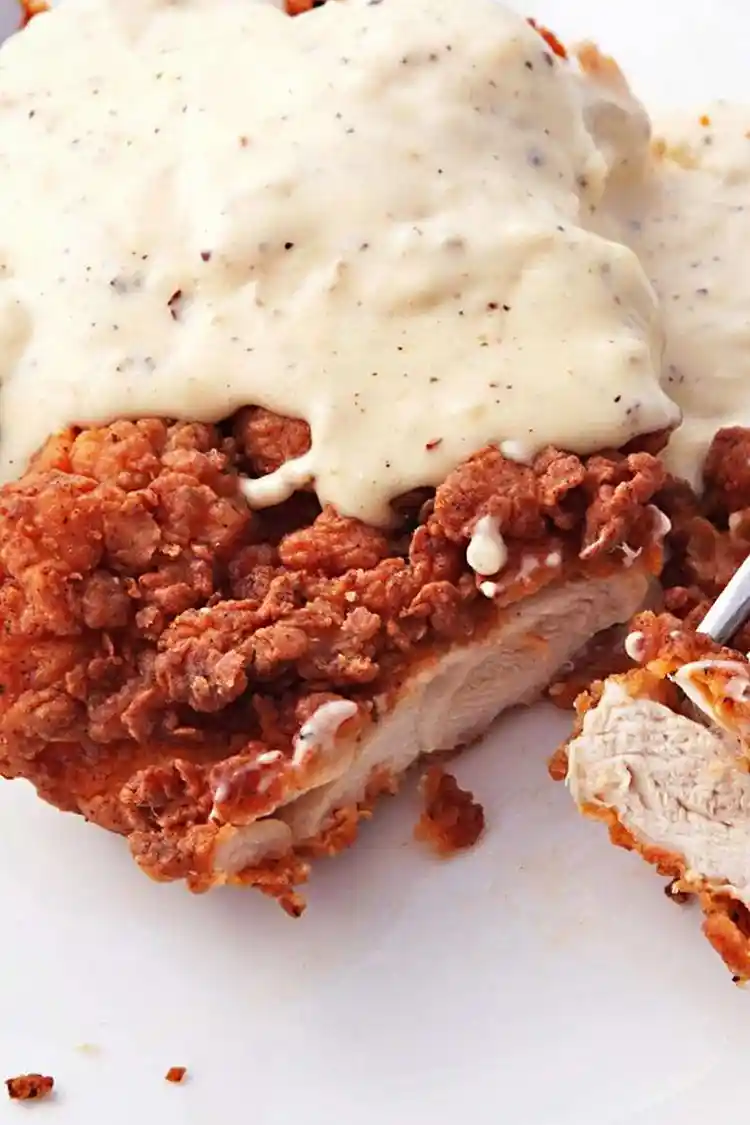
This recipe delivers tender, pounded chicken cutlets fried to a golden crunch and topped with a rich, savory white gravy. It combines a zesty spice blend with a velvety sauce for a comforting, hearty dinner.
List of ingredients
- 2 tablespoons paprika – adds color and earthy flavor.
- 2 tablespoons freshly ground black pepper – provides a bold, spicy kick.
- 2 teaspoons garlic powder – enhances the savory profile.
- 2 teaspoons dried oregano – adds a subtle herbal note.
- 1/2 teaspoon cayenne pepper – introduces a touch of heat.
- 4 boneless, skinless chicken thighs (about 4 ounces each), or 2 boneless, skinless chicken breasts (about 8 ounces each), cut and pounded into 4 cutlets – the main protein.
- 1 cup buttermilk – tenderizes meat and helps breading stick.
- 1 large egg – acts as a binder for the coating.
- 1 tablespoon plus 2 teaspoons kosher salt, divided – used for seasoning and brining.
- 1 1/2 cups all-purpose flour – the primary breading agent.
- 1/2 cup cornstarch – ensures a lighter, crispier crust.
- 1 teaspoon baking powder – adds aeration for extra crunch.
- 4 cups vegetable shortening or peanut oil, for frying – high-smoke point fats for crisping.
- 2 tablespoons unsalted butter – base for the gravy roux.
- 1 small onion, finely chopped (about 3/4 cup) – adds aromatic sweetness to the gravy.
- 2 medium cloves garlic, minced (about 2 teaspoons) – boosts gravy depth.
- 2 tablespoons all-purpose flour – thickens the sauce.
- 1 cup whole milk – provides the creamy base for the gravy.
- 3/4 cup heavy cream – adds richness and thickness.
- Kosher salt and freshly ground black pepper – for final seasoning of the gravy.
step-by-step instructions
- Prepare spice blend: Combine paprika, black pepper, garlic powder, oregano, and cayenne pepper in a small bowl and mix thoroughly with a fork.
- Tenderize the meat: One at a time, sandwich each piece of chicken between two pieces of plastic wrap or inside an opened zipper-lock bag. Pound with a meat pounder or the bottom of a heavy skillet until approximately 1/4 inch thick.
- Marinate the chicken: Whisk buttermilk, egg, 1 tablespoon salt, and 2 tablespoons of the spice mixture in a large bowl. Add the chicken and turn to coat. Transfer to a gallon-sized zipper-lock bag and refrigerate for at least 4 hours and up to overnight, flipping occasionally.
- Cook the cream gravy: Heat butter in a 10-inch heavy-bottomed nonstick skillet over medium-high until foamy. Add the onion and cook until softened, about 4 minutes. Add minced garlic and cook for 30 seconds. Stir in 2 tablespoons of flour and cook for 1 minute until absorbed. Gradually whisk in milk and heavy cream. Simmer for 3 minutes until thickened, then season with salt and plenty of black pepper. Keep warm.
- Prepare the dredging mixture: Whisk together flour, cornstarch, baking powder, 2 teaspoons salt, and the remaining spice mixture in a large bowl. Add 3 tablespoons of the marinade from the bag and work it in with your fingertips to create small clumps.
- Coat the chicken: Remove chicken from the marinade, letting excess drip off. Drop into the flour mixture, tossing and pressing firmly with your hand to ensure a thick layer adheres. Shake off excess flour and transfer to a plate.
- Heat the oil: Adjust oven rack to the middle and preheat to 175°F. Heat shortening or oil to 425°F in a wok or 12-inch cast iron skillet over medium-high heat.
- Fry the cutlets: Carefully lower 2 pieces of chicken into the pan. Adjust heat to maintain 325°F. Fry without moving for 2 minutes. Agitate gently with tongs for 3 minutes until deep golden brown. Flip and cook for another 2 minutes.
- Drain and serve: Transfer chicken to a paper towel-lined plate for 30 seconds, then move to a wire rack on a rimmed baking sheet in the oven. Repeat with remaining chicken. Serve immediately topped with cream gravy.
Optimizing Meat Texture and Tenderness
Choosing Between Thighs and Breasts
Boneless, skinless chicken thighs are recommended because they remain juicy and flavorful during high-heat frying. Thighs have a more uneven surface, which allows the breading to cling more effectively than the smooth surface of a breast. If using breasts, always slice them into thinner cutlets to prevent the outside from burning before the center is cooked.
The Importance of Pounding the Meat
Pounding the chicken to a uniform 1/4 inch thickness ensures that the meat cooks quickly and evenly. This process breaks down tough muscle fibers, resulting in a more tender bite. Using a zipper-lock bag during pounding prevents the meat from tearing and keeps your kitchen counters clean.
How the Buttermilk Brine Works
The lactic acid in buttermilk gently breaks down the proteins in the chicken, which helps the meat retain moisture during the frying process. The salt in the marinade penetrates deep into the muscle, seasoning the meat from the inside out. This brine also creates a tacky surface that helps the flour coating adhere firmly.
Advanced Breading and Coating Techniques
The Science of Cornstarch and Baking Powder
Combining cornstarch with all-purpose flour reduces the overall protein content of the coating, which prevents the crust from becoming too tough. Baking powder adds tiny bubbles of air into the breading as it hits the hot oil, creating a lighter and crispier texture. This combination ensures the crust remains crunchy even after the gravy is added.
Creating Flour Clumps for Maximum Crunch
Drizzling a small amount of the liquid marinade into the dry flour mixture creates small, moist clumps of dough. When these clumps fry, they expand and create a craggy, irregular surface on the chicken. This increased surface area results in more golden-brown edges and a superior crunch compared to a smooth dredging.
Achieving Proper Coating Adhesion
Pressing the flour mixture firmly into the meat with your hands is essential for a thick, professional crust. Simply tossing the meat in flour often results in a thin layer that may slough off in the pan. Shake off only the loose powder to ensure the oil stays clean and the coating remains substantial.
Professional Frying Strategies
Selecting the Best High-Heat Oil
Peanut oil and vegetable shortening are ideal because they have high smoke points and provide a neutral flavor. These fats can withstand the initial high heat needed to sear the crust without breaking down or smoking. Using a saturated fat helps in achieving a more traditional, crispier Southern-style crust.
Managing Oil Temperature with a Thermometer
Overheating the oil can cause the exterior to burn while the interior remains raw, while underheating leads to greasy, oil-soaked chicken. Starting at 425°F accounts for the temperature drop that occurs when cold meat is added to the pan. Maintaining a steady 325°F ensures the chicken cooks through at the same rate the crust browns.
Preventing Breading Separation
Avoiding movement for the first two minutes of frying allows the proteins in the flour to set and bond to the meat. Agitating the chicken too early can knock off the breading or cause it to separate from the chicken. Use a wire-mesh spider or tongs to gently move the pieces once the crust has firmed up.
Keeping Batches Warm and Crispy
Placing fried chicken on a wire rack instead of a flat plate prevents steam from trapping underneath the meat. Steam quickly softens the bottom crust, turning it soggy. A low oven at 175°F keeps the chicken hot and the crust crisp while you finish the remaining batches.
Perfecting the Cream Gravy
Developing Flavor with Aromatics
Sautéing finely chopped onions in butter provides a sweet, savory foundation that cuts through the richness of the cream. Adding minced garlic toward the end prevents the garlic from burning, which would otherwise make the gravy bitter. These aromatics transform a simple white sauce into a complex, savory accompaniment.
Creating a Stable Flour Roux
Cooking the flour in butter for about a minute removes the raw flour taste and creates a roux. This roux acts as the thickening agent that prevents the milk and cream from separating. Stirring constantly during this stage ensures the roux doesn’t brown too much, keeping the gravy a pale, creamy color.
Achieving a Velvety Consistency
Whisking the milk in a thin stream prevents lumps from forming and ensures a smooth emulsion. Adding heavy cream at the end increases the viscosity and adds a luxurious mouthfeel. Simmering the sauce for a few minutes allows the starch to fully hydrate and thicken the liquid.
Balancing the Peppery Profile
A traditional cream gravy relies heavily on freshly ground black pepper for its signature bite. Adding the pepper at the end allows the sharp notes to remain prominent. Taste the gravy frequently and adjust the salt carefully, as the salted butter and chicken breading already contribute significant sodium.
Substitutions and Customizations
Dairy-Free Buttermilk Alternatives
For a dairy-free marinade, you can use soy milk or almond milk mixed with a tablespoon of lemon juice or apple cider vinegar. Let the mixture sit for 10 minutes to curdle before adding it to the egg and spices. This provides the necessary acidity to tenderize the chicken.
Adjusting the Heat Levels
If you prefer a spicier dish, increase the cayenne pepper to a full teaspoon or add a pinch of chipotle powder for a smoky heat. To keep the dish mild for children, you can omit the cayenne entirely. The paprika provides a warm color without adding significant spice.
Alternative Flour Options
While all-purpose flour is standard, you can replace a portion of it with rice flour for an even crispier, glass-like crust. Rice flour does not develop gluten, which prevents the breading from becoming chewy. Keep the cornstarch and baking powder for the best results regardless of the flour used.
Storage and Reheating Advice
Refrigerating Leftovers
Store the fried chicken and the gravy in separate airtight containers in the refrigerator for up to three days. Keeping them separate prevents the chicken from absorbing moisture from the sauce and becoming soggy. Allow the chicken to cool completely before sealing the container to reduce condensation.
Freezing Cooked Chicken
Cooked chicken-fried chicken can be frozen for up to two months if wrapped tightly in foil and placed in a freezer bag. The gravy can also be frozen, though it may require a bit of whisking and a splash of milk upon reheating to restore its smooth texture.
Restoring Crispiness in the Oven
Avoid using a microwave to reheat the chicken, as this makes the breading rubbery and soft. Instead, place the cutlets on a wire rack in a 350°F oven for about 10-15 minutes. This evaporates surface moisture and recrisps the outer crust.
Reheating the Cream Gravy
Gently heat the gravy in a small saucepan over low heat, whisking constantly. If the sauce has thickened too much in the fridge, whisk in a tablespoon of whole milk or cream to loosen it. Avoid boiling the gravy, as this can cause the fats to separate.
Troubleshooting Common Issues
Why is the Breading Falling Off?
Breading usually sloughs off if the chicken was too wet when dredged or if the oil temperature was too low. Ensure you let excess buttermilk drip off before coating. If the oil is not hot enough, the coating will absorb grease instead of searing, causing it to slide off the meat.
Handling Burnt Crust with Raw Centers
This occurs when the oil is too hot or the chicken pieces are too thick. Use a thermometer to ensure the oil is at 325°F during the actual frying process. If the meat is too thick, it will take longer to cook through, giving the outside too much time to burn.
Fixing Lumpy Gravy
If your gravy develops lumps, it is usually due to adding the milk too quickly or not whisking enough. You can easily fix this by pouring the gravy through a fine-mesh strainer or using an immersion blender for a few seconds. To prevent this, always add liquid in a slow, steady stream.
Frequently Asked Questions
Can I use an air fryer for this recipe?
While possible, an air fryer will not produce the same thick, craggy crust as deep frying. To try it, spray the coated chicken generously with oil to prevent the flour from remaining dry and powdery. Cook at 375°F, flipping halfway through, until golden brown.
How long does the marinated chicken last in the fridge?
The chicken can safely stay in the buttermilk marinade for up to 24 hours. Beyond that, the acid in the buttermilk may begin to break down the meat too much, resulting in a mushy texture. Always keep the marinade refrigerated.
What is the difference between this and Southern Fried Chicken?
The primary difference is the preparation of the meat; chicken-fried chicken uses pounded cutlets rather than bone-in pieces. Additionally, it is specifically designed to be served with a peppery white cream gravy, mimicking the style of chicken-fried steak.
Can I make the gravy ahead of time?
Yes, the gravy can be made several hours in advance and kept warm on the lowest setting of your stove. If it thickens too much while waiting, simply whisk in a small amount of warm milk just before serving to return it to the desired consistency.
Print
Crispy Chicken-Fried Chicken with Peppery Cream Gravy
- Total Time: 4 hours 55 minutes
- Yield: 4 servings 1x
- Diet: General
Description
We use our fried chicken technique on boneless, skinless chicken thighs for an extra-crisp crust and juicy meat, served with a peppery cream gravy.
Ingredients
- 2 tablespoons paprika
- 2 tablespoons freshly ground black pepper
- 2 teaspoons garlic powder
- 2 teaspoons dried oregano
- 1/2 teaspoon cayenne pepper
- 4 boneless, skinless chicken thighs (about 4 ounces each)
- 1 cup buttermilk
- 1 large egg
- 1 tablespoon plus 2 teaspoons kosher salt, divided
- 1 1/2 cups all-purpose flour
- 1/2 cup cornstarch
- 1 teaspoon baking powder
- 4 cups vegetable shortening or peanut oil, for frying
- 2 tablespoons unsalted butter
- 1 small onion, finely chopped (about 3/4 cup)
- 2 medium cloves garlic, minced (about 2 teaspoons)
- 2 tablespoons all-purpose flour
- 1 cup whole milk
- 3/4 cup heavy cream
- Kosher salt and freshly ground black pepper
Instructions
- Mix Spices: Combine the paprika, black pepper, garlic powder, oregano, and cayenne pepper in a small bowl and mix thoroughly with a fork.
- Pound Chicken: Sandwich each piece of chicken between two pieces of plastic wrap or inside an opened zipper-lock bag and pound with a meat pounder or the bottom of a heavy skillet until approximately 1/4 inch thick.
- Marinate: Whisk the buttermilk, egg, 1 tablespoon salt, and 2 tablespoons of the spice mixture in a large bowl. Add the chicken and turn to coat. Transfer to a gallon-sized zipper-lock freezer bag and refrigerate for at least 4 hours and up to overnight, flipping occasionally.
- Make Gravy: Heat the butter in a 10-inch heavy-bottomed nonstick skillet over medium-high until foamy. Add the onion and cook until softened (4 minutes). Add the garlic and cook (30 seconds). Add 2 tablespoons flour and cook (1 minute). Add the milk and cream, whisking constantly, and simmer until thickened (3 minutes). Season with salt and pepper.
- Dredge Chicken: Whisk together flour, cornstarch, baking powder, 2 teaspoons salt, and the remaining spice mixture. Add 3 tablespoons of the marinade and work it into the flour with fingertips. Coat the chicken in the flour mixture, pressing firmly to adhere, then shake off excess.
- Heat Oil: Preheat oven to 175°F. Heat the shortening or oil to 425°F in a wok or 12-inch cast iron skillet over medium-high heat.
- Fry Chicken: Carefully lower 2 pieces of chicken into the pan. Adjust heat to maintain 325°F. Fry without moving for 2 minutes, then agitate and cook until deep golden brown (3 minutes). Flip and cook until second side is golden brown (2 minutes).
- Drain and Serve: Transfer chicken to a paper towel–lined plate for 30 seconds, then transfer to a wire rack in the oven to keep warm. Repeat with remaining chicken. Serve with the cream gravy.
Notes
For juicier results, use chicken thighs. If using chicken breasts, cut and pound them into cutlets before marinating.
- Prep Time: 15 minutes
- Cook Time: 40 minutes
- Category: Entree
- Method: Frying
- Cuisine: American
Nutrition
- Serving Size: 1 serving
- Calories: 742 kcal
- Sugar: 9 g
- Sodium: 951 mg
- Fat: 53 g
- Saturated Fat: 21 g
- Unsaturated Fat: 32 g
- Trans Fat: 0 g
- Carbohydrates: 34 g
- Fiber: 2 g
- Protein: 37 g
- Cholesterol: 258 mg