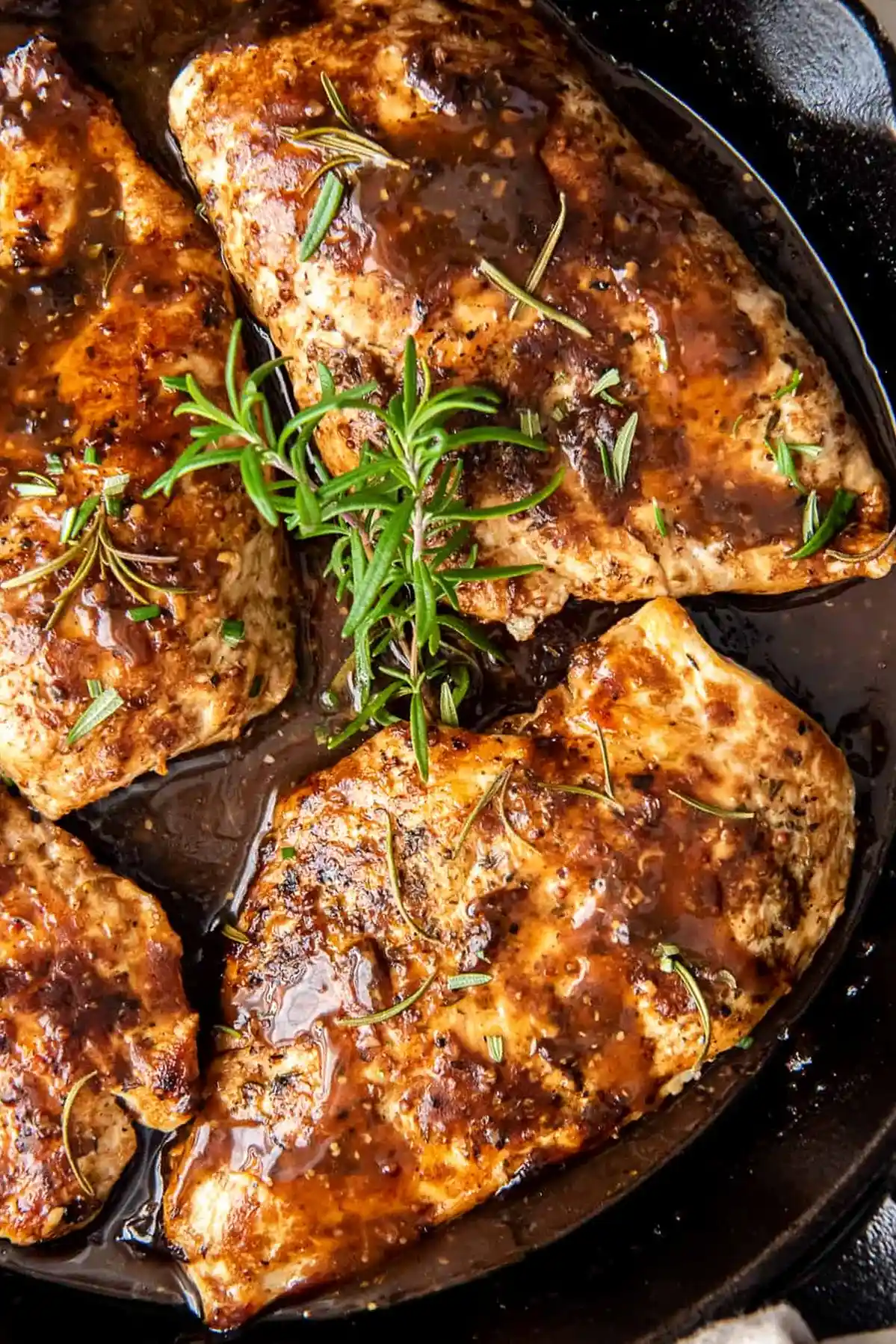
This balsamic chicken is coated in a tangy glaze of honey, garlic, and rosemary. It cooks quickly using a combination of skillet searing and oven baking to ensure a juicy result in about 30 minutes.
List of ingredients
- 1 ½ to 2 pounds boneless skinless chicken breasts (approximately 4 pieces) – use standard breasts for best results.
- 1 teaspoon kosher salt – for seasoning the meat.
- ½ teaspoon freshly ground black pepper – plus extra for tasting at the end.
- 1 ½ teaspoons Italian seasoning – provides a herb-based aromatic base.
- 2 tablespoons extra virgin olive oil – for searing the chicken.
- 2 tablespoons butter – adds richness to the pan sauce.
- 1 teaspoon minced garlic – fresh cloves are preferred for better flavor.
- ½ cup water – used to deglaze the pan and build the sauce.
- ½ cup balsamic vinegar – provides the tangy, acidic base of the glaze.
- 2 teaspoons honey – balances the acidity of the vinegar with sweetness.
- 1 tablespoon stone ground mustard or Dijon mustard – adds depth and helps emulsify the sauce.
- 1 tablespoon cornstarch – used as a thickener for the glaze.
- 1 tablespoon water – mixed with cornstarch to create a slurry.
- 3 or 4 sprigs rosemary – adds a woody, fresh aroma to the final dish.
step-by-step instructions
- Preheat the oven: Set your oven to 425 degrees F to ensure it is hot enough for the final roasting phase.
- Prepare the chicken: If the chicken breasts are uneven or very thick, place them on a cutting board covered with plastic wrap. Pound them lightly with a meat mallet until they are no more than ¾-inch thick to ensure even cooking. Slice them in half if they are too large for a single serving.
- Season the meat: Pat the chicken pieces completely dry with paper towels. Season both sides generously with the kosher salt, black pepper, and Italian seasoning.
- Sear the chicken: Heat olive oil in a large skillet over medium-high heat. Once the oil is shimmering, add the chicken and sear for about 3 minutes per side until golden brown. Do not cook them through at this stage; remove them to a plate and set aside.
- Sauté the garlic: Lower the pan heat to low and add the butter. Once melted, stir in the minced garlic and cook for 1 to 2 minutes until fragrant but not browned.
- Create the pan sauce: Stir in the water, balsamic vinegar, honey, mustard, and additional pepper. Whisk the ingredients together until well combined.
- Thicken the glaze: In a small bowl, whisk together 1 tablespoon of cornstarch and 1 tablespoon of water. Pour this slurry into the simmering sauce and cook for 1 to 2 minutes until the sauce thickens. Remove the pan from the heat.
- Combine and garnish: Return the seared chicken and any juices from the plate back into the skillet. Spoon the thickened sauce over each piece and place the rosemary sprigs on top.
- Bake to finish: Transfer the skillet to the oven and bake uncovered until the internal temperature reaches 165 degrees F, which usually takes 12 to 15 minutes.
- Rest and serve: Remove the pan from the oven and let the chicken rest for 5 to 10 minutes. This allows the juices to redistribute and the sauce to thicken further. Drizzle the remaining pan sauce over the chicken before serving.
Preparation Tips for Better Texture
Achieve Uniform Thickness with a Meat Mallet
Pounding the chicken breasts to a consistent ¾-inch thickness is critical for this recipe. Because the chicken finishes in a high-heat oven, uneven pieces will result in the thin ends drying out before the center is cooked. Using plastic wrap prevents the meat from tearing or sticking to the mallet.
Pat Dry the Chicken Surface
Moisture on the surface of the meat creates steam, which prevents the chicken from browning. By patting the breasts dry with paper towels before seasoning, you ensure the olive oil can create a proper sear. This golden-brown crust adds a deeper flavor to the final dish through the Maillard reaction.
Ingredient Substitutions and Alternatives
Using Chicken Thighs Instead of Breasts
Boneless, skinless chicken thighs can be used if you prefer a juicier, richer piece of meat. Thighs are more forgiving and less likely to overcook. However, you may need to increase the oven baking time by 3 to 5 minutes to ensure they reach the safe internal temperature.
Replacing Honey with Maple Syrup
If you do not have honey, pure maple syrup is an excellent substitute. It provides a similar level of sweetness to balance the balsamic vinegar but adds a slight woody note to the sauce. Use the same measurement of 2 teaspoons for a balanced flavor profile.
Choosing Between Stone Ground and Dijon Mustard
Stone ground mustard offers a rustic texture and a milder, more complex flavor that pairs well with the rosemary. Dijon mustard is smoother and has a sharper, more pungent kick. Both work well, but Dijon will make the sauce slightly more acidic.
Substituting Fresh Thyme for Rosemary
If you find rosemary too potent, fresh thyme is a great alternative. Thyme is more delicate and earthy, which complements the balsamic glaze without dominating the other flavors. Use about 4 to 6 sprigs of thyme to match the aromatic intensity of the rosemary.
Serving and Pairing Recommendations
Pairing with Starchy Base Options
The balsamic pan sauce is the highlight of this dish and pairs perfectly with starches that can absorb the glaze. Mashed potatoes, steamed jasmine rice, or a bed of orzo pasta are ideal choices. These sides prevent the sauce from going to waste on the plate.
Adding Fresh Green Vegetables
To create a balanced meal, serve this chicken with a side of steamed broccoli, roasted asparagus, or sautéed green beans. The bitterness of green vegetables cuts through the sweetness of the honey and the richness of the butter sauce. Lemon-parmesan salad is another refreshing option.
Low-Carb Side Dish Alternatives
For those avoiding grains, cauliflower mash or sautéed spinach are excellent substitutes for potatoes or rice. Roasted zucchini or a simple arugula salad with lemon dressing also complement the tangy flavor of the balsamic glaze without adding significant carbohydrates.
Storage and Reheating Instructions
Proper Refrigeration Storage
Store any leftover chicken and sauce in an airtight glass or plastic container. Keep it refrigerated for up to 4 days. It is best to store the chicken submerged in the remaining sauce to prevent the meat from drying out during storage.
Reheating in a Skillet for Best Quality
To maintain the best texture, reheat the chicken in a skillet over low heat. Add a tablespoon of water or chicken broth to the pan to loosen the sauce, which will have thickened significantly in the fridge. Cover the pan with a lid for a few minutes to steam the meat through.
Microwave Reheating Tips
If using a microwave, place the chicken and sauce on a microwave-safe plate and cover it with a damp paper towel. Heat in short 30-second intervals, stirring the sauce between periods. This prevents the chicken from becoming rubbery and ensures the glaze is evenly distributed.
Troubleshooting Common Issues
Preventing Garlic from Burning
Garlic burns quickly at high temperatures, becoming bitter and ruining the sauce. Ensure the pan is turned down to low heat before adding the butter and garlic. If the pan is still too hot from searing the chicken, let it cool for a minute before proceeding with the aromatics.
Fixing a Sauce That Is Too Thin
If the sauce has not thickened enough after simmering, you can add a tiny bit more cornstarch slurry. Mix a pinch of cornstarch with a teaspoon of cold water and whisk it into the simmering liquid. Let it bubble for another minute to activate the thickening properties.
Avoiding Overcooked and Dry Chicken
The most common issue with chicken breasts is overcooking. Use an instant-read meat thermometer to check the thickest part of the breast. Remove the pan from the oven exactly when the internal temperature hits 165 degrees F, as carryover cooking will continue while the meat rests.
Frequently Asked Questions
Can I make this recipe in a slow cooker?
This specific recipe is designed for searing and roasting to achieve a glaze; a slow cooker would result in a stewed texture. If you prefer a slow cooker, you would need to omit the searing steps and thicken the sauce separately at the end.
Do I really need to marinate the chicken first?
No, marinating is not required because the pan sauce is highly concentrated and infused with honey, garlic, and herbs. The searing process and the final oven bake with the glaze provide ample flavor penetration into the meat.
Can I use a different type of vinegar?
Apple cider vinegar can be used if balsamic is unavailable, but the flavor will be much more tart and less syrupy. If using apple cider vinegar, you may want to increase the honey by one teaspoon to balance the sharper acidity.
Do I have to use cornstarch for the sauce?
Cornstarch is used for a glossy, thickened glaze. If you prefer not to use it, you can simmer the sauce for a longer period to reduce it naturally, though this may result in a more intense, saltier flavor due to the concentration.
Print
Easy Balsamic Chicken
- Total Time: 30 minutes
- Yield: 4 servings 1x
- Diet: General
Description
This Easy Balsamic Chicken is glazed with a tangy balsamic pan sauce infused with the flavors of honey, garlic and fresh rosemary. This rustic and comforting meal is ready in about 30 minutes!
Ingredients
- 1 ½ to 2 pounds boneless skinless chicken breasts (4 pieces)
- 1 teaspoon kosher salt
- ½ teaspoon freshly ground black pepper
- 1 ½ teaspoons Italian seasoning
- 2 tablespoons extra virgin olive oil
- 2 tablespoons butter
- 1 teaspoon minced garlic
- ½ cup water
- ⅓ cup balsamic vinegar
- 2 teaspoons honey
- 1 tablespoon stone ground mustard or Dijon mustard
- 1 tablespoon cornstarch
- 1 tablespoon water
- 3 or 4 sprigs rosemary
Instructions
- Step: Preheat oven to 425 degrees F.
- Step: Pound chicken breasts to ¾-inch thick if needed.
- Step: Pat the chicken dry and season both sides with salt, pepper, and Italian seasoning.
- Step: Heat oil in a large skillet over medium-high heat, sear chicken about 3 minutes per side, then transfer to a plate.
- Step: Melt butter on low heat, sauté garlic, then whisk in water, balsamic vinegar, honey, mustard, and pepper.
- Step: Whisk in a mixture of cornstarch and 1 tablespoon water; simmer until thickened.
- Step: Return chicken and juices to the skillet, spoon sauce over the chicken, and add rosemary sprigs.
- Step: Bake uncovered until chicken is cooked through (165 degrees F), about 12 to 15 minutes.
- Step: Let rest for 5 to 10 minutes.
- Step: Serve chicken with the balsamic pan sauce drizzled over the top.
Notes
Chicken thighs can be used instead of breasts. Fresh thyme can be used as a substitute for rosemary.
- Prep Time: 5 minutes
- Cook Time: 20 minutes
- Category: Main Course
- Method: Pan-searing, Baking
- Cuisine: American
Nutrition
- Serving Size: 1 piece of chicken
- Calories: 350 kcal
- Sugar: 6 g
- Sodium: 873 mg
- Fat: 17 g
- Saturated Fat: 6 g
- Unsaturated Fat: 10 g
- Trans Fat: 0.3 g
- Carbohydrates: 10 g
- Fiber: 1 g
- Protein: 37 g
- Cholesterol: 124 mg