This satisfying one-pot meal combines tender potato gnocchi and shredded chicken in a rich, velvety broth. It is an ideal choice for a quick weeknight dinner that provides comfort and nutrition in under half an hour.
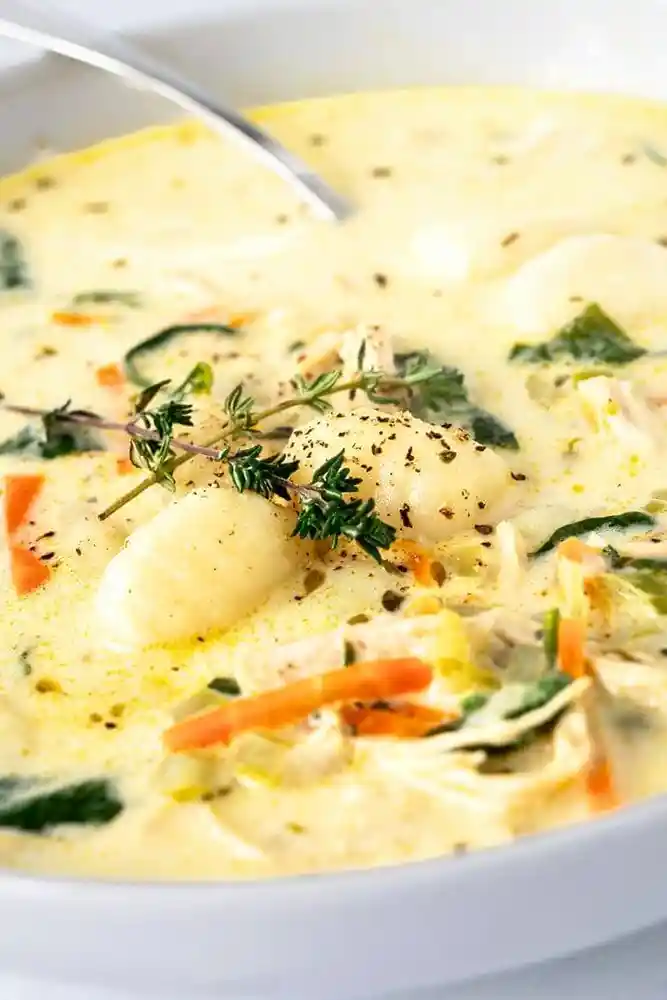
List of ingredients
- 2 tbsp olive oil – used for sautéing aromatics.
- 1 cup onion, chopped – provides a sweet base.
- 1 cup carrots, shredded – adds color and nutrients.
- 2 stalks celery, chopped finely – enhances the savory profile.
- 3 garlic cloves, minced – for aromatic depth.
- 1/2 tsp red pepper flakes – adds a hint of warmth.
- Salt and pepper to taste – for basic seasoning.
- 32 oz chicken broth – the primary liquid base.
- 2 cups leftover rotisserie chicken, shredded – for easy protein.
- 2 tsp fresh thyme – adds an earthy herbal note.
- 1 tsp dried oregano – provides traditional Italian flavor.
- 1/2 tsp red pepper flakes – for additional spice.
- 16 oz refrigerated potato gnocchi – the hearty starch element.
- 5 oz baby spinach – for freshness and vitamins.
- 1 cup heavy cream – creates the signature creamy texture.
step-by-step instructions
- Sauté Aromatics: Heat a large Dutch oven or pot over medium-high heat, and add the olive oil. Add the chopped onion, shredded carrots, diced celery, and minced garlic. Saute until softened, about 5-6 minutes. Season with salt and pepper.
- Simmer the Base: Pour in the chicken broth and add the shredded chicken, fresh thyme, red pepper flakes, and dried oregano. Bring to a boil, reduce the heat, and simmer for 10 minutes.
- Finish and Thicken: Add the potato gnocchi, baby spinach, and heavy cream. Cook for about 3 minutes or until the spinach is wilted and the gnocchi fully cooked and float to the surface. Taste the soup and add more salt if needed.
Broth Optimization Techniques
Using Low-Sodium Broth for Control
Selecting a low-sodium chicken broth allows you to maintain full control over the salt levels of the dish. Since rotisserie chicken is often heavily brined, using a standard broth can make the final result too salty. You can then add salt at the very end to taste.
Incorporating Additional Garlic Powder
Adding a pinch of garlic powder in addition to fresh minced garlic creates a more layered savory flavor. This provides a consistent base note that complements the sweetness of the sautéed carrots. It is best to stir this in during the initial sautéing phase.
Enhancing the Aroma with Fresh Thyme
Using fresh thyme leaves instead of dried herbs provides a brighter and more aromatic quality to the broth. Carefully strip the leaves from the stem and add them during the simmering stage. This ensures the herbal notes remain prominent without becoming bitter.
Gnocchi Texture Management
Timing the Gnocchi Addition
Add the potato gnocchi only during the final few minutes of the cooking process. Overcooking them can lead to a mushy texture and may make the broth too thick due to the release of excess starch. Three minutes is usually sufficient for refrigerated varieties.
Identifying When Gnocchi are Done
Gnocchi are typically finished cooking when they float to the surface of the liquid. This occurs because the internal temperature has reached a point where the air pockets within the potato dough expand. Once they float, they are ready to be served.
Preventing Gnocchi Clumping
Stir the soup gently but constantly when first adding the refrigerated gnocchi to the pot. This ensures the pieces separate and cook evenly rather than sticking together in clusters. A gentle whisking motion helps distribute them throughout the broth.
Vegetable Preparation Tips
Shredding Carrots for Faster Cooking
Shredding carrots instead of dicing them allows them to soften much more quickly in the pot. This ensures the vegetables are perfectly tender by the time the broth reaches its simmering point. It also creates a more integrated texture in the creamy base.
Uniform Celery Dicing
Chop the celery into very fine pieces to ensure an even distribution of flavor throughout every spoonful. Small pieces integrate better into the creamy texture of the soup than large chunks. This creates a more professional and consistent mouthfeel.
Managing Baby Spinach Volume
Add the baby spinach at the very end of the cooking process to preserve its vibrant green color. Stirring it in for just a few minutes prevents the leaves from becoming overcooked, slimy, or gray. The residual heat is usually enough to wilt the greens perfectly.
Dairy and Creamy Alternatives
Substituting Heavy Cream with Half and Half
Use half and half if you wish to reduce the overall calorie and fat content of the soup. While it provides a slightly less thick consistency, it still delivers a creamy experience. Adjust the simmering time slightly to ensure the thinner cream incorporates well.
Using Full-Fat Coconut Milk
Unsweetened coconut milk or coconut cream is a suitable alternative for those avoiding dairy products. It adds a subtle richness and maintains the velvety mouthfeel characteristic of the original recipe. Ensure the coconut milk is well-shaken before adding.
Preventing Cream Curdling
To avoid curdling, ensure the heavy cream is at room temperature or stir it in very slowly. Avoid bringing the soup to a rolling boil once the cream has been added to the pot. Maintaining a gentle simmer keeps the fat and water emulsified.
Protein Variations and Swaps
Using Cooked Turkey Breast
Shredded cooked turkey is an excellent substitute for rotisserie chicken in this recipe. Ensure the turkey is moist, as it can dry out faster than chicken during the reheating process. You may want to add an extra splash of broth to compensate.
Integrating Plant-Based Tofu
For a plant-based version, use extra-firm tofu cut into small, bite-sized cubes. Add the tofu at the same time as the shredded chicken to allow it to absorb the flavors of the broth. This provides a similar protein structure to the chicken.
Adding Sautéed Mushrooms for Umami
Adding sliced mushrooms during the initial sauté phase increases the overall umami profile of the soup. This is particularly effective when making a vegetarian version of the dish. Sauté them until golden brown before adding the other vegetables.
Storage and Preservation
Optimal Airtight Container Selection
Store leftovers in glass airtight containers to prevent the soup from absorbing other refrigerator odors. This helps maintain the freshness of the cream and the integrity of the herbs. Glass is preferred over plastic to avoid staining from the carrots.
Refrigeration Timeline and Quality
Keep the soup refrigerated for no more than three to four days to ensure quality. Beyond this window, the gnocchi may degrade in texture and the cream may begin to separate. Always cool the soup quickly before placing it in the fridge.
Managing Liquid Absorption
Be aware that gnocchi continue to absorb liquid even after the soup has been stored. You will likely find that the soup is significantly thicker upon reheating. Adding a small amount of chicken broth before warming helps restore the original consistency.
Reheating Procedures
Slow Stovetop Warming Method
Reheat the soup over low to medium heat on the stove for the best results. Stir frequently to ensure the heat is distributed evenly and to prevent the cream from scorching at the bottom of the pot. This method preserves the gnocchi texture best.
Microwave Heating Intervals
Heat the soup in short one-minute intervals, stirring thoroughly in between each session. This prevents the formation of hot spots and ensures the gnocchi are heated through without becoming rubbery. Use a microwave-safe lid to retain moisture.
Correcting Thickness After Storage
If the soup has thickened too much during refrigeration, whisk in a tablespoon of broth or water. Do this before the soup reaches a full simmer for the smoothest result. This prevents the soup from becoming a thick stew.
Freezer Guidelines
Omitting Perishables Before Freezing
Do not freeze the soup with the heavy cream or fresh spinach already added. These ingredients often separate or lose their structural integrity during the freezing and thawing process. Freeze only the base of broth, chicken, and vegetables.
Freezer-Safe Storage Techniques
Use heavy-duty freezer bags or airtight containers, leaving about an inch of space at the top for expansion. Store the base for up to three months for optimal flavor. Ensure the soup is completely chilled before freezing.
Proper Thawing and Finishing
Thaw the soup in the refrigerator overnight before heating it on the stove. This slow thaw preserves the quality of the ingredients better than rapid defrosting. Add the fresh spinach and cream during the final heating stage.
Technical Troubleshooting
Thickening a Thin Base
Use a cornstarch slurry if the soup feels too thin after adding the cream. Mix one tablespoon of cornstarch with two tablespoons of cold water until smooth, then stir it into the simmering pot. Let it bubble for two minutes to activate.
Preventing Cream Separation
Avoid bringing the soup to a violent boil after the cream has been incorporated. Maintain a gentle simmer to keep the proteins and fats in the cream emulsified. If separation occurs, stir rapidly with a whisk over low heat.
Balancing Excessive Saltiness
If the rotisserie chicken makes the soup too salty, add a squeeze of fresh lemon juice. The acidity helps cut through the excess sodium and brightens the overall flavor. Alternatively, add a small amount of unsalted water or broth.
Frequently Asked Questions
Can I use a different type of pasta?
Yes, small shapes like orzo, ditalini, or small elbow pasta work well. Be sure to adjust the cooking time based on the specific pasta’s requirements, as some may take longer than the gnocchi to soften.
How do I thicken the soup naturally?
Allowing the soup to simmer for a longer period helps the natural starches from the gnocchi thicken the base. You can also mash a few of the gnocchi against the side of the pot to release more starch into the broth.
Can I make this soup in advance?
You can prepare the base of the soup up to four days early. For the best quality, store the broth and chicken separately from the dairy and greens, adding the cream and spinach just before serving.
What if I don’t have rotisserie chicken?
You can use poached chicken breast, cooked turkey, or even pre-cooked cubes of chicken. Ensure the meat is fully cooked and shredded or diced before adding it to the simmering broth.
Print
30-Minute Creamy Chicken Gnocchi Soup
- Total Time: 30 minutes
- Yield: 6 servings 1x
- Diet: General
Description
This creamy Chicken Gnocchi Soup is a complete meal in itself!
Ingredients
- 2 tbsp olive oil
- 1 cup onion, chopped
- 1 cup carrots, shredded
- 2 stalks celery, chopped finely
- 3 garlic cloves, minced
- 1/2 tsp red pepper flakes
- Salt and pepper to taste
- 32 oz chicken broth
- 2 cups leftover rotisserie chicken, shredded
- 2 tsp fresh thyme
- 1 tsp dried oregano
- 16 oz refrigerated potato gnocchi
- 5 oz baby spinach
- 1 cup heavy cream
Instructions
- Step: Heat a large Dutch oven or pot over medium-high heat, and add the olive oil. Add the chopped onion, shredded carrots, diced celery, and minced garlic. Saute until softened, about 5-6 minutes. Season with salt and pepper.
- Step: Pour in the chicken broth and add the shredded chicken, fresh thyme, red pepper flakes, and dried oregano. Bring to a boil, reduce the heat, and simmer for 10 minutes.
- Step: Add the potato gnocchi, baby spinach, and heavy cream. Cook for about 3 minutes or until the spinach is wilted and the gnocchi fully cooked and float to the surface. Taste the soup and add more salt if needed.
Notes
Store leftovers for 3 days in the fridge in an airtight container. Gnocchi continue to absorb water when stored, so you may need to add more broth before reheating.
- Prep Time: 10 minutes
- Cook Time: 20 minutes
- Category: Soup
- Method: Simmering
- Cuisine: American
Nutrition
- Serving Size: 1 serving
- Calories: 627 kcal
- Sugar: 4 g
- Sodium: 89 mg
- Fat: 24 g
- Saturated Fat: 11 g
- Unsaturated Fat: 13 g
- Trans Fat: 0 g
- Carbohydrates: 73 g
- Fiber: 8 g
- Protein: 20 g
- Cholesterol: 61 mg