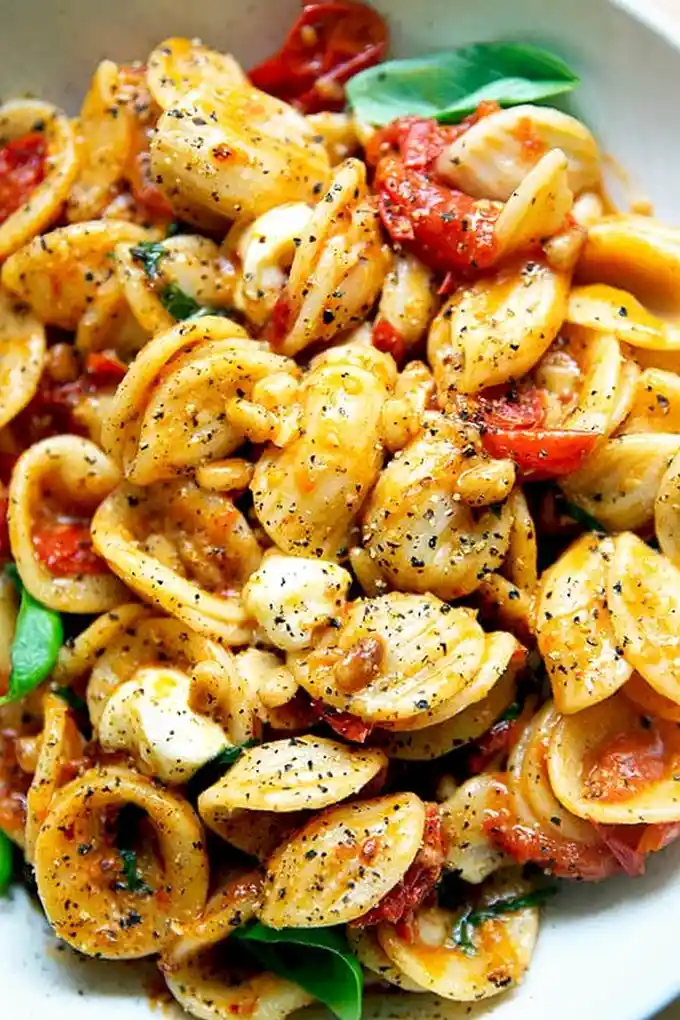
This vibrant pasta dish captures the essence of summer with a simple, flavor-packed sauce made from sautéed cherry tomatoes and aromatics. Perfectly suited for a quick weeknight dinner, the combination of toasted pine nuts, fresh basil, and creamy mozzarella elevates a basic bowl of pasta into a restaurant-quality meal. It is a reliable, refreshing, and satisfying recipe that relies on fresh produce and straightforward techniques to deliver maximum taste.
List of ingredients
- 1/4 cup olive oil
- 1 small shallot, thinly sliced
- 4 garlic cloves, thinly sliced
- Kosher salt to taste
- 12 ounces orecchiette pasta
- 1/3 cup pine nuts
- 1/2 to 1 teaspoon crushed red pepper flakes
- 1 pound small, sweet tomatoes, halved
- 1/2 cup grated parmesan cheese
- 4 ounces small mozzarella balls
- 1/2 cup fresh basil, thinly sliced
- Fresh cracked black pepper to taste
step-by-step instructions
- Step: Bring a large pot of water to a boil. Place the pine nuts in a small skillet over the lowest heat possible.
- Step: In a large skillet, combine olive oil, shallots, garlic, and a pinch of salt. Turn heat to high until oil shimmers, then cover, turn heat to low, and cook for 10 minutes until soft.
- Step: Once the water boils, add 1 tablespoon of kosher salt and cook the pasta until al dente.
- Step: Uncover the shallot mixture, add crushed red pepper, and stir. Raise heat to medium, add tomatoes and a pinch of salt, cooking for 3 to 5 minutes until breaking down. Add 1 cup of water and bring to a simmer.
- Step: Reserve a cup of pasta cooking liquid, then drain the pasta. Immediately transfer the pasta to the tomato sauce.
- Step: Increase heat on pine nuts to medium, stirring constantly until toasted. Add to the pasta.
- Step: Add parmesan cheese and black pepper. Stir in reserved liquid if the sauce is too thick.
- Step: Stir in mozzarella and basil, and serve immediately.
Refining Your Pasta Techniques
Selecting the Best Pasta Shape
Orecchiette, which translates to little ears, is uniquely designed to scoop up the cherry tomato sauce. If you cannot find orecchiette, other short, cup-like shapes such as shells or campanelle perform exceptionally well. These shapes hold onto the bits of garlic and tomato far better than long strands like linguine, ensuring every forkful has the perfect ratio of sauce to noodle.
Achieving the Perfect Tomato Texture
The secret to this sauce is allowing the tomatoes to break down just until they lose their structure but before they turn into a pureed soup. By cooking them on medium heat after the aromatics have softened, you maintain a rustic texture. If your tomatoes are particularly firm, you can add a few extra minutes of simmer time to help them soften appropriately.
The Importance of Pasta Water
Starch-rich pasta water is the secret ingredient that emulsifies the olive oil and cheese into a creamy coating. Always reserve a portion of the water before draining the pasta. Even if the sauce looks perfect initially, the noodles will continue to absorb liquid as they sit, so having a splash of hot pasta water on hand is vital for refreshing the consistency just before serving.
Customizing Your Flavor Profile
Balancing Heat Levels
Crushed red pepper flakes provide a necessary warmth that cuts through the sweetness of the tomatoes and the richness of the cheese. When serving this dish to children or those with a sensitivity to spice, start with a very small pinch or omit the flakes entirely. You can always pass a small dish of red pepper flakes at the table for adults who prefer more intensity.
Exploring Tomato Variations
While cherry tomatoes are the standard choice for this recipe due to their concentrated sweetness and juiciness, you can experiment with grape tomatoes or even chopped heirloom varieties. Ensure that any large tomatoes are chopped into uniform, bite-sized pieces so they release their juices at the same rate. Very juicy, overripe tomatoes may require slightly less simmering time than firmer varieties.
Enhancing the Nutty Component
If you prefer a different crunch, toasted sliced almonds or walnuts can be used as a substitute for pine nuts. These alternatives offer a slightly different earthy flavor but maintain the satisfying texture contrast. Always toast your nuts in a dry pan until they are fragrant to ensure they provide the best possible flavor profile for the finished dish.
Strategies for Service and Storage
Maintaining Optimal Freshness
This dish is designed to be eaten immediately while the mozzarella is soft and the basil remains bright green. Because the sauce relies on the contrast between the hot pasta and the fresh cheese, it does not hold up well to long periods of waiting. If you must wait to serve, keep the cheese and basil separate until the very last moment.
Storing Leftover Pasta
If you have leftovers, place them in an airtight container in the refrigerator for up to two days. Note that the mozzarella will firm up significantly once cold, and the pasta will continue to absorb the remaining sauce. It is best to store the pasta and the fresh basil separately if you anticipate needing to save some for the next day, as fresh herbs will wilt quickly in a hot container.
Guidelines for Proper Reheating
When reheating leftovers, use a skillet over low heat rather than a microwave to prevent the pasta from becoming mushy. Add a small tablespoon of water to the pan to help loosen the sauce as it warms. Stir gently until the pasta is heated through and the mozzarella has regained some of its creamy consistency, then add a final fresh sprinkle of basil before serving.
Addressing Common Cooking Inquiries
How do I stop the pine nuts from burning?
Pine nuts have a very high oil content and can transition from golden to scorched in seconds. The most reliable method is to keep the heat at the lowest possible setting and never step away from the stove while they are toasting. Use a light-colored skillet if possible, as it makes it much easier to visually monitor the change in color.
What is the best way to handle fresh basil?
To avoid bruising the basil, stack the leaves on top of each other, roll them into a tight cylinder, and use a very sharp knife to slice them into thin ribbons, known as chiffonade. This technique minimizes cell damage to the leaves, which keeps the herb vibrant and prevents the edges from turning dark or brown before you reach the table.
Can I make the sauce ahead of time?
You can prepare the aromatic base—the sautéed shallots, garlic, and cooked tomatoes—a few hours in advance. Keep this mixture in the skillet and simply bring it back to a gentle simmer while your pasta water is boiling. This allows you to finish the dish quickly when you are ready to eat without compromising the texture of the tomatoes or the integrity of the sauce.
Should I rinse my pasta after boiling?
You should never rinse your pasta after draining it, as the starch on the surface of the noodles is crucial for helping the sauce adhere. Rinsing removes this sticky layer, which results in the sauce sliding off the noodles rather than coating them. Simply drain the pasta well and move it directly into your waiting sauce for the best results.
Why use cold-start for the aromatics?
Starting the shallots and garlic in cold oil and bringing them up to temperature slowly ensures they soften and mellow out without burning. This gentle approach creates a deeper, more uniform sweetness compared to throwing aromatics into hot oil, which can cause the edges to crisp or brown too quickly while leaving the centers raw and pungent.
Print
Pasta with Simple Cherry Tomato Sauce
- Total Time: 45 minutes
- Yield: 4 servings 1x
- Diet: Vegetarian
Description
A super simple but flavorful summer pasta featuring sautéed cherry tomatoes, toasted pine nuts, fresh basil, mozzarella, and parmesan cheese tossed with orecchiette pasta.
Ingredients
- 1/4 cup olive oil
- 1 small shallot, thinly sliced
- 4 garlic cloves, thinly sliced
- Kosher salt to taste
- 12 ounces orecchiette pasta
- 1/3 cup pine nuts
- 1/2 to 1 teaspoon crushed red pepper flakes
- 1 pound small, sweet tomatoes, halved
- 1/2 cup grated parmesan cheese
- 4 ounces small mozzarella balls
- 1/2 cup fresh basil, thinly sliced
- Fresh cracked black pepper to taste
Instructions
- Step: Bring a large pot of water to a boil. Place the pine nuts in a small skillet over the lowest heat possible.
- Step: In a large skillet, combine olive oil, shallots, garlic, and a pinch of salt. Turn heat to high until oil shimmers, then cover, turn heat to low, and cook for 10 minutes until soft.
- Step: Once the water boils, add 1 tablespoon of kosher salt and cook the pasta until al dente.
- Step: Uncover the shallot mixture, add crushed red pepper, and stir. Raise heat to medium, add tomatoes and a pinch of salt, cooking for 3 to 5 minutes until breaking down. Add 1 cup of water and bring to a simmer.
- Step: Reserve a cup of pasta cooking liquid, then drain the pasta. Immediately transfer the pasta to the tomato sauce.
- Step: Increase heat on pine nuts to medium, stirring constantly until toasted. Add to the pasta.
- Step: Add parmesan cheese and black pepper. Stir in reserved liquid if the sauce is too thick.
- Step: Stir in mozzarella and basil, and serve immediately.
Notes
A short pasta like orecchiette works best. You can substitute cherry tomatoes with any ripe, juicy tomatoes. Pearl-sized mozzarella is ideal, but diced fresh mozzarella works well too. Adjust red pepper flakes for heat preference.
- Prep Time: 15 minutes
- Cook Time: 30 minutes
- Category: Pasta
- Method: Stovetop
- Cuisine: Italian
Nutrition
- Serving Size: 1 serving
- Calories: 485 kcal
- Sugar: 6 g
- Sodium: 520 mg
- Fat: 22 g
- Saturated Fat: 6 g
- Unsaturated Fat: 14 g
- Trans Fat: 0 g
- Carbohydrates: 58 g
- Fiber: 4 g
- Protein: 16 g
- Cholesterol: 20 mg