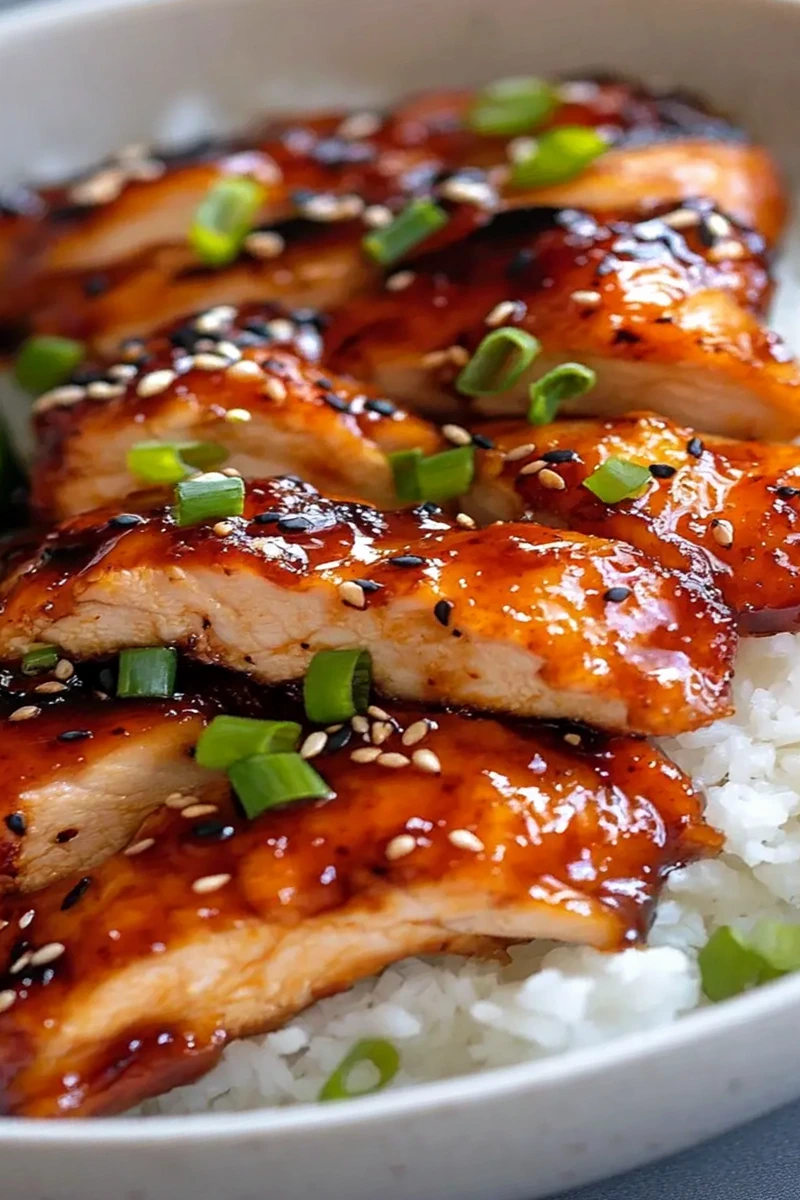
This sticky honey gochujang chicken is the ultimate weeknight solution for anyone craving bold, restaurant-quality flavors in under thirty minutes. The combination of sweet honey and savory Korean chili paste creates a deeply caramelized, finger-licking glaze that transforms simple chicken thighs into a centerpiece dish. It is a reliable, high-impact recipe that balances complexity with incredible ease of preparation.
List of ingredients
- 6 thighs boneless chicken (keep the skin on)
- 2 cloves garlic (grated with microplane)
- 3 stalks green onions (white and green parts separated)
- 2 tablespoons gochujang paste
- 2 tablespoons honey
- 3 tablespoons rice vinegar
- 1 tablespoon soy sauce
- 1 tablespoon sesame oil
step-by-step instructions
- Step: If needed, use a sharp knife or kitchen shears to debone the chicken thighs.
- Step: Grate the garlic using a microplane and thinly slice the green onions, keeping the white and green parts separated.
- Step: In a bowl, whisk together the gochujang paste, honey, rice vinegar, soy sauce, sesame oil, and grated garlic; stir in the white parts of the green onions.
- Step: Place the chicken thighs in the marinade, ensuring each piece is well-coated, and let it sit for at least 15 minutes.
- Step: For Air Fryer, preheat to 375°F (200°C) and cook for 20 minutes, flipping halfway through.
- Step: For Oven, preheat to 425°F (220°C), bake on a parchment-lined sheet for 30-35 minutes, flipping halfway, and broil the last 3 minutes for crispiness.
- Step: Serve with freshly made rice and garnish with the sliced green parts of the onions.
Refining your cooking technique
Achieving the perfect glaze texture
The secret to a sticky glaze is the sugar content in the honey, which caramelizes quickly at high heat. Watch your chicken closely during the final minutes of cooking, as the sugars can transition from perfectly browned to burnt rapidly. Using an instant-read meat thermometer ensures you reach the safe internal temperature of 165°F (74°C) without drying out the meat.
Managing internal moisture
Boneless thighs are more forgiving than breasts, but they still require proper handling to stay succulent. By keeping the skin on, you create a protective barrier that seals in the natural juices while the exterior develops its signature char. Avoid overcrowding your air fryer or baking sheet, as excess moisture trapped between pieces will lead to steaming rather than the desired crispiness.
Flavor profile adjustments
Balancing the heat levels
Gochujang paste varies in spiciness depending on the specific brand and fermentation age. If you prefer a milder outcome, you can reduce the gochujang by half and replace that volume with more honey or a teaspoon of tomato paste. For those seeking extra heat, add a pinch of red chili flakes to the marinade or a drizzle of chili oil after the chicken has finished cooking.
Enhancing the umami depth
If you want to deepen the savory notes, consider adding a teaspoon of grated fresh ginger to your marinade mixture. Ginger pairs exceptionally well with the nuttiness of sesame oil and provides a sharp, refreshing contrast to the sweet honey. You might also experiment with adding a drop of toasted sesame seeds on top at the end for an extra layer of flavor and aesthetic appeal.
Ingredient substitutions and alternatives
Selecting suitable vinegar varieties
While rice vinegar is the traditional choice for this profile, apple cider vinegar can serve as a suitable substitute if you find yourself in a pinch. Apple cider vinegar provides a similar level of tanginess and fruitiness that complements the honey beautifully. Always avoid using white distilled vinegar, as it is far too harsh and lacks the subtle sweetness required for this specific glaze.
Replacing the sweetener
If you are looking for an alternative to honey, pure maple syrup works exceptionally well in this recipe. It offers a slightly woodier, earthier sweetness that stands up to the pungent intensity of the gochujang. Ensure you use pure syrup rather than pancake syrup, as the added artificial flavors and stabilizers in imitation products will change the profile of your glaze.
Practical service suggestions
Pairing with grains and vegetables
This dish is naturally very flavorful, making it an ideal companion for neutral bases like jasmine rice or quinoa. Steamed broccoli, blanched bok choy, or simply sautéed snap peas provide the necessary crunch and freshness to balance the richness of the sticky glaze. Serving these greens on the side allows them to soak up any excess sauce remaining on the plate.
Creating a balanced meal experience
To turn this into a more substantial spread, consider offering small sides of pickled radish or cucumbers. The bright acidity of these cold vegetables acts as a palate cleanser between bites of the rich, spicy chicken. This contrast creates a more authentic and varied dining experience that keeps the meal feeling light despite the intense flavors of the main course.
Storage and reheating logistics
Maintaining glaze consistency
Store leftovers in an airtight container for no more than three days to maintain the best quality. When placing the chicken in the fridge, ensure it has cooled completely before sealing the container to prevent condensation from softening the crisp skin. If the sauce has thickened too much during storage, it will loosen back up when properly heated.
The best reheating methods
Avoid the microwave if you want to keep the skin from becoming rubbery. Reheating in a conventional oven at 350°F on a wire rack allows the heat to circulate, effectively re-crisping the exterior. If you have an air fryer, reheating at 325°F for about 5 minutes is the most efficient way to mimic the original texture of the freshly prepared dish.
Frequently asked questions
Does the skin need to remain on the chicken?
While you can use skinless thighs, the skin provides a significant amount of the fat that renders out and combines with the honey and gochujang to create the signature sticky coating. Without the skin, you may find the chicken a bit drier and the glaze slightly less rich in consistency.
Can I prepare this in a slow cooker?
This recipe is designed for dry-heat cooking methods like air frying or roasting to ensure the glaze caramelizes properly. A slow cooker will introduce too much moisture and create a stewed effect, which prevents the desired sticky texture from forming on the surface of the meat.
How do I know when the chicken is finished?
The chicken is safe to eat once an instant-read thermometer inserted into the thickest part of the thigh reads 165°F (74°C). The meat should be tender and opaque throughout, and the glaze should be bubbling and thick enough to coat the back of a spoon.
Are there any common mistakes to avoid?
The most common error is adding the green onion parts too early; the green tops are delicate and should only be used as a fresh garnish. Another mistake is using too much heat at the very start, which can burn the honey before the chicken is cooked through; keep an eye on your oven or air fryer temperature settings to maintain consistency.
Print
Sticky Honey Gochujang Chicken
- Total Time: 30 minutes
- Yield: 4 pieces 1x
- Diet: Non-Vegetarian
Description
This Easy Sticky Honey Gochujang Chicken recipe combines sweet and spicy flavors for a delicious meal in 30 minutes.
Ingredients
- 6 thighs boneless chicken (keep the skin on)
- 2 cloves garlic (grated with microplane)
- 3 stalks green onions (white and green parts separated)
- 2 tablespoons gochujang paste
- 2 tablespoons honey
- 3 tablespoons rice vinegar
- 1 tablespoon soy sauce
- 1 tablespoon sesame oil
Instructions
- Step: If needed, use a sharp knife or kitchen shears to debone the chicken thighs.
- Step: Grate the garlic using a microplane and thinly slice the green onions, keeping the white and green parts separated.
- Step: In a bowl, whisk together the gochujang paste, honey, rice vinegar, soy sauce, sesame oil, and grated garlic; stir in the white parts of the green onions.
- Step: Place the chicken thighs in the marinade, ensuring each piece is well-coated, and let it sit for at least 15 minutes.
- Step: For Air Fryer, preheat to 375°F (200°C) and cook for 20 minutes, flipping halfway through.
- Step: For Oven, preheat to 425°F (220°C), bake on a parchment-lined sheet for 30-35 minutes, flipping halfway, and broil the last 3 minutes for crispiness.
- Step: Serve with freshly made rice and garnish with the sliced green parts of the onions.
Notes
Store leftover chicken in an airtight container in the fridge for up to three days. Reheat in the oven at 350°F until warmed through.
- Prep Time: 10 minutes
- Cook Time: 20 minutes
- Category: Dinner
- Method: Air Fryer or Oven
- Cuisine: Korean
Nutrition
- Serving Size: 1 piece
- Calories: 320 kcal
- Sugar: 8 g
- Sodium: 650 mg
- Fat: 18 g
- Saturated Fat: 4 g
- Unsaturated Fat: 12 g
- Trans Fat: 0 g
- Carbohydrates: 12 g
- Fiber: 1 g
- Protein: 26 g
- Cholesterol: 95 mg