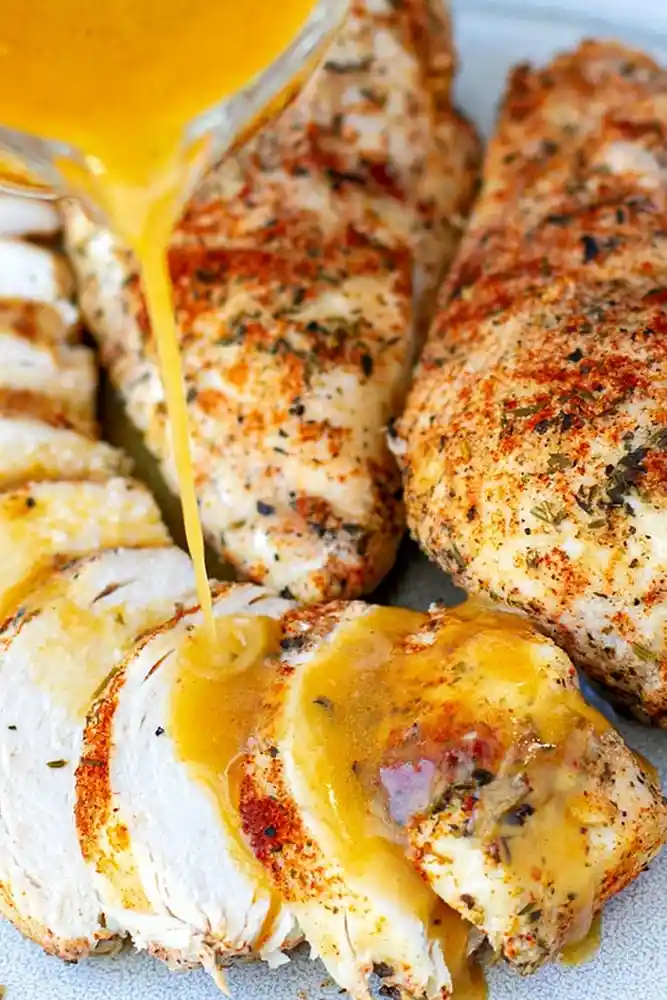
Creating tender, succulent chicken breasts at home is effortless with this pressure cooking method. By using a trivet to elevate the meat and crafting a savory pan sauce from the drippings, you achieve a restaurant-quality meal in one appliance. This simple, flavorful recipe is perfect for busy weeknights or as a reliable cornerstone for your weekly meal preparation.
List of ingredients
- 3 chicken breasts (skinless/boneless, about 0.5 lb / 270 g each)
- 1 teaspoon salt
- 1/2 teaspoon pepper
- 1 teaspoon sweet or mild paprika powder
- 1 teaspoon garlic powder
- 1 teaspoon onion powder
- 1 cup low-sodium chicken stock
- 2 bay leaves
- 3 garlic cloves
- 1 tablespoon butter
- 1 tablespoon all-purpose flour
- 1 tablespoon lemon juice
step-by-step instructions
- Prep: Season the chicken breasts evenly with salt, pepper, paprika, garlic, and onion powders on both sides. Allow to come to room temperature for 15 minutes.
- Add ingredients: Add the chicken stock, garlic cloves, and bay leaves to the Instant Pot. Place the trivet on top with handles facing up and place the chicken breasts on the trivet.
- Set & cook: Secure and lock the lid. Select Manual/Pressure Cook and adjust to 10 minutes on HIGH pressure.
- Release: Once the timer completes, allow for a natural pressure release for 5 minutes, then perform a quick release for the remaining pressure.
- Prepare the gravy: Remove the chicken to a plate and cover with foil. Press the Saute button and simmer the broth for 2-3 minutes to reduce.
- Thicken: Scoop a few tablespoons of hot liquid into a small bowl, whisk in the flour until smooth, then stir back into the pot. Add butter and lemon juice, stirring until combined.
- Finish and serve: Slice the chicken breasts into thick pieces and pour the gravy over the top or serve on the side.
Refining Your Pressure Cooking Technique
Achieving Even Temperatures
Allowing your chicken to rest on the counter before cooking is a vital step. Cold meat hits the hot environment of a pressure cooker and can result in uneven texture. Ensuring the internal temperature of the chicken is not fridge-cold helps the center finish at the same time as the exterior.
Selecting the Right Stock Base
Using low-sodium stock allows you to control the exact seasoning of your gravy. Since you are reducing the liquid at the end, high-sodium broths can quickly become overly salty. Always taste your sauce during the final saute step before adding extra salt.
Practical Gravy Enhancements
Managing Sauce Consistency
If you prefer a thicker gravy, you can increase the flour or cornstarch by half a tablespoon. Always whisk the thickening agent with a small amount of warm liquid in a separate cup first. This prevents clumps from forming when you add it to the larger pot of boiling broth.
Balancing Final Flavors
The lemon juice is meant to provide a subtle lift rather than a dominant sour note. If you find the gravy feels too heavy or fatty, add an extra teaspoon of lemon juice gradually. This brightness creates a cleaner finish that complements the savoriness of the poultry drippings.
Storage and Reheating Advice
Proper Refrigeration Methods
Store your cooked chicken in an airtight container for up to three days. It is highly recommended to store the gravy separately from the meat. This prevents the chicken from becoming saturated and helps keep the gravy texture stable.
Methods for Gentle Reheating
To reheat, warm the chicken gently in a skillet with a splash of water or broth to prevent drying out. Reheat the gravy separately in a small saucepan over low heat, whisking in a teaspoon of water if it has thickened too much in the fridge. Bringing them to temperature independently ensures the best texture for both components.
Frequently Asked Questions
Can I use frozen chicken breasts for this recipe?
You can use frozen chicken, but you must increase the cooking time to roughly 12-15 minutes depending on the thickness. Note that the gravy flavor will be milder because frozen chicken releases extra water into the pot. You may need to simmer the liquid longer during the saute phase to achieve the desired concentration.
What are the best flour substitutes for the gravy?
Cornstarch is an excellent alternative that creates a glossy, clear gravy. If you are following a strict diet, arrowroot powder or tapioca starch work well as thickeners. Simply swap them in a one-to-one ratio, but always mix with cool or warm liquid before adding to the hot pan to ensure they incorporate smoothly.
How do I know when the chicken is perfectly cooked?
The chicken should reach an internal temperature of 165 degrees Fahrenheit. Because chicken breasts vary in size, using a digital meat thermometer is the most reliable way to check for doneness. If the thickest part of the breast reaches this temperature, the meat will remain tender rather than becoming stringy or tough.
Can I add vegetables to the cooking liquid?
You can add hearty root vegetables like carrots or potatoes to the pot alongside the chicken. However, keep in mind that vegetables release their own moisture, which can dilute your gravy base. If you choose to add vegetables, you might need to simmer the broth for a few extra minutes at the end to regain the desired consistency.
How can I make the gravy even more savory?
For a deeper flavor profile, stir in a teaspoon of dried herbs like thyme or rosemary during the saute stage. You can also add a small dash of soy sauce or Worcestershire sauce for a hit of umami. These additions complement the garlic and onion base without overpowering the natural taste of the chicken.
Should I use salted or unsalted butter?
Unsalted butter is preferred so you can manage the salt level in the final sauce. If you only have salted butter, omit the added salt from the gravy preparation step until you have tasted the finished product. This helps you avoid an overly aggressive saltiness in your finished dish.
Can I freeze the leftovers?
The cooked chicken freezes beautifully for up to three months. Ensure it is completely cooled before placing it in a freezer-safe bag or container. Thaw it overnight in the refrigerator before reheating gently with the gravy to maintain the moisture balance of the meat.
Print
Instant Pot Chicken Breasts & Gravy
- Total Time: PT45M
- Yield: 4 servings 1x
- Diet: High Protein
Description
Learn how to make easy, succulent Instant Pot chicken breasts and gravy with our beginner-friendly recipe. This method produces tender chicken perfect for a main dinner dish or convenient meal prep.
Ingredients
- 3 chicken breasts (skinless/boneless, about 0.5 lb / 270 g each)
- 1 teaspoon salt
- 1/2 teaspoon pepper
- 1 teaspoon sweet or mild paprika powder
- 1 teaspoon garlic powder
- 1 teaspoon onion powder
- 1 cup low-sodium chicken stock
- 2 bay leaves
- 3 garlic cloves
- 1 tablespoon butter
- 1 tablespoon all-purpose flour
- 1 tablespoon lemon juice
Instructions
- Prep: Season the chicken breasts evenly with salt, pepper, paprika, garlic, and onion powders on both sides. Allow to come to room temperature for 15 minutes.
- Add ingredients: Add the chicken stock, garlic cloves, and bay leaves to the Instant Pot. Place the trivet on top with handles facing up and place the chicken breasts on the trivet.
- Set & cook: Secure and lock the lid. Select Manual/Pressure Cook and adjust to 10 minutes on HIGH pressure.
- Release: Once the timer completes, allow for a natural pressure release for 5 minutes, then perform a quick release for the remaining pressure.
- Prepare the gravy: Remove the chicken to a plate and cover with foil. Press the Saute button and simmer the broth for 2-3 minutes to reduce.
- Thicken: Scoop a few tablespoons of hot liquid into a small bowl, whisk in the flour until smooth, then stir back into the pot. Add butter and lemon juice, stirring until combined.
- Finish and serve: Slice the chicken breasts into thick pieces and pour the gravy over the top or serve on the side.
Notes
Storage: Store chicken for up to 3 days in the refrigerator or freeze for up to 3 months. Keep gravy in a separate container. Flour options: Cornstarch or gluten-free flour may be substituted for all-purpose flour.
- Prep Time: PT15M
- Cook Time: PT30M
- Category: Main
- Method: Pressure Cooker
- Cuisine: British
Nutrition
- Serving Size: 1 breast with gravy
- Calories: 243 kcal
- Sugar: 0.3 g
- Sodium: 820 mg
- Fat: 8 g
- Saturated Fat: 3 g
- Unsaturated Fat: 3 g
- Trans Fat: 0.1 g
- Carbohydrates: 4 g
- Fiber: 0.5 g
- Protein: 38 g
- Cholesterol: 116 mg